
Squeaker cap for a water bottle used in a dog cruncher toy
a water bottle and squeaker technology, applied in the field of squeaker caps, can solve the problems of simple crunching sound, and the rapid speed of plastic water bottles to the point of being flattened and depleted,
- Summary
- Abstract
- Description
- Claims
- Application Information
AI Technical Summary
Benefits of technology
Problems solved by technology
Method used
Image

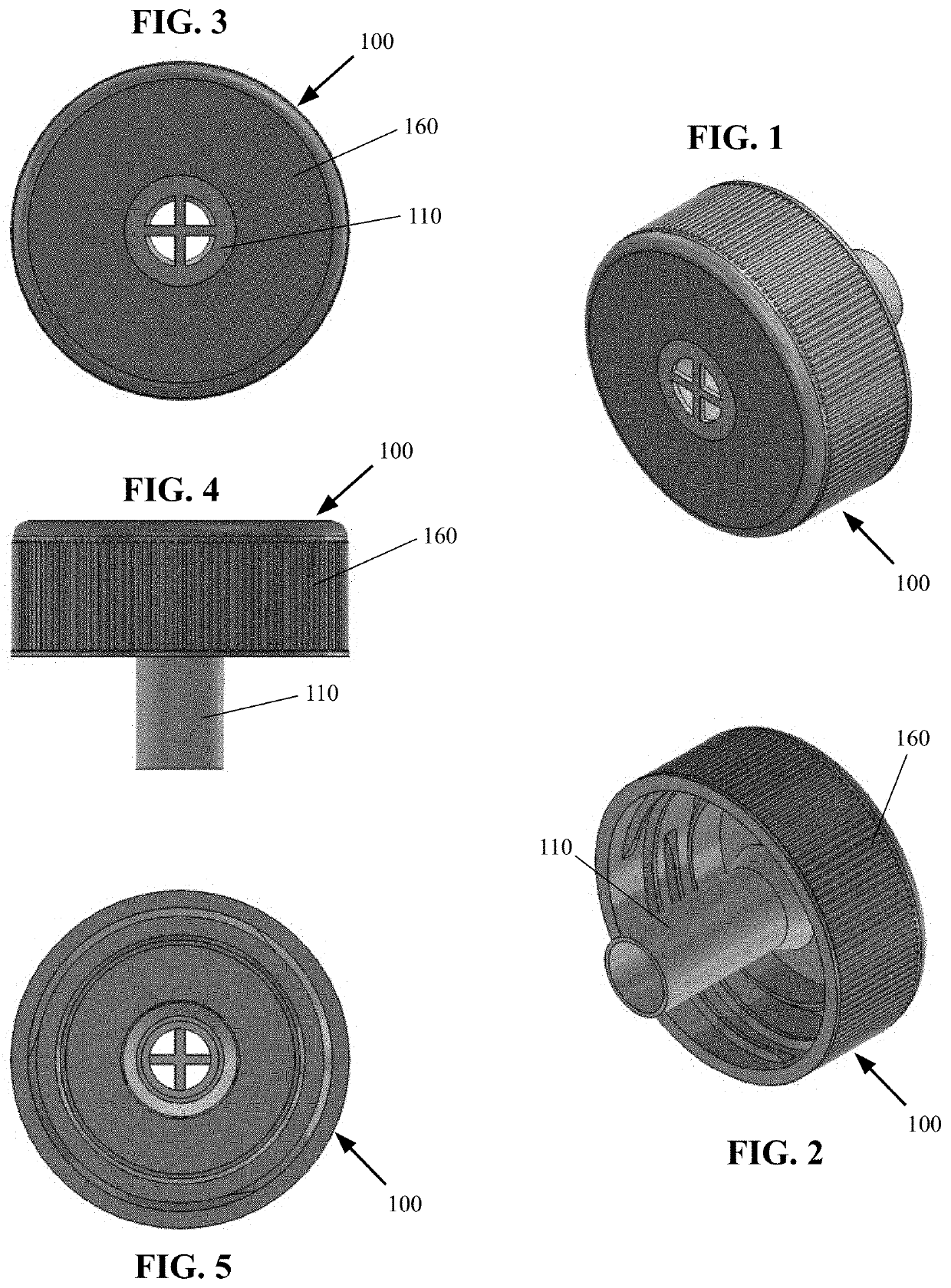
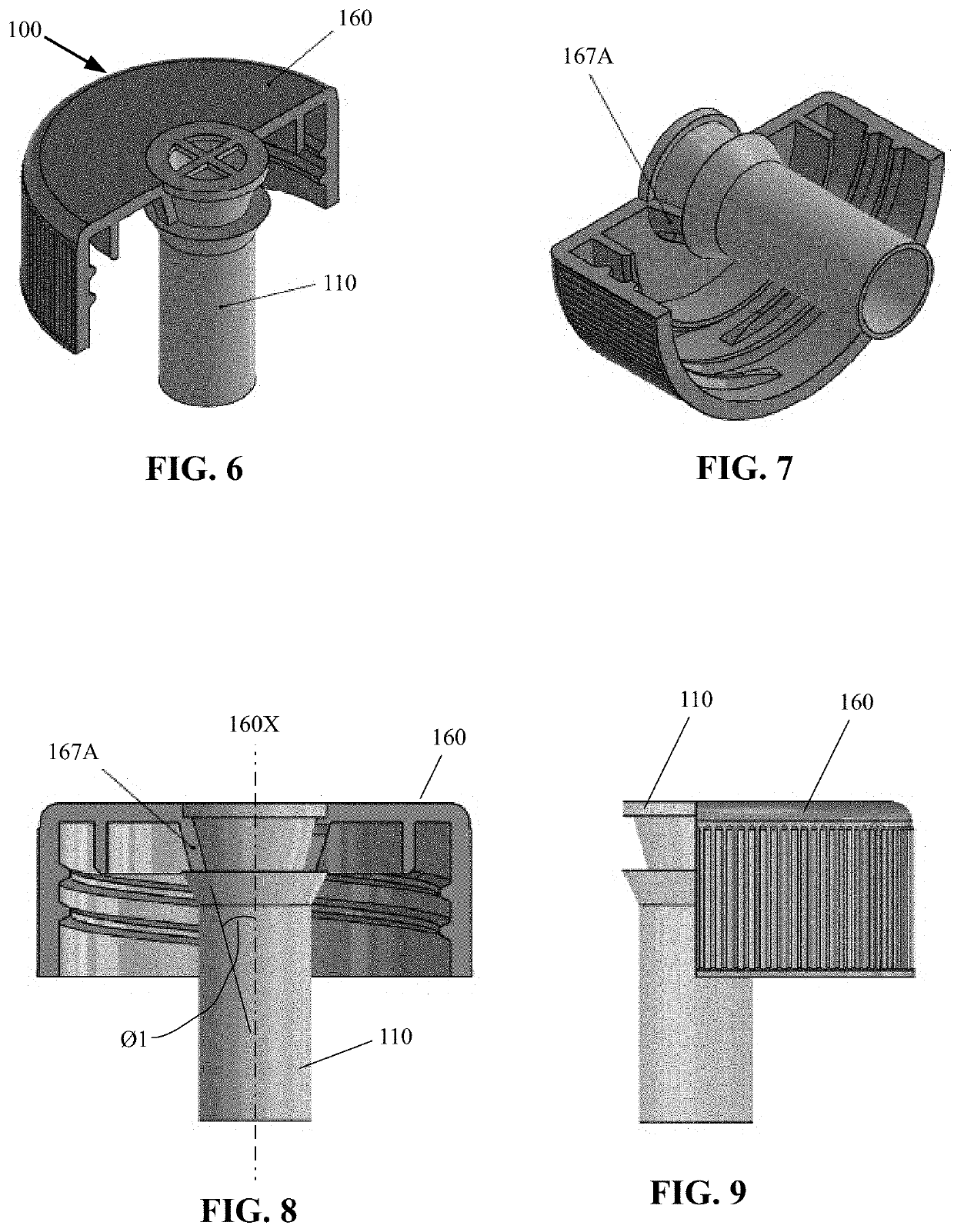
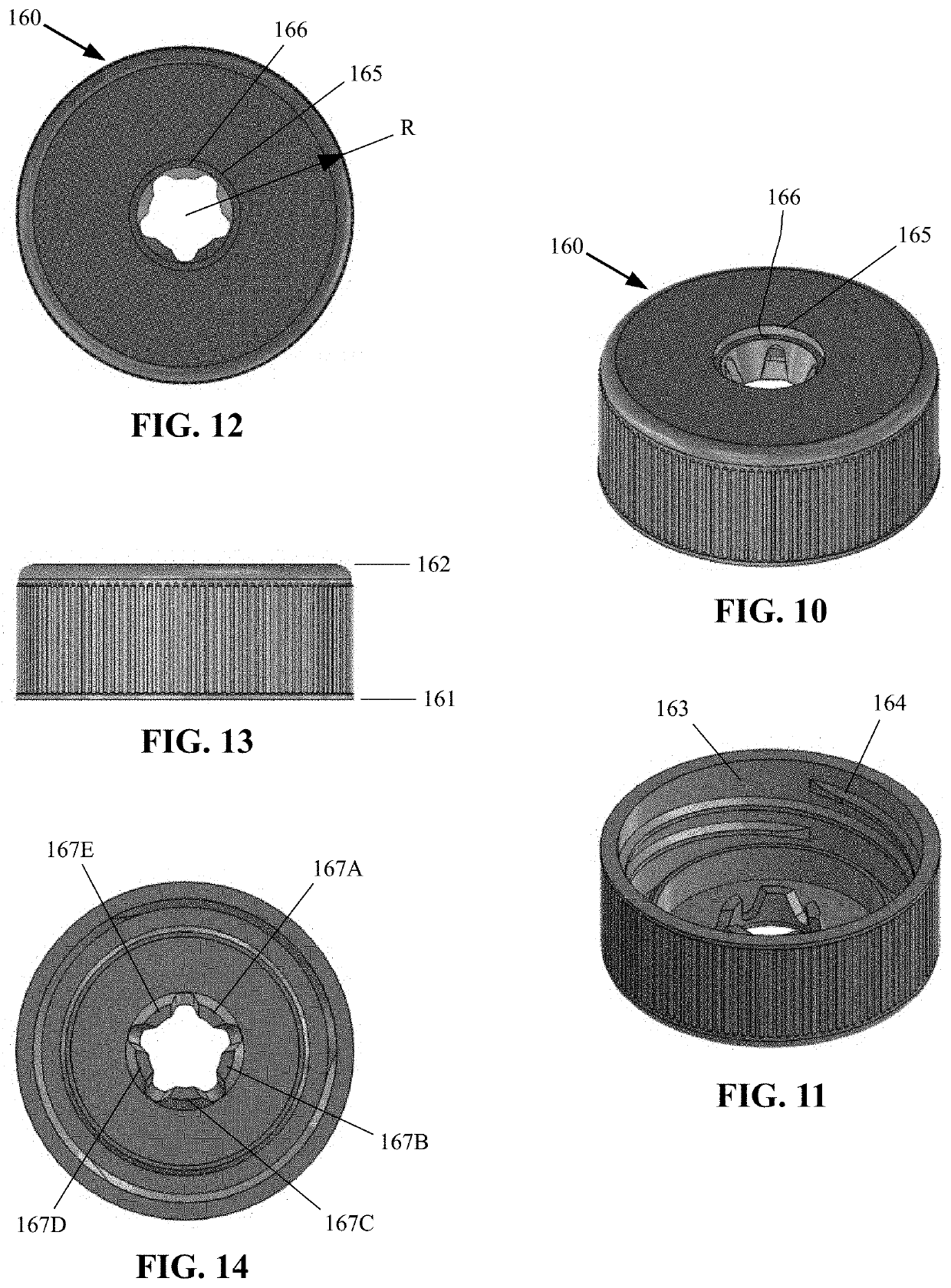
Examples
Embodiment Construction
[0035]As used throughout this specification, the word “may” is used in a permissive sense (i.e., meaning having the potential to), rather than a mandatory sense (i.e., meaning must), as more than one embodiment of the invention may be disclosed herein. Similarly, the words “include”, “including”, and “includes” mean including but not limited to.
[0036]The phrases “at least one”, “one or more”, and “and / or” may be open-ended expressions that are both conjunctive and disjunctive in operation. For example, each of the expressions “at least one of A. B and C”, “one or more of A, B, and C”, and “A, B, and / or C” herein means all of the following possible combinations: A alone; or B alone; or C alone; or A and B together; or A and C together; or B and C together; or A, B and C together.
[0037]Also, the disclosures of all patents, published patent applications, and non-patent literature cited within this document are incorporated herein in their entirety by reference. However, it is noted tha...
PUM
 Login to View More
 Abstract
Description
Claims
Application Information
 Login to View More