

Functionalized branched alcohols as non-ionic sugar surfactants
a technology of branched alcohols and non-ionic sugar surfactants, applied in the field of branched alcohols, can solve the problems of low processing time in applications such as fast textile processing
Patent Information
- Authority / Receiving Office
- US · United States
- Patent Type
- Patents(United States)
- Current Assignee / Owner
- Publication Date
- 2022-09-27
Smart Images
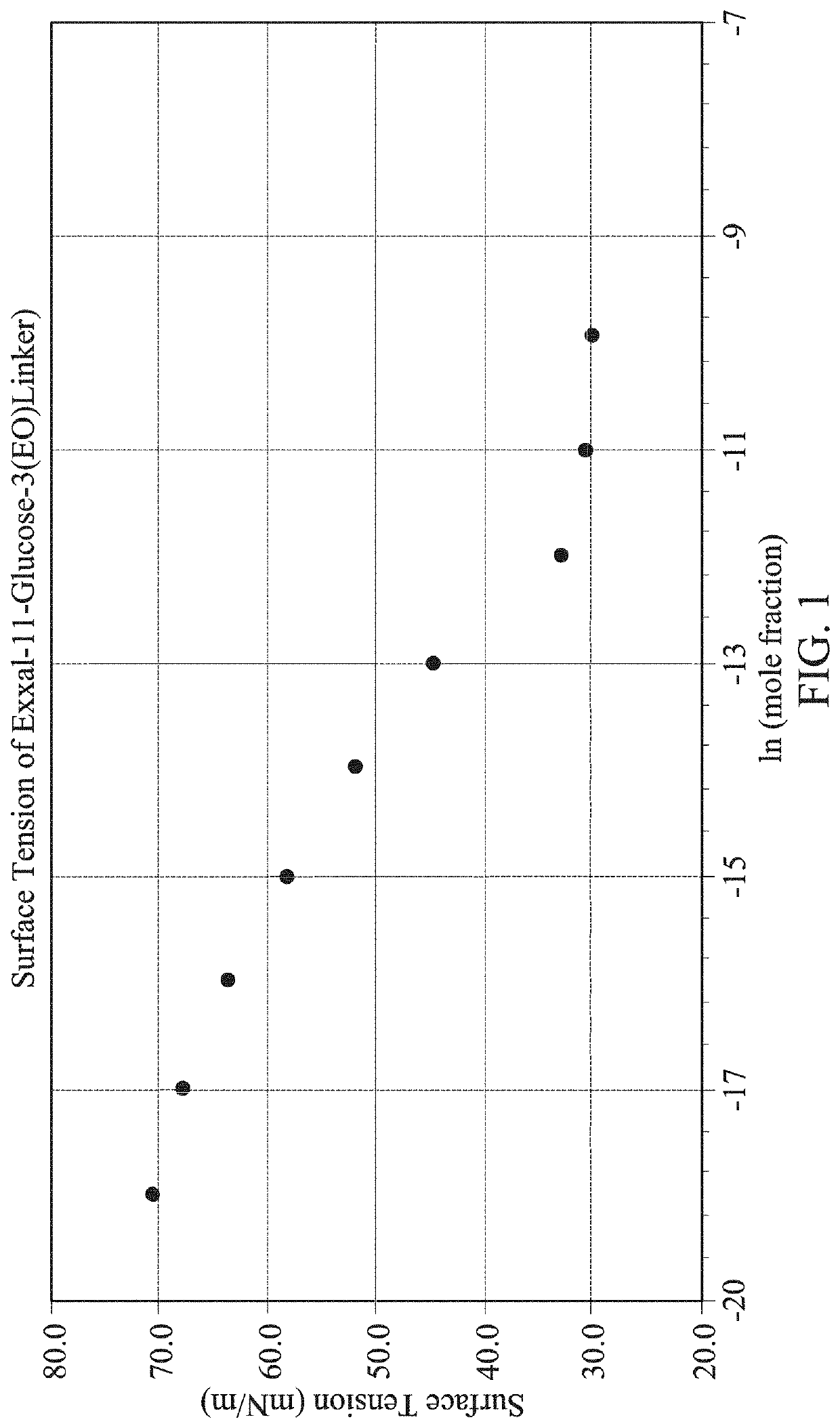
Figure 1 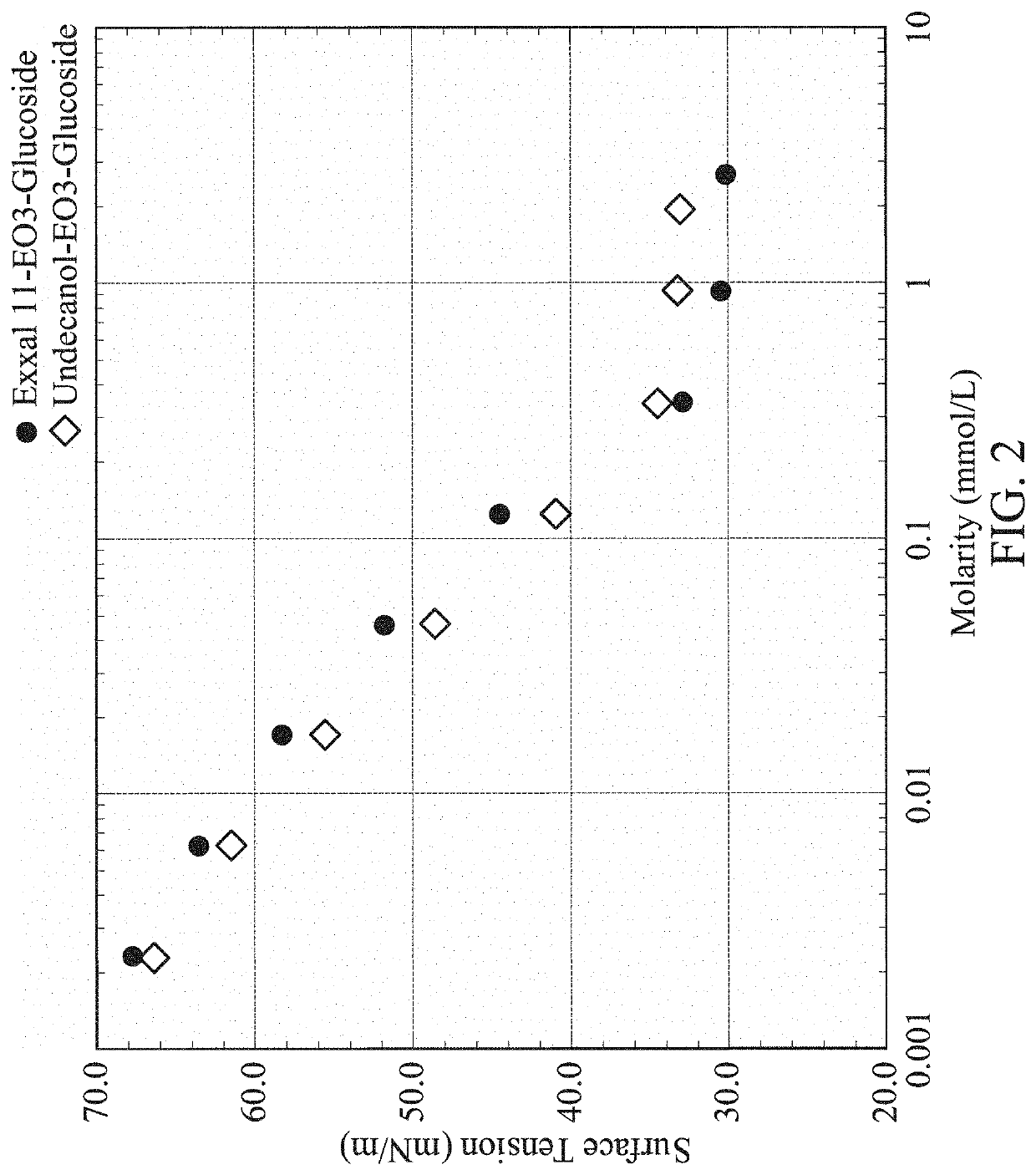
Figure 2 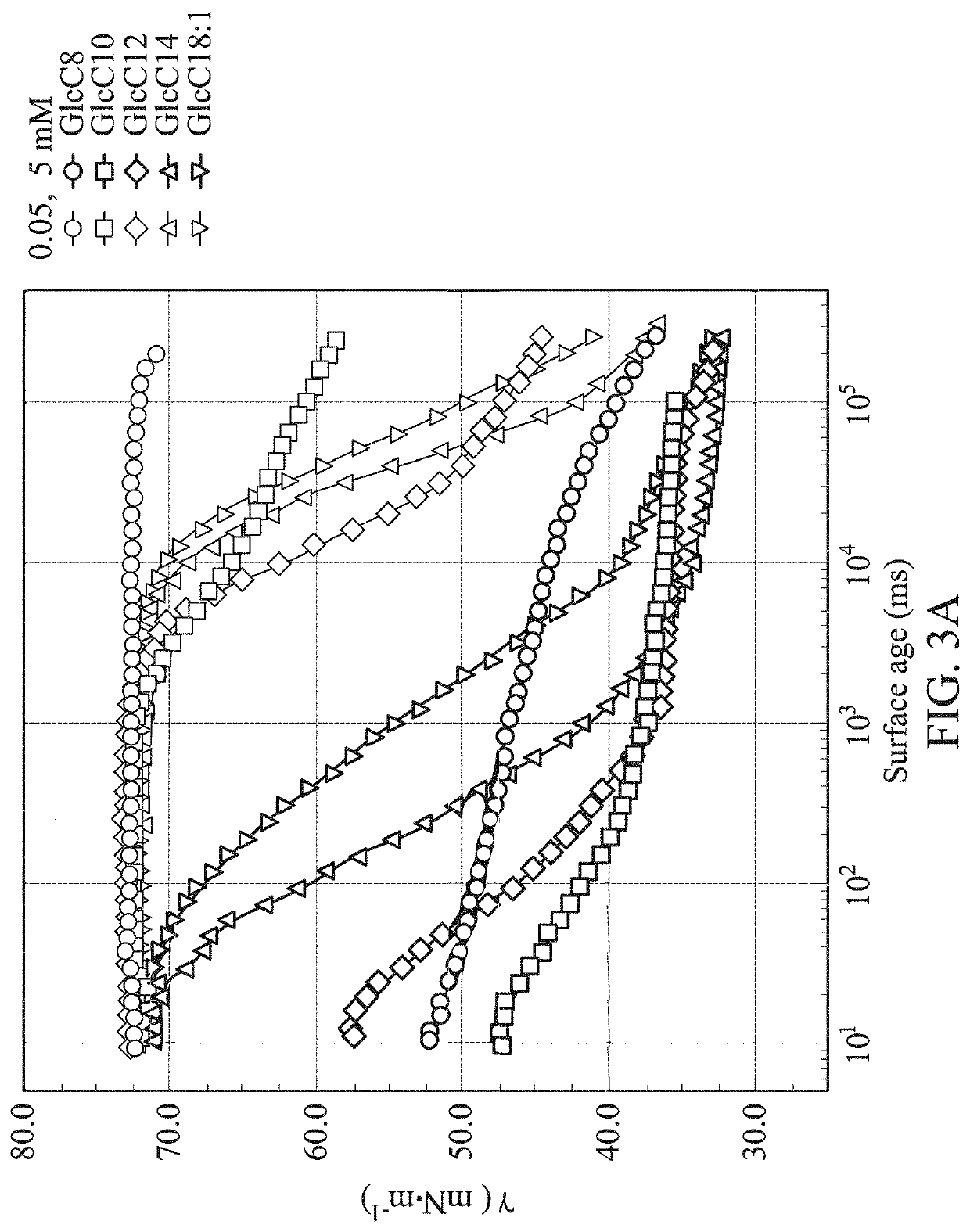
Figure 3
Abstract
Description
[0001] The instant application claims benefit of Provisional Ser. No. 62 / 950,433 filed on Dec. 19, 2019.FIELD OF THE INVENTION
[0002] The present invention relates to branched alcohols, and more specifically relates to functionalized branched alcohols useful as non-ionic sugar surfactants.BACKGROUND OF THE INVENTION
[0003] Surfactant molecules are amphiphilic compounds, that is, some portion of the molecule is hydrophilic and some portion of the molecule is hydrophobic. These two segments have different solubility behavior in oil and water. At an oil-water interface, the polar segment of the molecule is found in the water phase while the non-polar segment resides in the oil phase. Surfactants can be classified based on polarity where an ionic surfactant interacts with polar fluids through charge-based interactions, or as a non-ionic surfactant that interacts through non-charged-based interactions such as hydrogen bonding. Traditional building blocks of surfactants include linear alpha ol...
Examples
example 1
Synthesis of Functionalized Branched Alcohols
[0134]In this example and as shown below in Scheme XII, EXXAL™ 11 was first ethoxylated by conversion of EXXAL™ 11 to EXXAL™ 11 tosylate esters, followed by reaction with triethylene glycol in the presence of sodium hydride. The ethoxylated EXXAL™ 11 was then coupled to β-D-glucose pentaacetate in the presence of a Lewis acid. Next, the acetate groups were removed with a base to provide the functionalized branched alcohols. EXXAL™ 11 is a mixture wherein C11H23 represents the main component of the EXXAL™ 11 mixture.
[0135]
example 2
Non-ionic Sugar Surfactant Performance
[0136]In the next example, surface tension measurements were taken to demonstrate surface activity for functionalized branched alcohols and a comparative linear alcohol. Surface tension isotherms were measured for selected functionalized branched alcohols EXXAL™ 11-Glucose-3(EO )Linker (also referred to herein as “EXXAL™ 11-EO3-Glucoside”) and EXXAL™ 11-Galactose-3(EO)Linker, as well as comparative alkoxylated alcohol glycoside n-undecanol-glucose-3(EO)Linker (also referred to herein as “Undecanol-EO3-Glucoside”). The names, chemical structures, and weight average molecular weights of these functionalized branched alcohols are as follows:
[0137]Compound 1, n-undecanol-glucose-3(EO)Linker
[0138]
[0139]Compound 2, EXXAL™ 11-Glucose-3(EO)Linker
[0140]
[0141]Compound 3, EXXAL™ 11-Galactose-3(EO)Linker
[0142]
[0143]The compounds were water soluble over the measured concentration ranges without any addition of solubilizers and / or complexing agents (which wer...