
Preformed liner adhered to a pipe with an adhesive
A pre-forming, adhesive technology used in synthetic resin layered products, pipe elements, tubular articles, etc., to solve problems such as lining bends, narrowing of oil flow paths, etc.
Patent Information
- Authority / Receiving Office
- CN · China
- Patent Type
- Applications(China)
- Current Assignee / Owner
- Publication Date
- 2008-10-22
- Estimated Expiration
- Not applicable · inactive patent
Smart Images
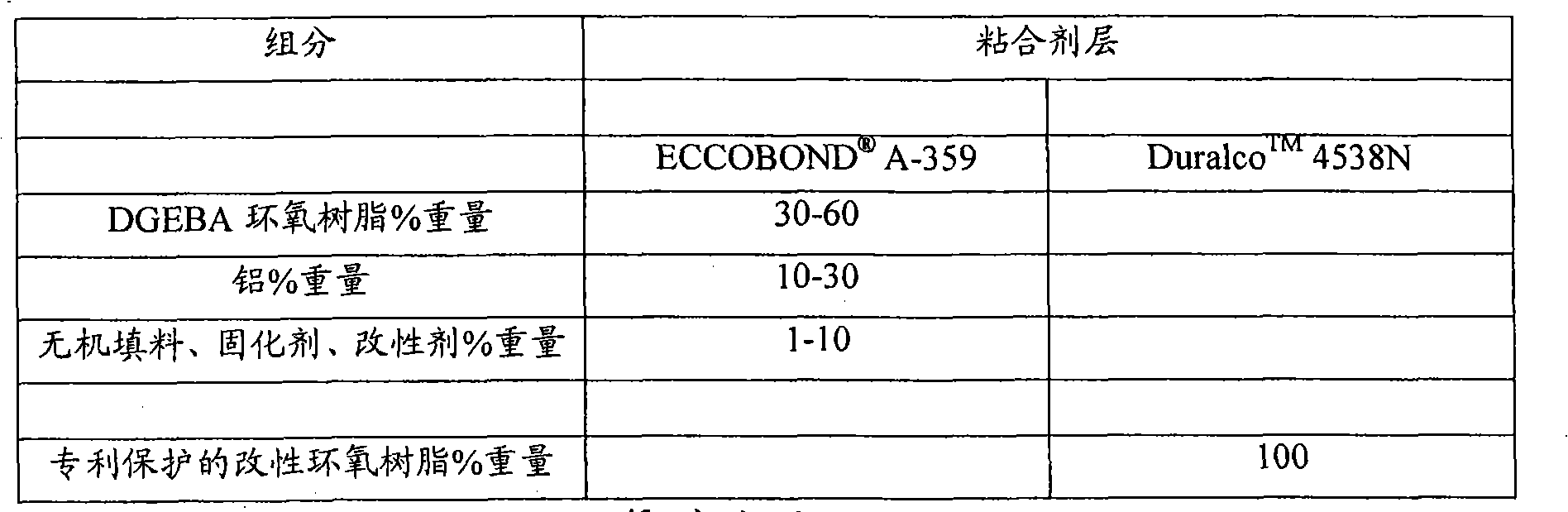
Figure 1 
Figure 2 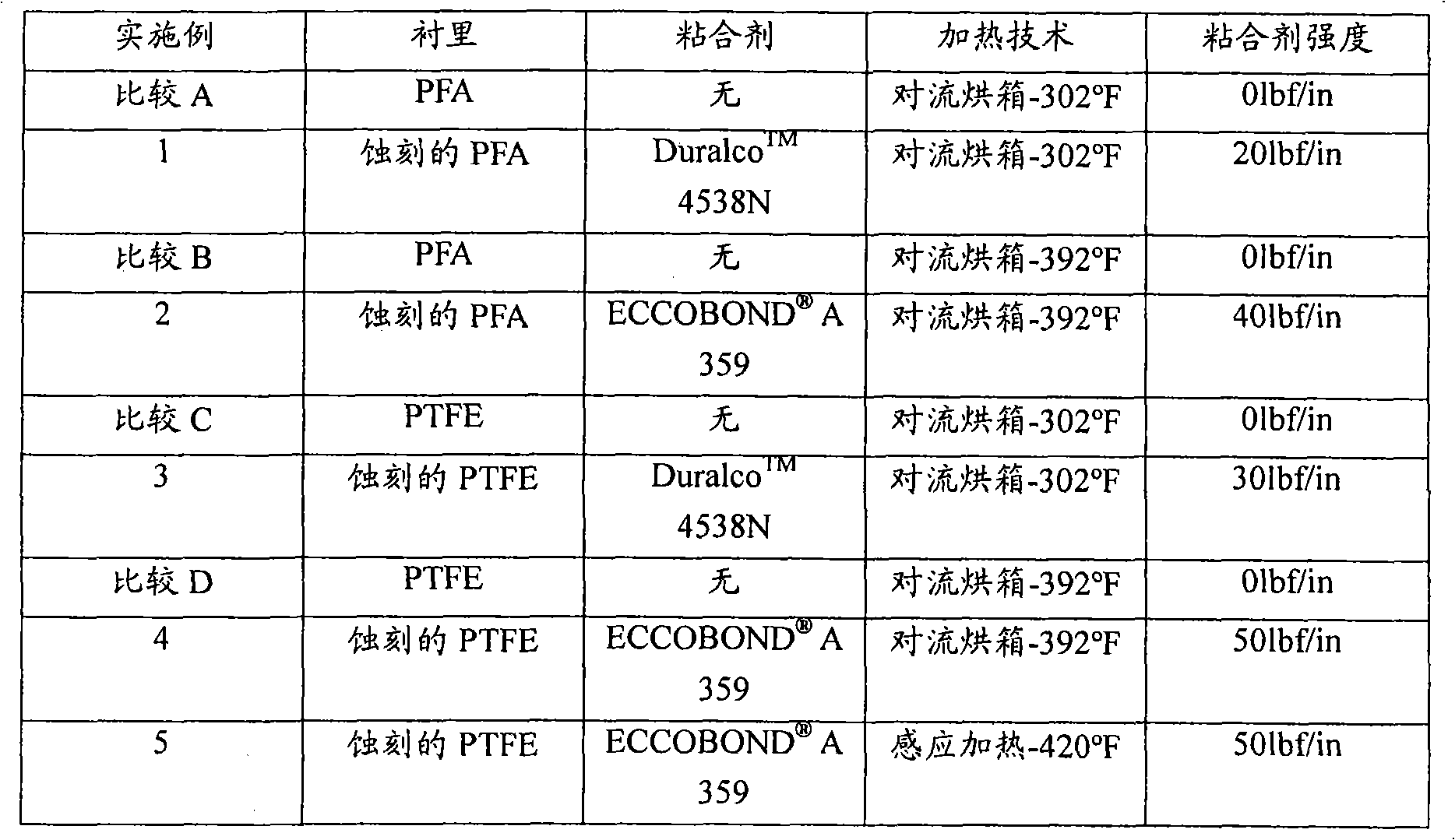
Figure 3
Abstract
Description
technical field
[0001] The present invention relates to a preformed polymeric liner adhered to the surface (eg inner and / or outer surface) of a pipe, especially an oil well tubular, by an adhesive, especially a thermosetting adhesive. The liner may comprise melt processable and non-melt processable fluoropolymers. Background technique
[0002] Pipes used to produce and transport chemicals are subject to corrosion and clogging. An example of such a pipe is the often huge oil pipe. For economical reasons, the tubing is manufactured from carbon steel rather than more expensive corrosion-resistant alloys. Downhole tubing transports oil from deeply buried sediments to the surface, where the hot subsurface environment induces corrosion. Various substances (such as water, sulfur, sulfur dioxide, carbon dioxide) normally present in the oil make it acidic, causing corrosion to occur on the inner surface of the pipe. Even at colder temperatures, long distances of transportation pi...
Examples
Embodiment 1
[0073] Example 1 - Contains Duralco TM 4538N Epoxy PFA
[0074] The preformed PFA liner was chemically etched approximately 1300 microns (50 mils) thick using a sodium in ammonia solution. Subsequent use of Duralco TM A 4538N adhesive coat "coats" the outside of the liner. Slide the epoxy coated liner into the blast tube with a snug "slip fit". Place the lined tube in a standard convection oven preheated to 302°F (150°C). When the sample reached the target temperature of 302°F, the sample was left in the oven for 60 minutes. After removing the sample from the oven and allowing it to cool, the sample was cut into strips and the adhesion strength of the liner to the pipe wall was 20 lbf / in.
Embodiment 2
[0077] Example 2 - Contains ECCOBOND A 359 Epoxy PFA
[0078] The preformed PFA liner was chemically etched approximately 1300 microns (50 mils) thick using a sodium in ammonia solution. Subsequent use of ECCOBOND A 359 adhesive coat "coats" the outside of the liner. Slip the epoxy coated liner into the sandblasted tube with a snug "slip fit". Place the lined tube in a standard convection oven preheated to 392°F (200°C). When the sample reached the target temperature of 392°F, the sample was left in the oven for 15 minutes. After removing the sample from the oven and allowing it to cool, the sample was cut into strips and the adhesion strength of the liner to the pipe wall was 40 lbf / in.
Embodiment 3
[0081] Example 3 - Contains Duralco TM 4538N PTFE
[0082] The preformed PTFE liner was chemically etched approximately 3900 microns (150 mils) thick using a solution of sodium in liquid ammonia. Subsequent use of Duralco TM A 4538N adhesive coat "coats" the outside of the liner. Slip the epoxy coated liner into the sandblasted tube with a snug "slip fit". Place the lined tube in a standard convection oven preheated to 302°F (150°C). When the sample reached the target temperature of 302°F, the sample was left in the oven for 60 minutes. After removing the sample from the oven and allowing it to cool, the sample was cut into strips and the adhesion strength of the liner to the pipe wall was 30 lbf / in.