
Improvements in or relating to joining stretchable fabric portions to one another
A fabric structure and fabric technology, applied to the seams of textile materials, textiles, papermaking, clothing, etc., can solve the problems of reducing the degree of bonding of two pieces of fabrics and the fragmentation of binders
Patent Information
- Authority / Receiving Office
- CN · China
- Patent Type
- Applications(China)
- Current Assignee / Owner
- Publication Date
- 2009-06-17
- Estimated Expiration
- Not applicable · inactive patent
Smart Images
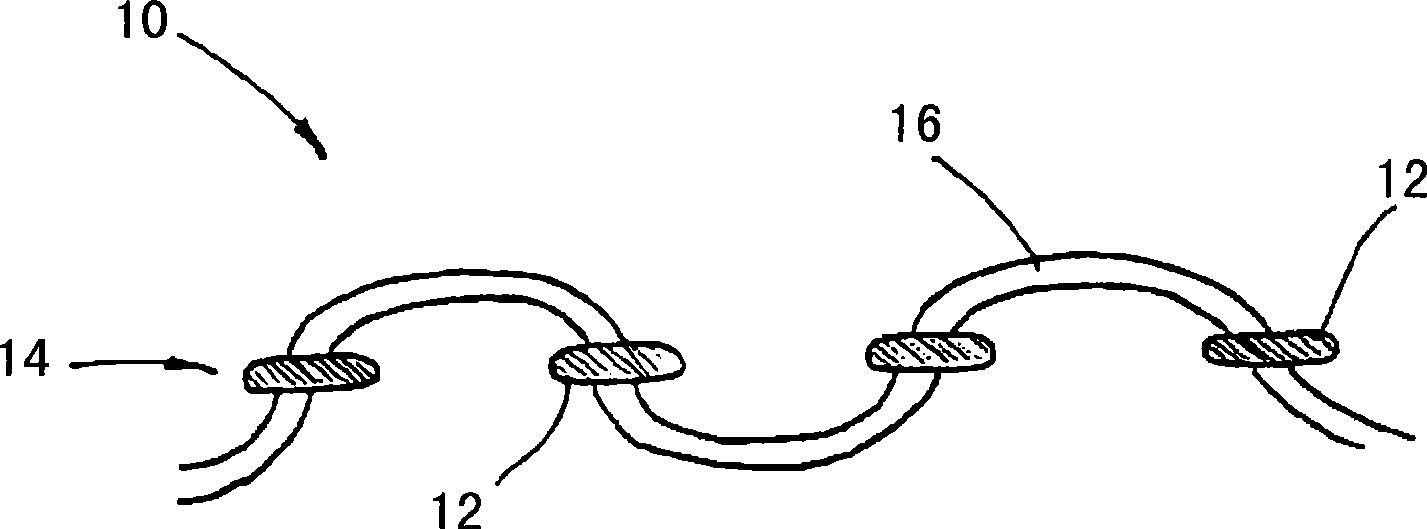
Figure 1 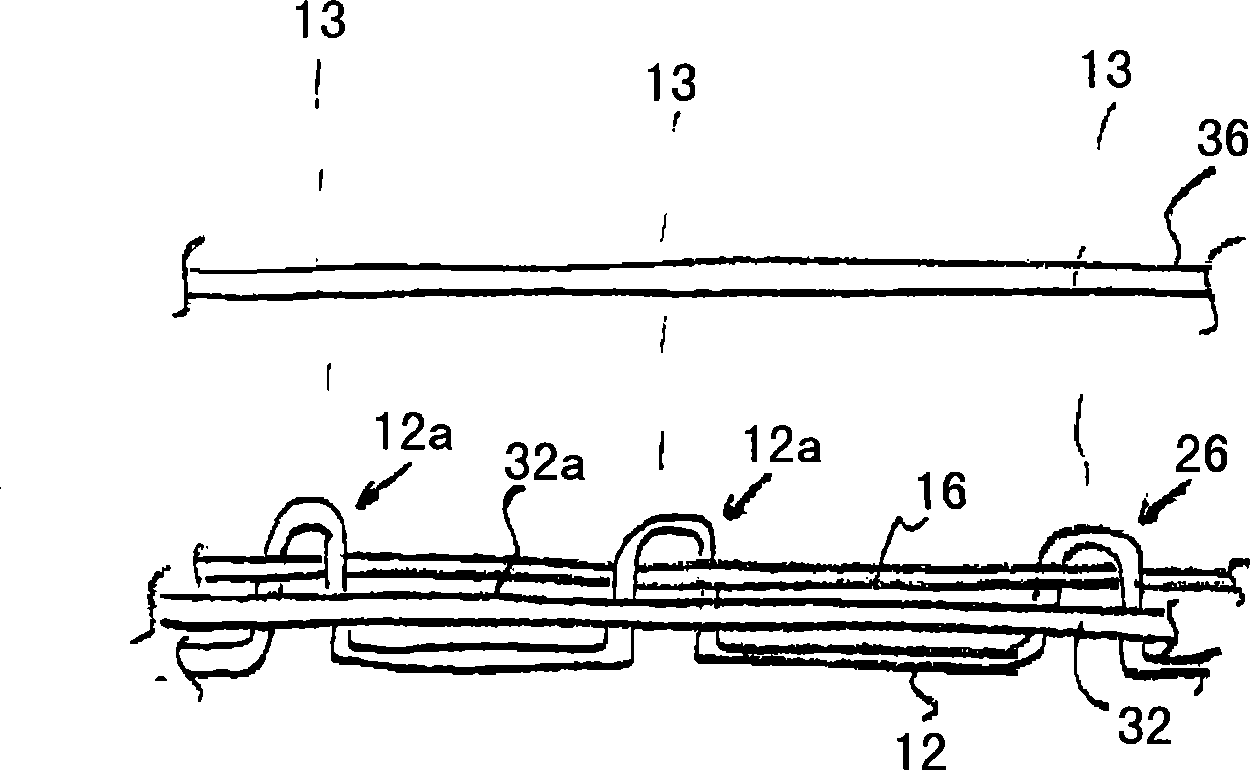
Figure 2 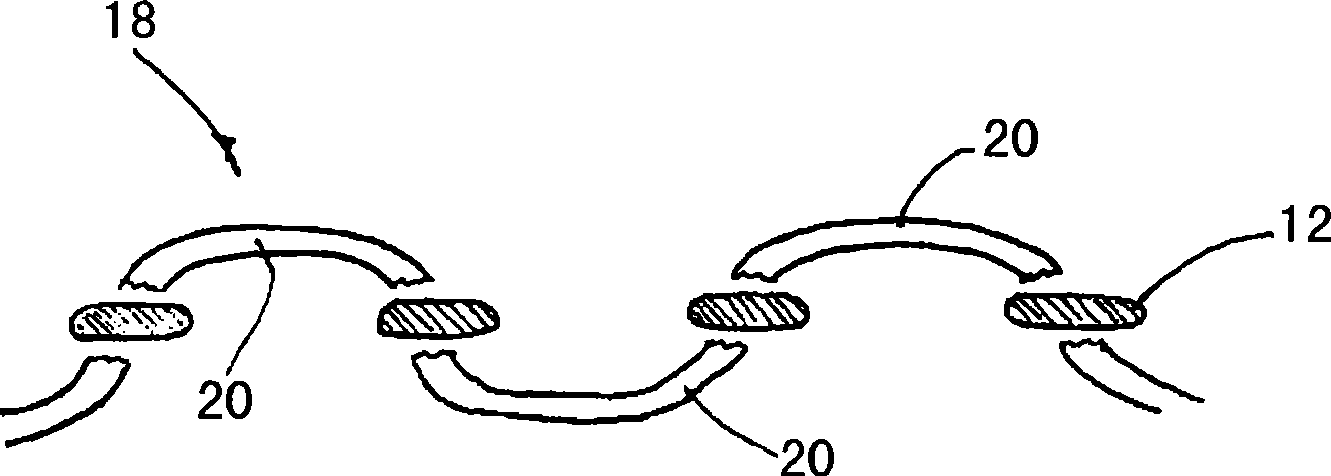
Figure 3
Abstract
Description
technical field
[0001] The present invention relates to a method of joining first and second stretchable fabric portions to each other in a desired configuration, a fabric structure comprising a first fabric portion and a second fabric portion joined to each other in a desired configuration , and garments comprising such fabric structures. Background technique
[0002] In garment production, it is often necessary to join two fabric portions to each other in a desired configuration to make a garment. The bond between any such fabric portions must be of sufficient strength to maintain the fabric portions in a desired configuration, for example, during wear or laundering of the garment.
[0003] It is known to join two fabric parts to each other in a desired configuration using a stitch formation in which one or more sewing threads are stitched through the two fabric parts to join the fabrics together .
[0004] However, making such conventional seaming constructions strong ...
Examples
Embodiment Construction
[0056] As shown schematically in FIG. 1( a ), the suture structure formed by the method according to the first embodiment of the present invention is mainly indicated by reference numeral 10 .
[0057] The first seaming structure 10 is a simple double-stitched seam formed by sewing the infusible first thread 12 (FIG. 1(b)) through the first stretchable fabric portion 32 to define forming a first stitch formation (stitch formation) 14; and by looping the second fusible thread 16 in the first stitch formation 14, so that the first thread 12 and the second fusible thread 16 overlap each other. This is shown more clearly in Figure 1(b), it is to be noted that the second thread 16 extends across (across) the surface 32a of the first fabric portion 32 and is in face contact with said surface 32a, The first line 12 is formed as bridge formations 12 a at a plurality of discrete locations 13 along the second line 16 , each bridge formation spanning over the second line 16 in a bridging...