
Flat-opened bottom-hung window
A flat-opening, bottom-hanging, and flat-opening technology, which is applied in the direction of wing fan layout, can solve the problem of windows being opened in a single way, and achieve the effect of saving indoor space
Patent Information
- Authority / Receiving Office
- CN · China
- Patent Type
- Patents(China)
- Current Assignee / Owner
- Publication Date
- 2013-01-02
Smart Images
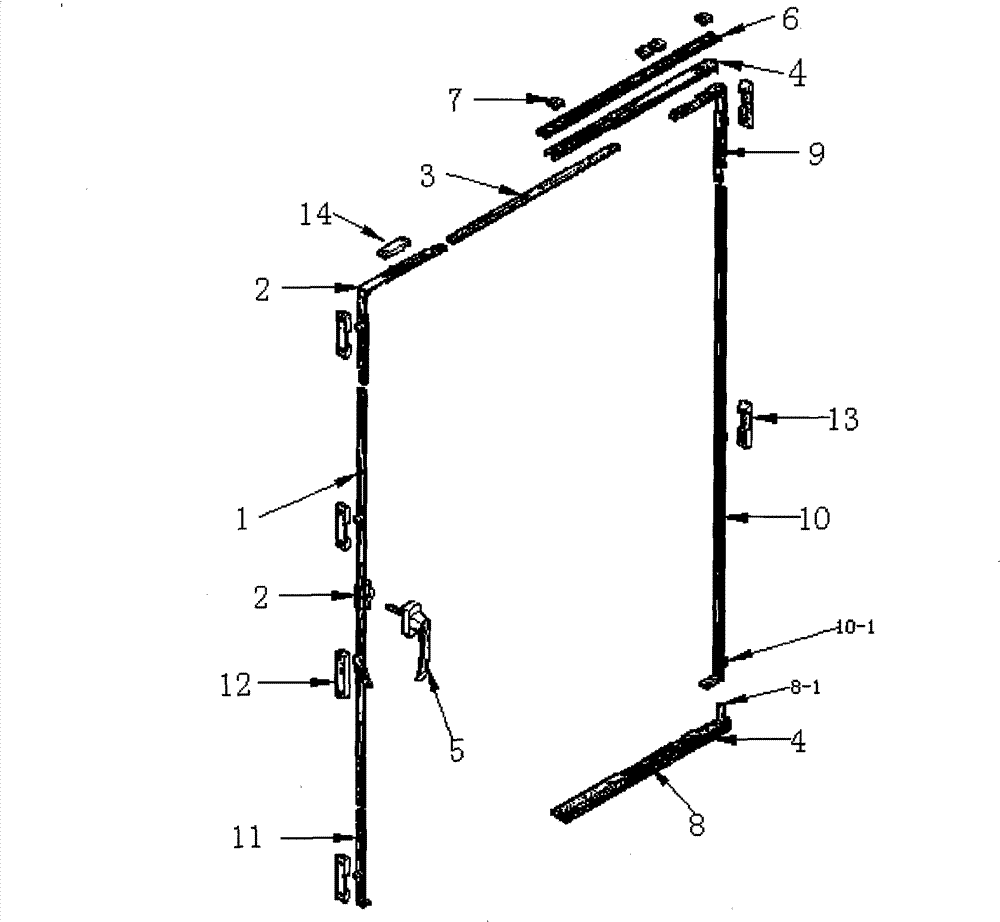
Figure 1 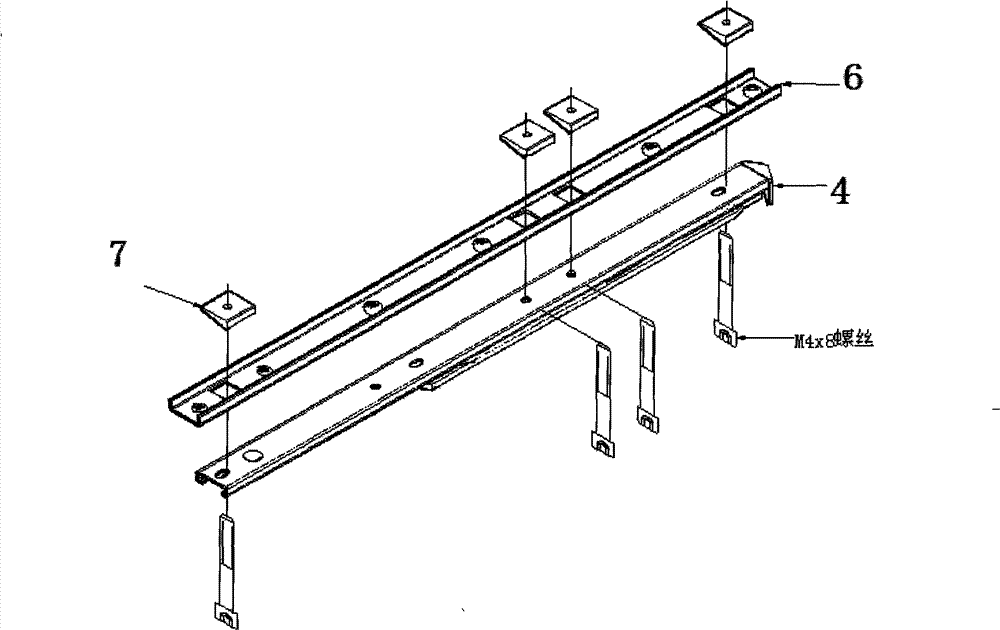
Figure 2 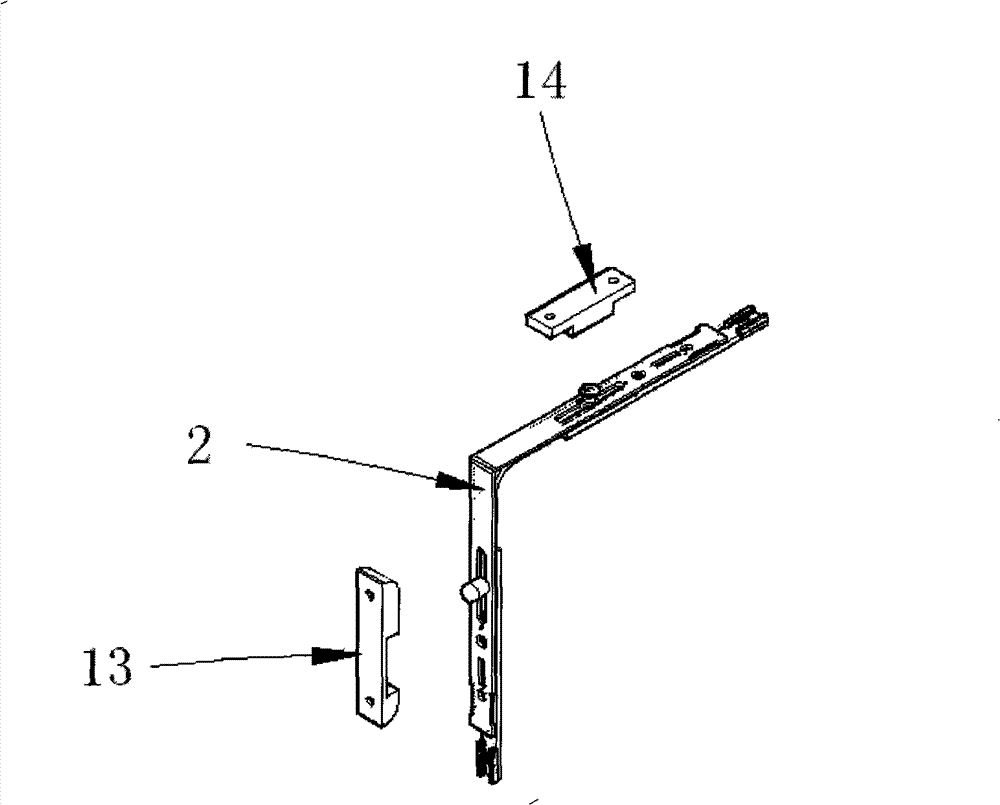
Figure 3
Abstract
Description
technical field
[0001] The invention relates to a casement and bottom-hung window, in particular to an interlocking and interlocking window which can be opened sideways and hung down. Background technique
[0002] For ordinary casement windows or ordinary bottom-hung windows, the sash is connected to the window frame through five-link sliding braces. The handle and the transmission rod are on the other side of the fan relative to the five connecting rods, and the lock seat on the window frame corresponds to the locking point on the transmission rod. The opening method is single, that is, one frame corresponds to one fan, and it is either opened horizontally or hung down. Contents of the invention
[0003] The object of the present invention is to provide a casement and bottom-hung window, that is, to provide an interlocking and interlocking window that can be opened and hung down. The invention solves the problem that the usual window can only be opened in a single way (...
Examples
Embodiment 1
[0047] Such as Figure 1~6 As shown, it is a structural schematic diagram of the hardware mechanism of a casement and bottom-hung window of the present invention. The angle drive type A (2) is installed in the profile notch corresponding to the upper corner of the window sash; in the profile notch corresponding to the vertical side of the sash The transmission rod (1) is installed, and the transmission rod (1) is connected with the angle transmission type A (2) and the height connecting rod (11) using racks, and the gland plate is fixed on the fan at the joint with screws. Angle drive type B (9) is installed on the corner corresponding to the angle drive type A (2) on the upper part of the fan, and a horizontal connecting rod (3) is used between the angle drive type A (2) and the angle drive type B (9). With a rack connection, the gland plate at the joint is fixed on the fan with screws; a five-link sliding brace (4) is installed at the corresponding position on the upper end ...
Embodiment 2
[0049] Such as Figure 7 and 8 As shown, it is a schematic diagram of another hardware structure of a casement bottom-hung window of the present invention, and a schematic diagram of a hardware mechanism of a casement bottom-hung window of the present invention using a guide block. A guide block (21) is installed near the middle of one end, and a "U"-shaped guide groove (22) is installed at one end of the upper pole of the cable-stayed shear bar (8), and the cable-stayed shear bar (8) is installed on the lower edge of the window sash. In the notch of the profile, the five-link sliding brace (4) is installed on the lower edge of the window frame relative to the diagonally-stayed shear bar (8), and is used between the diagonally-stayed shear bar (8) and the five-link sliding brace (4). Riveted and rotatable; the oblique-stayed shear bar (8) is connected with the angle drive type A (2) by a rack, and the gland plate at the joint is fixed on the fan with screws; the guide block (...
Embodiment 3
[0051] Such as Figure 9 and 10 As shown, it is a schematic diagram of another hardware structure of a casement bottom-hung window of the present invention, and a schematic diagram of a hardware mechanism of a casement bottom-hung window of the present invention using corner hinge sleeves. A corner hinge cover (16) is installed, and a corner hinge seat (15) is installed at the position corresponding to the corner hinge cover (16) on the outside of the window frame, and the corner hinge cover (16) and the corner hinge seat (15) Use nut (17) to fasten after mutually assembling; That is, nut (17) can adjust window sash up and down, and corner hinge seat (15) can adjust window sash left and right. A diagonally-stayed shear bar (8) is installed in the profile notch under the window sash; a guide block (21) is installed near the middle of an end of the lower shear bar (8); A "U"-shaped guide groove (22) is installed at one end of the upper layer rod, and one end of the obliquely-s...