
Self-adaptive method for watermarking intensive image texture
An adaptive, image-based technology, applied in image data processing, image data processing, instruments, etc., can solve the problems of increased complexity and low efficiency, and achieve the effect of small visual perception and balanced contradictions
Patent Information
- Authority / Receiving Office
- CN · China
- Patent Type
- Applications(China)
- Current Assignee / Owner
- Publication Date
- 2009-09-16
- Estimated Expiration
- Not applicable · inactive patent
Smart Images
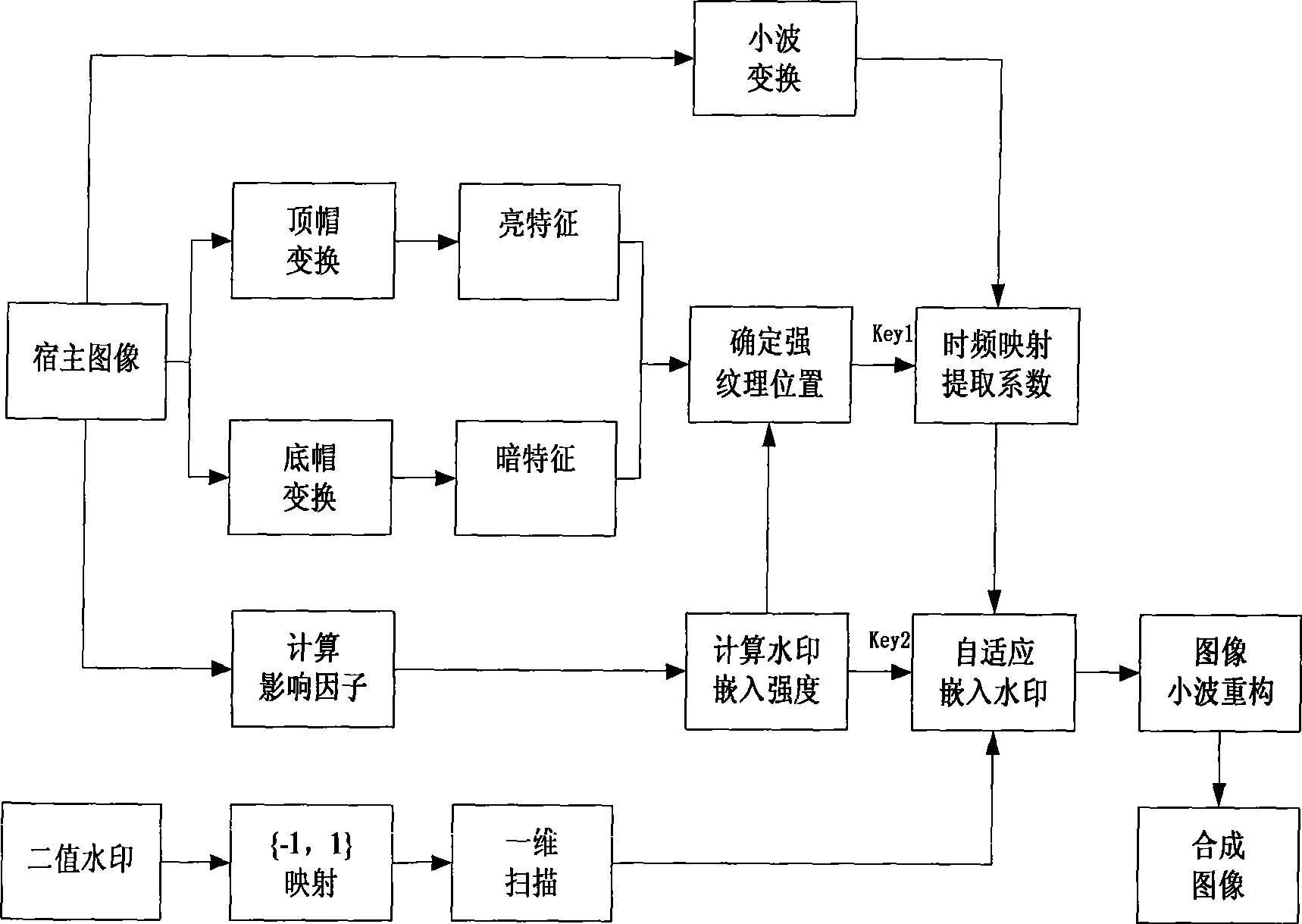
Figure 1 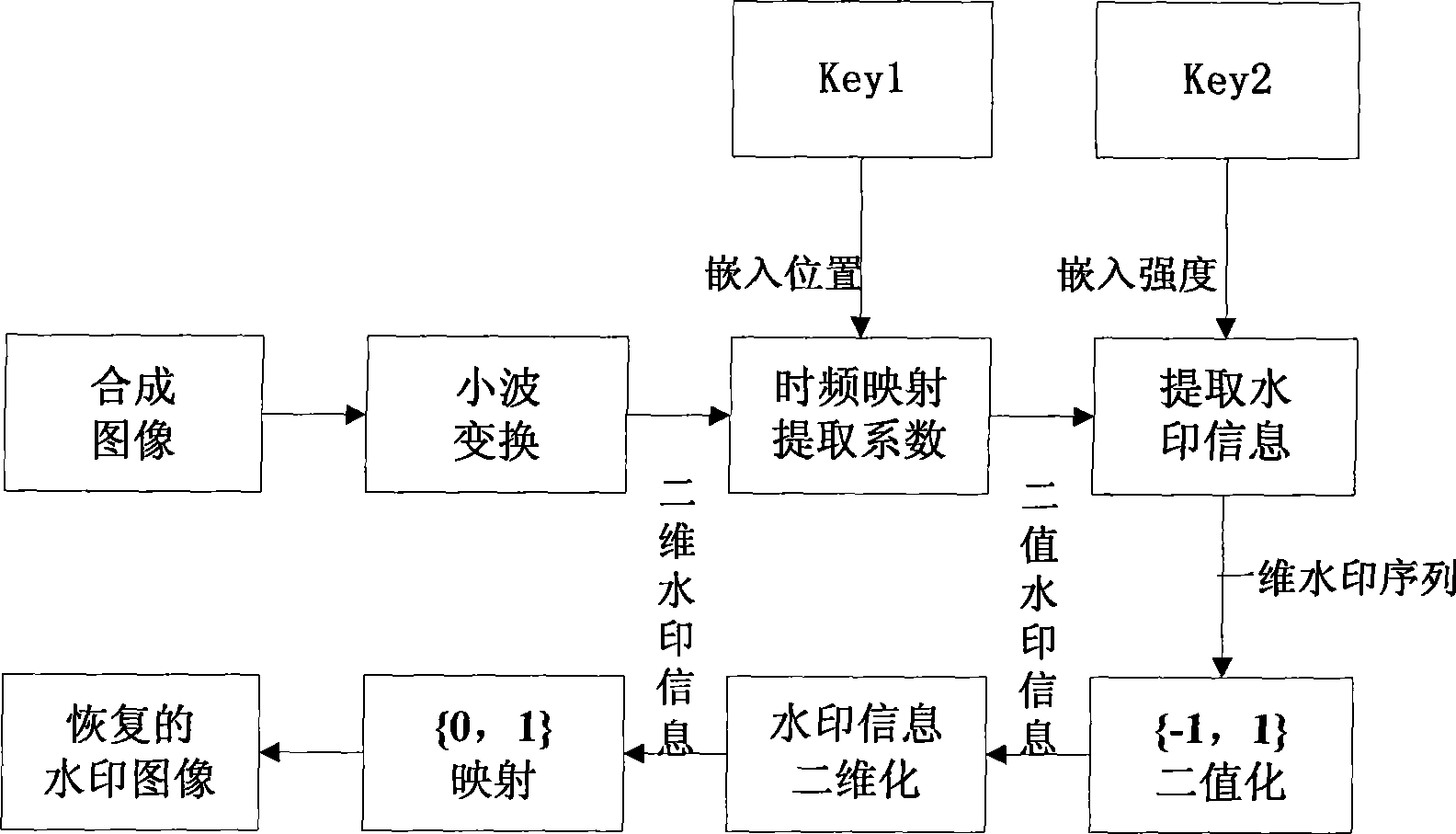
Figure 2 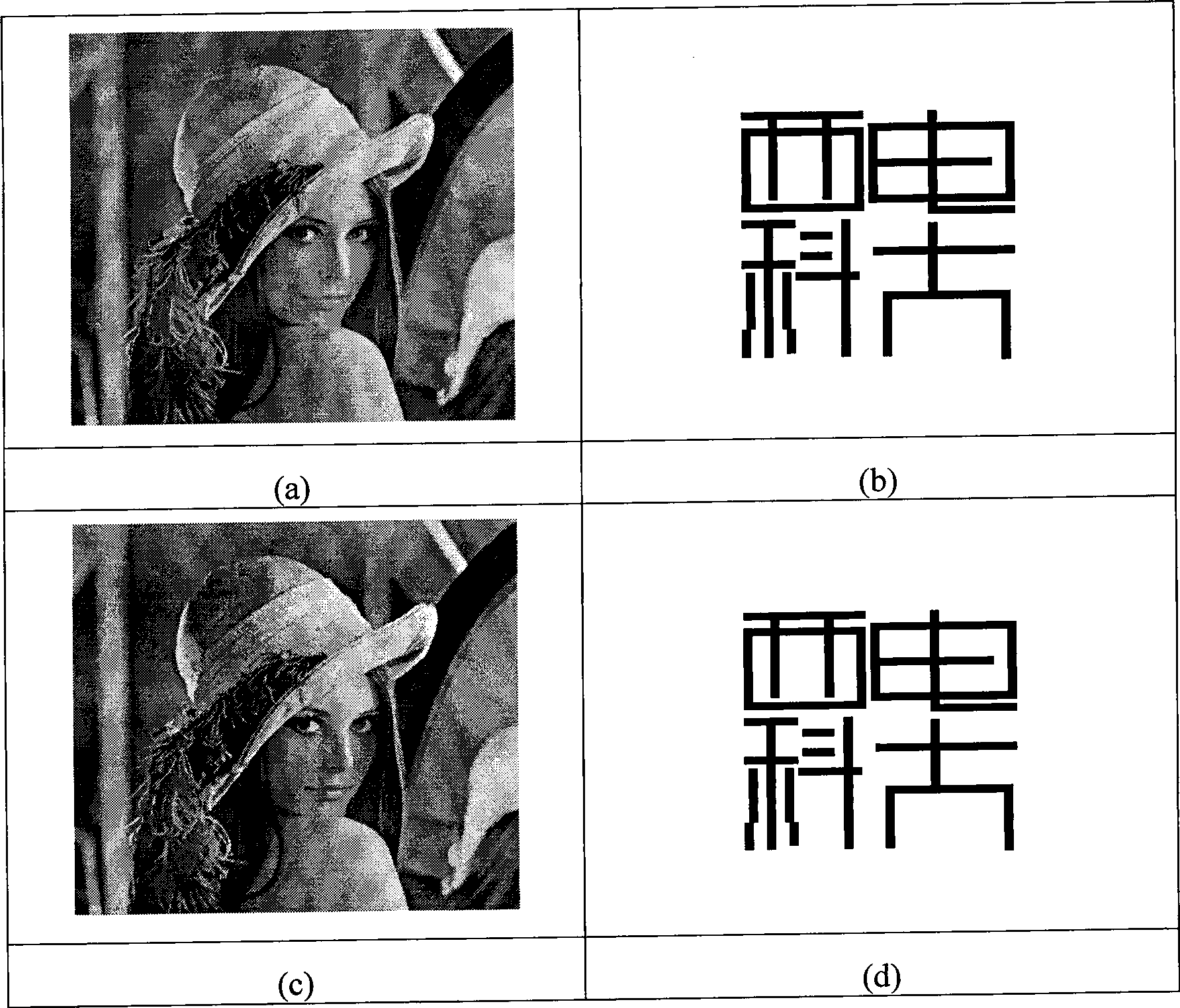
Figure 3
Abstract
Description
technical field
[0001] The invention belongs to the field of image information processing and relates to a digital image watermarking method, which can be used to provide technical guarantee for the security of digital multimedia product copyright. Background technique
[0002] Mathematical morphology, as an emerging nonlinear image processing technology, has received widespread attention and has been successfully applied to many aspects of image processing, such as image edge detection, image segmentation, image classification, object detection, etc. However, it is relatively rare, and the relevant literature includes:
[0003] Sedaaghi, M.H. et al. proposed a morphological watermarking algorithm in Morphological watermarking[J].Electronics Letters.2005, 5.41(10): Embedding {-1, 0, 1} watermark into the least important bit plane of the host image, Use the hit-or-miss opening transformation (hit-or-miss opening) operation to detect the watermark signal, which belongs to the...
Examples
Embodiment Construction
[0038] 1. Introduction to basic theory
[0039] 1. Mathematical Morphology
[0040] Mathematical morphology is a mathematical tool that has developed rapidly in recent years and is widely used to analyze images based on morphology. The basic idea is to use structural elements with a certain shape to measure and extract the corresponding shape in the image to achieve image analysis and recognition. the goal of. The mathematical basis and language used in mathematical morphology are set theory, which can simplify image data, maintain shape characteristics, remove irrelevant structures, and have a natural parallel implementation structure.
[0041] Binary Morphology regards a binary image as a collection and explores it with structural elements. It is a processing process for collections. The algorithm is simple, suitable for parallel processing, easy to implement in hardware, and suitable for binary processing. Image segmentation, thinning, skeleton extraction, edge extraction...