
Crutch with controllable rod length through pressure sensing and method thereof for controlling rod length
A technology for levers and crutches, which is applied to walking sticks, travel products, applications, etc., can solve the problems of inconvenient use, not necessarily able to adjust the user's height, general products and methods without suitable structures and methods, etc.
Patent Information
- Authority / Receiving Office
- CN · China
- Patent Type
- Applications(China)
- Current Assignee / Owner
- Publication Date
- 2011-05-25
Smart Images
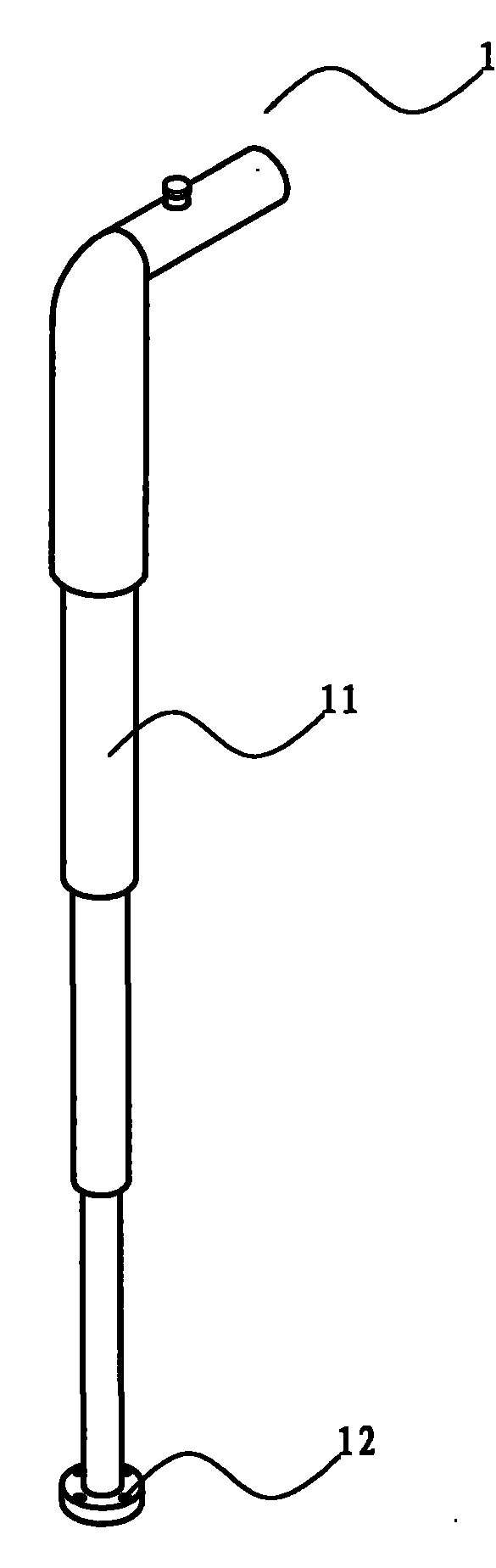
Figure 1 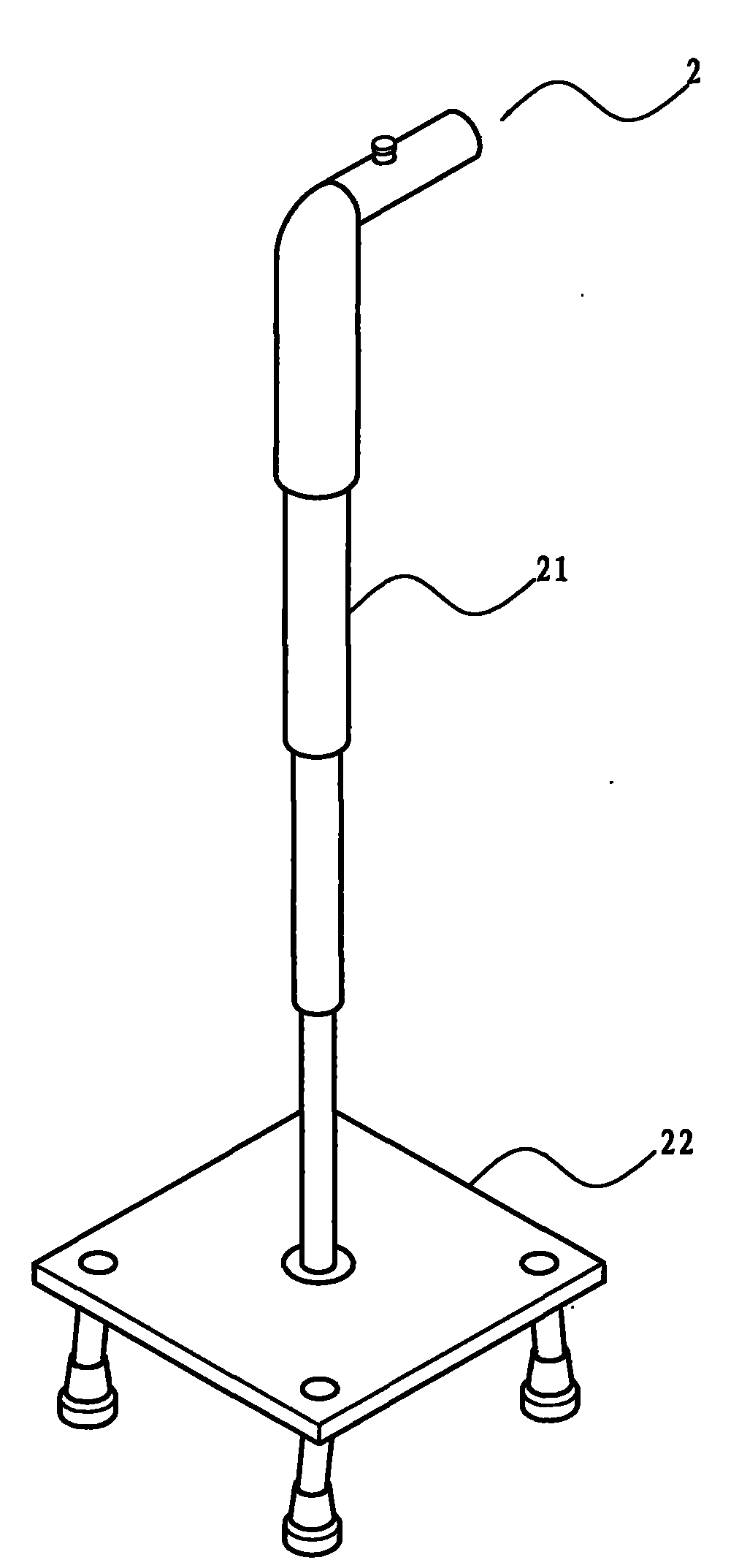
Figure 2 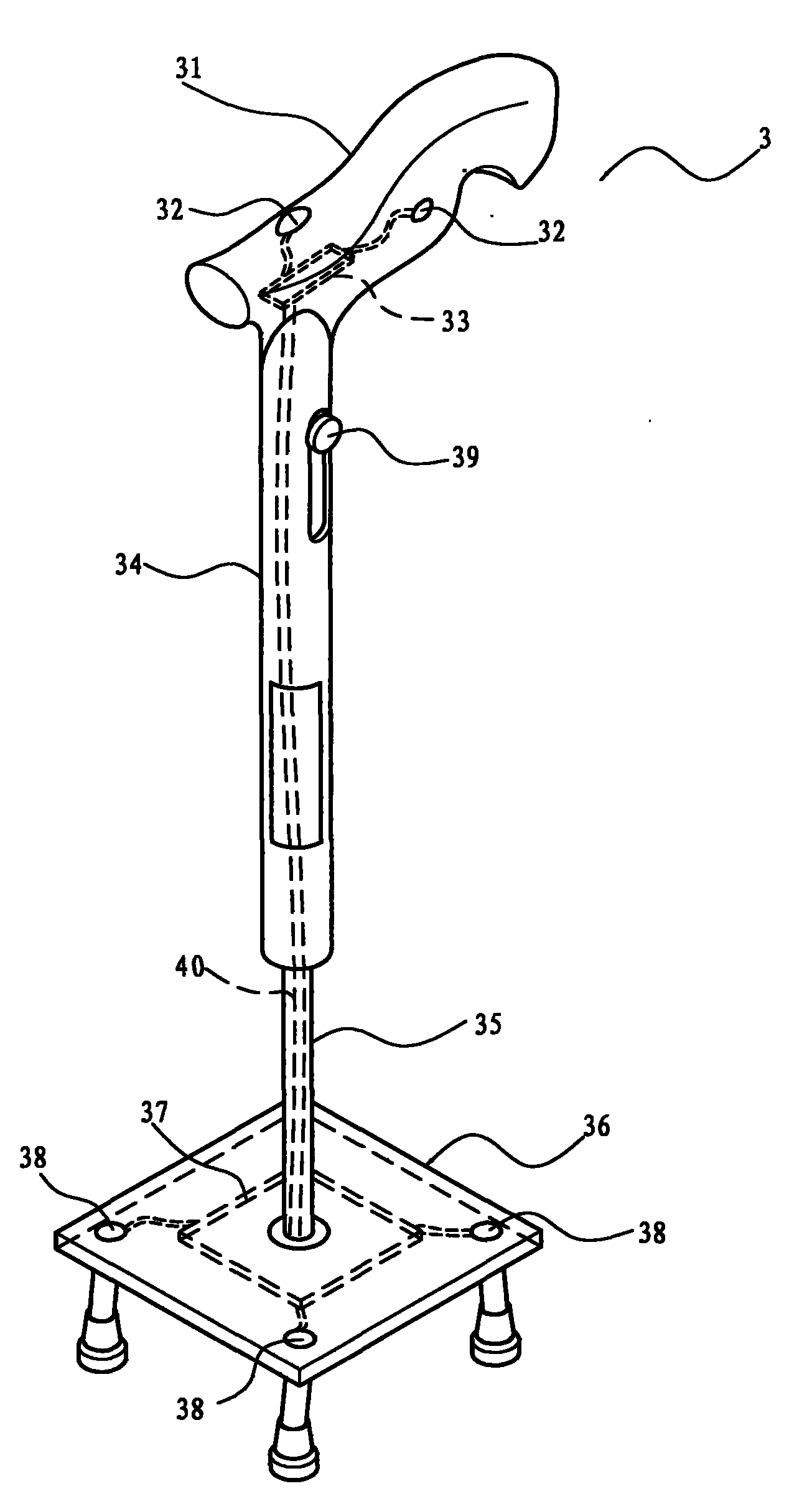
Figure 3
Abstract
Description
technical field
[0001] The invention relates to a crutch with the function of length adjustment and its length adjusting method, in particular to a crutch and its length adjusting method for adjusting its own length according to the inclination angle of the crutch and the pressure of the crutch contacting the ground. Background technique
[0002] see Figure 1A , Figure 1B as shown, Figure 1A is a schematic diagram of a single-leg telescoping crutch of the prior art, Figure 1B is a schematic diagram of a prior art multi-leg telescoping crutch. In the prior art, crutches are sharp tools for assisting people with disabilities to walk. Early crutches were mostly single-legged crutches 1. However, in order to make the single-legged crutches 1 convenient for users to store and carry, the manufacturer developed a multi-segment single-legged crutches 1, which consists of columns 11 with different apertures connected in series, and has The ability of stretching to adjust the l...
Examples
Embodiment Construction
[0062] In order to further explain the technical means and effects of the present invention to achieve the intended purpose of the invention, below in conjunction with the accompanying drawings and preferred embodiments, the pressure-sensitive crutch and the method for controlling the length of the rod proposed by the present invention Its specific implementation, structure, method, steps, features and effects thereof are described in detail below.
[0063] The aforementioned and other technical contents, features and effects of the present invention will be clearly presented in the following detailed description of preferred embodiments with reference to the drawings. Through the description of the specific implementation mode, a more in-depth and specific understanding of the technical means and effects adopted by the present invention to achieve the intended purpose can be obtained. However, the accompanying drawings are only for reference and description, and are not used t...