
Device and method for reducing oxidation degree of adsorbed solvent
A technology of degree of oxidation and adsorption of solvents, applied in chemical instruments and methods, separation methods, separation of dispersed particles, etc., can solve problems such as damage, accelerated oxidation and decomposition reactions, poor thermal conductivity, etc.
Patent Information
- Authority / Receiving Office
- CN · China
- Patent Type
- Applications(China)
- Current Assignee / Owner
- Publication Date
- 2011-10-19
- Estimated Expiration
- Not applicable · inactive patent
Smart Images
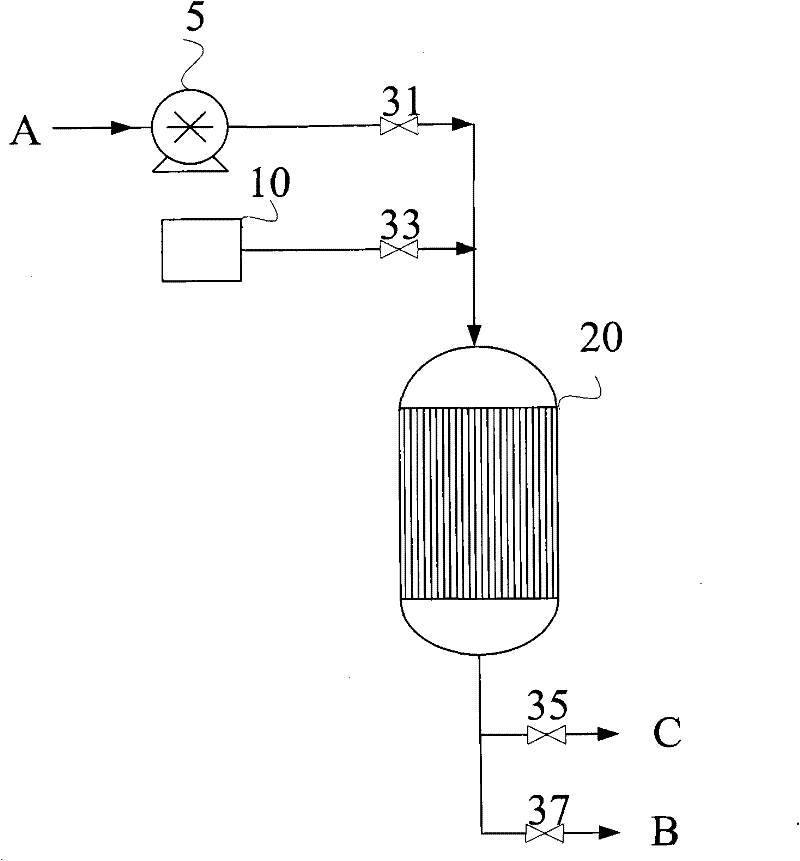
Figure 1 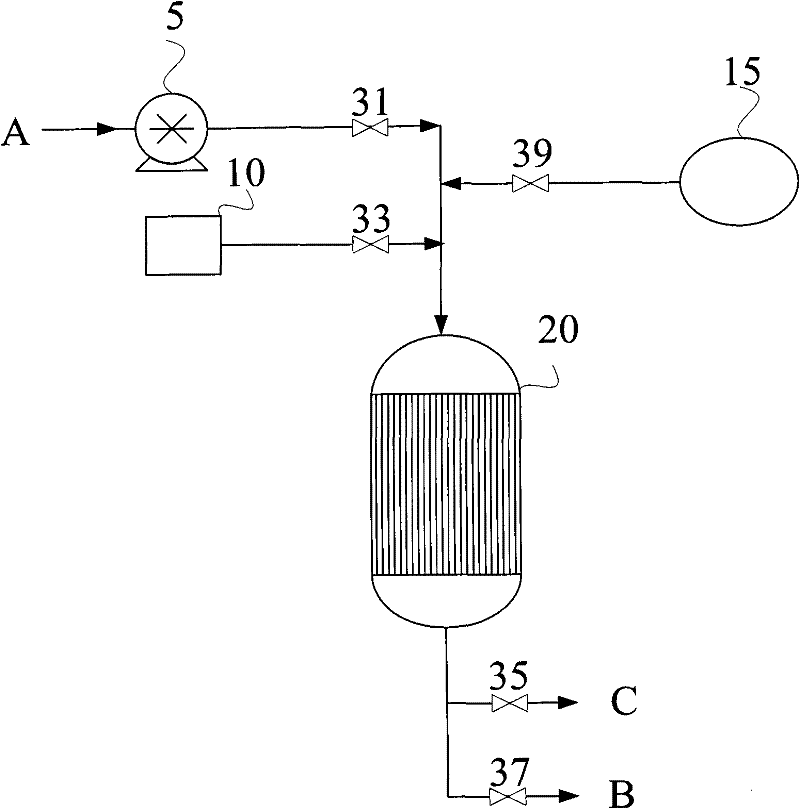
Figure 2 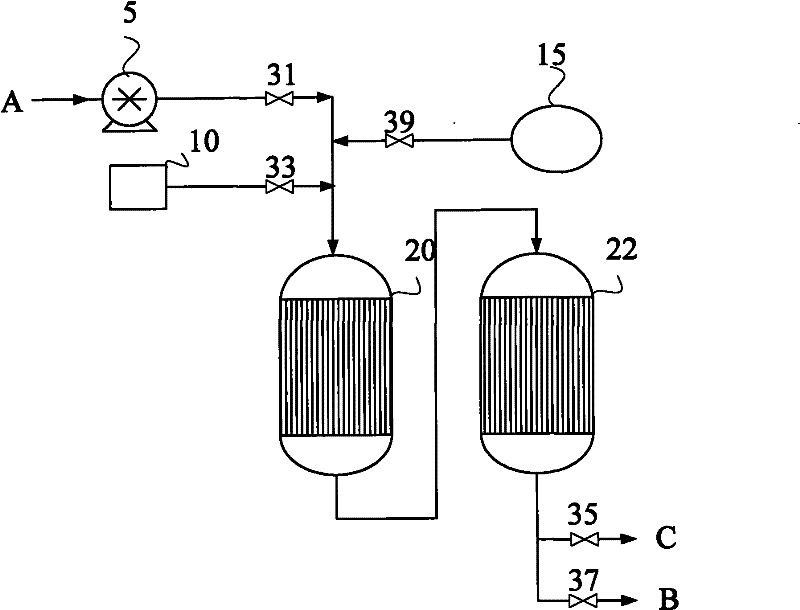
Figure 3
Abstract
Description
technical field
[0001] The invention relates to a device and a method capable of effectively reducing the oxidation degree of an adsorbed solvent, in particular to a recovery device and a method for the adsorbed solvent containing ketone organic solvents. Background technique
[0002] Greenhouse gas (CO 2 ) reduction and resource reuse are issues that the world must face together. Due to the rapid development of the industry in the past and the environmental protection policy that focused on the reduction rate, the industry did not pay attention to resources when dealing with volatile organic waste gases (VOCs). Recycling and reuse, while the main treatment method is burning.
[0003] However, at present, due to the continuous increase in international raw materials, it is more and more common to use activated carbon adsorption and desorption systems as solvent recovery in organic waste gas; but because ketone solvent gases in organic waste gas can easily cause carbon bed f...
Examples
Embodiment 1
[0047] See figure 2 , which is a specific embodiment of a device for reducing the degree of oxidation of the adsorbed solvent in the present invention, which includes a fan 5 , a steam generating unit 10 , an inert gas generating unit and an activated carbon adsorption and desorption unit 20 .
[0048]The operation of the present invention to purify the organic waste gas to be treated is as follows. The plurality of valves 31, 33, 35, 37 and 39 in the device are opened or closed as required. First, the organic waste gas is pumped from the air inlet A through the fan 5, and then The valve 31 enters the activated carbon adsorption-desorption unit 20, and the adsorption procedure is carried out in the activated carbon adsorption-desorption unit 20, that is, the organic matter (comprising ketone solvent) in the organic waste gas is the The activated carbon is absorbed, and the clean air after purification flows out through the air outlet B through the valve 37; when the adsorptio...
Embodiment 2
[0051] See image 3 , which is another specific embodiment of a device for reducing the degree of oxidation of the adsorbed solvent in the present invention, which includes a fan 5, a steam generating unit 10, an inert gas generating unit and two activated carbon adsorption and desorption units 20, 22 (And these activated carbon adsorption and desorption units are connected in series).
[0052] The operation of the present invention to purify the organic waste gas to be treated is as follows. The plurality of valves 31, 33, 35, 37 and 39 in the device are opened or closed as required. First, the organic waste gas is pumped from the air inlet A through the fan 5, and then The valve 31 enters these activated carbon adsorption and desorption units 20, 22, and the adsorption procedure is carried out in these activated carbon adsorption and desorption units 20, 22, that is, the organic substances (comprising ketone solvents) in the organic waste gas are absorbed and desorbed by the...
Embodiment 3
[0055] See Figure 4 , which is another specific embodiment of a device for reducing the degree of oxidation of the adsorbed solvent in the present invention, which includes a fan 5, a steam generating unit 10, an inert gas generating unit and two activated carbon adsorption and desorption units 20, 22 (And these activated carbon adsorption and desorption units are connected in parallel).
[0056] The operation of the present invention to purify the organic waste gas to be treated is as follows. The plurality of valves 31, 32, 33, 34, 35, 36, 37, 38, 39 and 40 in the device are opened or closed as required. First, the organic waste gas is removed from the The air inlet A is pumped through the fan 5, and enters the activated carbon adsorption-desorption units 20, 22 through the valves 31, 32, and the adsorption process is carried out in these activated carbon adsorption-desorption units 20, 22, that is, the organic matter in the organic waste gas (comprising ketone solvents) i...