
Preparation method and application of bamboo charcoal loaded au-tio2 composite material
A composite material, au-tio2 technology, applied in chemical instruments and methods, other chemical processes, water/sludge/sewage treatment, etc., can solve the problems of poor ammonia nitrogen removal ability and insignificant micro-pollution removal effect, and achieve preparation Simple method, rich pore distribution characteristics, high specific surface area effect
Patent Information
- Authority / Receiving Office
- CN · China
- Patent Type
- Applications(China)
- Current Assignee / Owner
- Publication Date
- 2011-12-28
- Estimated Expiration
- Not applicable · inactive patent
Smart Images
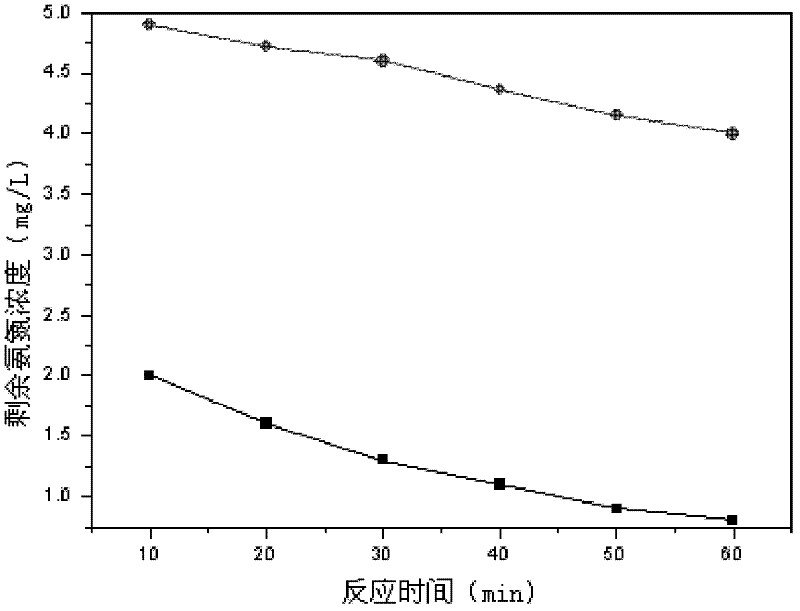
Figure 1 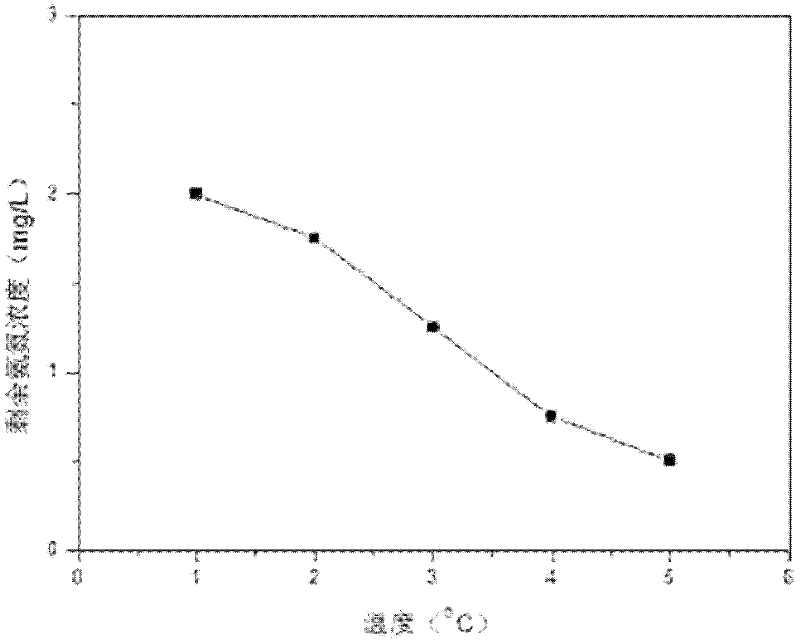
Figure 2 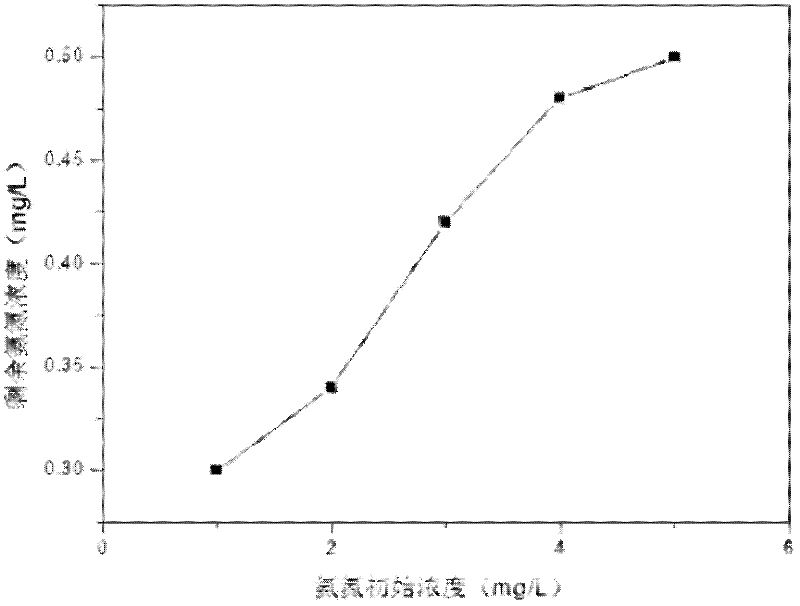
Figure 3
Abstract
Description
technical field
[0001] The present invention relates to a kind of Au-TiO 2 -The preparation method and application of the composite material of bamboo charcoal. Background technique
[0002] In recent years, with the rapid development of the economy, most of the surface water and groundwater in my country have been polluted to varying degrees, and ammonia nitrogen is one of the main pollutants. If the polluted source water is not treated or treated properly, the ammonia nitrogen content in the effluent water from the waterworks will be high, which will cause the growth of nitrosifying bacteria and nitrifying bacteria in the pipe network, thus making the nitrate and nitrite in the pipe network content exceeded the standard. Excessive nitrates can cause methemoglobinemia in infants, and when nitrate nitrogen (NO 3 -N) When the content is higher than 10mg / L, the red blood cells cannot carry oxygen and cause the baby to suffocate and die; in addition, after the conversion of ...
Examples
specific Embodiment approach 1
[0017] Specific implementation mode 1: This implementation mode is bamboo charcoal loaded Au-TiO 2 The preparation method of composite material, it is realized through the following steps:
[0018] 1. Au-TiO 2 Preparation of nanomaterials: the TiO 2 The nano-powder is uniformly dispersed until the pH value is 8-9 and the concentration is 8-15g / L HAuCl 4 solution, then let it stand for 1-3 hours, then add ammonia water and soak for 1-3 hours, then filter, and then wash the precipitate on the filter paper until the filtrate is neutral to obtain Au-TiO 2 preform, and then Au-TiO 2 The preform is dried at 100°C-115°C for 12-16h, and then calcined at 400°C-600°C for 3-6h to obtain Au-TiO 2 Nanomaterials, among them, control TiO 2 Nanopowder quality and HAuCl 4 The ratio of solution volume is 1g: 8 ~ 15mL, the addition of ammonia water and HAuCl 4 The volume ratio of the solution is 1:1;
[0019] 2. Bamboo charcoal loaded Au-TiO 2 Preparation of composite materials: a, the ...
specific Embodiment approach 2
[0022] Specific embodiment two: the difference between this embodiment and specific embodiment one is that in step one, TiO 2The nano powder is evenly dispersed to a concentration of 10g / L HAuCl with a pH value of 8-9 4 in solution. Other steps and parameters are the same as those in Embodiment 1.
specific Embodiment approach 3
[0023] Embodiment 3: This embodiment is different from Embodiment 1 or 2 in that ammonia water is added in step 1 and soaked for 2 hours. Other steps and parameters are the same as those in Embodiment 1 or Embodiment 2.