
Preparation method of high-flowing high ethylene content polypropylene randon transparent copolymer resin
A technology of transparent polypropylene and random copolymerization, applied in the field of synthetic resin, can solve the problems of low content of comonomer, influence on application, increase of solvent extraction amount of resin products, etc., and achieves simple production process, convenient implementation and good transparency. Effect
Patent Information
- Authority / Receiving Office
- CN · China
- Patent Type
- Applications(China)
- Current Assignee / Owner
- Publication Date
- 2012-04-04
Smart Images
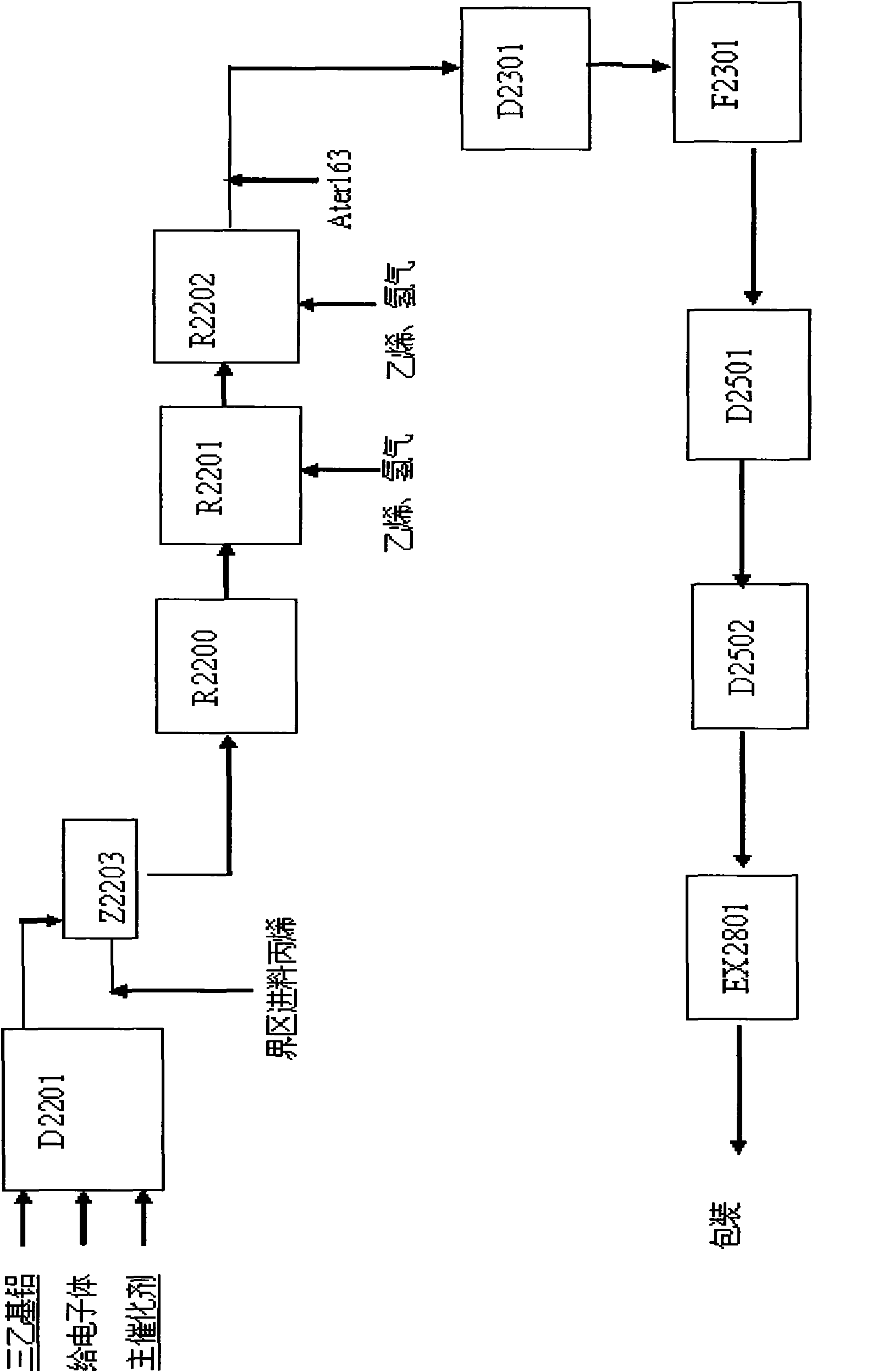
Figure 1 
Figure 2 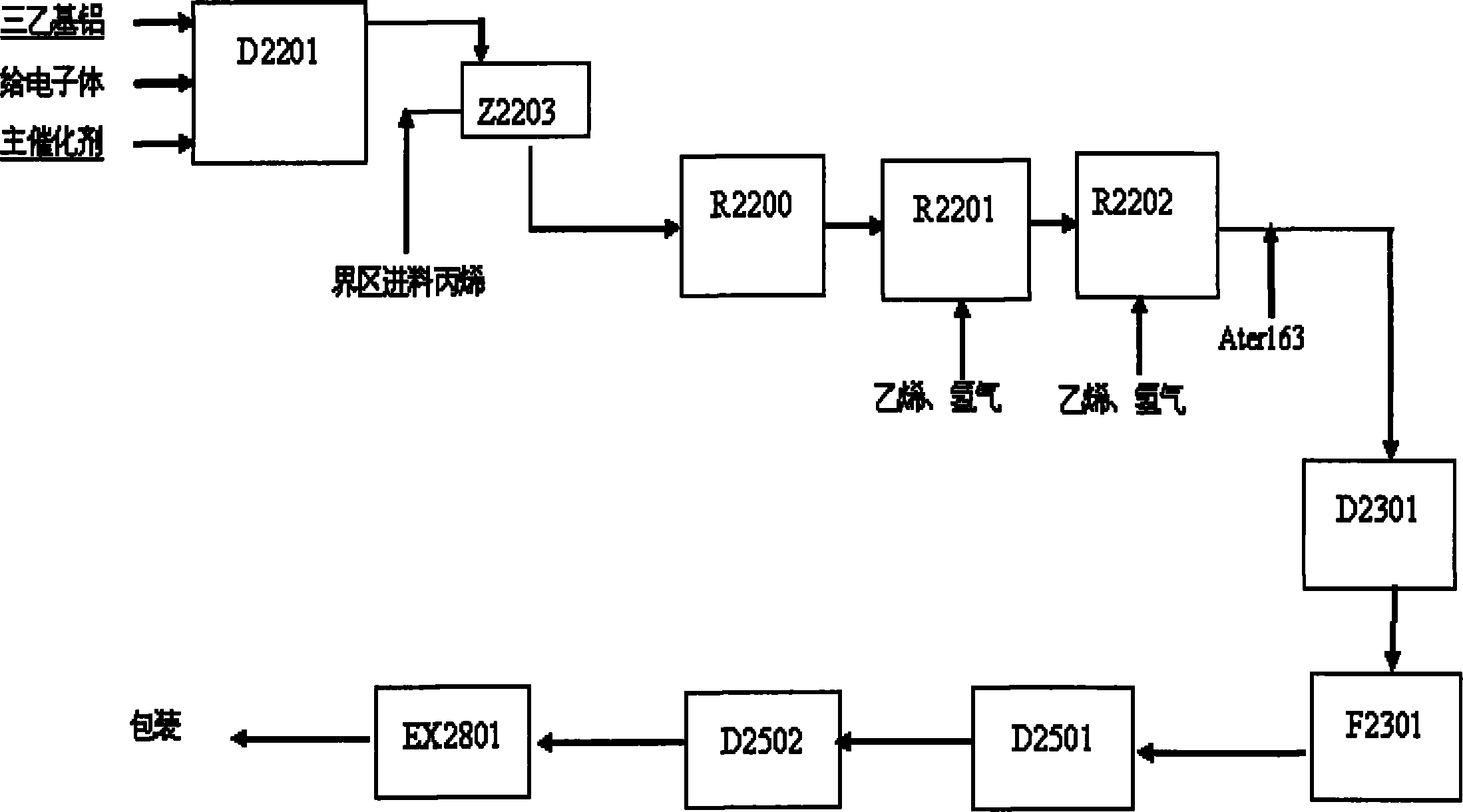
Figure 3
Abstract
Description
technical field
[0001] The invention relates to a preparation method of random copolymerized transparent polypropylene resin with high flow (flow rate 14-20g / 10min) and high ethylene content (ethylene content 3.6-4.0%), belonging to the field of synthetic resins. Background technique
[0002] In recent years, transparent polypropylene has developed rapidly and has been widely used in various aspects such as culture, medical treatment, and food packaging. It is developed in the direction of high transparency, high transparency and high mechanical properties.
[0003] The improvement of fluidity will reduce the impact toughness of the product. Therefore, it is necessary to increase the content of comonomer to compensate for the loss of toughness. However, due to the limitation of polymerization technology, the content of comonomer in random copolymerized transparent polypropylene is generally low. In addition, the increase of the comonomer will increase the solvent extraction...
Examples
Embodiment 1
[0028] The CS catalyst is added to the pre-contact tank D2201 at 120g / h, according to the ratio of triethylaluminum flow / propylene flow ratio of 0.14kg / kg, and external electron donor flow / propylene flow ratio of 0.1kg / kg, respectively. The complex formed by thorough stirring and mixing enters the online mixer Z2203 and mixes with cold propylene (6t / h), then flows into the pre-polymerization reactor R2200, reacts at 20°C and 3.4Mpa pressure for 4min, and then enters a loop polymerization reaction In the R2201, add ethylene and hydrogen at the same time, control the ethylene flow rate to 30% of the total flow rate, and the hydrogen concentration to be 0.13-0.15% (V / V). Enter the two-loop polymerization reactor, the reaction conditions of the two-loop polymerization reactor are the same as that of the ring, the ethylene flow rate is controlled to be 70% of the total flow rate, the hydrogen concentration is 0.13-0.15% (V / V), the reaction time is 0.6h, and the polymerization reacti...
Embodiment 2
[0030] The CS catalyst is added to the pre-contact tank D2201 at 120g / h, according to the ratio of triethylaluminum flow / propylene flow ratio of 0.2kg / kg and external electron donor flow / propylene flow ratio of 0.08kg / kg. The complex formed by thorough stirring and mixing enters the online mixer Z2203 and mixes with cold propylene (6t / h), then flows into the pre-polymerization reactor R2200, reacts at 20°C and 3.4Mpa pressure for 4min, and then enters a loop polymerization reaction In the R2201, add ethylene and hydrogen at the same time, control the flow rate of ethylene to be 50% of the total flow rate, and the concentration of hydrogen gas to be 0.12-0.15% (V / V). Enter the two-loop polymerization reactor, the reaction conditions of the two-loop polymerization reactor are the same as that of the ring, the ethylene flow rate is controlled to be 50% of the total flow rate, the hydrogen concentration is 0.12-0.15% (V / V), the reaction time is 0.6h, and the polymerization reaction...