
Decision method for rolling optimization of wind and light storage cooperative scheduling
A collaborative scheduling and rolling optimization technology, applied in electric vehicle charging technology, instruments, data processing applications, etc., can solve the problems of increased peak-to-valley difference, excessive power generation at night, and constraints
Patent Information
- Authority / Receiving Office
- CN · China
- Current Assignee / Owner
- Publication Date
- 2012-06-20
Smart Images
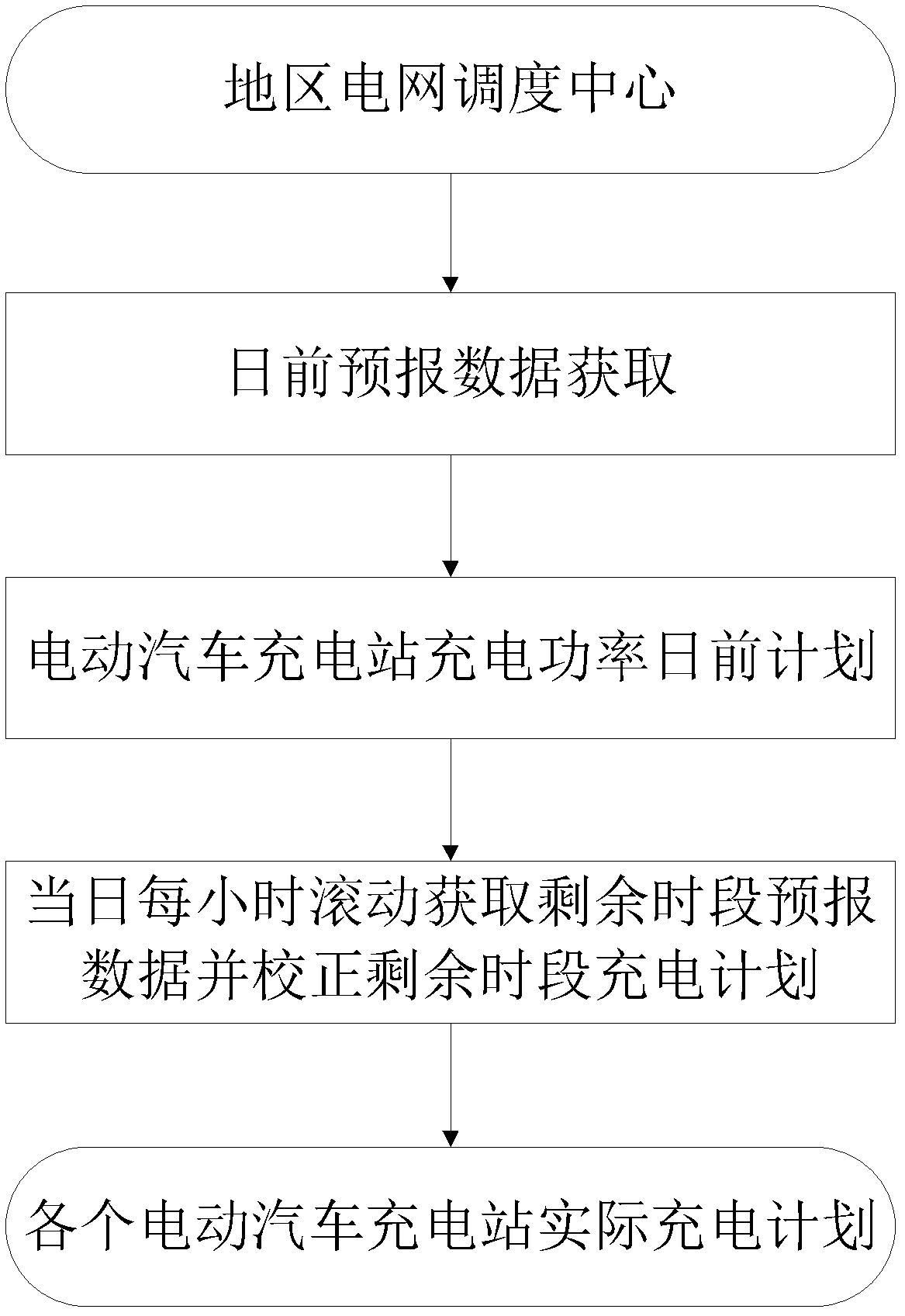
Figure 1 
Figure 2 
Figure 3
Abstract
Description
Technical field
[0001] The invention relates to a rolling optimization decision-making method of wind-solar-storage cooperative scheduling. Background technique
[0002] The technological development of renewable energy power generation methods such as wind power and photovoltaic power generation has gradually matured, and the proportion of power generation capacity has increased year by year. However, wind energy, solar energy and other energy sources have the characteristics of randomness and intermittentness. In particular, wind power generation has the characteristics of more power generation at night and lower reverse peak regulation characteristics during the day, making the system an equivalent load composed of load, wind power, and photovoltaic power. Compared with the original load curve, the peak-to-valley difference rate of the curve is significantly increased. The peak-shaving pressure faced by thermal power units in the system increases, which restricts the power gri...
Examples
Embodiment Construction
[0042] The present invention will be further described below with reference to the drawings and embodiments.
[0043] Such as figure 1 As shown, a rolling optimization decision-making method for wind-solar cooperative scheduling includes the following steps:
[0044] A. Day-ahead forecast data acquisition and day-ahead plan:
[0045] 1) Obtaining forecast data
[0046] From the forecasting system of the regional power grid dispatching center, the forecast value of each load demand of the next day, the wind power of each wind farm and the output power of each photovoltaic power station in each period of time is obtained. And from this, the equivalent load curve composed of load, wind power of wind farm and output power of photovoltaic power station is obtained. See Table 1 for details. Obtain the maximum and minimum charging power value of each electric vehicle charging station in each period of the next day, electric vehicle energy demand, and the maximum and minimum inventory power...