
Harmonic Suppression Method of Interference Signal Based on Electromagnetic Compatibility
A technology for suppressing interference signals and harmonics, applied in harmonic reduction devices and AC networks to reduce harmonics/ripples, etc., can solve problems such as difficult implementation, limited suppression effect, and inability to reduce harmonic components, etc., to achieve easy Realization, harmonic suppression cost is low, and the effect of improving the harmonic suppression effect
Patent Information
- Authority / Receiving Office
- CN · China
- Patent Type
- Patents(China)
- Current Assignee / Owner
- Publication Date
- 2016-07-06
Smart Images
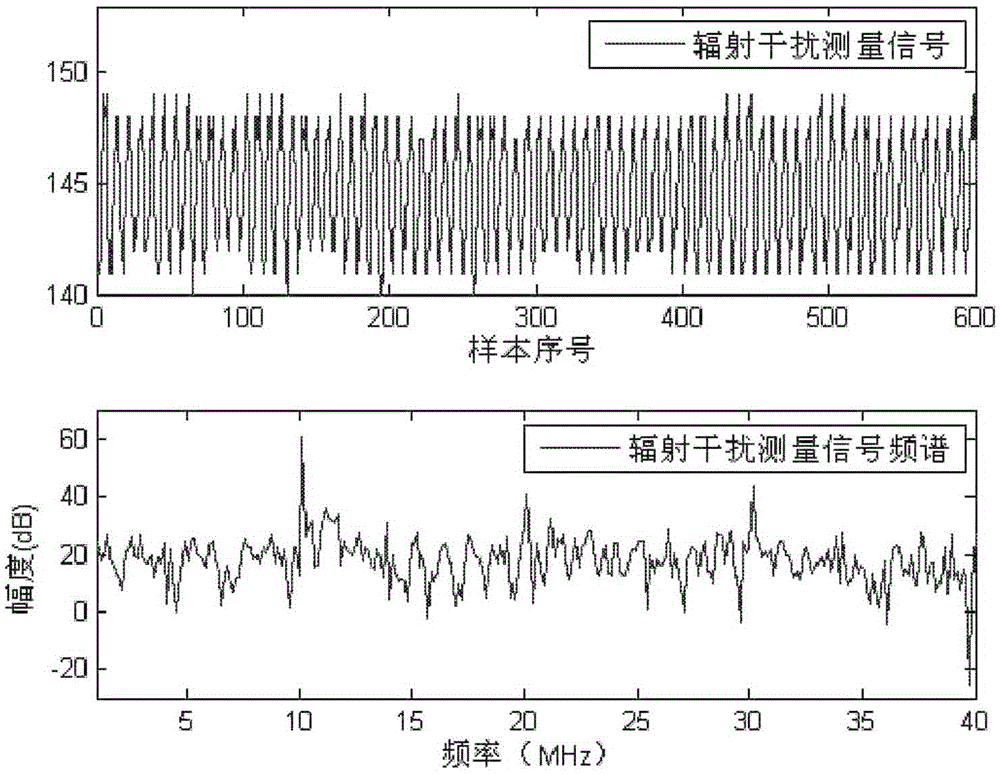
Figure 1 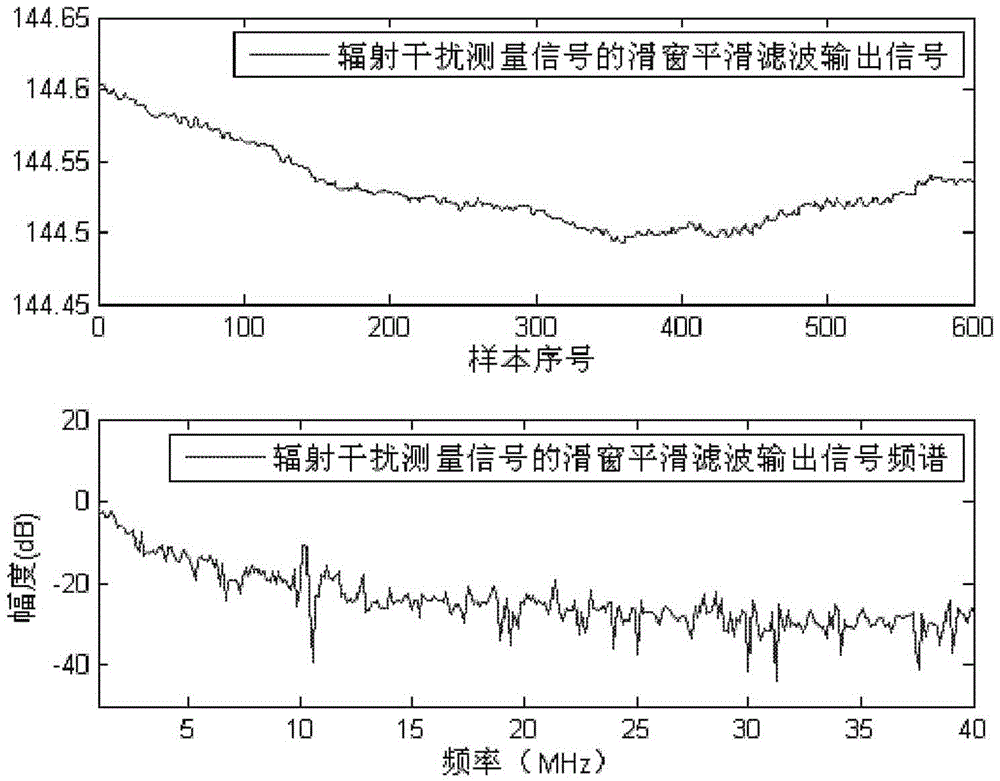
Figure 2 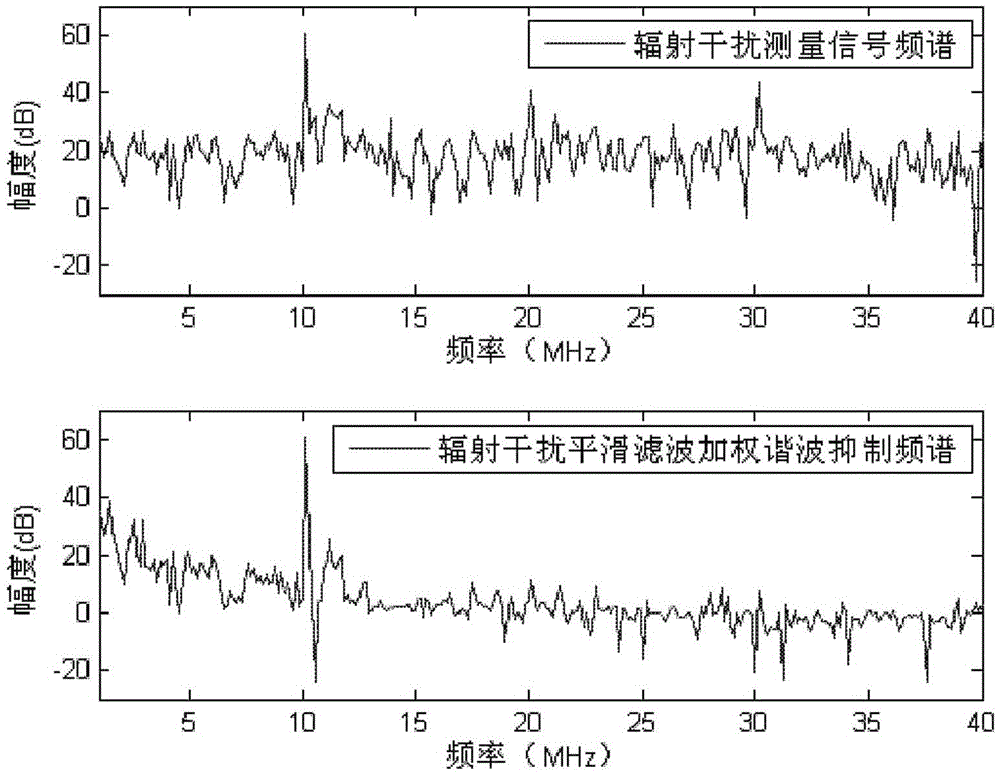
Figure 3
Abstract
Description
Technical field:
[0001] The invention relates to the technical field of electromagnetic compatibility, in particular to an electromagnetic compatibility-based harmonic suppression method for interference signals. Background technique:
[0002] With the advancement of technology, more and more electronic products are required to meet the electromagnetic compatibility standards in China. If the interference caused by the electronic products to the environment during operation fails to meet the relevant electromagnetic compatibility standards, then the product should be tested before it enters the market. Carry out electromagnetic compatibility rectification until it reaches the standard. The key to rectification is to find out the source of exceeding the standard by analyzing the interference signal. However, due to the high cost, most electronic product manufacturers do not have high-performance test equipment; and the storage space of data acquisition equipment such as oscil...
Examples
Embodiment 1
[0038] Embodiment 1: For the example of the harmonic suppression of radiated electromagnetic compatibility analysis interference signal, the product includes a 10MHz crystal oscillator, collects the radiated interference signal x(n) and its spectrum X(k) of this product with 80MHz sampling rate as figure 1 shown, visible figure 1 The middle frequency spectrum contains the radiated interference signal and its harmonics generated by the 10MHz crystal oscillator.
[0039] Step 1: The measured interference signal is averaged through the sliding window to suppress the quantization noise that causes harmonics, and obtain the corresponding smoothing filter signal spectrum, such as figure 2 As shown, the sliding window smoothing filter output signal w(n) and its spectrum W(k) of the interference signal x(n) are given by figure 2 It can be seen that the harmonics of the 10MHz signal in the smoothing filter output signal are greatly weakened, and the 10MHz radiation interference sign...
Embodiment 2
[0042] Embodiment 2: Example of harmonic suppression of interference signal in conducted electromagnetic compatibility analysis, in this conducted electromagnetic compatibility analysis, the product includes 2 crystal oscillators of 2.5MHz and 3.87MHz, and the common mode conducted interference signal x( n) and its spectrum X(k) such as Figure 4 shown, visible Figure 4 Contains 2.5MHz and 3.87MHz conduction interference signals and their harmonics generated by 2 crystal oscillators.
[0043] Step 1: The measured interference signal is averaged through the sliding window to suppress the quantization noise that causes harmonics, and obtain the corresponding smoothing and filtering signal spectrum, such as Figure 5 As shown, the sliding window smoothing filter output signal w(n) of the interference signal x(n) and its spectrum W(k), it can be seen that the harmonics in the smoothing output signal are effectively attenuated, but the interference signal also becomes blurred, w...