
A method for separating rare earth phosphor from electronic waste powder
A technology of electronic waste and rare earth phosphors, applied in chemical instruments and methods, luminescent materials, recycling technology, etc., can solve the problems of unsatisfactory quality content of rare earth oxides, pollution of water sources, soil and vegetation, and difficulty in separation, etc. problems, to achieve the effect of solving poor separation effect, solving difficult operation and easy operation
Patent Information
- Authority / Receiving Office
- CN · China
- Patent Type
- Patents(China)
- Current Assignee / Owner
- Publication Date
- 2016-09-28
Smart Images
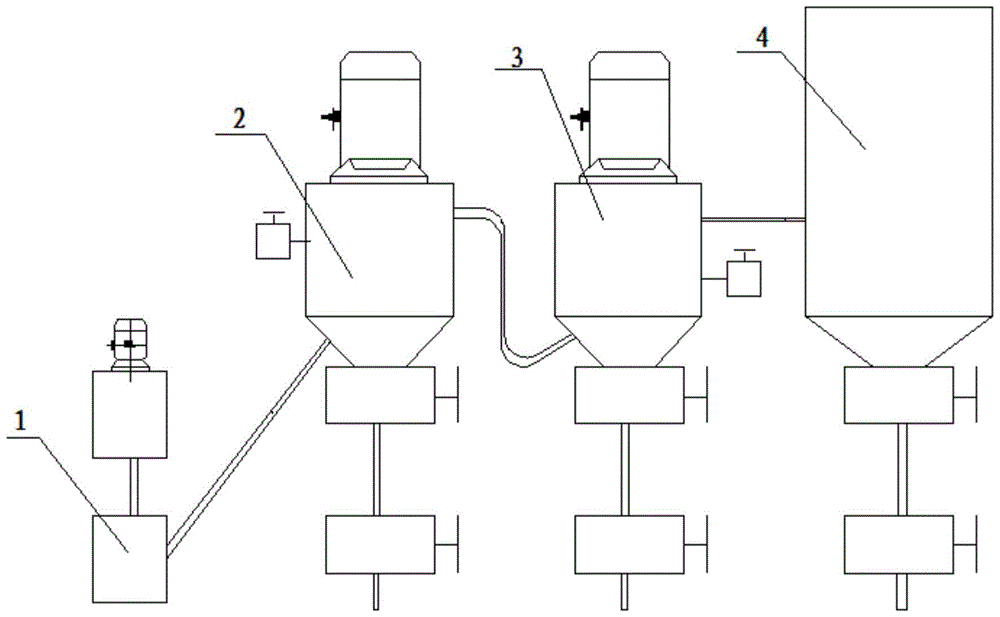
Figure 1
Abstract
Description
technical field
[0001] The invention belongs to the technical field of fine particle separation, and in particular relates to a method for separating rare earth fluorescent powder from electronic waste powder. Background technique
[0002] With the increasing demand for electronic products in modern life, more and more electronic waste is generated. In order to ensure the dismantling process of e-waste and the lower pollution and recyclability of e-waste, the recyclable utilization of e-waste has become a necessary trend. Electronic waste containing rare earth phosphors is composed of screen cone glass, graphite, rare earth phosphors, aluminum foil, nano-alumina, and dust. Due to the different dismantling methods of electronic waste, traditional methods are used to extract only Rare earth phosphors with a rare earth oxide mass content of only 5% to 10% can be recovered. The particle size of each component in this rare earth phosphor is close, and the specific gravity is not...
Examples
Embodiment 1
[0025] This embodiment includes the following steps:
[0026] Step 1. Pass the electronic waste powder through a 100-mesh sieve, and take the under-sieve to obtain fine particles of electronic waste; the electronic waste powder is composed of the following components in mass percentages: screen cone glass 50%, graphite 7%, 20% of rare earth phosphor, 7% of aluminum foil, 11% of nano-alumina and 5% of dust; the mass content of rare earth oxide in the rare earth phosphor is not less than 30%;
[0027] Step 2. The electronic waste fine particles described in step 1 are transported to the fine particle separation device for primary separation, and the primary separation material is collected at the discharge port of the fine particle separation device, and then the primary separation material is Return to the fine particle separation device for secondary separation, and collect the secondary separation material at the discharge port of the fine particle separation device; figure ...
Embodiment 2
[0031] This embodiment includes the following steps:
[0032] Step 1. Pass the electronic waste powder through a 150-mesh sieve, and take the under-sieve to obtain fine particles of electronic waste; the electronic waste powder is composed of the following components in mass percentages: screen cone glass 45%, graphite 5%, 27% of rare earth phosphor, 8% of aluminum foil, 10% of nano-alumina and 5% of dust; the mass content of rare earth oxide in the rare earth phosphor is not less than 30%;
[0033] Step 2. The electronic waste fine particles described in step 1 are transported to the fine particle separation device for primary separation, and the primary separation material is collected at the discharge port of the fine particle separation device, and then the primary separation material is Return to the fine particle separation device for secondary separation, and collect the secondary separation material at the discharge port of the fine particle separation device; figure ...
Embodiment 3
[0037] This embodiment includes the following steps:
[0038] Step 1. Pass the electronic waste powder through a 200-mesh sieve, and take the under-sieve to obtain fine particles of electronic waste; the electronic waste powder is composed of the following components in mass percentages: screen cone glass 40%, graphite 5%, 30% of rare earth phosphor, 5% of aluminum foil, 15% of nano-alumina and 5% of dust; the mass content of rare earth oxide in the rare earth phosphor is not less than 30%;
[0039] Step 2. The electronic waste fine particles described in step 1 are transported to the fine particle separation device for primary separation, and the primary separation material is collected at the discharge port of the fine particle separation device, and then the primary separation material is Return to the fine particle separation device for secondary separation, and collect the secondary separation material at the discharge port of the fine particle separation device; figure ...