
Schizophrenia biomarker, detection method and kit
A technology of schizophrenia and biomarkers, which is applied in the direction of biochemical equipment and methods, and the determination/testing of microorganisms, can solve the problems that have not been seen or have no influence on the expression level of miRNA, so as to simplify the diagnosis process and improve the accuracy of diagnosis rate effect
Patent Information
- Authority / Receiving Office
- CN · China
- Patent Type
- Applications(China)
- Current Assignee / Owner
- Publication Date
- 2015-07-01
- Estimated Expiration
- Not applicable · inactive patent
Smart Images
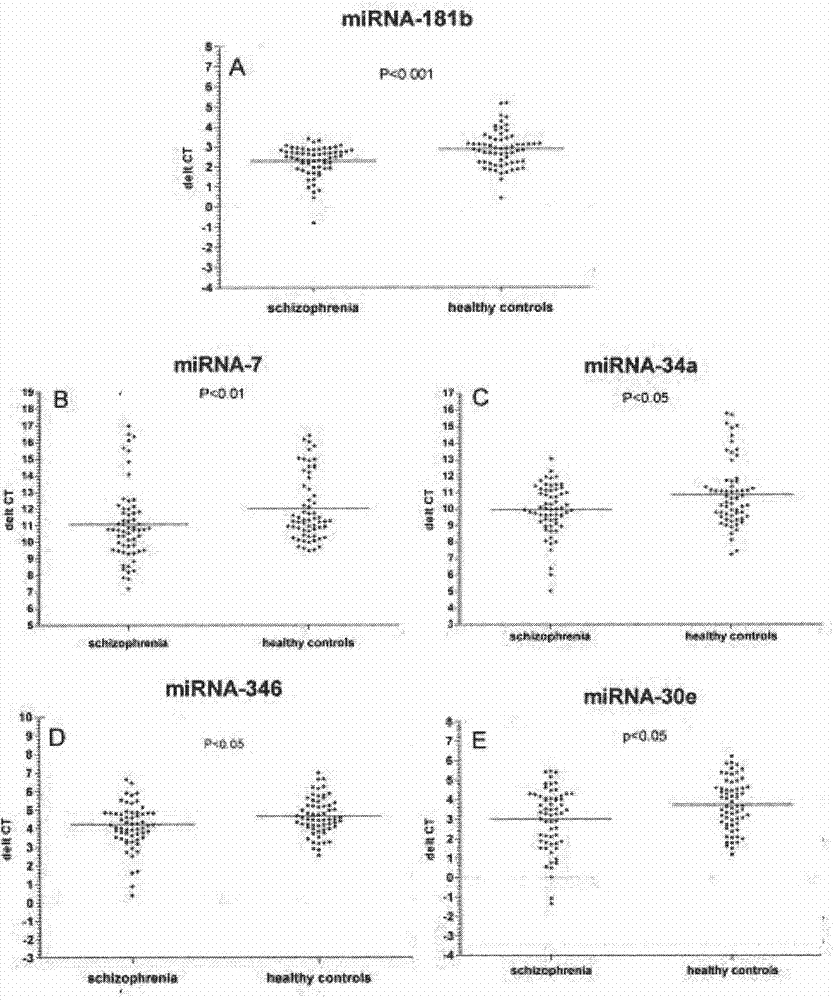
Figure 1 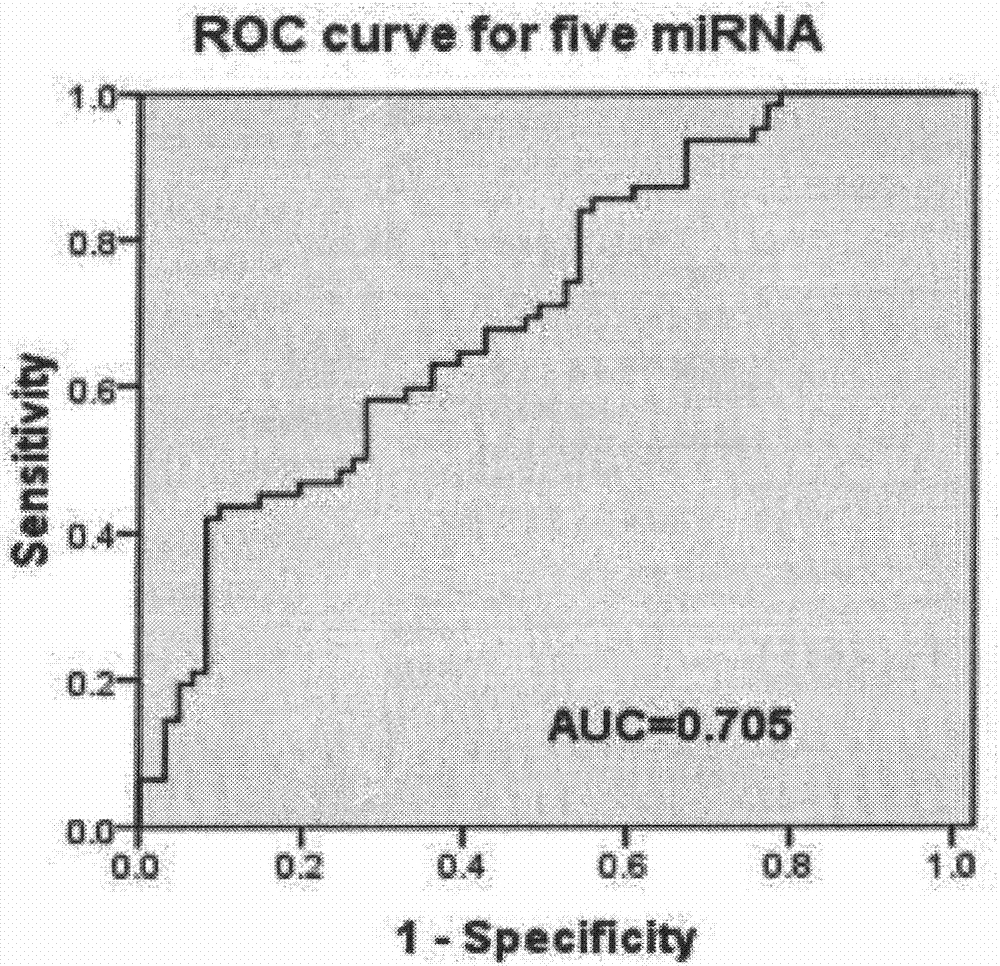
Figure 2 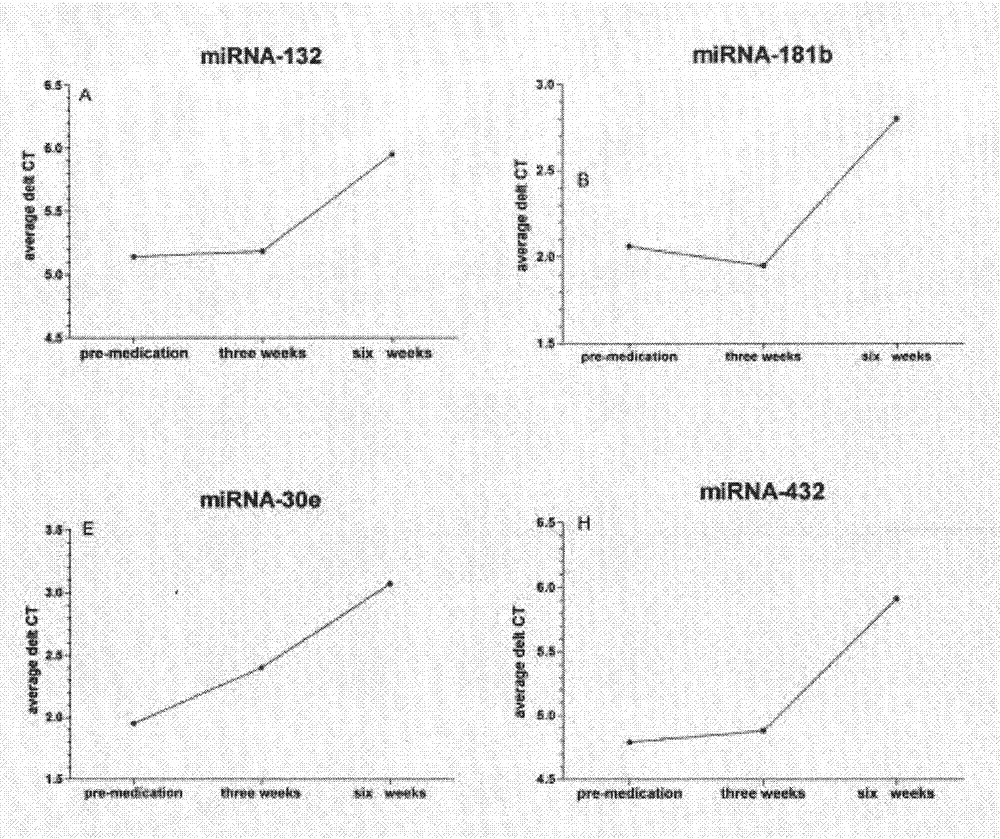
Figure 3
Abstract
Description
technical field
[0001] The invention belongs to the field of biotechnology, and relates to a schizophrenia biomarker, a detection method and a kit. Background technique
[0002] Schizophrenia is one of the most serious and complex neuropsychiatric diseases, with a lifetime prevalence of about 1% worldwide. Its clinical symptoms mainly include hallucinations, delusions, neurophysiological dysfunction, and neurocognitive dysfunction. For a long time, schizophrenia lacks specific pathological diagnostic indicators, and delayed or misdiagnosed diagnosis is very unfavorable to the prognosis of the disease. Therefore, finding a biomarker with high stability, specificity and sensitivity has become an important direction of schizophrenia research. In addition, the current drug treatment of schizophrenia mainly involves the dopamine receptor system, 5-HT receptor system and γ-aminobutyric acid system, but the pharmacological mechanism is not clear, and the treatment lacks pertinence...
Examples
Embodiment 1
[0019] Example 1 Schizophrenia diagnostic biomarkers
[0020] 1. Research object
[0021] ①Case group: From July 2012 to May 2013, patients were continuously treated in the outpatient and psychiatric departments of the 102nd Hospital of the Chinese People's Liberation Army (hereinafter referred to as 102 Hospital). Inclusion criteria: meeting the diagnostic criteria for schizophrenia in the fourth edition of the American Diagnostic and Statistical Manual of Mental Disorders (DSM-IV); first-episode patients or not taking antipsychotic drugs for 3 months before enrollment; age 15-60 years. Exclusion criteria: suffering from other mental diseases; suffering from physical or nervous system diseases such as traumatic brain injury; history of alcoholism or drug abuse; history of blood transfusion within 1 month before enrollment; Shock Therapist (MECT).
[0022] ②Control group: staff from the 102 Hospital and health examiners. Except for one case of gender mismatch, the rest were ...
Embodiment 2
[0038] Example 2 Schizophrenia Outcome Biomarkers
[0039] Concrete research object and method are with embodiment 1, and the result shows:
[0040] After 3 and 6 weeks of medication, the expression levels of miR-30e, miR-181b, miR-132 and miR-432 were significantly reduced (p<0.05~p<0.01); the specific data are shown in Table 2:
[0041] Table 2 Comparison of the relative expression level of plasma miRNA before and after treatment in the case group (ΔCT)
[0042]
[0043] Note: Compared with before medication, *P<0.05, **P<0.01; compared with medication for 3 weeks, ΔP<0.05.
[0044] After 6 weeks of medication, there was no significant difference between the plasma miRNA expression level and the control group (p>0.05); specific data are shown in Table 3:
[0045] Table 3 Comparison of plasma miRNA expression levels between the two groups for 6 weeks (△CT)
[0046]
[0047]
[0048] During the course of medication, the changes in the expression levels of miRNA-132...