
A concrete air-entraining agent
A technology for concrete and air-entraining agent, applied in the field of concrete air-entraining agent, can solve the problems of unreasonable bubble size, large loss of air content, influence on strength, etc., and achieve good air-entraining effect, high air content, and low concrete strength. Effect
Patent Information
- Authority / Receiving Office
- CN · China
- Patent Type
- Patents(China)
- Current Assignee / Owner
- Publication Date
- 2017-07-25
Smart Images
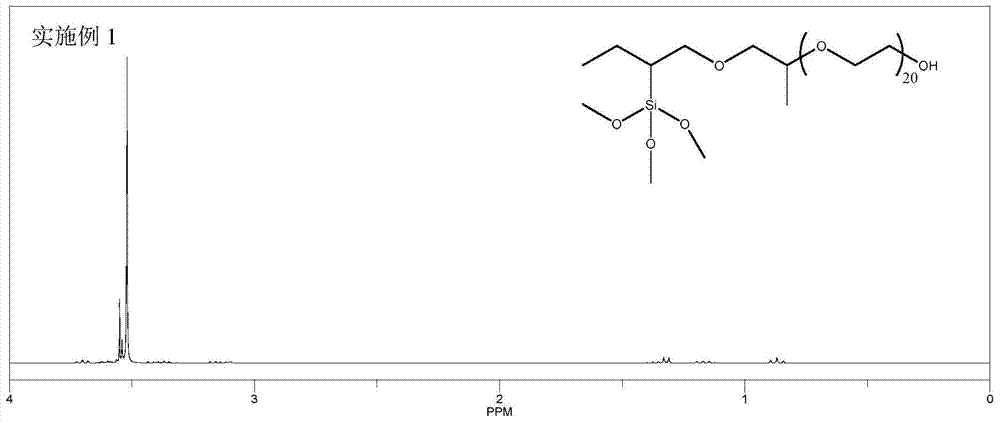
Figure 1 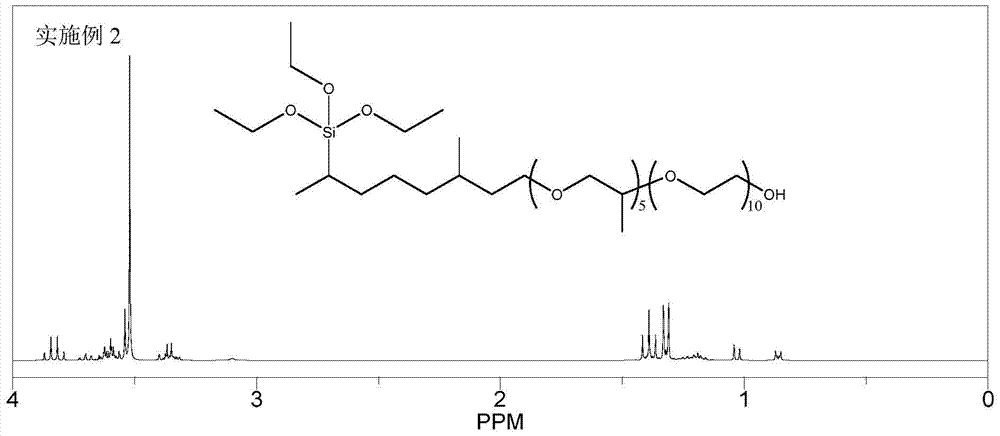
Figure 2 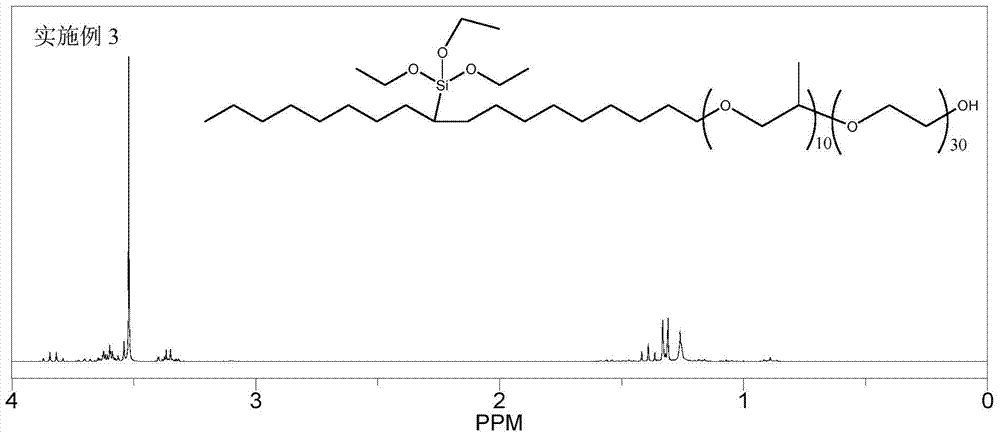
Figure 3
Abstract
Description
technical field
[0001] The invention belongs to the field of building materials, in particular to a concrete air-entraining agent. Background technique
[0002] Air-entraining agent refers to the admixture that introduces a large number of uniform, stable and closed micro-bubbles into the concrete during the mixing process to improve the workability of the concrete mixture and the freeze-thaw durability of the hardened concrete.
[0003] As one of the earliest used concrete admixtures, air-entraining agents play an important role in improving the durability of concrete and are widely valued. However, following the traditional air-entraining agents such as rosin and saponin, there are very few newly developed air-entraining agents, and most of them are by-products of petrochemical, paper industry and other industries or imported products from other industries. With the increasing performance requirements of concrete in construction, the existing air-entraining agents are mor...
Examples
Embodiment 1
[0036] Step 1: Add 1.0mol of 2-butenol and 0.7g of sodium methoxide (1.0wt% of butenol) into the cleaned and dried reactor, seal it, and exchange it with nitrogen for 3 to 4 times to remove the reactor the air inside. Raise the temperature to 100°C, and under the condition that the reaction pressure is below 0.6Mpa, slowly feed 1mol of propylene oxide into the reaction kettle. After the feeding is completed, mature for 1h, and then continue to feed 20mol of ethylene oxide. After the feeding is completed, Aging for 2h, then cooling and degassing to discharge.
[0037] Step 2: Add 1.0 mol of the unsaturated alcohol polyether obtained in Step 1 and 1.0 mol of HSi(OCH3)3 into a dry flask equipped with a thermometer, a condenser and a stirrer. Heat up under stirring, when the temperature reaches 50°C, add 0.3ml of 0.01mol / L isopropanol solution of chloroplatinic acid (amount of 1ppm) dropwise, and control the temperature at 50-80°C during the dropwise addition. After the dropwise...
Embodiment 2
[0041]Step 1: Add 1.0mol of 3-methyl-7-heptenol and 2.0g of potassium hydroxide (1.5wt% of 3-methyl-7-heptenol) into the cleaned and dried reactor, Seal it, and exchange it with nitrogen for 3 to 4 times to remove the air in the kettle. Raise the temperature to 80°C, and under the condition that the reaction pressure is below 0.7Mpa, slowly feed 5 mol of propylene oxide into the reaction kettle. After the feeding is completed, mature for 1 hour, and then continue to feed 10 mol of ethylene oxide. After the feeding is completed, Aging for 1h, then cooling down and degassing to discharge.
[0042] Step 2: In a dry flask equipped with a thermometer, condenser and stirrer, add 1.0mol of the unsaturated alcohol polyether obtained in step 1 and 1.2mol of HSi(OCH 2 CH 3 ) 3 . The temperature was raised under stirring, and when the temperature reached 60°C, 4.0ml of 0.01mol / L isopropanol solution of chloroplatinic acid (amount of 15ppm) was added dropwise, and the temperature was ...
Embodiment 3
[0046] Step 1: Add 1.0mol of cis-9-octadecenol, 2.2g of sodium hydroxide and 3.2g of sodium methoxide (the sum of both mass is 2.0wt% of cis-9-octadecenol) and wash , In the dried reaction kettle, seal it, and exchange it with nitrogen for 3 to 4 times to remove the air in the kettle. Raise the temperature to 140°C, and under the condition that the reaction pressure is below 0.5Mpa, slowly feed 10mol of propylene oxide into the reaction kettle. After the feeding is completed, mature for 2 hours, and then continue to feed 30mol of ethylene oxide. After the feeding is completed, Aging for 2h, then cooling and degassing to discharge.
[0047] Step 2: In a dry flask equipped with a thermometer, condenser and stirrer, add 1.0mol of the unsaturated alcohol polyether obtained in step 1 and 1.5mol of HSi(OCH 2 CH 3 ) 3 . Heat up under stirring, when the temperature reaches 70°C, add 58.9ml of 0.01mol / L isopropanol solution of chloroplatinic acid (amount of 100ppm) dropwise, during...