
Bidirectional association bidirectional tensioning device with variable damping device
A technology of tensioning device and damping device, which is applied in the direction of transmission, belt/chain/gear, mechanical equipment, etc., can solve the problems of increasing the variation of the belt on the tight side, the tension of the belt on the tight side, and the tension on the tight side, etc. The effect of reducing the excessive load of the wheel hub, accelerating the swing speed and prolonging the service life
Patent Information
- Authority / Receiving Office
- CN · China
- Patent Type
- Applications(China)
- Current Assignee / Owner
- Publication Date
- 2016-11-09
Smart Images
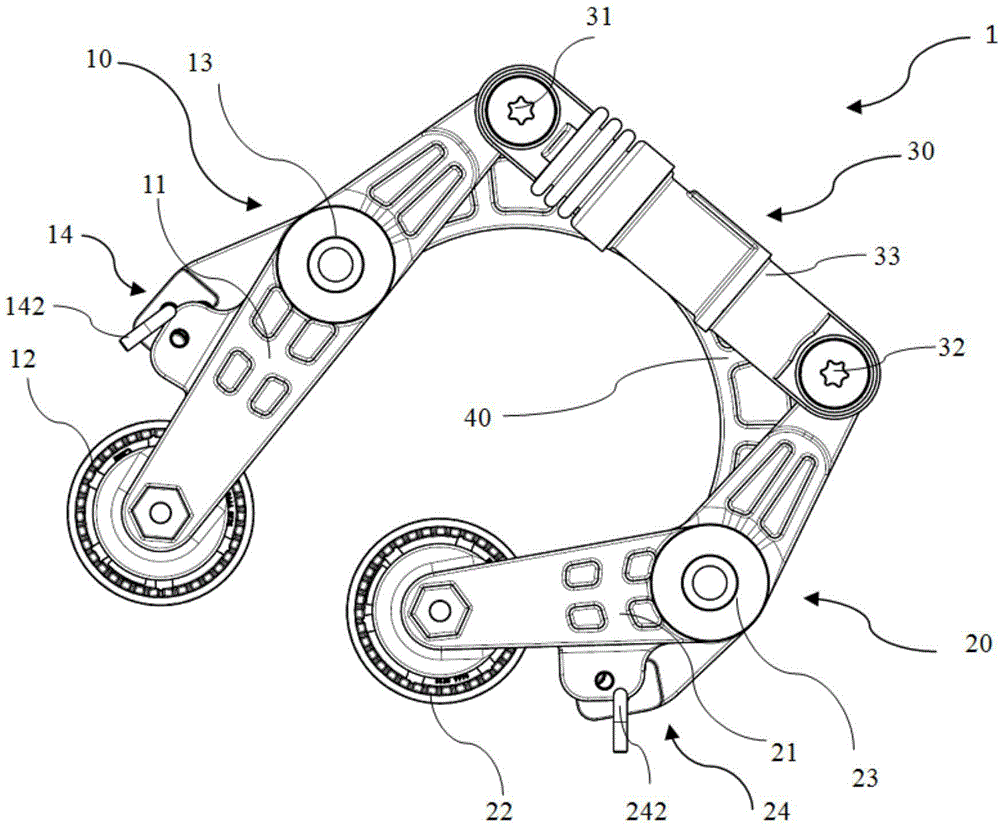
Figure 1 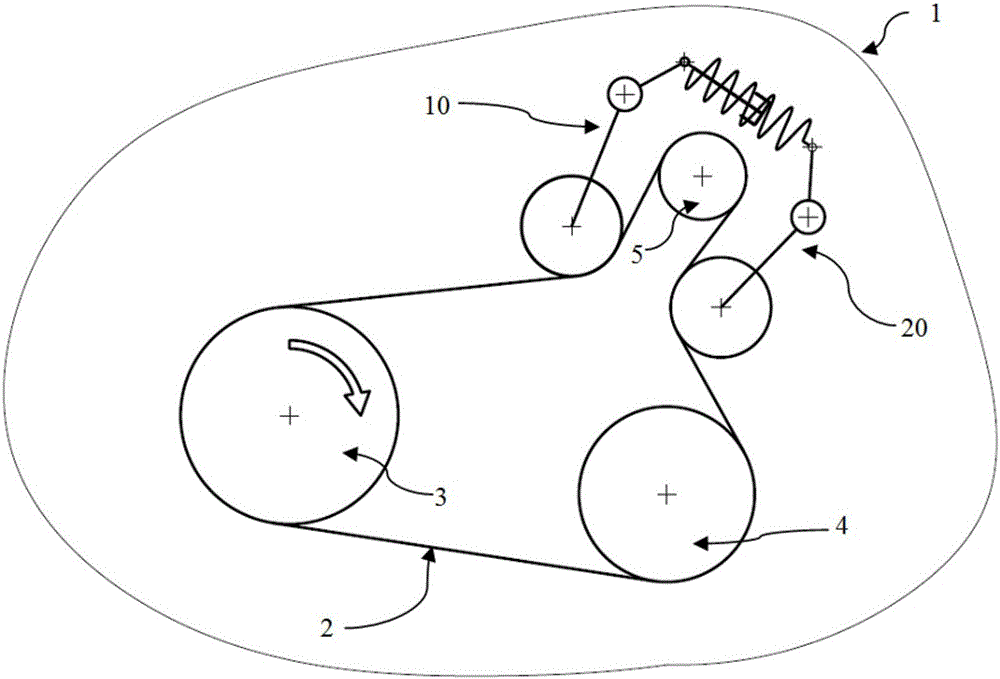
Figure 2 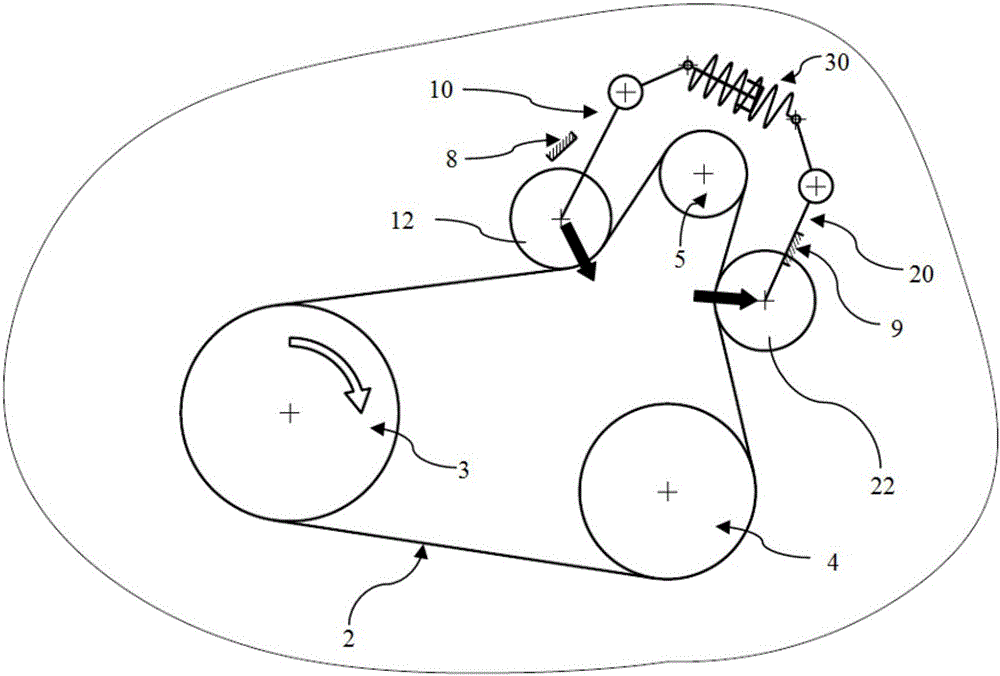
Figure 3
Abstract
Description
technical field
[0001] The invention relates to a tensioning device, in particular to a bidirectional tensioning device with bidirectional association and a variable damping device. Background technique
[0002] Under the requirement of higher and higher energy utilization efficiency of automobiles, mild-hybrid engines with start-stop technology have become the mainstream, and cars with start-stop technology driven by belts generally need to use MGU motors. The function of the MGU motor itself determines that it can not only output power for the engine, such as working as a starter motor and a booster motor, but also convert the kinetic energy of the engine into electrical energy, such as consuming engine power as a generator to generate electricity and as a motor when the engine decelerates. When the energy recovery motor is working. Thus, in a belt drive drive system, there are two drive sources: the crankshaft pulley and the MGU motor pulley. When these two driving sour...
Examples
Embodiment
[0049] figure 1 , Figure 5 A two-way tensioning device 1 is shown, the two-way tensioning device 1 includes a first tensioner 10, a second tensioner 20, an associated variable damping device 30 and a base 40, the The first tensioner 10 and the second tensioner 20 are respectively fixed on the base 40 , and can swing around their respective first rotating shaft 15 and second rotating shaft 16 . One end of the first tensioner 10 and one end of the second tensioner 20 are respectively connected to the associated belt variable damping device 30 by fastening components 19 and 29, and each hinge can rotate around its own Centers 27 and 28 swing freely (see Figure 8 ), so that the first tensioner 10 and the second tensioner 20 are associated.
[0050] The first tensioner 10 includes a first tensioning arm 11, a first tensioning wheel 12 and a first damping device 13, the first tensioning wheel 12 is rotatably fixed to the first sheet One end of the tensioning arm 11, the first ...