
Pink sparkling wine and preparation process thereof
A preparation process and technology of sparkling wine, applied in the field of pink sparkling wine and its preparation, can solve the problems of unsuitable taste, sour taste, etc., and achieve the effect of good taste and nutrient composition, refreshing taste and bright color
Patent Information
- Authority / Receiving Office
- CN · China
- Current Assignee / Owner
- Publication Date
- 2017-06-20
- Estimated Expiration
- Not applicable · inactive patent
Smart Images
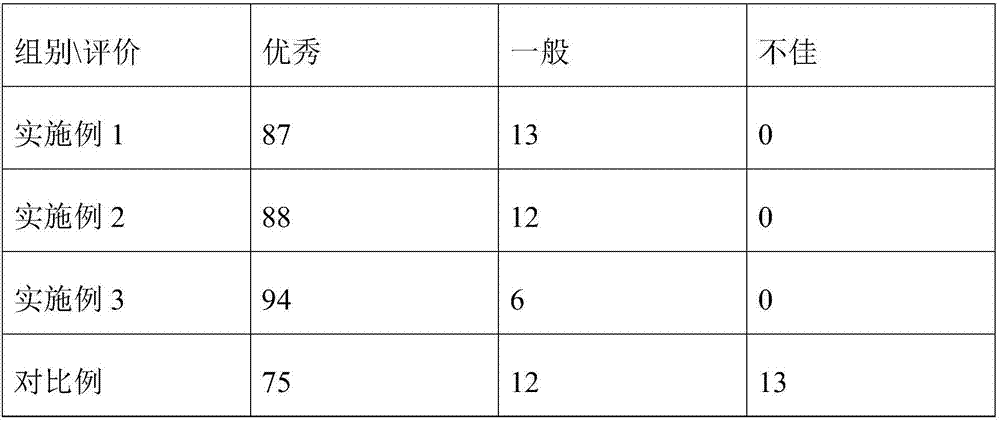
Figure 1 
Figure 2 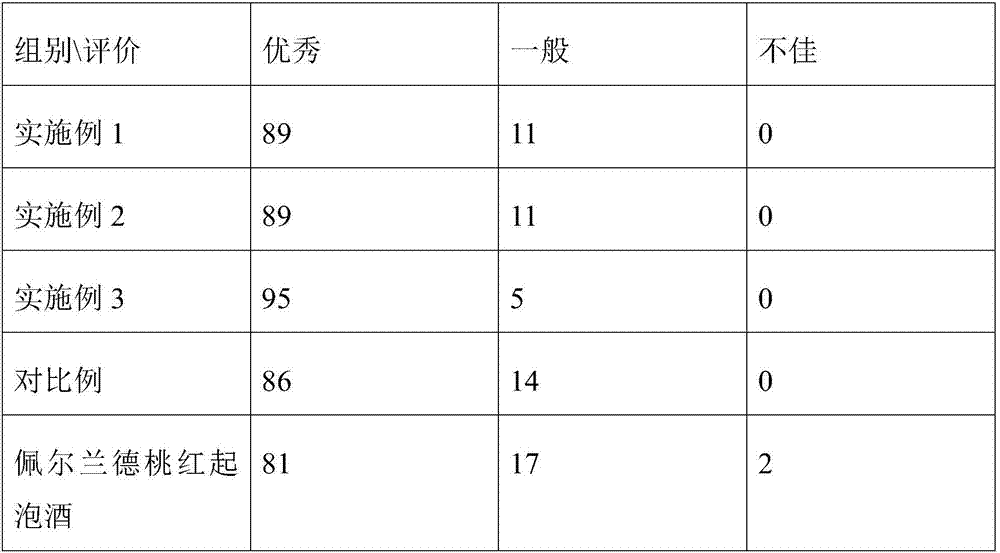
Figure 3
Abstract
Description
technical field
[0001] The invention relates to the field of food, in particular to a pink sparkling wine and a preparation process thereof. Background technique
[0002] The so-called sparkling wine is professionally explained as a wine with a carbon dioxide pressure equal to or greater than 0.05MPa at 20°C. In layman's terms, it is a wine that will bubble. Sparkling wine is a kind of wine rich in carbon dioxide and suitable for various festive occasions. Sparkling wine is used as an aperitif before meals in Europe, and it is better to chill it to 8-12 degrees before drinking. For Americans with heavy tastes, they tend to drink it with dessert after a meal.
[0003] In recent years, due to the rapid development of information technology, more and more people in China have come into contact with and recognized Western culture, so people's love for wine has become stronger and stronger. More and more sparkling wines are entering the country. However, although sparkling wi...
Examples
Embodiment 1
[0034] Prepare Rosé Sparkling Wine
[0035] Harvesting: Grapes are harvested late after they are ripe, so that the glucose level can reach 260g / L.
[0036] Selection: remove the branches and leaves, moldy and rotten fruits and other sundries in the raw materials.
[0037] Squeeze to get the juice: choose a frame press, add sodium metabisulfite (purity 50%) at 100g / ton during the pressing process.
[0038] Clarification: add pectinase at 30g / ton, clarify at natural low temperature (0-6°C) for 3 days, pour the tank and separate the lees.
[0039] Primary fermentation (alcoholic fermentation): Yeast (Nuomo STR) is added to the separated supernatant at a dosage of 250g / ton, and fermented at low temperature and temperature control (13-15°C) for 25 days.
[0040] Stop fermentation: When the alcohol content reaches 10% VOL, lower the temperature to 0-6°C to stop the fermentation.
[0041] Clarification: add 800g of bentonite and 30g of vegetable gum per ton of grape juice, and cla...
Embodiment 2
[0048] Prepare Rosé Sparkling Wine
[0049] Harvesting: Grapes are harvested late after they are ripe, so that the glucose level can reach 260g / L.
[0050] Selection: remove the branches and leaves, moldy and rotten fruits and other sundries in the raw materials.
[0051] Squeeze to get the juice: choose a frame press, add sodium metabisulfite (purity 50%) at 150g / ton during the pressing process.
[0052] Clarification: add pectinase at 50g / ton, clarify at natural low temperature (0-6°C) for 10 days, pour the tank and separate the lees.
[0053] Primary fermentation (alcoholic fermentation): Yeast (Nuomo STR) is added to the separated supernatant at a dosage of 350g / ton, and fermented at low temperature and temperature control (13-15°C) for 30 days.
[0054] Stop fermentation: When the alcohol content reaches 11% VOL, lower the temperature to 0-6°C to stop the fermentation.
[0055] Clarification: add 1200g of bentonite and 50g of vegetable gum per ton of grape juice, and cla...
Embodiment 3
[0062] Prepare Rosé Sparkling Wine
[0063] Harvesting: Grapes are harvested late after they are ripe, so that the glucose level can reach 255g / L.
[0064] Selection: remove the branches and leaves, moldy and rotten fruits and other sundries in the raw materials.
[0065] Squeeze to get the juice: choose a frame press, add sodium metabisulfite (purity 50%) at 120g / ton during the pressing process.
[0066] Clarification: add pectinase at a rate of 40g / ton, clarify at natural low temperature (0-6°C) for one week, and pour the tank to separate the lees.
[0067] Primary fermentation (alcoholic fermentation): Yeast (Nuomo STR) is added to the separated supernatant at a dosage of 300g / ton, and fermented at low temperature and temperature control (13-15°C) for 26 days.
[0068] Stop fermentation: When the alcohol content reaches 10% VOL, lower the temperature to 0-6°C to stop the fermentation.
[0069] Clarification: add 1000g of bentonite and 40g of vegetable gum per ton of grap...