
Flue gas analysis device and method based on ultraviolet differential technology
A technology of flue gas analysis and ultraviolet difference, which is applied in the field of flue gas analysis devices based on ultraviolet difference technology, can solve the problems of increasing the difficulty of on-site maintenance, failing to meet the monitoring requirements, increasing the complexity of the system, and achieving strong anti-background gas interference, The structure is simple and the effect of improving the intensity of the spectral signal
Patent Information
- Authority / Receiving Office
- CN · China
- Patent Type
- Patents(China)
- Current Assignee / Owner
- Publication Date
- 2019-10-22
Smart Images
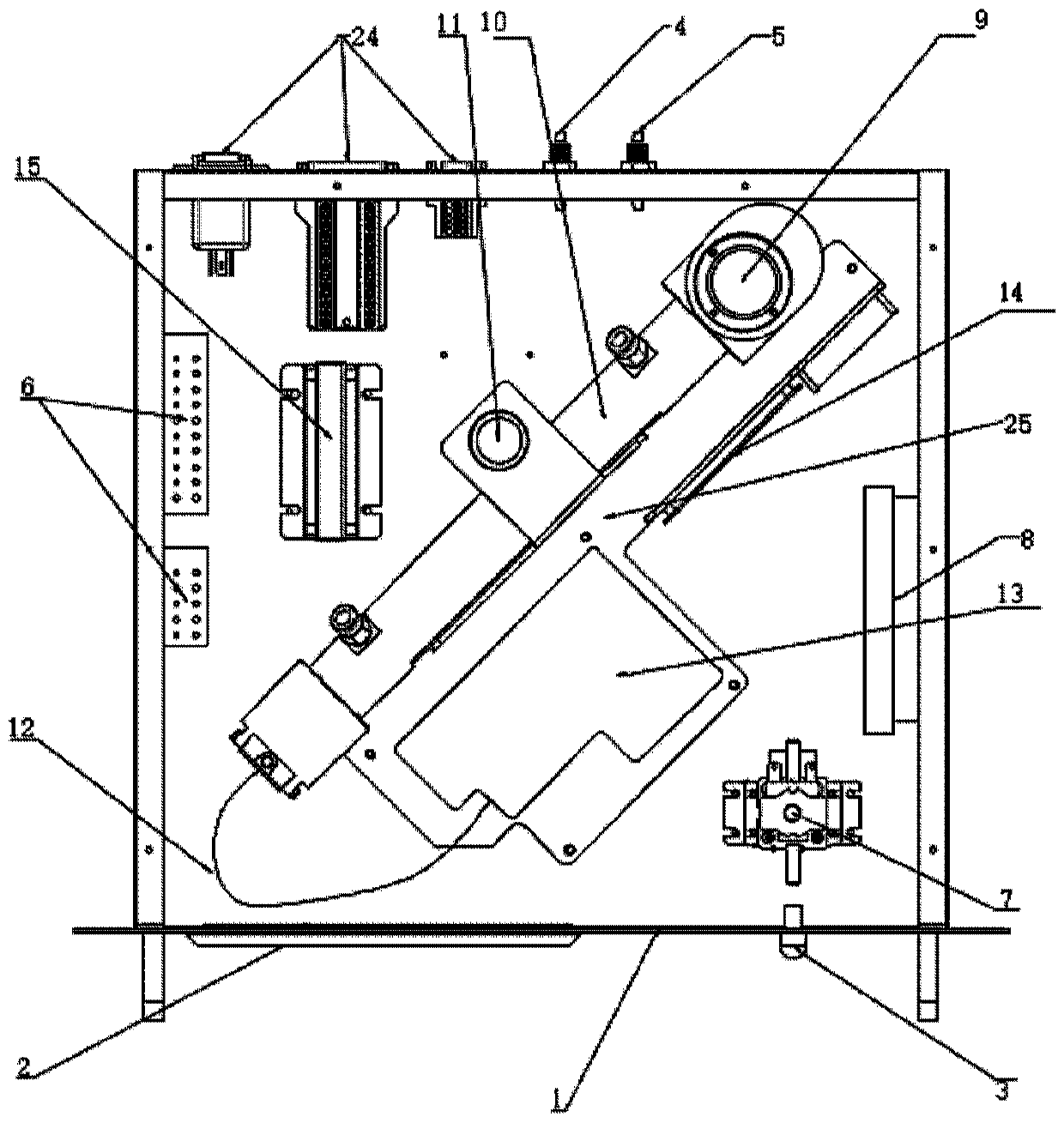
Figure 1 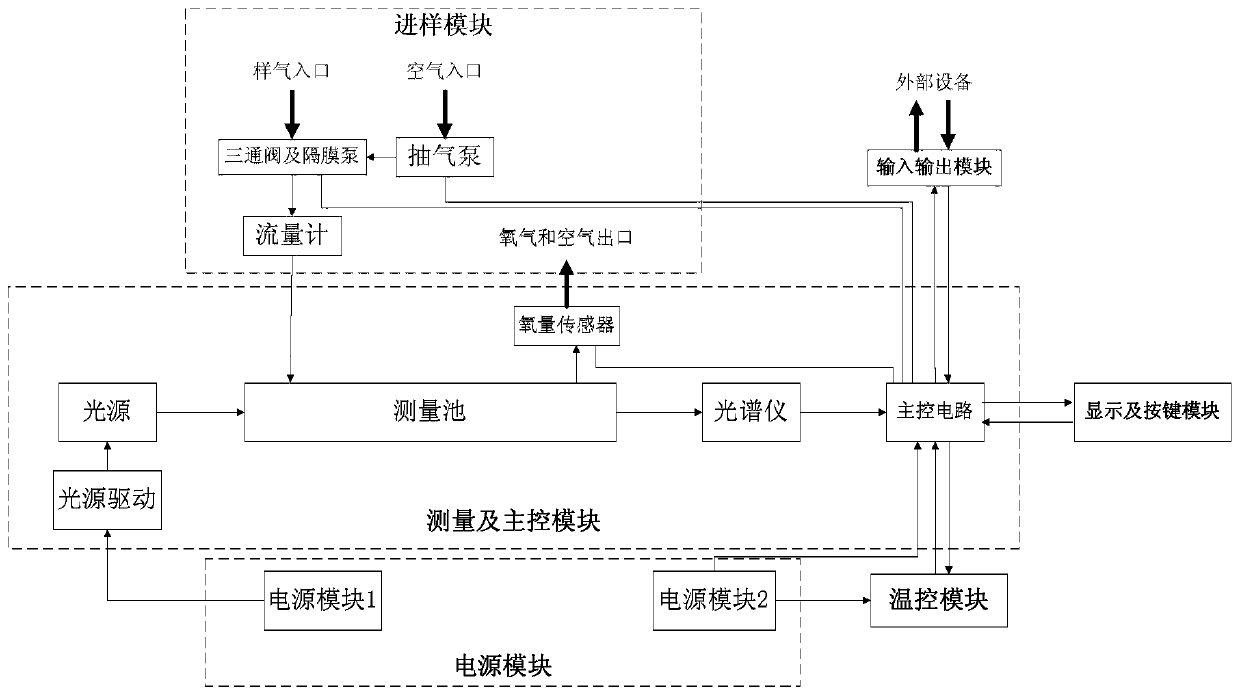
Figure 2 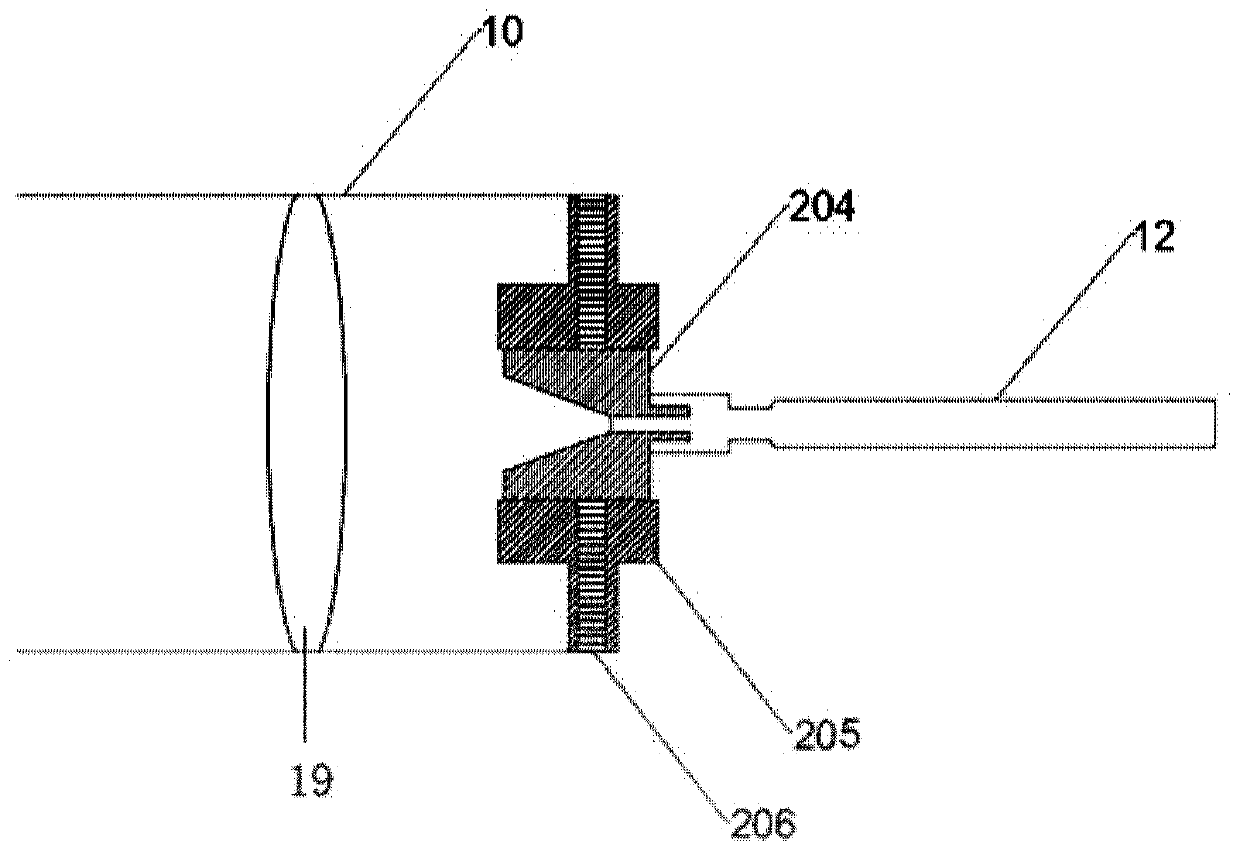
Figure 3
Abstract
Description
technical field
[0001] The invention relates to a spectrum analysis device, in particular to a flue gas analysis device and method based on ultraviolet differential technology. Background technique
[0002] In December 2015, the executive meeting of the State Council decided to fully implement ultra-low emission and energy-saving transformation of coal-fired units before 2020. The latest Air Pollution Prevention and Control Law came into effect on January 1, 2016. Local environmental protection departments have successively issued the most stringent emission standards in history, and the emission concentrations of smoke, sulfur dioxide, and nitrogen oxides should not exceed 10mg / m 3 、35mg / m 3 , 50mg / m 3 .
[0003] Due to the complexity of the flue gas components in the ultra-low emission site and the low concentration of sulfur dioxide and nitrogen oxide emissions, most of the flue gas analyzers currently installed on site are conventional range analyzers, which can no l...
Examples
Embodiment Construction
[0040] In order to make the purpose, technical solutions and advantages of the present invention clearer, the present invention will be described in further detail below in conjunction with specific embodiments and with reference to the accompanying drawings, the contents of which are sufficient to enable any person skilled in the art to understand the technical content of the present invention and According to implement.
[0041] When using ultraviolet differential absorption spectroscopy for detection, the light absorption of the sample gas can be divided into two parts: one part changes rapidly with the wavelength and constitutes the narrow-band fine structure of the spectrum, this part is only related to the characteristic absorption of the gas to be measured; the other part changes with the wavelength Slowly changing, constituting the broadband structure of the spectrum, this part is not only related to the characteristics of some gases, but also related to the scattering of...