
Method for restoring electronic waste contaminated soil through reinforcing nano zero-valent iron combined impatiens balsamina
A nano-zero-valent iron and polluted soil technology, applied in the field of phytoremediation enhancement, to achieve the effect of strong operability, good adaptability and large specific surface area
Patent Information
- Authority / Receiving Office
- CN · China
- Patent Type
- Applications(China)
- Current Assignee / Owner
- Publication Date
- 2018-06-22
- Estimated Expiration
- Not applicable · inactive patent
Smart Images
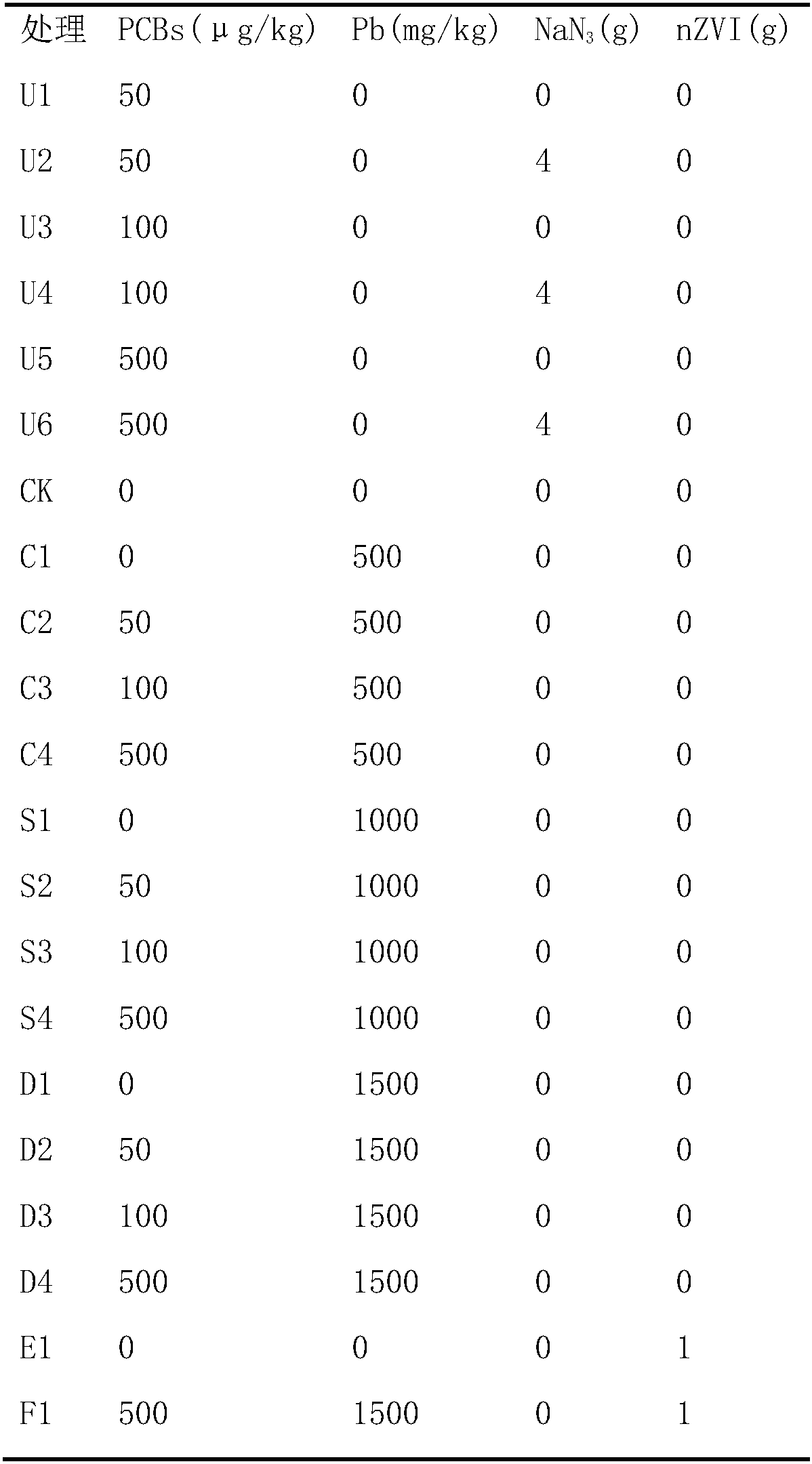
Figure 1 
Figure 2 
Figure 3
Abstract
Description
technical field
[0001] The invention relates to the strengthening technical field of phytoremediation, in particular to a method for strengthening impatiens with nanometer zero-valent iron to repair soil polluted by electronic waste. Background technique
[0002] China has become the world's largest recipient of e-waste. Electronic and electrical waste has become a new environmental problem in the world, and is attracting more and more attention from the international community. In 2012, the Basel Action Network [Basel Action Network (BAN)] and the Silicon Valley Toxics Coalition (SVTC) published a long-form report jointly authored by them, "Export Hazards: High-tech Waste Flowing to Asia." The study found that the concentration of Ba in the sediment was 10 times the dangerous concentration stipulated by the US EPA, and Sn, Cr and Pb were 152 times, 1338 times and 212 times the danger markers, respectively. Water pollution in Guiyu Town is more serious than sediment. The ...
Examples
Embodiment
[0024] Nano-zero valent iron combined with Impatiens to remediate polychlorinated biphenyl-lead compound polluted soil experiment
[0025] The potting experiment site is located in the greenhouse of TEDA College, Nankai University. The site is located in Binhai New Area, Tianjin City, with an altitude of about 50m. There is no pollution source around the experimental site, and it is an uncontaminated area of Pb and PCBs.
[0026] The soil used in the experiment was collected from Jieyang County, Guangdong City, Guangdong Province, China (geographic location 23.27'28N, 116.19'47E) farmland topsoil (0-20cm), the soil physical and chemical properties total C, total, total P and pH are in order 1.66%, 1021.68mg / kg, 1.14%, 0.60%, 6.50 and 5.4.
[0027] A total of 21 treatment groups were set up in this experiment, and each treatment was repeated 3 times. See Table 1 for details of different treatment groups set up in the experiment.
[0028] The PCBs trichlorobiphenyl, PCB18 and P...