
Method for constructing cardiac pressure overload/unloading mouse model
A technology of mouse model and construction method, applied in medical science, veterinary instruments, veterinary surgery, etc.
Patent Information
- Authority / Receiving Office
- CN · China
- Patent Type
- Applications(China)
- Current Assignee / Owner
- Publication Date
- 2019-08-16
- Estimated Expiration
- Not applicable · inactive patent
Smart Images
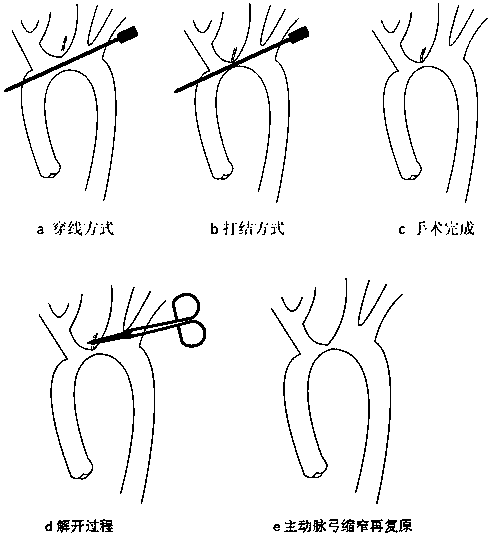
Figure 1 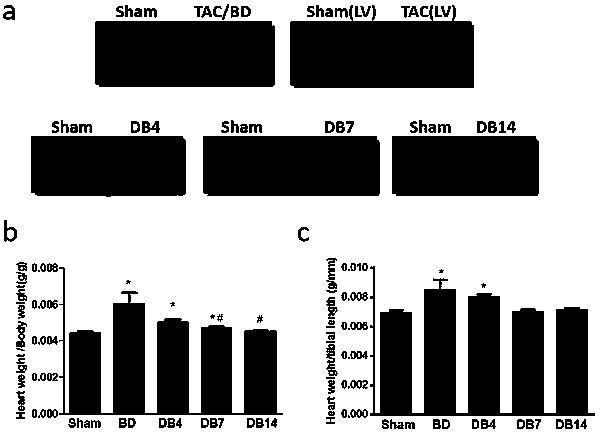
Figure 2 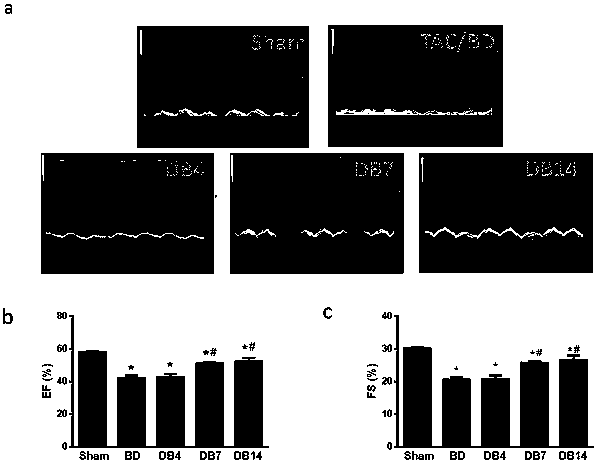
Figure 3
Abstract
Description
technical field
[0001] The invention relates to a method for constructing a cardiac pressure overload / unload mouse model, which provides a reliable animal model for studying reverse cardiac remodeling. Background technique
[0002] Aortic arch stenosis accounts for a large proportion of adult heart diseases and is one of the main causes of heart failure. Chronic aortic stenosis is a common clinical disease that leads to left ventricular overload. Relief of outflow tract obstruction through aortic valve replacement is Typical unloading process. When the aortic valve is stenotic, the ejection resistance of the left ventricle increases, resulting in excessive left ventricular pressure load. The body's compensatory mechanism promotes myocardial hypertrophy to enhance the contractility of the ventricular muscle, increasing the pressure gradient across the aortic valve during systole, and maintaining normal cardiac output. This kind of compensation promotes the increase of wall ...
Examples
Embodiment Construction
[0019] Below by way of specific implementation, the above-mentioned content of the present invention is described in further detail again; But this should not be interpreted as the scope of the above-mentioned theme of the present invention being limited to following examples; All technologies realized based on the idea of the present invention all belong to the present invention range. The concrete technical scheme that the present invention provides is as follows:
[0020] see figure 1 , Cardiac pressure overload / unload mouse model construction:
[0021] The specific operation steps are as follows
[0022] 1) Clean up the surgical area and prepare surgical instruments;
[0023] 2) The surgical area is wiped and disinfected with 75% alcohol;
[0024] 3) Make sure that the heat blanket is at the correct temperature (37°C), and make sure that the small animal ventilator is breathing smoothly. It is important to maintain normal body temperature and respiration in small an...