
Channel estimation algorithm combining corrected angle mismatch with sparse Bayesian learning
A sparse Bayesian, channel estimation technology, applied in computing, complex mathematical operations, design optimization/simulation, etc., can solve the problems of deviation, less research on uplink channel state information, deviation from preset angles, etc., to improve the estimation performance effect
Patent Information
- Authority / Receiving Office
- CN · China
- Patent Type
- Applications(China)
- Current Assignee / Owner
- Publication Date
- 2020-09-15
Smart Images
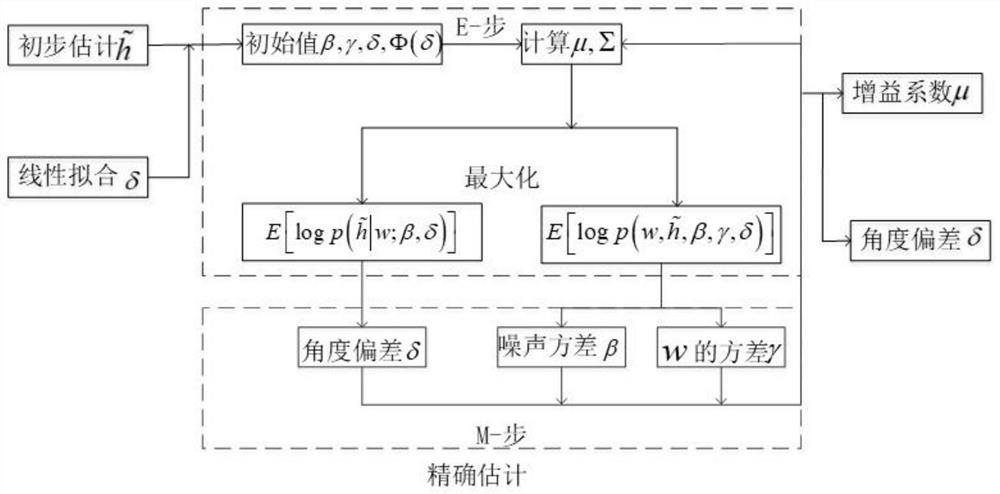
Figure 1 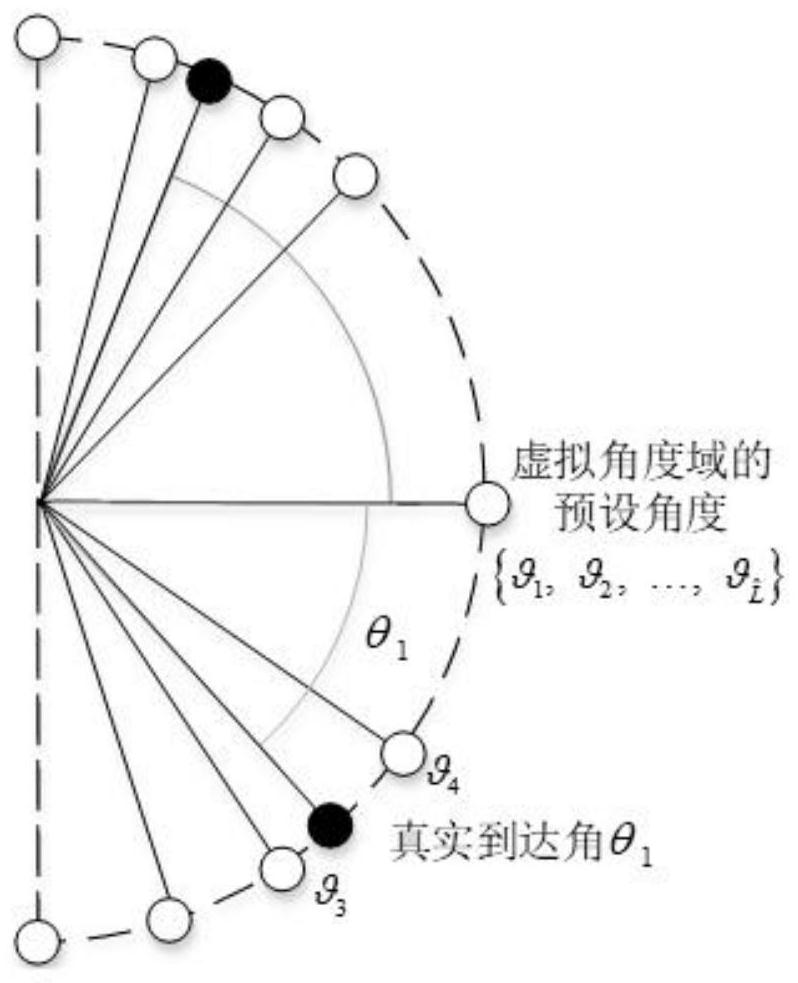
Figure 2 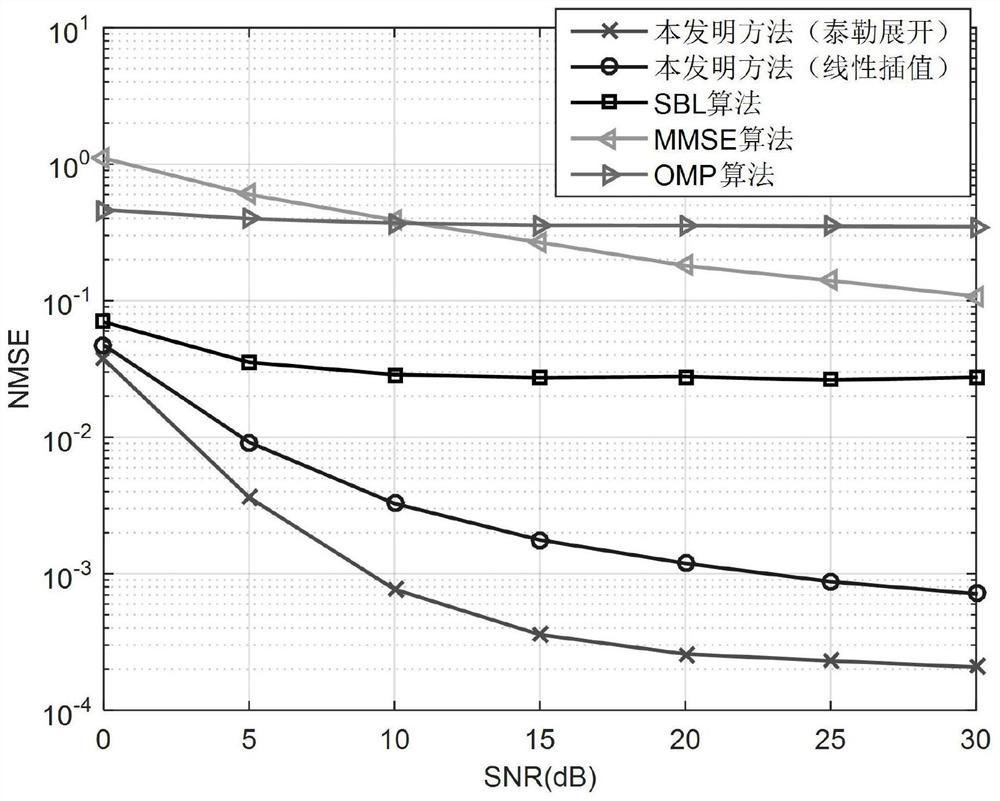
Figure 3
Abstract
Description
technical field
[0001] The invention belongs to the technical field of wireless communication, in particular to a channel estimation algorithm combining corrected angle mismatch and sparse Bayesian learning. Background technique
[0002] Sparse channel estimation has always been a research hotspot among scholars, but how to effectively obtain uplink channel state information in the angle domain is rarely studied. In fact, after discrete Fourier transform (Discrete FourierTransform, DFT), the channel has hidden sparsity in the virtual angle domain. The channel estimation problem in the angle domain usually uses the hidden sparsity in the virtual angle domain for channel estimation, the so-called virtual angle The domain refers to the division of a certain range of angle intervals into multiple uniform and discrete preset angles (sampling grid). However, the rough division of the preset angles will make the real angle of arrival (DOAs) deviate from the preset angle, resulting ...
Examples
Embodiment Construction
[0042] In order to make the purpose, features and advantages of the present invention understandable, the specific implementation manners of the present invention will be described in detail below in conjunction with the accompanying drawings.
[0043] In order to describe the contents of the present invention conveniently, the terms and system models of the present invention are first introduced:
[0044] System model:
[0045]Build a massive MIMO based uplink multi-user system. The base station adopts a uniform linear array (ULA), equipped with M antennas, and the user end is U single-user antennas. Assuming that the propagation path from the uth user end to the base station is composed of P scattering paths, the channel vector of the uplink can be expressed as for:
[0046]
[0047] g u,p and θ u,p are the path gain and angle of arrival (DOA) of the p-th path from the u-th user to the base station, respectively, where, And the steering vector a(θ) is
[0048]
...