
A method for identifying metabolic expression profiling markers of high-yield and low-yield varieties of Camellia oleifera
A high-yield and low-yield technology, applied in instruments, measuring devices, scientific instruments, etc., to achieve the effects of convenient and fast analysis methods, simple sampling methods, and the development of camellia oleifera industrialization.
Patent Information
- Authority / Receiving Office
- CN · China
- Patent Type
- Patents(China)
- Current Assignee / Owner
- Publication Date
- 2022-06-07
Smart Images
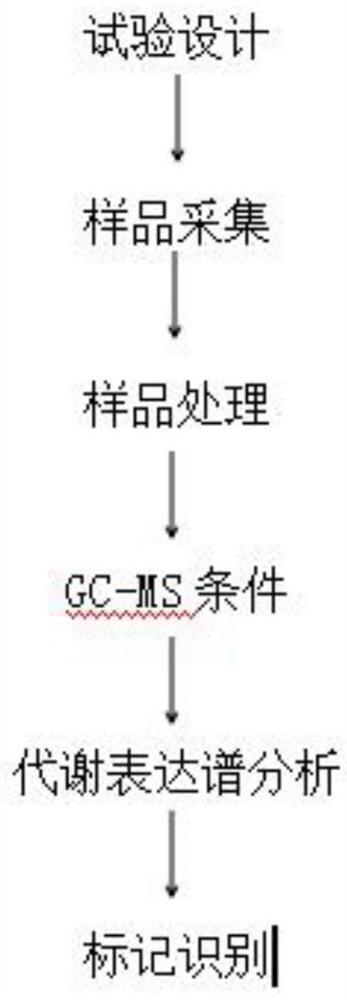
Figure 1 
Figure 2 
Figure 3
Abstract
Description
technical field
[0001] The invention belongs to the technical field of Camellia oleifera breeding, in particular to a method for identifying a metabolic expression profile marker of Camellia oleifera high-yield and low-yield species groups. Background technique
[0002] Camellia oleifera is an important woody oil tree species in my country and one of the four major woody oil tree species in the world, mainly distributed in southern provinces. Its product camellia oil is high-grade edible oil, and its fatty acid composition is similar to that of olive oil. Long-term consumption is very beneficial to human health. Camellia oleifera is planted on the mountains and does not compete with grains for land, providing a large number of labor and employment opportunities for forest farmers in the mountains. The camellia oleifera industry is a characteristic and advantageous industry in my country. The development of the camellia oleifera industry can not only ensure the national grai...
Examples
Embodiment 1
[0048] Three high-yield Camellia oleifera trees (numbered A, B and C) were selected in Shuinan State-owned Forest Farm, Shaxian County, Fujian Province. The average fruit yield per plant from 2017 to 2019 was 2.62, 2.35 and 1.5Kg, respectively. A high-yield group was constructed and three camellia trees were selected. For the low-yielding camellia cultivars (numbered D, E and F), the average fruit yield per plant from 2017 to 2019 was 0.49, 0.46 and 0.01Kg, respectively, and a low-yield group was constructed.
[0049] On May 12, 2020, the sample BULK method was taken, and 5 shoots were collected from the upper, middle and lower parts of each individual plant, first mixed by each plant, and then mixed in each group.
[0050] Take 100 g of freshly mixed samples from each of the high-yield group and low-yield group, soak them in 1000 mL of anhydrous methanol for 3 days, pour out the solvent and collect, repeat 3 times, combine all the solutions obtained from the 3 times, and then ...