
Method for improving phellinus igniarius cultivation efficiency through laboratory intelligent cultivation management
A cultivation management and laboratory technology, applied in the field of laboratory intelligent cultivation management to improve Phellinus linteus cultivation efficiency, can solve the problems of underutilization, low Phellinus linteus quality, short cultivation period, etc. Effect of Phellinus linteus quality and short cultivation period
Patent Information
- Authority / Receiving Office
- CN · China
- Patent Type
- Applications(China)
- Current Assignee / Owner
- Publication Date
- 2021-04-09
Smart Images
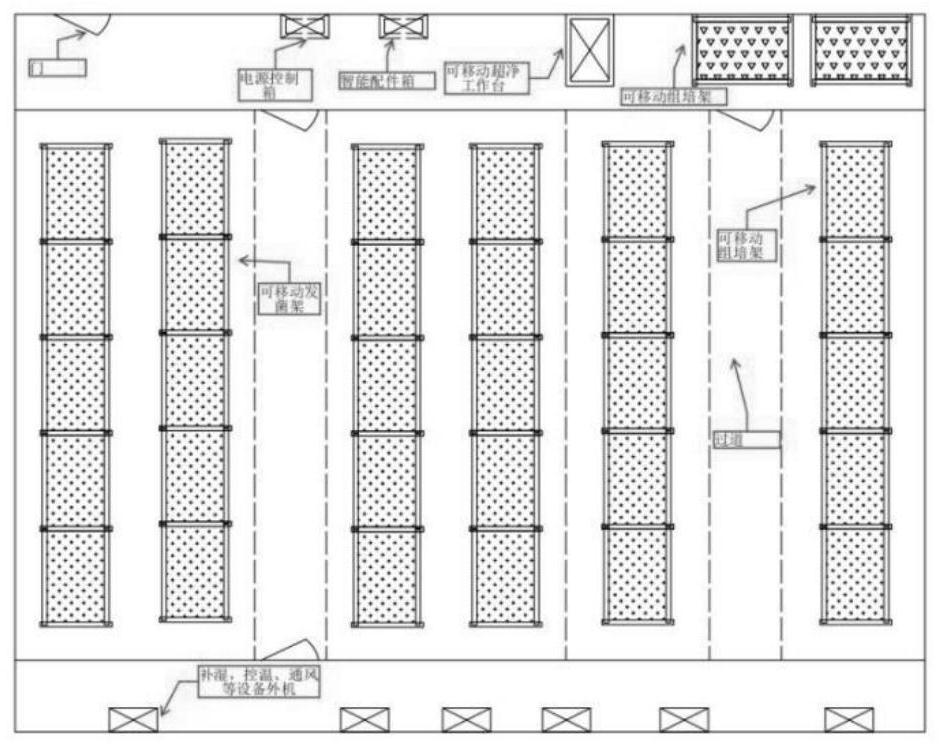
Figure 1 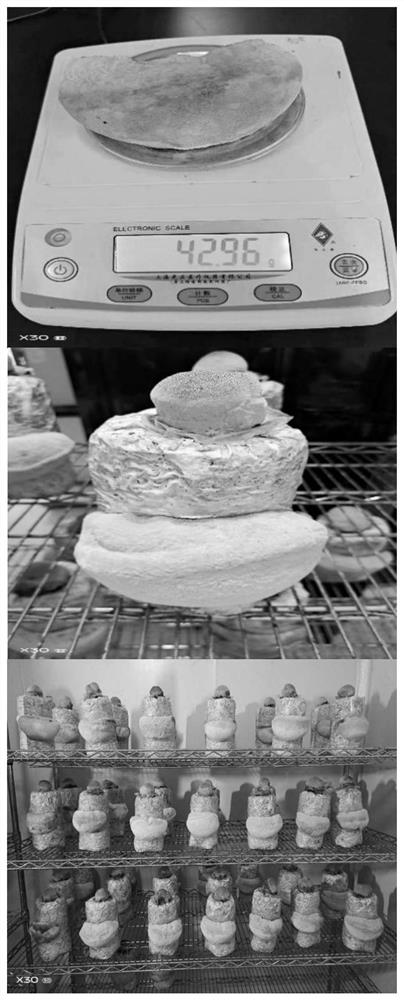
Figure 2 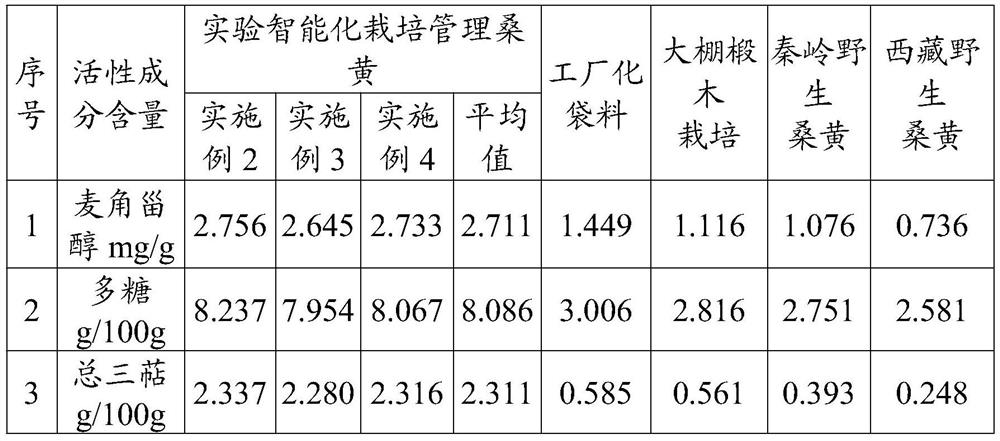
Figure 3
Abstract
Description
technical field
[0001] The invention relates to the technical field of medicinal and edible fungus cultivation, in particular to a method for improving the cultivation efficiency of Phellinus phellidis by intelligent cultivation management in a laboratory. Background technique
[0002] Phellinus mulberry is a precious Chinese herbal medicine growing on mulberry trees. It has been used as a traditional Chinese medicine for more than 2,000 years. "Describes Phellinus as "long-term service, making light of life and prolonging life", so Phellinus has the reputation of "forest gold". At present, many institutions in China have preserved Phellinus species and have carried out a series of research. Phellinus anticancer effect was first announced by the Japanese National Cancer Research Center in 1968. The experiment showed that the water extract of the wild Phellinus fruiting body had an inhibitory effect on mouse sarcoma S180 tumor cells, and the proliferation inhibition rate was...
Examples
Embodiment 2
[0048] Optimization of the quality improvement of the solid plate medium of the Phellinus radix parent species: under sterile conditions, after inoculating the activated Phellinus slant parent species on the solid plate medium of the Phellinus chinensis species, cultured at 26°C for 10 days to optimize the quality. Fast growing, dense and vigorous, solid Phellinus strains with neat edges for use.
[0049] The components used in the solid plate medium are: 230g / L potato, 23g / L glucose, 0.3g / L lignin, 1.2g / LMgSO 4 , 1.5g / LKH 2 PO 4 , 1.5ml / L wood vinegar, 18.0g / L agar, the remainder water, and adjust the pH to 6.0.
[0050] Phellinus liquid strain intermittent expansion culture: liquid expansion medium at a temperature of 121 ° C, autoclaved for 30 minutes, and cooled in a sterile environment. Under aseptic conditions, 10 pieces of Phellinus fungi with a diameter of 0.6cm round cakes were placed in the liquid medium and cultured with intermittent shaking. Under sterile dark c...
Embodiment 3
[0057] Optimization of the quality improvement of the solid plate medium of the Phellinus radix parent species: under sterile conditions, after inoculating the activated Phellinus slant parent species on the solid plate medium of the Phellinus chinensis species, cultured at 26°C for 10 days to optimize the quality. Fast growing, dense and vigorous, solid Phellinus strains with neat edges for use.
[0058] The ingredients used in the solid plate medium are: 200g / L potato, 24g / L glucose, 0.2g / L lignin, 1.1g / LMgSO 4 , 1.4g / LKH 2 PO 4 , 2.0ml / L wood vinegar, 17.0g / L agar, the balance of water, and adjust the pH to 6.0.
[0059] Phellinus liquid strain intermittent expansion culture: liquid expansion medium at a temperature of 121 ° C, autoclaved for 30 minutes, and cooled in a sterile environment. Under aseptic conditions, 10 pieces of Phellinus fungi with a diameter of 0.6cm round cakes were placed in the liquid medium and cultured with intermittent shaking. Under sterile dark...
Embodiment 4
[0067] Optimization of the quality improvement of the solid plate medium of Phellinus chinensis: Under sterile conditions, after inoculating the activated Phellinus slant mother species on the solid plate medium of Phellinus chinensis, cultured at 25°C for 10 days to improve the quality, select Fast growing, dense and vigorous, solid Phellinus strains with neat edges for use.
[0068] The ingredients used in the solid plate medium are: 220g / L potato, 20g / L glucose, 0.4g / L lignin, 1.3g / LMgSO 4 , 1.6g / LKH 2 PO 4 , 3.0ml / L wood vinegar, 16.0g / L agar, the balance of water, and adjust the pH to 6.0.
[0069] Phellinus liquid strain intermittent expansion culture: liquid expansion medium at a temperature of 121 ° C, autoclaved for 30 minutes, and cooled in a sterile environment. Under aseptic conditions, 10 pieces of Phellinus fungi with a diameter of 0.6cm round cakes were placed in the liquid medium and cultured with intermittent shaking. Under sterile dark conditions, the temp...