
A self-compensating in-situ drilling coring and testing device
A testing device and self-compensating technology, applied in the direction of extraction of undisturbed cores, earthwork drilling, wellbore/well components, etc., can solve problems such as staying in conceptualization, achieve fidelity, save energy, save production and maintenance costs Effect
Patent Information
- Authority / Receiving Office
- CN · China
- Patent Type
- Patents(China)
- Current Assignee / Owner
- Publication Date
- 2021-12-17
Smart Images

Figure 1 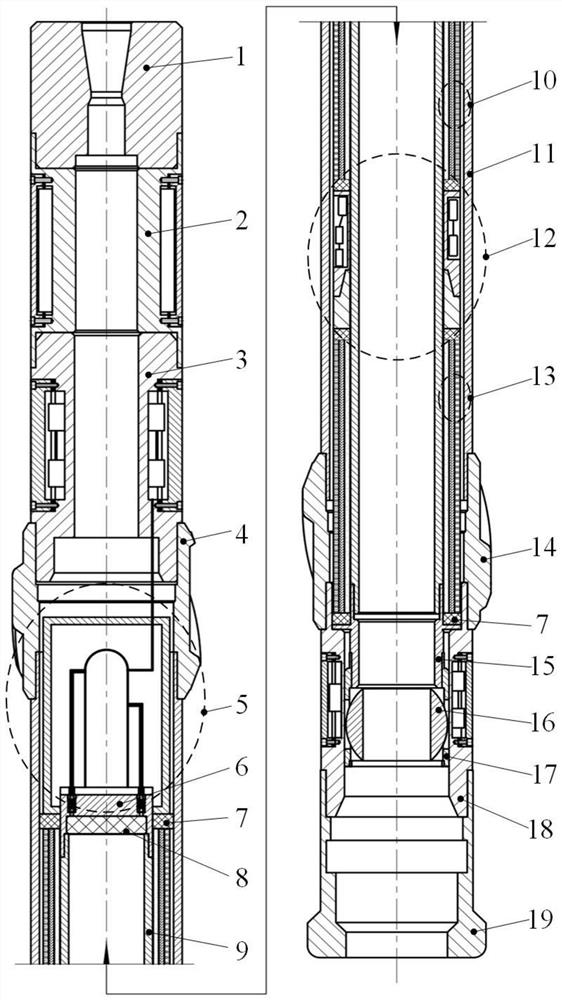
Figure 2 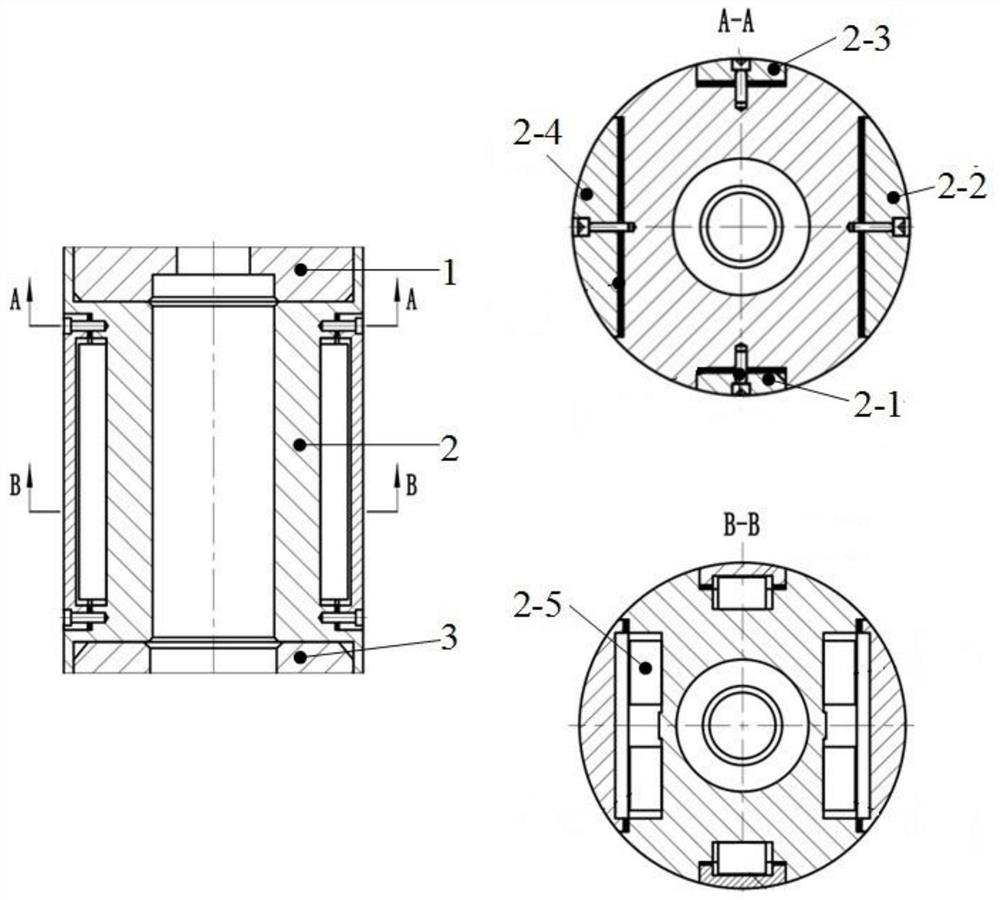
Figure 3
Abstract
Description
technical field
[0001] The invention relates to the technical field of oil exploration and development petroleum engineering drilling and coring, and more specifically relates to a self-compensating in-situ drilling and coring and testing device. Background technique
[0002] The study of gas hydrate sediment cores is an essential basic data required for petroleum resource development and engineering geological evaluation research. Conventional core drilling tool assemblies only have simple coring tools, centralizers, and heavy drill pipes, and there are no pressure-holding measures, or the pressure-holding time of sealed coring tools is limited. When the core is recovered from the downhole to the wellhead, due to temperature Due to changes in environmental conditions such as pressure and pressure, the internal structure of the core sample will change, so that it cannot reflect the true nature of the natural gas hydrate in the actual formation, and even a complete core sampl...
Examples
Embodiment
[0044] refer to figure 1 As shown, a self-compensating in-situ drilling coring and testing device includes a safety upper joint 1, a power supply base 2, a core control base 3, a first centering joint 4, and a fixed connection from top to bottom. Coring inner cylinder 9, coring outer cylinder 11, second centering joint 14, core measurement and control base 18, downhole coring bit 19; said core control base 3 is provided with a pressure temperature control device; correspondingly, the core measurement and control The inside of the base 18 is provided with a pressure and temperature measuring device and a ball valve opening and closing control device; the coring inner cylinder 9 is sleeved inside the coring outer cylinder 11, and the The upper section 10 of the heat preservation device and the lower section 13 of the heat preservation device are installed between the outer cylinders 11; a rock core deformation testing device 12 is arranged between the upper section 10 of the hea...