

A random access method for single-stranded DNA data storage information
By designing stem-loop primers and specific polymerase chain reactions with selective enhancement modules, the problem of random access accuracy caused by reduced primer orthogonality in the existing technology is solved, and high-precision single-stranded DNA data storage information is achieved. Access, especially under two-base difference conditions, significantly improves access accuracy.
Patent Information
- Application Number
- CN202111114042.4
- Authority / Receiving Office
- CN · China
- Patent Type
- Patents(China)
- Current Assignee / Owner
- Filing Date
- 2021-09-23
- Publication Date
- 2024-10-11
- Estimated Expiration
- 2041-09-23
AI Technical Summary
When the existing DNA information storage technology distinguishes bases close to the 5' end of the primer, the orthogonality between primers is reduced, resulting in a reduction in the specificity of the PCR process, limiting the number of available orthogonal primers and the design complexity, making it difficult to implement High-precision random access.
Design stem-loop primers with selectivity enhancement modules to identify target DNA fragments through complementary pairing of fixed loop regions and stem regions, and combine with specific polymerase chain reactions to achieve high selectivity and high-precision randomization of DNA data storage information. access.
It significantly improves the random access accuracy of single-stranded DNA data storage information, especially under double-base difference conditions, improves the random access accuracy of low-orthogonality primers, and enhances the amplification specificity of target DNA.
Smart Images
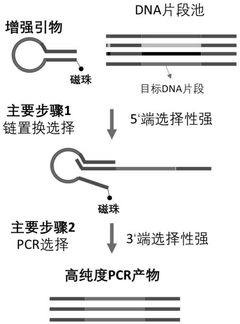
Figure FT_1 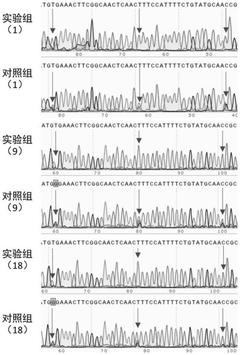
Figure FT_2 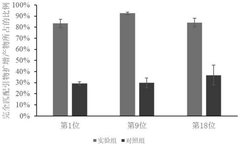
Figure FT_3
Abstract
Description
Technical Field
[0001] The present invention relates to the technical field of bioinformatics, and in particular to a random access method for single-stranded DNA data storage information. Background Art
[0002] DNA information storage technology has the characteristics of high density and long storage reliability cycle, which has significant advantages over traditional storage media. Random access technology is the core function of storage. The current mainstream DNA information storage technology realizes large-scale data storage by synthesizing a large number of short-chain DNA sequences through DNA chips. DNA information storage random access technology designs different PCR primers with high orthogonality at both ends of the short chain, and then specifically amplifies the target DNA fragment through polymerase chain reaction (PCR), and then realizes random access to DNA data storage through sequencing reading. High-precision random access to large-scale data storage requires a large number of orthogonal primers. However, when the distinguishing base is close to the 5' end of the primer, the orthogonality between primers is greatly reduced, and the specificity of the PCR process is greatly reduced, which greatly interferes with the random access reading process. The number of available orthogonal primers and the complexity of orthogonal primer design are greatly limited. Summary of the invention
[0003] In view of this, the present invention provides a random access method for single-stranded DNA data storage information. The method is based on a DNA strand displacement reaction of a stem-loop primer and a specific polymerase chain reaction, which achieves highly selective amplification of the target DNA and significantly improves the random access accuracy of the single-stranded DNA data storage information.
[0004] In order to achieve the above-mentioned object of the invention, the present invention provides the following technical solutions:
[0005] The present invention provides a random access method for single-stranded DNA data storage information, comprising:
[0006] Step 1: designing a stem-loop primer; the stem-loop primer comprises a fixed loop region and a stem region 1 and a stem region 2 capable of base complementary pairing;
[0007] The partial sequence at the 3' end of the fixed loop region and the sequence formed by the stem region 1 are complementary to the 3' end base of the target DNA fragment;
[0008] Step 2: mixing the single-stranded DNA data storage sample to be accessed with the stem-loop primer, so that the target DNA fragment in the single-stranded DNA data storage sample undergoes strand displacement with the stem region 2 of the stem-loop primer, and obtaining a strand displacement complex bound with the target DNA fragment;
[0009] Step 3: Perform PCR amplification on the obtained strand displacement complex using upstream and downstream primers that specifically recognize the target DNA fragment, sequence the amplified product, and decode the sequencing result to obtain the storage information of the target DNA fragment.
[0010] In step 1 of the present invention, the sequence composed of the partial sequence at the 3' end of the fixed loop region and the sequence of the stem region 1 is complementary to the base at the 3' end of the target DNA fragment, that is, the sequence composed of the partial sequence at the 3' end of the fixed loop region and the sequence of the stem region 1 is complementary to the base at the 3' end of the target DNA fragment, and the target DNA fragment can be specifically identified. In some specific embodiments of the present invention, the sequence composed of the partial sequence at the 3' end of the fixed loop region and the sequence of the stem region 1 is used as an upstream primer for specifically amplifying the target DNA fragment during the PCR amplification process in step 3.
[0011] The random access method provided by the present invention has a flowchart of the access process. Figure 1 .
[0012] The present invention first designs a stem-loop primer with a selective enhancement module. Wherein, the selective enhancement module is a sequence that can specifically recognize and bind to a target DNA fragment, that is, a partial sequence at the 3' end of the fixed loop region and a sequence of the stem region 1. The stem-loop primer specifically recognizes and binds to the target DNA fragment through the selective enhancement module, that is, strand displacement selection. The target DNA fragment is extracted from a single-stranded DNA data storage sample through strand displacement selection, and then ordinary PCR amplification is performed, and the high selectivity of the 3' end of PCR itself is utilized to finally achieve high-selectivity, high-precision random access.
[0013] In some embodiments, the sequence of at least 3 bp at the 3' end of the fixed loop region and the sequence of stem region 1 are complementary to the base at the 3' end of the target DNA fragment.
[0014] In some embodiments, the number of bases in the stem region 1 is 6 to 10 bp. In some specific embodiments, the number of bases in the stem region 1 is 6 bp.
[0015] In the present invention, the strand displacement reaction in step 2 is specifically as follows: mixing the single-stranded DNA data storage sample, the magnetic beads coupled with the stem-loop primer and the TBST buffer, resuspending the magnetic beads, incubating at a constant temperature of 30° C. for 2 h, magnetically separating, discarding the supernatant, and washing the magnetic beads.
[0016] Wherein, the stem-loop primer is coupled to the magnetic beads through streptavidin and biotin.
[0017] More specifically, the 5' end of the stem-loop primer is modified with biotin, and the magnetic beads are streptavidin-modified magnetic beads.
[0018] In the present invention, the PCR amplification uses the strand displacement complex as a template and adds the following system:
[0019] 1 μL of 10mM dNTP, 25 μL of 2×Phanta Max buffer, 1 μL of Phanta enzyme, 2 μL of upstream and downstream primers, and add sterile water to 50 μL.
[0020] In the present invention, the procedure of PCR amplification is:
[0021] Pre-denaturation at 95°C for 5 min; denaturation at 95°C for 15 sec, annealing at 53°C for 15 sec, extension at 72°C for 15 sec, 35 cycles;
[0022] Fully extend at 72°C for 10 min; store at 4°C.
[0023] The random access method for single-stranded DNA data storage information provided by the present invention is based on the DNA strand displacement reaction of the stem-loop primer and the specific polymerase chain reaction, which realizes the high selective amplification of the target DNA and significantly improves the random access accuracy of the single-stranded DNA data storage information. The results show that under the condition of double base difference, the access method of the hairpin primer based on DNA strand displacement of the present invention has a significant effect on improving the random access accuracy in DNA data storage, proving that the two-step selection method based on DNA strand displacement reaction and specific polymerase chain reaction of the present invention can effectively improve the random access accuracy of low-orthogonality primers. BRIEF DESCRIPTION OF THE DRAWINGS
[0024] Figure 1 1. A flow chart showing a random access method of the present invention;
[0025] Figure 2 Shows the sequencing results of accessing 3 different base difference positions based on two different access methods;
[0026] Figure 3 The figure shows the access to three different base difference positions based on two different access methods, and the proportion of the amplification products of the completely matched primers is calculated by measuring the peak heights of the corresponding positions. DETAILED DESCRIPTION
[0027] The present invention provides a random access method for single-stranded DNA data storage information. Those skilled in the art can refer to the content of this article and appropriately improve the process parameters to achieve it. It is particularly important to point out that all similar replacements and modifications are obvious to those skilled in the art, and they are all considered to be included in the present invention. The methods and applications of the present invention have been described through preferred embodiments, and relevant personnel can obviously modify or appropriately change and combine the methods and applications of this article without departing from the content, spirit and scope of the present invention to implement and apply the technology of the present invention.
[0028] The present invention provides a random access method for single-stranded DNA data storage information, comprising:
[0029] Step 1: designing a stem-loop primer; the stem-loop primer comprises a fixed loop region and a stem region 1 and a stem region 2 capable of base complementary pairing;
[0030] The partial sequence at the 3' end of the fixed loop region and the sequence formed by the stem region 1 are complementary to the 3' end base of the target DNA fragment;
[0031] Step 2: mixing the single-stranded DNA data storage sample to be accessed with the stem-loop primer, so that the target DNA fragment in the single-stranded DNA data storage sample undergoes strand displacement with the stem region 2 of the stem-loop primer, and obtaining a strand displacement complex bound with the target DNA fragment;
[0032] Step 3: Perform PCR amplification on the obtained strand displacement complex using upstream and downstream primers that specifically recognize the target DNA fragment, connect the amplified product to a cloning vector, transform the microorganism, and then sequence it, and read the storage information of the target DNA fragment according to the sequencing result.
[0033] In some specific embodiments, the random access method for single-stranded DNA data storage information provided by the present invention specifically includes:
[0034] 1) Stem-loop primer pretreatment: Use a pipette to take 10 μL of 0.1 μM stem-loop primer and pretreat at 95° C. for 5 min.
[0035] 2) Place the magnetic bead bottle on a vortex oscillator for 20 seconds to vortex and resuspend the magnetic beads. Use a pipette to transfer 10 μL of magnetic beads to a new centrifuge tube. Place the centrifuge tube on a magnetic separator and let it stand for 1 minute (this operation is referred to as magnetic separation later on). Use a pipette to remove the supernatant and remove the centrifuge tube from the magnetic separator.
[0036] 3) Add 1 mL of TBST buffer to the centrifuge tube, cover the tube, and shake thoroughly to resuspend the magnetic beads. Perform magnetic separation and remove the supernatant.
[0037] 4) Repeat “Step 3)” once.
[0038] 5) Add 500 μL of stem-loop primer diluted with TBST buffer to the centrifuge tube and shake thoroughly to resuspend the magnetic beads. Place the centrifuge tube on a rotating mixer and rotate and mix at room temperature for 30 minutes.
[0039] 6) Magnetic separation, remove the supernatant.
[0040] 7) Wash the magnetic beads three times according to the method in "Step 3)".
[0041] 8) Add 14 μL of TBST buffer and 1 μL of each of the four templates, mix and resuspend the magnetic beads. Place in a 30°C constant temperature incubator for 2 hours.
[0042] 9) Magnetic separation, remove the supernatant.
[0043] 10) Wash the magnetic beads six times according to the method in "Step 3)".
[0044] 11) Add the following PCR amplification system (50 μl): 1 μl of 10 mM dNTP, 25 μl of 2×Phanta Max buffer, 1 μl of Phanta enzyme, 2 μl of upstream and downstream primers, and add sterile water to 50 μl.
[0045] 12) PCR reaction procedure: pre-denaturation at 95°C for 5 min; denaturation at 95°C for 15 sec, annealing at 53°C for 15 sec, extension at 72°C for 15 sec, 35 cycles; full extension at 72°C for 10 min; storage at 4°C.
[0046] 13) Product recovery: The recovery of PCR products was carried out according to the instructions of Tiangen Agarose Gel DNA Recovery Kit and Common DNA Product Purification Kit.
[0047] Unless otherwise specified, the test materials used in the present invention are all common commercial products and can be purchased in the market.
[0048] The present invention will be further described below in conjunction with embodiments:
[0049] Example 1
[0050] 1. Experimental materials and instruments: stem-loop primers, single-stranded DNA data storage samples, 1X TBST buffer, streptavidin magnetic beads, PhantaDNA polymerase, PCR instrument, vortex oscillator, pipette, constant temperature incubator,
[0051] Primer sequences of the experimental group:
[0052] 1) Stem-loop primer (5'-3')
[0053] GATGATGACATGCTACTCTGCAGGCCGACATGCTACGACGACCCCCTGCAGAGTAGCATGTC.
[0054] 2) Simple Primer 1 (5'-3')
[0055] CCTGCAGAGTAGCATGTCCG;
[0056] 3) Simple Primer 2 (5'-3')
[0057] AATGCAGAGTAGCATGTCCG;
[0058] 4) Simple Primer 3 (5'-3')
[0059] TTTGCAGAGTAGCATGTCCG;
[0060] 5) Simple Primer 4 (5'-3')
[0061] GGTGCAGAGTAGCATGTCCG;
[0062] 6) Simple Primer 5 (5'-3')
[0063] GCCTACGTAGTCACAGTCGG
[0064] 7) Template 1 (5'-3')
[0065] GCCTACGTAGTCACAGTCGGTTTACGAAAGAGCGTAGGAACCGTCAATATCGGAGTATCGCTCGGAATCGACCAGTGCTGAGAAAATATGTGAAACTTCGGCAACTCAACTTTCCATTTTCTGTATGCAACCGCTAAATGGGTACCAAATTCGGTAATGGTGGTTTAGCCCACGGACATGCTACTCTGCAGGGGGTCG
[0066] 8) Template 2 (5'-3')
[0067] GCCTACGTAGTCACAGTCGGTTTACGAAAGAGCGTAGGAACCGTCAATATCGGAGTATCGCTCGGAATCGACCAGTGCTGAGAAAATATGCGAAACTTCGGCAACTCAACATTCCATTTTCTGTATGCAAGCGCTAAATGGGTACCAAATTCGGTAATGGTGGTTTAGCCCACGGACATGCTACTCTGCAAAGGGTCG
[0068] 9) Template 3 (5'-3')
[0069] GCCTACGTAGTCACAGTCGGTTTACGAAAGAGCGTAGGAACCGTCAATATCGGAGTATCGCTCGGAATCGACCAGTGCTGAGAAAATATGAGAAACTTCGGCAACTCAACCTTCCATTTTCTGTATGCAATCGCTAAATGGGTACCAAATTCGGTAATGGTGGTTTAGCCCACGGACATGCTACTCTGCATTGGGTCG
[0070] 10) Template 4 (5'-3')
[0071] GCCTACGTAGTCACAGTCGGTTTACGAAAGAGCGTAGGAACCGTCAATATCGGAGTATCGCTCGGAATCGACCAGTGCTGAGAAAATATGGGAAACTTCGGCAACTCAACGTTCCATTTTCTGTATGCAAACGCTAAATGGGTACCAAATTCGGTAATGGTGGTTTAGCCCACGGACATGCTACTCTGCACCGGGTCG
[0072] 2. Test methods:
[0073] The random access method of the present invention comprises:
[0074] 1) Stem-loop primer pretreatment: Use a pipette to take 10 μL of 0.1 μM stem-loop primer and pretreat at 95° C. for 5 min.
[0075] 2) Place the magnetic bead bottle on a vortex oscillator for 20 seconds to vortex and resuspend the magnetic beads. Use a pipette to transfer 10 μL of magnetic beads to a new centrifuge tube. Place the centrifuge tube on a magnetic separator and let it stand for 1 minute (this operation is referred to as magnetic separation later on). Use a pipette to remove the supernatant and remove the centrifuge tube from the magnetic separator.
[0076] 3) Add 1 mL of TBST buffer to the centrifuge tube, cover the tube, and vortex to resuspend the magnetic beads. Perform magnetic separation and remove the supernatant.
[0077] 4) Repeat “Step 3)” once.
[0078] 5) Add 500 μL of stem-loop primer diluted with TBST buffer to the centrifuge tube and shake thoroughly to resuspend the magnetic beads. Place the centrifuge tube on a rotating mixer and rotate and mix at room temperature for 30 minutes.
[0079] 6) Magnetic separation, remove the supernatant.
[0080] 7) Wash the magnetic beads three times according to the method in "Step 3)".
[0081] 8) Add 14 μL of TBST buffer and 1 μL of each of the four templates, mix and resuspend the magnetic beads. Place in a 30°C constant temperature incubator for 2 hours.
[0082] 9) Magnetic separation, remove the supernatant.
[0083] 10) Wash the magnetic beads six times according to the method in "Step 3)".
[0084] 11) Add the following PCR amplification system (50 μl): 1 μl of 10 mM dNTP, 25 μl of 2×Phanta Max buffer, 1 μl of Phanta enzyme, 2 μl of upstream and downstream primers, and add sterile water to 50 μl.
[0085] 12) PCR reaction procedure: pre-denaturation at 95°C for 5 min; denaturation at 95°C for 15 sec, annealing at 53°C for 15 sec, extension at 72°C for 15 sec, 35 cycles; full extension at 72°C for 10 min; storage at 4°C.
[0086] 13) Product recovery: The recovery of PCR products was carried out according to the instructions of Tiangen Agarose Gel DNA Recovery Kit and Common DNA Product Purification Kit.
[0087] Access method for the control group: The control group used simple primer 1, simple primer 2, simple primer 3, and simple primer 4 as upstream primers, and the downstream primer was simple primer 5. The experimental group used the same upstream and downstream primers as the control group to amplify the single-stranded DNA data storage samples.
[0088] 3. Experimental results:
[0089] The experimental group used a double-base difference hairpin primer designed based on the random method of the present invention to identify the target DNA sequence, and the control group used a double-base difference simple primer to identify the target DNA sequence. The height of the sequencing peak graph was measured to indicate the concentration of the corresponding template. The sequencing results are shown in FIG. Figure 2 When the double base difference position is at the 1st, 9th and 18th positions, taking the middle base judgment site as an example, the experimental group basically presents a single peak graph; in the control group, the peaks overlap with each other, the target DNA sequence does not have an advantage, and the high-precision access effect is poor. The proportion of the fully matched primer amplification product is calculated based on the height of the judgment site peak graph of the sequencing results, and the results are shown in Figure 3 .
[0090] When the base difference was at the 1st position, the proportion of products amplified by perfectly matched primers was 29.41% in the control group, while the proportion of products amplified by perfectly matched primers was 83.33% in the experimental group, an increase of 53.92%; when the base difference was at the 9th position, the proportion of products amplified by perfectly matched primers was 29.79% in the control group, while the proportion of products amplified by perfectly matched primers was 92.59% in the experimental group, an increase of 62.81%; when the base difference was at the 18th position, the proportion of products amplified by perfectly matched primers was 36.73% in the control group, while the proportion of products amplified by perfectly matched primers was 84.21% in the experimental group, an increase of 47.48%.
[0091] The above results show that under the condition of double base difference, the random access method of the hairpin primer based on DNA strand displacement of the present invention has a significant effect on improving the random access accuracy in DNA data storage. It proves that the two-step selection method based on DNA strand displacement reaction and specific polymerase chain reaction of the present invention can effectively improve the random access accuracy of low orthogonal primers.
[0092] The above are only preferred embodiments of the present invention. It should be pointed out that, for ordinary technicians in this technical field, several improvements and modifications can be made without departing from the principles of the present invention. These improvements and modifications should also be regarded as the scope of protection of the present invention.
Claims
1. A random access method for single-stranded DNA data storage information, characterized in that: include: Step 1: designing a stem-loop primer; the stem-loop primer comprises a fixed loop region and a stem region 1 and a stem region 2 of complementary base pairing; The partial sequence at the 3' end of the fixed loop region and the sequence formed by the stem region 1 are complementary to the 3' end base of the target DNA fragment; Step 2: Mix the single-stranded DNA data storage sample to be accessed, the magnetic beads coupled to the stem-loop primer, and the TBST buffer, so that the target DNA fragment in the single-stranded DNA data storage sample undergoes strand displacement with the stem-loop primer, thereby displacing the stem region 2 of the stem-loop primer; resuspend the magnetic beads, incubate at 30° C. for 2 h, perform magnetic separation, discard the supernatant, and wash the magnetic beads to obtain a strand displacement complex of the target DNA fragment and the stem region 1; Step 3: Perform PCR amplification on the obtained strand displacement complex using upstream and downstream primers that specifically recognize the target DNA fragment, sequence the amplified product, and read the stored information of the target DNA fragment according to the sequencing result.
2. The random access method according to claim 1, characterized in that: The sequence of at least 3 bp at the 3' end of the fixed loop region and the sequence of the stem region 1 are complementary to the base at the 3' end of the target DNA fragment.
3. The random access method according to claim 1, characterized in that: The stem-loop primer is coupled to the magnetic beads via streptavidin and biotin.
4. The random access method according to claim 3, characterized in that: The 5' end of the stem-loop primer is modified with biotin, and the magnetic beads are streptavidin-modified magnetic beads.
5. The method according to claim 1, characterized in that The PCR amplification uses the strand displacement complex as a template and adds the following system: 1µL of 10mM dNTP, 25 µL of 2×Phanta Max buffer, 1µL of Phanta enzyme, 2µL of upstream and downstream primers, and add sterile water to 50µL.
6. The method according to claim 1, characterized in that The procedure of the PCR amplification is: Pre-denaturation at 95°C for 5 min; denaturation at 95°C for 15 sec, annealing at 53°C for 15 sec, extension at 72°C for 15 sec, 35 cycles; Fully extend at 72℃ for 10 min; store at 4℃.