

A high-strength polytetrafluoroethylene recycled powder composite material and its preparation process
By introducing polytetrafluoroethylene fiber into PTFE recycled powder, the problem of low tensile strength of PTFE recycled powder in the existing technology is solved, the preparation of high-strength polytetrafluoroethylene recycled powder composite material is realized, and various application needs are met. .
Patent Information
- Application Number
- CN202410926999.6
- Authority / Receiving Office
- CN · China
- Patent Type
- Patents(China)
- Current Assignee / Owner
- Filing Date
- 2024-07-11
- Publication Date
- 2024-10-18
- Estimated Expiration
- 2044-07-11
AI Technical Summary
The existing recycled PTFE powder has low tensile strength, which limits its use in many application fields. The existing technology mainly improves the pressure resistance by adding recycled powder but cannot improve the tensile strength.
By mixing the polytetrafluoroethylene dispersion and polytetrafluoroethylene regenerated powder, polytetrafluoroethylene fibers are produced in the powder gaps of the regenerated powder to improve the strength of the product. An organic solvent is used to form a stable suspension, which is washed and crushed. Obtain uniform high-strength recycled powder composite.
The tensile strength of the polytetrafluoroethylene recycled powder composite is significantly improved to 15-20MPa, and the elongation at break is 200-300%, which meets the processing needs and expands its application fields.
Smart Images
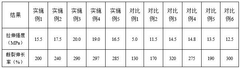
Figure SMS_1
Abstract
Description
Technical Field
[0001] The invention relates to the technical field of PTFE recycled materials, in particular to a high-strength polytetrafluoroethylene recycled powder composite material and a preparation process thereof. Background Art
[0002] Polytetrafluoroethylene (PTFE), commonly known as the "King of Plastics", is a polymer compound made of tetrafluoroethylene. It has excellent chemical stability, corrosion resistance, sealing, high lubricity and non-stickiness, electrical insulation and good anti-aging resistance. It is widely used in environmental protection, filtration, construction, aerospace and other fields. In our daily life, polytetrafluoroethylene (PTFE) has become one of the indispensable polymer materials with its excellent performance and wide application fields.
[0003] However, the waste disposal of PTFE has always been a thorny issue. With the improvement of environmental awareness, PTFE recycled powder has emerged as an environmentally friendly and economical material, which not only solves the problem of PTFE waste disposal, but also brings new possibilities to the field of materials science. However, the tensile strength of the blank made of PTFE recycled powder is much lower than that of the original PTFE. This characteristic limits its application in many fields. In the prior art, recycled materials are usually mixed with new materials for use, and the processing method is similar to that of new materials, but the tensile properties of the resulting products are significantly worse than those of new materials.
[0004] German patent document DE2939754B1 improves the pressure resistance of polytetrafluoroethylene products by adding polytetrafluoroethylene recycled powder during production. The technology described in this patent is to add recycled powder as a filler into new materials to improve their pressure resistance, but this method cannot improve its own tensile strength, thus limiting its application field. Japanese patent JP07062184A provides a slidable sealing composition, which uses part of the recycled powder to replace PTFE and plays a lubricating role in the slidable sealing composition. The PTFE recycled powder has the same lubricity as the new PTFE powder, but its tensile strength is still significantly lower than that of the new material.
[0005] It can be seen that the prior art generally utilizes other properties of PTFE recycled powder, but the problem of reduced tensile strength caused by adding PTFE recycled powder seriously limits its application field. Summary of the invention
[0006] The purpose of the present invention is to overcome the deficiencies of the above-mentioned prior art and provide a high-strength polytetrafluoroethylene recycled powder composite material and a preparation method thereof. The present invention mixes a polytetrafluoroethylene dispersion with polytetrafluoroethylene recycled powder so that polytetrafluoroethylene fibers can be generated in the powder gaps of the polytetrafluoroethylene recycled powder, thereby improving the strength of the product.
[0007] To achieve the above object, the present invention adopts the following technical solutions:
[0008] A high-strength polytetrafluoroethylene recycled powder composite material comprises polytetrafluoroethylene recycled powder and polytetrafluoroethylene dispersion, wherein the mass ratio of the polytetrafluoroethylene recycled powder to the polytetrafluoroethylene dispersion is 1:1-4, the average particle size of the polytetrafluoroethylene recycled powder is ≤300um, the solid content of the polytetrafluoroethylene dispersion is 20-50%, the molecular weight of the polytetrafluoroethylene in the polytetrafluoroethylene dispersion is 3 million to 10 million, and the primary particle size of the dispersion is 200-500nm.
[0009] The tetrafluoroethylene regenerated powder is the re-crushed fine material of polytetrafluoroethylene products.
[0010] The high-strength polytetrafluoroethylene recycled powder composite material has a tensile strength of 15-20 MPa, an elongation at break of 200-300%, and a test standard of ASTM D4894.
[0011] Preferably, the mass ratio of the polytetrafluoroethylene regenerated powder to the polytetrafluoroethylene dispersion is 1:3-4.
[0012] Preferably, the polytetrafluoroethylene dispersion is a stock solution produced after emulsion polymerization, no additional emulsifier is added to the dispersion, the solid content of the dispersion used is 35-45%, the molecular weight of polytetrafluoroethylene is 5-7 million, and the primary particle size of the dispersion is 300-400 nm.
[0013] Preferably, the average particle size of the polytetrafluoroethylene regenerated powder is 50-300 um.
[0014] The present invention also provides a preparation process of the high-strength polytetrafluoroethylene recycled powder composite material, comprising the following steps:
[0015] The polytetrafluoroethylene recycled powder and polytetrafluoroethylene dispersion are mixed in proportion, an organic solvent is added to form a stable suspension, and the mixture is fully shaken until a precipitate is precipitated. The precipitate is washed three times with pure water and an organic solvent respectively, and then dried. The precipitate is crushed and broken up to obtain a high-strength polytetrafluoroethylene recycled powder composite material with uniform particle size.
[0016] Preferably, the average particle size of the obtained high-strength polytetrafluoroethylene recycled powder composite material is ≤300um.
[0017] Preferably, the amount of the organic reagent added to form a stable suspension is 2-5 times the mass of the polytetrafluoroethylene regenerated powder, so that the regenerated powder and the dispersion can form a stable suspension.
[0018] Preferably, the organic solvent is not limited to isopropanol, ethanol and other reagents, which are volatile and can make the polytetrafluoroethylene product crushed and dispersed into powder.
[0019] Preferably, the precipitate is pulverized using a dry mixer.
[0020] Beneficial effects of the present invention:
[0021] The present invention uses a polytetrafluoroethylene dispersion to mix with the re-crushed fine material of the polytetrafluoroethylene product, so that fibers are generated between the particles of the re-crushed fine material of the product, thereby increasing the strength of the recycled material product. During mixing, an organic reagent is used to disperse the re-crushed fine material of the product so that it can form a stable suspension with the dispersion to achieve the best mixing effect. After washing and drying the precipitate, it is crushed again to ensure the uniformity of the particle size of the high-strength regenerated powder. The tensile strength of the high-strength polytetrafluoroethylene regenerated powder composite obtained by the present invention is 15-20MPa, and the elongation at break is 200-300%, which can fully meet the processing requirements. DETAILED DESCRIPTION
[0022] The present invention is further described below in conjunction with the examples. The polytetrafluoroethylene regenerated powder used in the examples and comparative examples of the present invention is from the waste material of the suspended resin blank turning, and the regenerated powder of other polytetrafluoroethylene products can also be used. The polytetrafluoroethylene dispersion used is the original liquid produced after emulsion polymerization, and no additional emulsifier is added.
[0023] Example 1
[0024] A high-strength polytetrafluoroethylene recycled powder composite material and a preparation process thereof, the steps are as follows:
[0025] Add polytetrafluoroethylene recycled powder with an average particle size of 50um and polytetrafluoroethylene dispersion (solid content of 40%, molecular weight of 6 million, primary particle size of 350nm) into the blender in a mass ratio of 1:1, add isopropanol twice the mass of the polytetrafluoroethylene recycled powder as solvent to form a stable suspension, shake well until precipitation is precipitated, wash the precipitate three times with pure water and isopropanol respectively, dry it, and crush it again with the blender to obtain a uniform high-strength polytetrafluoroethylene recycled powder mixture.
[0026] Example 2
[0027] A high-strength polytetrafluoroethylene recycled powder composite material and a preparation process thereof, the steps are as follows:
[0028] Add polytetrafluoroethylene recycled powder with an average particle size of 50um and polytetrafluoroethylene dispersion (solid content of 40%, molecular weight of 6 million, primary particle size of 350nm) into the blender in a ratio of 1:2, add isopropanol 3 times the mass of the polytetrafluoroethylene recycled powder as solvent to form a stable suspension, shake well until precipitation occurs, wash the precipitate three times with pure water and isopropanol respectively, dry it, and crush it again with a blender to obtain a uniform high-strength polytetrafluoroethylene recycled powder mixture.
[0029] Example 3
[0030] A high-strength polytetrafluoroethylene recycled powder composite material and a preparation process thereof, the steps are as follows:
[0031] Add polytetrafluoroethylene recycled powder with an average particle size of 50um and polytetrafluoroethylene dispersion (solid content of 40%, molecular weight of 6 million, primary particle size of 350nm) into the blender in a ratio of 1:3, add isopropanol 3 times the mass of the polytetrafluoroethylene recycled powder as solvent to form a stable suspension, shake well until precipitation occurs, wash the precipitate three times with pure water and isopropanol respectively, dry it, and crush it again with a blender to obtain a uniform high-strength polytetrafluoroethylene recycled powder mixture.
[0032] Example 4
[0033] A high-strength polytetrafluoroethylene recycled powder composite material and a preparation process thereof, the steps are as follows:
[0034] Add polytetrafluoroethylene recycled powder with an average particle size of 50um and polytetrafluoroethylene dispersion (solid content of 40%, molecular weight of 6 million, primary particle size of 350nm) into the blender in a ratio of 1:4, add isopropanol 3 times the mass of the polytetrafluoroethylene recycled powder as solvent to form a stable suspension, shake well until precipitation occurs, wash the precipitate three times with pure water and isopropanol respectively, dry it, and crush it again with a blender to obtain a uniform high-strength polytetrafluoroethylene recycled powder mixture.
[0035] Example 5
[0036] A high-strength polytetrafluoroethylene recycled powder composite material and a preparation process thereof, the steps are as follows:
[0037] Add polytetrafluoroethylene recycled powder with an average particle size of 300um and polytetrafluoroethylene dispersion (solid content of 40%, molecular weight of 6 million, primary particle size of 350nm) into the blender in a ratio of 1:3, add isopropanol 5 times the mass of the polytetrafluoroethylene recycled powder as solvent to form a stable suspension, shake well until precipitation occurs, wash the precipitate three times with pure water and isopropanol respectively, dry it, and crush it again with a blender to obtain a uniform high-strength polytetrafluoroethylene recycled powder mixture.
[0038] Comparative Example 1
[0039] Polytetrafluoroethylene recycled powder with an average particle size of 50um without any treatment.
[0040] Comparative Example 2
[0041] A polytetrafluoroethylene recycled powder composite material and a preparation process thereof, the steps are as follows:
[0042] Polytetrafluoroethylene recycled powder with an average particle size of 50 um and polytetrafluoroethylene dispersion (solid content of 40%, molecular weight of 6 million, primary particle size of 350 nm) are added to the blender in a ratio of 1:0.5, and isopropanol in an amount 3 times the mass of the polytetrafluoroethylene recycled powder is added as a solvent to form a stable suspension. The suspension is fully shaken until a precipitate is precipitated. The precipitate is washed three times with pure water and isopropanol respectively, and then dried. The precipitate is crushed again with a blender to obtain a polytetrafluoroethylene recycled powder composite.
[0043] Comparative Example 3
[0044] A polytetrafluoroethylene recycled powder composite material and a preparation process thereof, the steps are as follows:
[0045] Polytetrafluoroethylene recycled powder with an average particle size of 50 um and polytetrafluoroethylene dispersion with a solid content of 40%, a molecular weight of 6 million, and a primary particle size of 350 nm) are added to a blender in a ratio of 1:5, and isopropanol 3 times the mass of the polytetrafluoroethylene recycled powder is added as a solvent to form a stable suspension. The suspension is fully shaken until a precipitate is precipitated. The precipitate is washed three times with pure water and isopropanol respectively, and then dried. It is crushed again with a blender to obtain a polytetrafluoroethylene recycled powder composite.
[0046] Comparative Example 4
[0047] A polytetrafluoroethylene recycled powder composite material and a preparation process thereof, the steps are as follows:
[0048] Polytetrafluoroethylene recycled powder with an average particle size of 350um and polytetrafluoroethylene dispersion (solid content of 40%, molecular weight of 6 million, primary particle size of 350nm) are added to the blender in a mass ratio of 1:3, and isopropanol in an amount of 3 times the mass of the polytetrafluoroethylene recycled powder is added as a solvent to form a stable suspension. The suspension is fully shaken until a precipitate is precipitated. The precipitate is washed three times with pure water and isopropanol respectively, and then dried. It is then crushed again with a blender to obtain a polytetrafluoroethylene recycled powder composite.
[0049] Comparative Example 5
[0050] A polytetrafluoroethylene recycled powder composite material and a preparation process thereof, the steps are as follows:
[0051] Polytetrafluoroethylene recycled powder with an average particle size of 50 um and polytetrafluoroethylene dispersion (solid content of 10%, molecular weight of 2 million, primary particle size of 150 nm) are added to the blender in a ratio of 1:3, and isopropanol in an amount 3 times the mass of the polytetrafluoroethylene recycled powder is added as a solvent to form a stable suspension. The suspension is fully shaken until a precipitate is precipitated. The precipitate is washed three times with pure water and isopropanol respectively, and then dried. The precipitate is crushed again with a blender to obtain a polytetrafluoroethylene recycled powder composite.
[0052] Comparative Example 6
[0053] The solid content of the polytetrafluoroethylene dispersion is 60%, the molecular weight is 2 million, the primary particle size is 600 nm, and the other preparation steps are the same as those in Comparative Example 5 to obtain a polytetrafluoroethylene recycled powder composite.
[0054] The tensile strength and elongation at break of the polytetrafluoroethylene recycled powder mixtures or single powders prepared in Examples 1-5 and Comparative Examples 1-6 were tested according to ASTM D4894. The test results are shown in Table 1.
[0055] Table 1 Tensile strength and elongation at break of polytetrafluoroethylene recycled powder mixture or single powder
[0056]
[0057] The high-strength recycled powder must meet the basic requirements of a tensile strength greater than 15 MPa and an elongation greater than 200% in subsequent processing and use. As can be seen from Table 1, the tensile strength of the high-strength polytetrafluoroethylene recycled powder composites obtained in Examples 1-5 is 15-20 MPa, and the elongation at break is 200-300%, which can meet the processing requirements.
[0058] Compared with Examples 1 to 4, the tensile strength and elongation at break of the polytetrafluoroethylene recycled powder with an average particle size of 50um without any treatment in Comparative Example 1 are both poor. Compared with Examples 1 to 4, the ratios of polytetrafluoroethylene recycled powder and polytetrafluoroethylene dispersion in Comparative Examples 2 and 3 are less than and greater than a certain ratio, respectively. Although the tensile strength and elongation at break are significantly improved compared with Comparative Example 1, they are still less than the product requirements. The dispersion ratio of Comparative Example 2 is too small, and the amount of fiber that can be provided is insufficient to provide sufficient strength. The dispersion ratio of Comparative Example 3 is too large. Although the amount of fiber is large, the structure of the material becomes loose. Although the elongation at break is significantly improved, its tensile strength is reduced. Compared with Examples 3 and 5, the particle size of the powder in Comparative Example 4 exceeds a certain range. The excessive particle size causes the sample to be unable to be fully compacted, and the tensile strength is lower than the requirement. Compared with Example 3, the solid content, primary particle size and molecular weight of the dispersion in Comparative Example 5 are all lower than the range of the preferred technical solution, and the tensile strength and elongation at break of the recycled powder do not meet the requirements. The solid content of the dispersion and the primary particle size of Comparative Example 5 are both beyond the preferred range, and the molecular weight is lower than the preferred range. Although the elongation at break of the regenerated powder meets the requirements, the tensile strength does not meet the requirements.
Claims
1. A high-strength polytetrafluoroethylene recycled powder composite material, characterized in that: It is prepared from polytetrafluoroethylene recycled powder and polytetrafluoroethylene dispersion, wherein the mass ratio of polytetrafluoroethylene recycled powder to polytetrafluoroethylene dispersion is 1:1-4, the average particle size of the polytetrafluoroethylene recycled powder is ≤300um, the solid content of the polytetrafluoroethylene dispersion is 20-50%, the molecular weight of polytetrafluoroethylene in the polytetrafluoroethylene dispersion is 3-10 million, and the primary particle size of the dispersion is 200-500nm.
2. The polytetrafluoroethylene recycled powder composite material according to claim 1, characterized in that: The tensile strength of high-strength polytetrafluoroethylene recycled powder composite is 15-20MPa, and the elongation at break is 200-300%.
3. The polytetrafluoroethylene recycled powder composite material according to claim 1, characterized in that: The mass ratio of the polytetrafluoroethylene regenerated powder to the polytetrafluoroethylene dispersion is 1:3-4.
4. The polytetrafluoroethylene recycled powder composite material according to claim 1, characterized in that: The polytetrafluoroethylene dispersion is a stock solution after emulsion polymerization, the solid content of the dispersion is 35-45%, the molecular weight of polytetrafluoroethylene is 5-7 million, and the primary particle size of the dispersion is 300-400 nm.
5. The polytetrafluoroethylene recycled powder composite material according to claim 1, characterized in that: The average particle size of the polytetrafluoroethylene recycled powder is 50-300 um.
6. The process for preparing the high-strength polytetrafluoroethylene recycled powder composite material according to any one of claims 1 to 5, characterized in that: The following steps are involved: The polytetrafluoroethylene recycled powder and polytetrafluoroethylene dispersion are mixed in proportion, an organic solvent is added to form a stable suspension, and the mixture is fully shaken until a precipitate is precipitated. The precipitate is washed three times with pure water and an organic solvent in sequence and then dried. The precipitate is crushed and broken up to obtain a high-strength polytetrafluoroethylene recycled powder composite material with uniform particle size.
7. The preparation process according to claim 6, characterized in that: The average particle size of the obtained high-strength polytetrafluoroethylene recycled powder composite material is ≤300um.
8. The preparation process according to claim 6, characterized in that: The amount of organic solvent added to form a stable suspension is 2-5 times the mass of the polytetrafluoroethylene regenerated powder.
9. The preparation process according to claim 6, characterized in that: The organic solvent includes one or more of isopropanol and ethanol.
Citation Information
Patent Citations
mixed material
DE2939754B1
Slidable sealing composition
JP1995062184A
Preparation method of low molecular weight polytetrafluoroethylene resin
CN102443086A
Process for production of aqueous polytetrafluoroethylene dispersion for coagulation processing, and aqueous polytetrafluoroethylene dispersion for coagulation processing
CN102575017A