
Gel formulations for guiding radiotherapy
a technology of radiotherapy and formulation, applied in the field of improved formulations for guiding radiotherapy, can solve the problems of limiting the practical usefulness of markers in radiotherapy, the risk of complications, and the significant and unpredictable movement of tumors and surrounding tissu
Patent Information
- Authority / Receiving Office
- US · United States
- Patent Type
- Patents(United States)
- Current Assignee / Owner
- Publication Date
- 2020-02-18
Smart Images
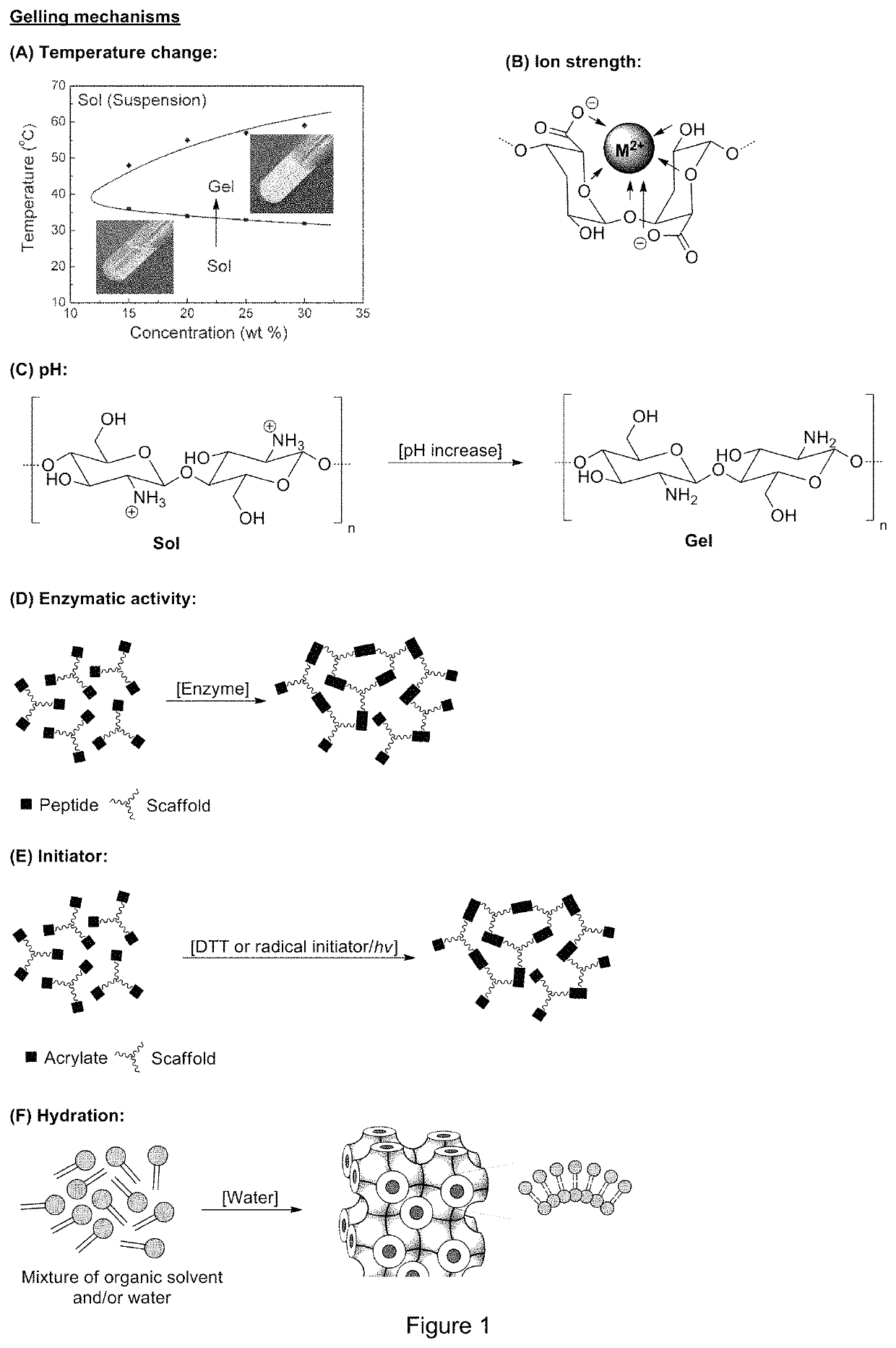
Figure 1 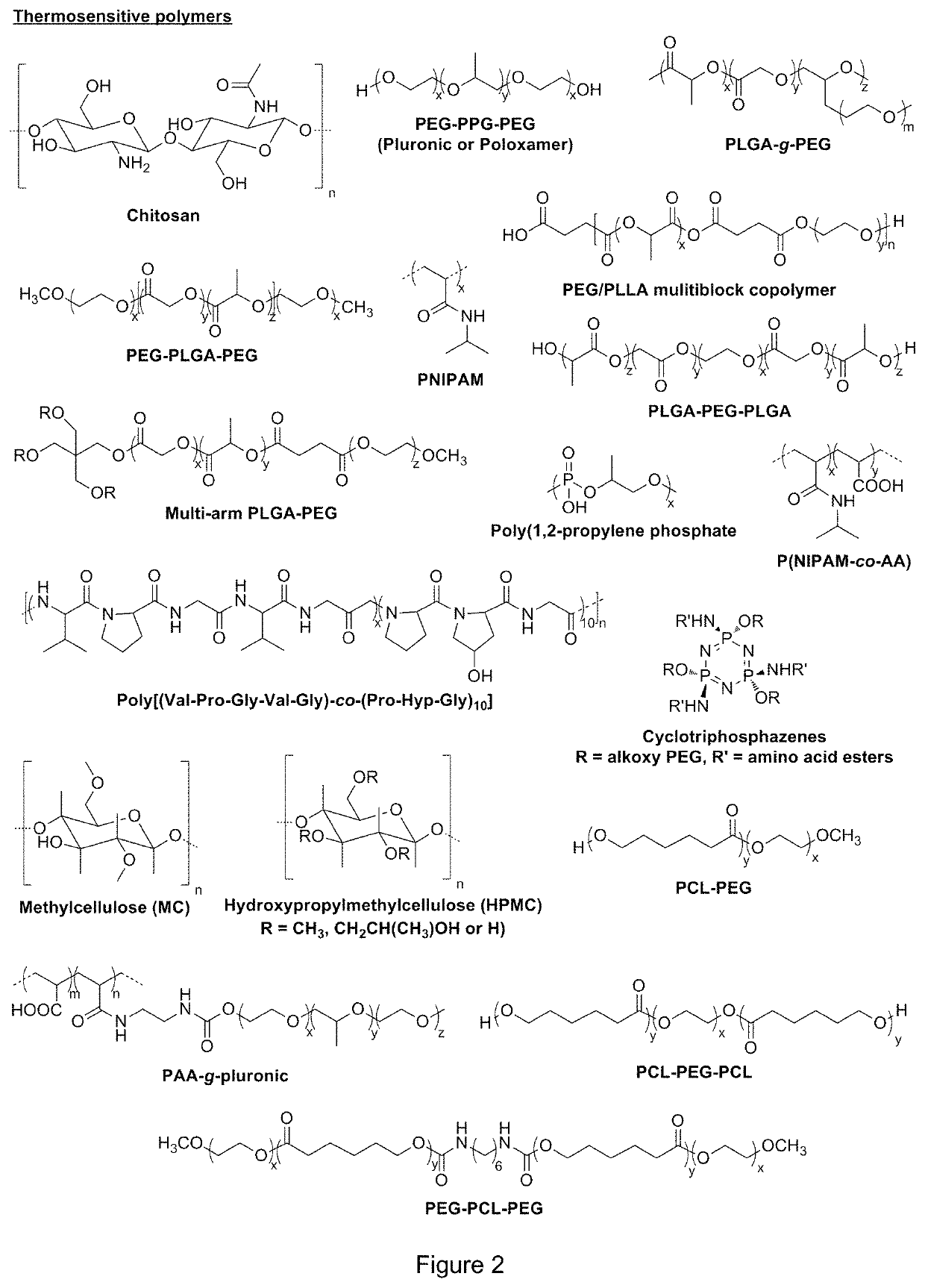
Figure 2 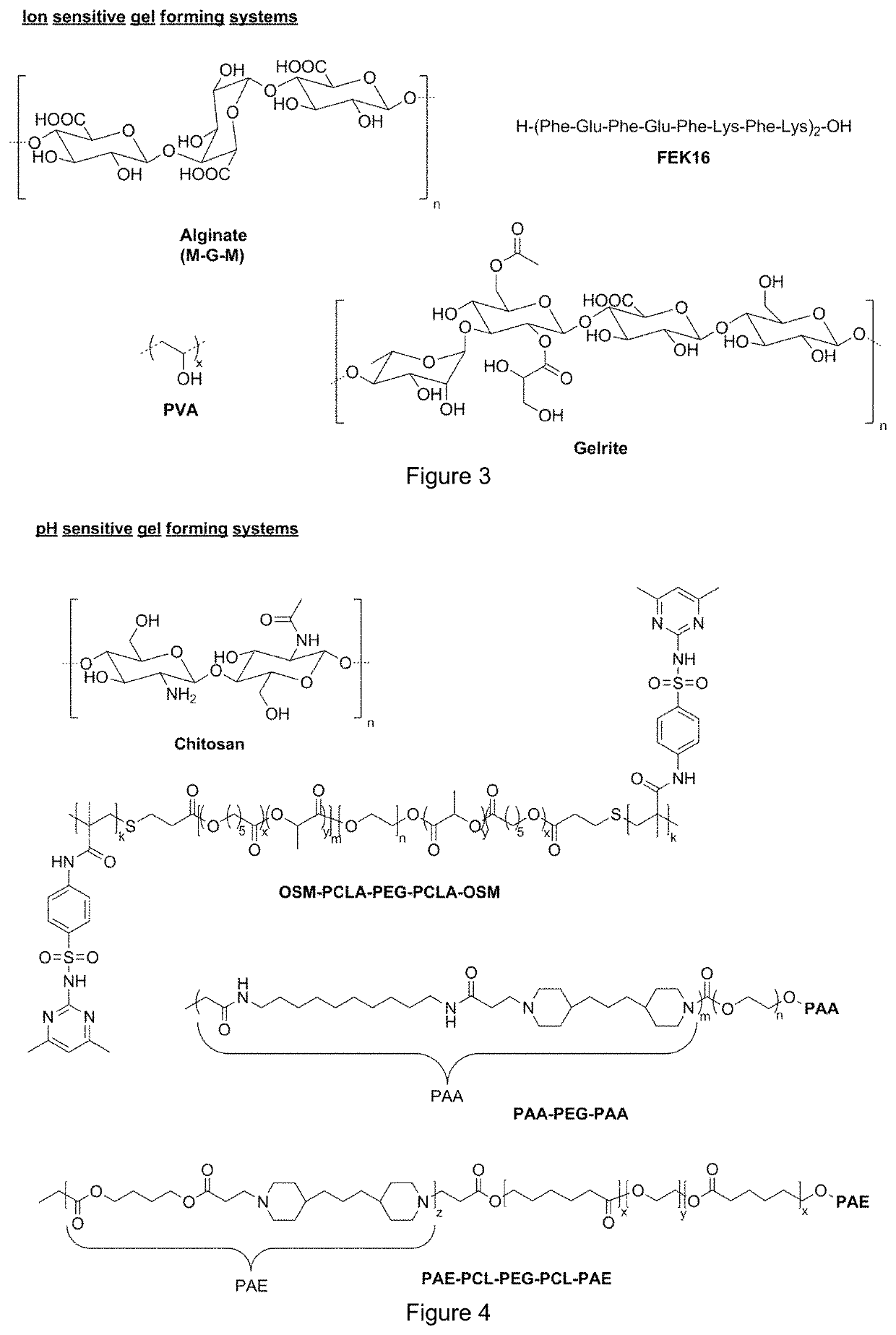
Figure 3
Abstract
Description
RELATED APPLICATIONS
[0001] This application is a National Stage Filing under U.S.C. § 371 of PCT International Application PCT / EP2014 / 060673, filed May 23, 2014, which designates the U.S., and which claims benefit of SE Application No. 1350637-3 filed May 24, 2013, the content of each of which is incorporated by reference herein in its entirety.FIELD OF THE INVENTION
[0002] The present invention relates to improved formulations for guiding radiotherapy.TECHNICAL BACKGROUND
[0003] Every year more than 12 million people are diagnosed with cancer worldwide and over 7.5 million people die from cancer each year. These numbers are expected to increase because of population growth and due to the lifestyle in the Western world. Radiotherapy is an important part of modern cancer treatment and more than 50% of cancer patients receive radiotherapy at least once. Modern radiotherapy relies on advanced high precision planning, treatment equipment and imaging techniques (such as, e.g., computed tomogr...
Examples
example 1
Iodo-SAIB Gel Formation and CT-Contrast In Vitro
Materials
[0171]Chemicals were purchased from Sigma-Aldrich Inc. (Brøndby, Denmark) unless otherwise stated. 2-(2,4,6-triiodophenoxy)acetic acid (3) and 6,6′-(2,4,6-triiodophenoxy)acetoxy-isobutyric-Sucrose (8) was synthesized in two and four steps, respectively, as outlined in FIG. 7 and FIG. 8.
Synthesis
2-(2,4,6-triiodophenoxy)acetic acid (3)
[0172]2,4,6-triiodophenol (1) (10.00 g, 21.2 mmol) was dissolved in dry DMF (75 mL) under N2-atmosphere. To this solution, tert-butyl bromoacetate (4.20 mL, 28.46 mmol) and K2CO3 (8.79 g, 63.6 mmol) were added and the stirred overnight at rt. The solvent was removed in vacou and the remaining yellow oil re-dissolved in EtOAc (150 mL) and washed with MQ-H2O (3×150 mL). The organic phase was dried with MgSO4, filtrated and concentrated in vacou to give tert-butyl 2-(2,4,6-triiodophenoxy)acetate (2) as a light yellow oil which was used in the next step without further purification. 2 was dissolved in ...
example 2
Synthesis and Improved Properties of PNIPAM-Coated AuNP
Materials
[0184]Chemicals were purchased from Sigma-Aldrich Inc. (Brøndby, Denmark) unless otherwise stated. HAuCl4×3H2O was purchased from Wako Chemicals GmbH (Neuss, Germany) and SH-PNIPAM (MW 3500, PDI=1.24) was purchased from Polymer Source (Dorval, Canada).
AuNP Synthesis, PNIPAM Coating and Particle Characterization
[0185]All glassware was cleaned with aqua regia prior to use. Trisodium citrate (10 mL, 38.8 mM) was rapidly injected into a refluxing solution of HAuCl4*3H2O (100 mL, 1.0 mM) under vigorous stirring. An immediately color change from light yellow to wine red was observed and the reflux was continued for 15 min after which the solution was cooled to rt. The obtained AuNP-seeds (20 mL) were added to a boiling solution of HAuCl4*3H2O (2500 mL, 0.296 mM) under vigorous stirring. Subsequently, trisodium citrate (11.2 mL, 38.8 mM) was added and the mixture refluxed for 30 min resulting in a clear color change from wine ...
example 3
Controlling Particle Retention in SAIB Gels Based on Particle Hydrophobicity
[0187]Chemicals were purchased from Sigma-Aldrich Inc. (Brøndby, Denmark) unless otherwise stated. HAuCl4×3H2O was purchased from Wako Chemicals GmbH (Neuss, Germany), SH-PNIPAM (MW 3500, PDI=1.24) was purchased from Polymer Source (Dorval, Canada) and MeO-PEG5000-SH was purchased from Rapp Polymere GmbH (Tuebingen, Germany).
AuNP Synthesis, PEG5000 Coating and Particle Characterization
[0188]PEGylated AuNPs (PEG5000) were prepared as outlined for the PNIPAM coated AuNP in Example 2 using SH-PEG5000 as particle coating polymer. PEGylated particles were characterized by UV-Vis (λ=539 nm) and DLS (59.7±0.9 nm) and the concentration determined by ICP-MS (82.6 mg Au / mL).
In Vitro Release of AuNP from SAIB / EtOH / PLA Gels
[0189]Formulations (1000 mg each) consisting of SAIB / EtOH / PLA (75:20:5)+3.0 w % PNIPAM3500 or PEG5000 coated AuNP was prepared as outlined in the table below.
[0190]
PNIPAM 3500−PEG 5000−FormulationSAIB...