
Identity and content authentication for phone calls
a technology for identity and content authentication and phone calls, applied in the field of identity and content authentication for phone calls, can solve the problems that modern telephony infrastructure simply provides no means for anyone to reason about either of these properties, and never designed to provide end-to-end authentication or integrity guarantees, so as to reduce many open security problems in telephony, reduce latency and overhead, and increase security
Patent Information
- Authority / Receiving Office
- US · United States
- Patent Type
- Patents(United States)
- Current Assignee / Owner
- Publication Date
- 2020-09-01
Smart Images
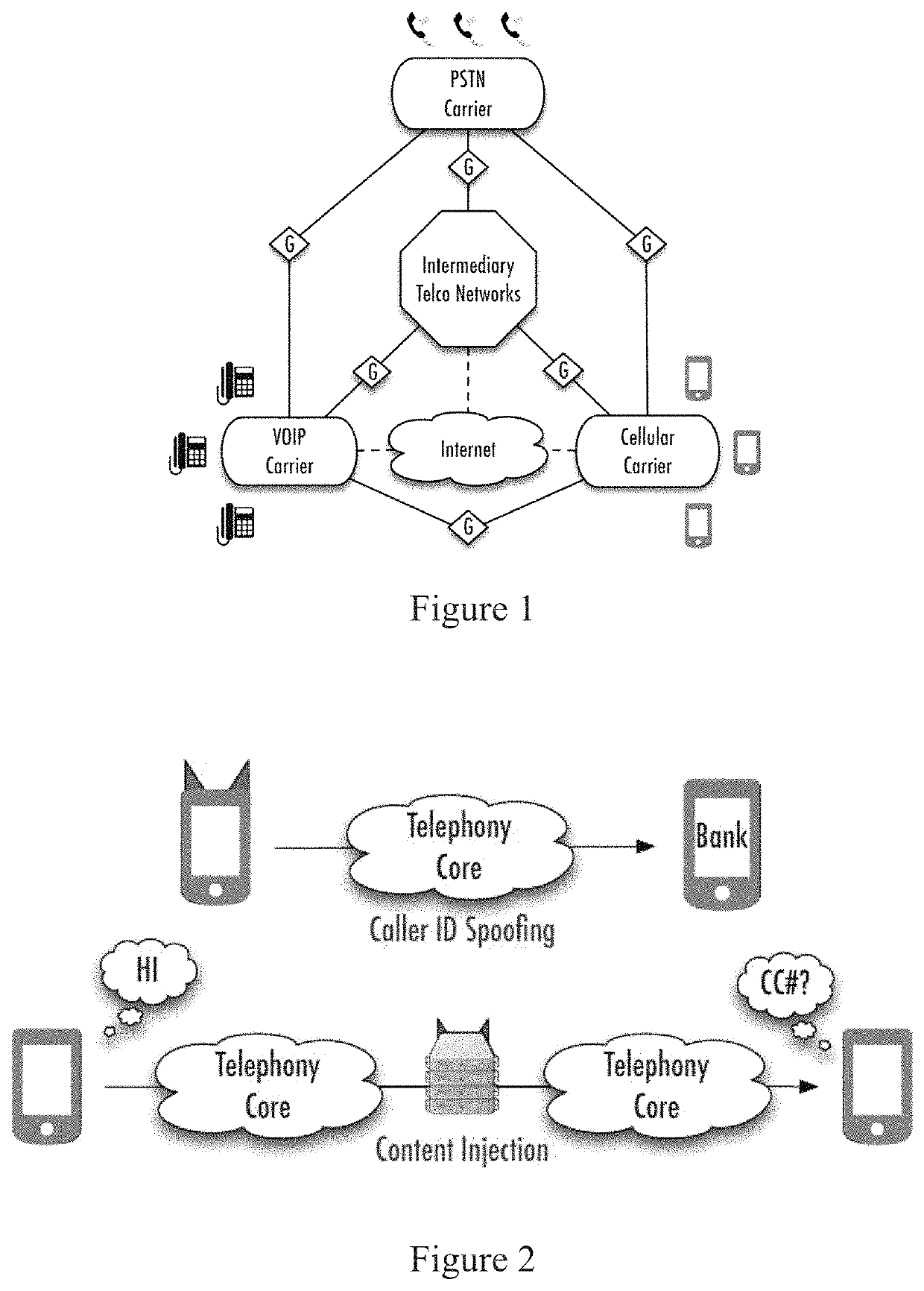
Figure 1 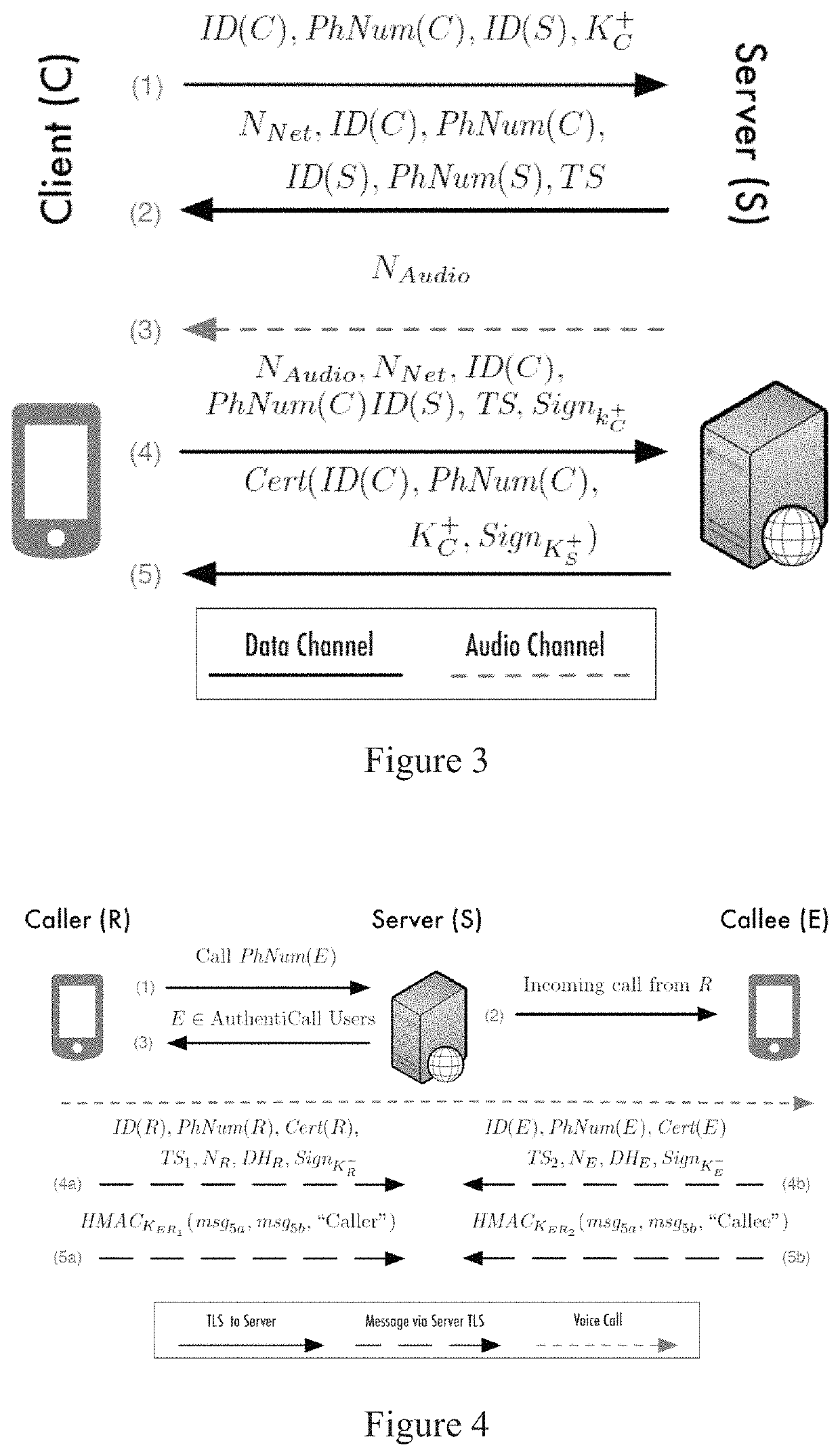
Figure 2 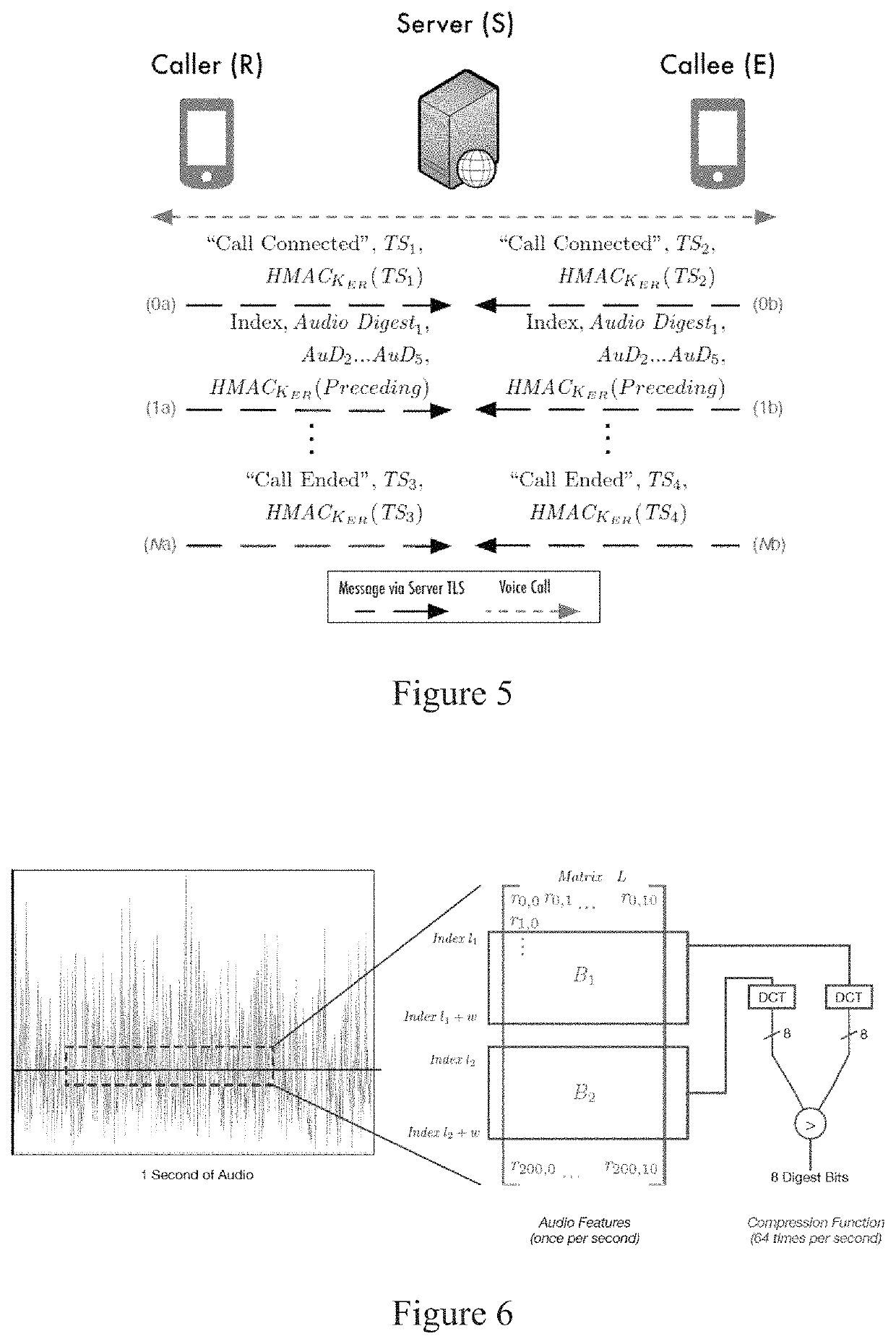
Figure 3
Abstract
Description
CROSS-REFERENCE TO RELATED APPLICATION
[0001] This application claims the benefit of U.S. Provisional Patent Application Ser. No. 62 / 481,951, filed Apr. 5, 2017, which is incorporated herein by reference in its entirety, including any figures, tables, and drawings.GOVERNMENT SUPPORT
[0002] This invention was made with government support under grant number 1617474 awarded by the National Science Foundation. The government has certain rights in the invention.BACKGROUND
[0003] Telephones remain of paramount importance to society since their invention 140 years ago, and they are especially important for sensitive business communications, whistleblowers and journalists, and as a reliable fallback when other communication systems fail. When faced with critical or anomalous events, the default response of many organizations and individuals is to rely on the telephone. For instance, banks receiving requests for large transfers between parties that do not generally interact call account owners. Po...
Examples
embodiment 1
[0069]A method for call authentication comprising:
[0070]an enrollment protocol (to ensure users actually control the number they claim to own);
[0071]a handshake protocol (to mutually authenticate two calling parties); and
[0072]a call integrity protocol (to ensure the security of the voice channel and the content it carries).
embodiment 2
[0073]The method according to Embodiment 1, wherein a server acts as either an endpoint and / or intermediary between user clients (or client-server architecture is employed).
embodiment 3
[0074]The method according to any of Embodiments 1 to 2, wherein all of the protocols implement end-to-end cryptography.