
Comparing video encoders/decoders using shot-based encoding and a perceptual visual quality metric
a video encoder and perceptual visual quality technology, applied in the field of video and encoding technologies, can solve the problems of difficult, if not impossible, of accurately and reliably predicting human perception of quality, each bd-rate value does not accurately and reliably predict the actual overall visual quality difference, and the use of bd-rate values to draw valid conclusions about whether one configured encoder performs better than another configured encoder in human-perceived video quality is difficult, if no
Patent Information
- Authority / Receiving Office
- US · United States
- Patent Type
- Patents(United States)
- Current Assignee / Owner
- Publication Date
- 2021-11-02
Smart Images
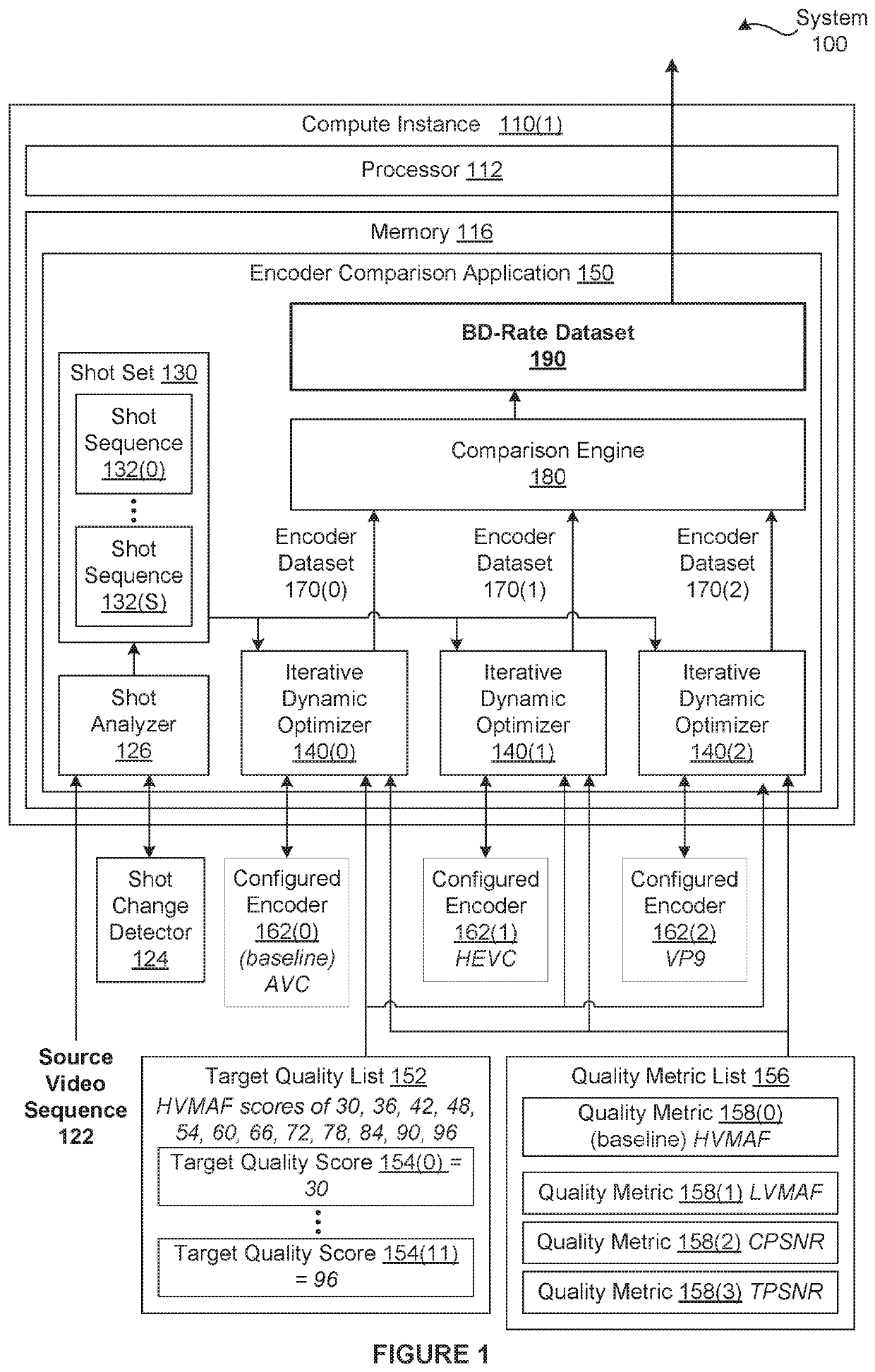
Figure 1 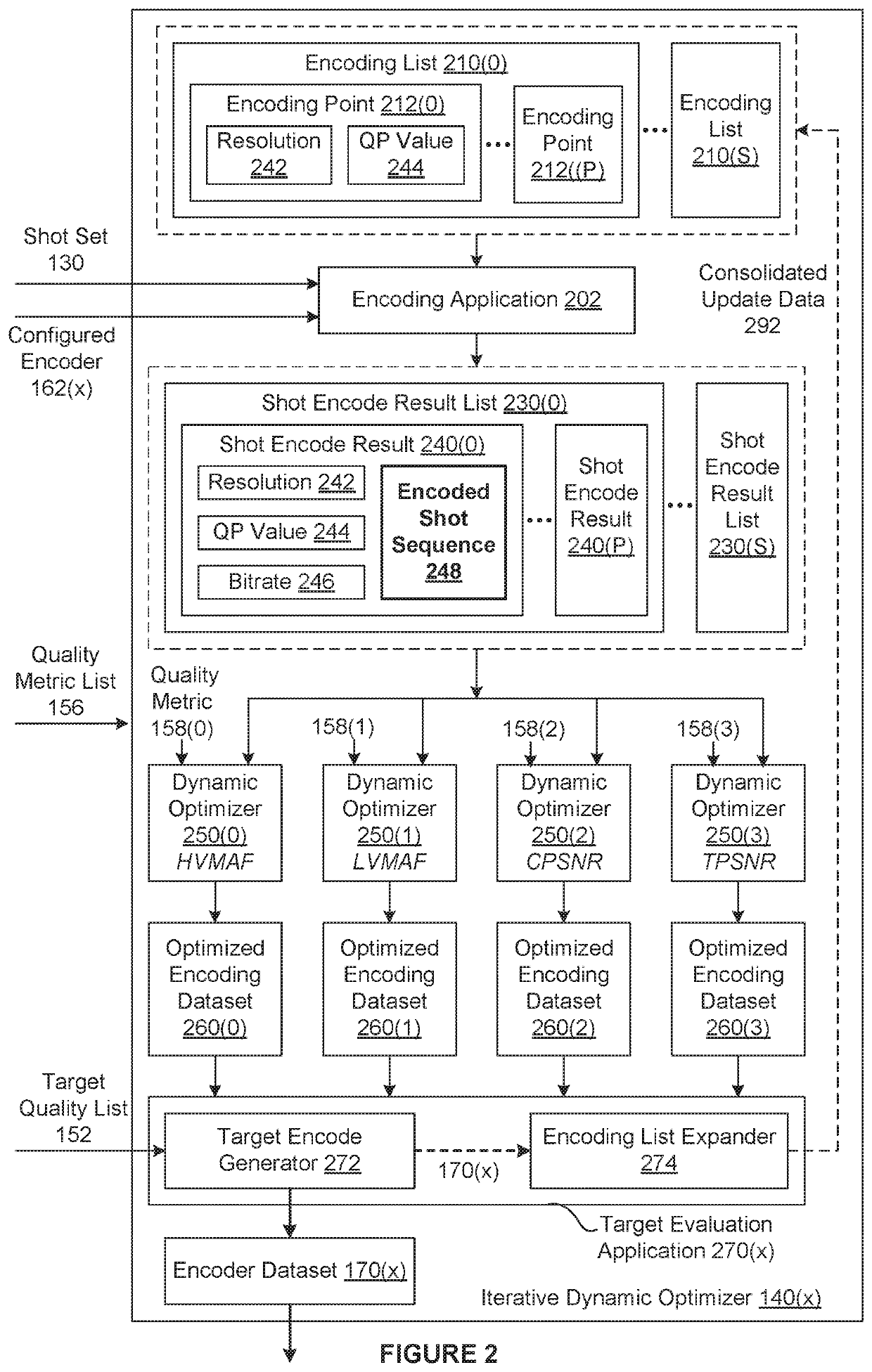
Figure 2 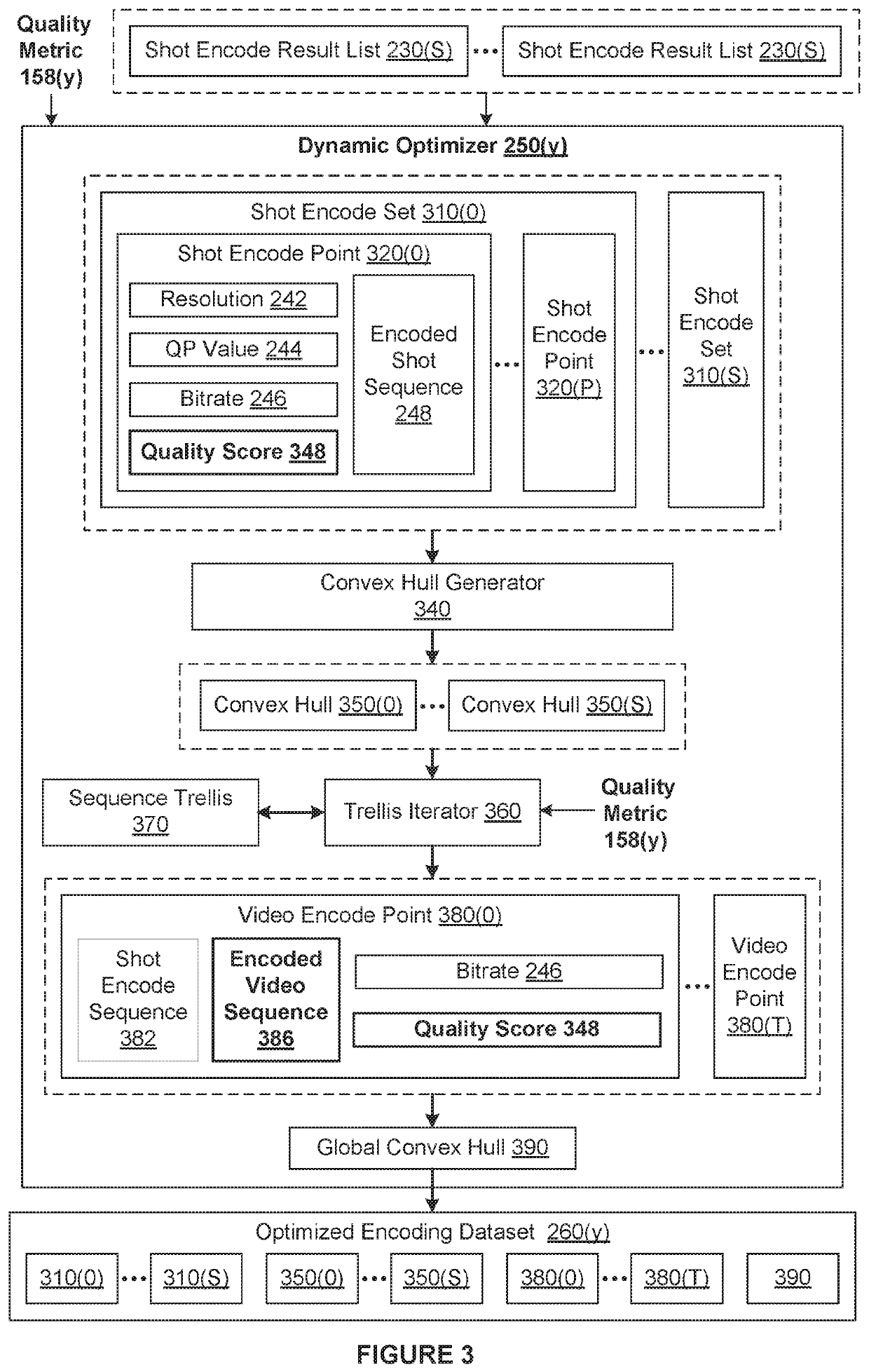
Figure 3
Abstract
Description
CROSS-REFERENCE TO RELATED APPLICATIONS
[0001] The present application is a continuation-in-part of the co-pending U.S. patent application titled, “ITERATIVE TECHNIQUES FOR GENERATING MULTIPLE ENCODED VERSIONS OF A MEDIA TITLE,” filed on Jun. 22, 2018 and having Ser. No. 16 / 016,432, which is a continuation-in-part of co-pending U.S. patent application titled, “ITERATIVE TECHNIQUES FOR ENCODING VIDEO CONTENT,” filed on Feb. 22, 2018 and having Ser. No. 15 / 902,976, which claims the priority benefit of the U.S. Provisional Patent Application titled, “VIDEO ENCODING AT SCALE: PERCEPTUALLY OPTIMAL ENCODING OF VIDEO SEQUENCES,” filed on Feb. 23, 2017 and having Ser. No. 62 / 462,873, the U.S. Provisional Patent Application titled, “ENCODING TECHNIQUE FOR OPTIMIZING DISTORTION AND BITRATE,” filed on Jul. 18, 2017 and having Ser. No. 62 / 534,170, and the U.S. Provisional Patent Application titled, “ENCODING TECHNIQUE FOR OPTIMIZING DISTORTION AND BITRATE,” filed on Aug. 25, 2017 and having Ser. ...
Examples
Embodiment Construction
[0002]Embodiments relate generally to video and encoding technologies and, more specifically, to comparing video encoders / decoders using shot-based encoding and a perceptual visual quality metric.
Description of the Related Art
[0003]Being able to accurately and efficiently encode source video content is an important aspect of real-time delivery of high-quality video content. When encoding source video content, there are numerous encoder / decoders (“codecs”) from which to choose. As a general matter, though, each different codec implements a different encoding algorithm that makes different trade-offs between quality and bitrate (i.e., the number of bits used for encoding). The effectiveness of any given encoding algorithm typically varies based on the type and complexity of the source video content, the resolution of the source video content, and any number of configuration parameters.
[0004]In many implementations, the configuration parameters associated with a given encoding algorith...