
Exercise device for strengthening gluteal muscles
a technology of exercise device and gluteal muscle, which is applied in the direction of gymnastic exercise, sport apparatus, weights, etc., can solve the problems of further increasing the difficulty of exercise, increase the difficulty of exercise, increase or decrease the resistance of continuous belts, etc.
Patent Information
- Authority / Receiving Office
- US · United States
- Patent Type
- Patents(United States)
- Current Assignee / Owner
- Publication Date
- 2022-02-22
Smart Images
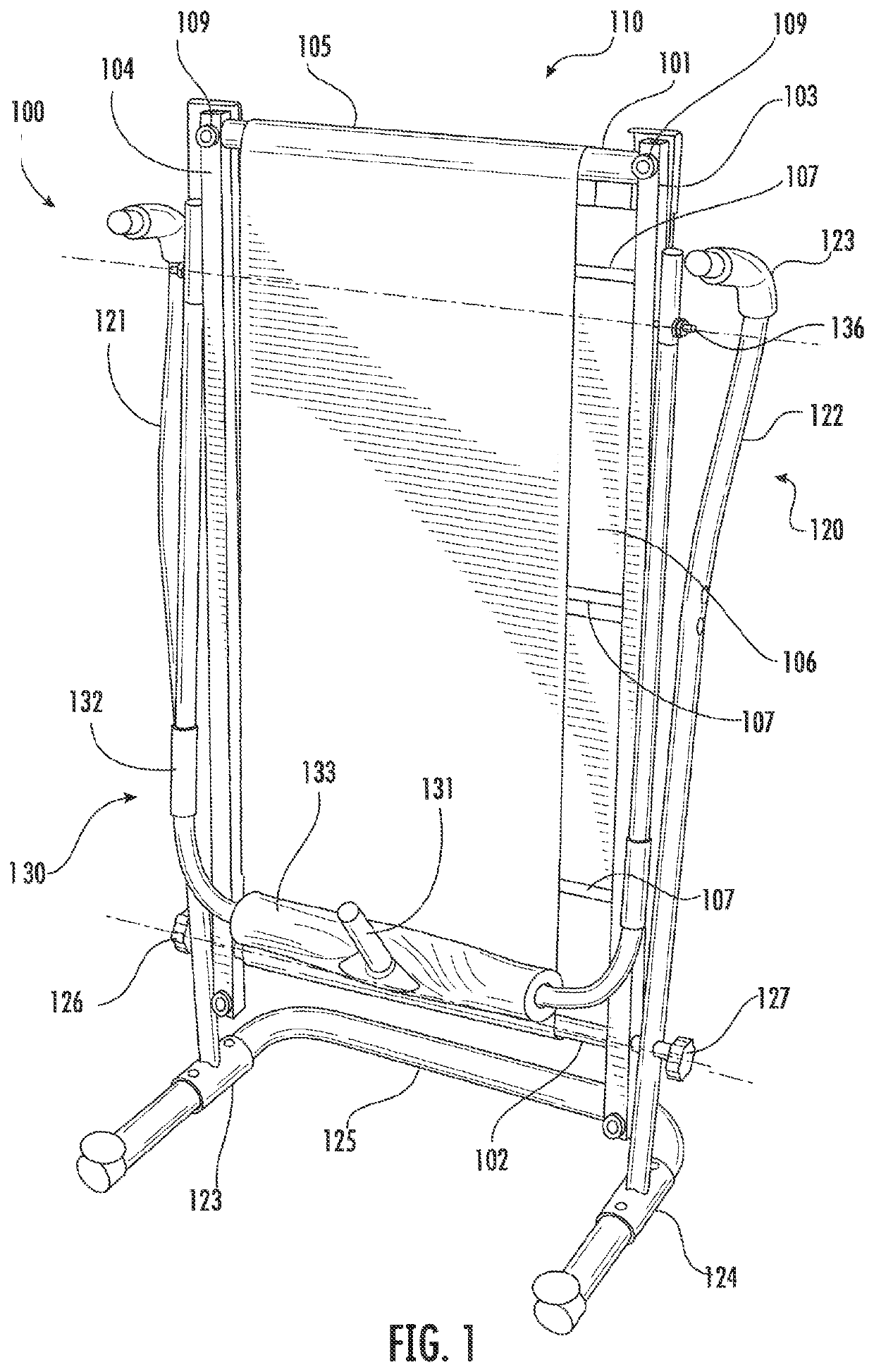
Figure 1 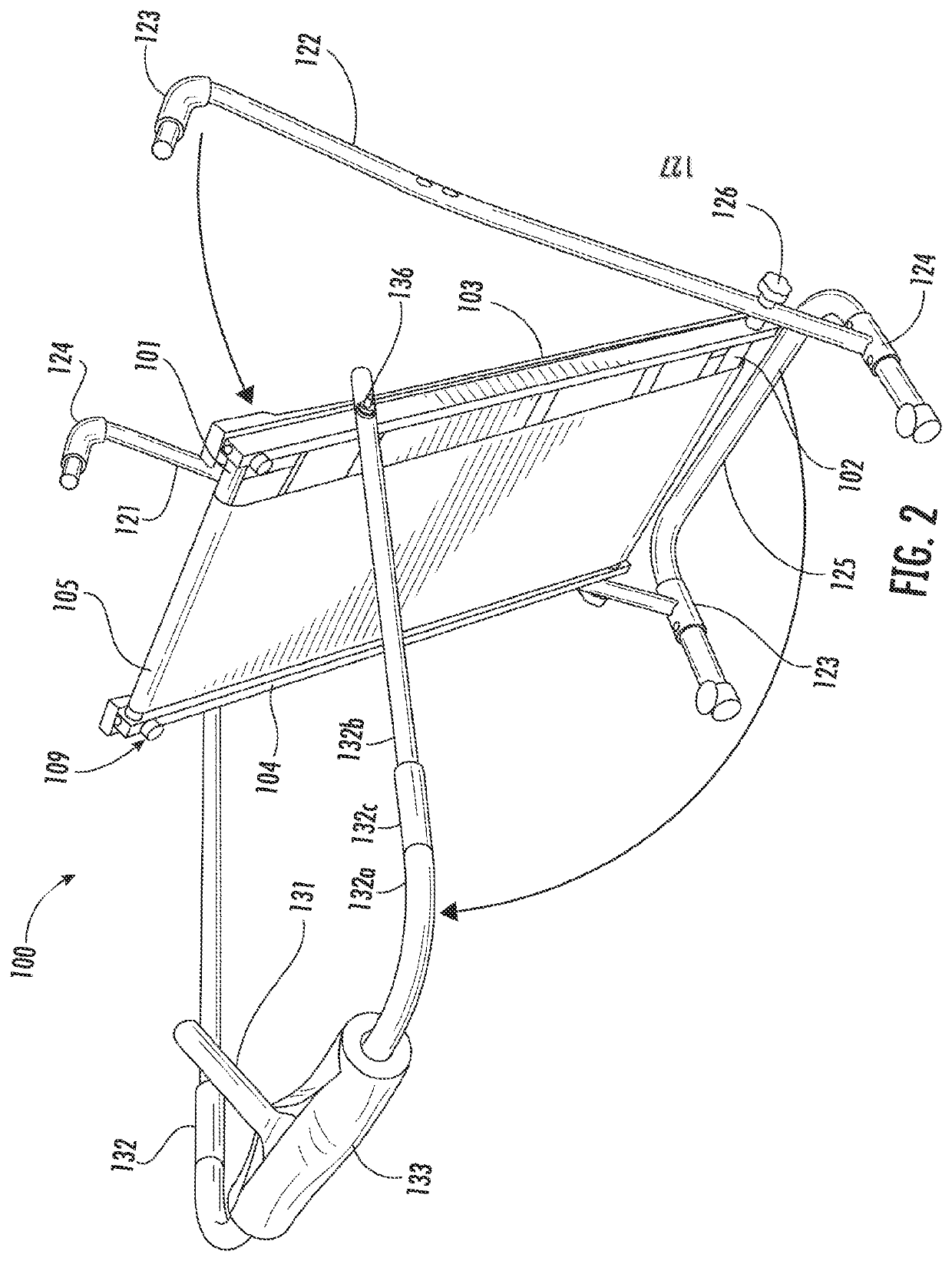
Figure 2 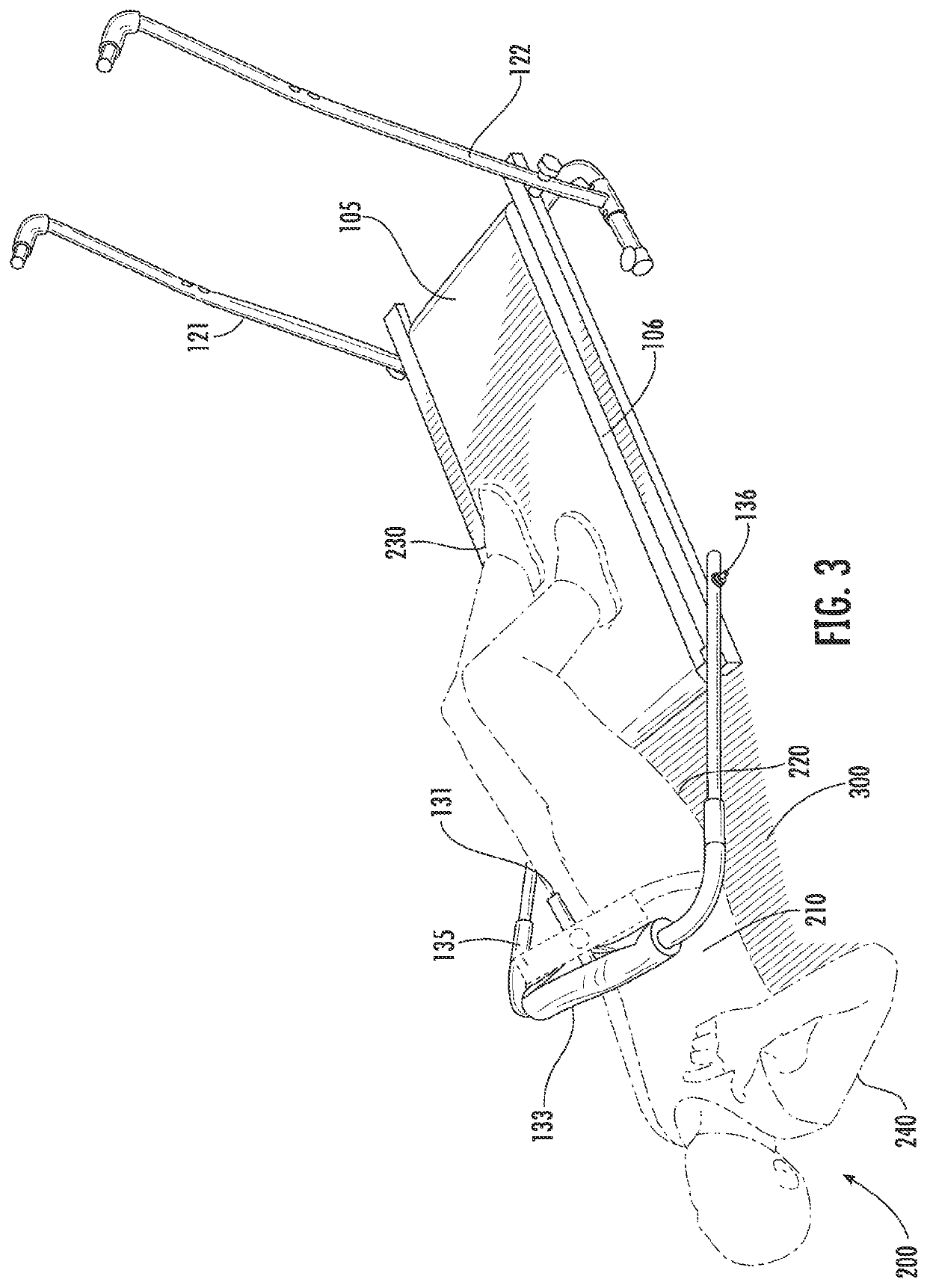
Figure 3
Abstract
Description
CROSS-REFERENCE TO RELATED APPLICATIONS
[0001] NoneFEDERALLY SPONSORED RESEARCH OR DEVELOPMENT
[0002] Not ApplicableBACKGROUND
[0003] Exercise devices, such as bench press racks, treadmills, and leg curl machines, are commonly purchased and used by consumers in order to strengthen their muscles at home or in a gym. There are few machines that could be used, however, to exercise gluteal muscles.
[0004] It would therefore be desirable to provide improved exercise devices and methods of using exercise machines to strengthen a person's gluteal muscles during a workout.SUMMARY OF THE INVENTION
[0005] A system and method for exercising gluteus and hamstring muscles of a person are disclosed. The method involves disposing an exercise machine base having a conveyor belt or a continuous belt under the feet of a person while the person lies back-down on a resting surface. In some embodiments, the continuous belt could be pulled taut between at least two rollers. The continuous belt preferably is config...
Examples
Embodiment Construction
[0020]The following detailed description describes a novel exercise system and method to exercise the buttock muscles of a person.
[0021]Various exercise devices could be utilized to perform such exercises. Four different exemplary devices are shown in FIGS. 1-7 as devices 100, 100a, 100b, and 100c, as examples. An exemplary device typically has a continuous belt system that can be placed in front of a user's feet during the exercise. Contemplated continuous belt systems include a base having a continuous belt mounted to a frame that is pulled taut between at least two rollers. The belt could be configured to rotate about the rollers, having an upper side of the belt that is positioned less than two feet from a resting surface that the base rests upon, such as the ground. The base comprising the continuous belt could have one or more sets of wheels coupled to a side of the base that allow a user to easily wheel the base around before and after a workout session.
[0022]A weight bar cou...