
Assisted standing and walking device with lateral gait control
a technology of lateral gait control and assistive standing, which is applied in the direction of walking aids, chiropractic devices, physical therapy, etc., can solve problems such as one-sided weakness, and achieve the effects of simple release, limited lateral gait movement, and simple user-friendly installation
Patent Information
- Authority / Receiving Office
- US · United States
- Current Assignee / Owner
- Publication Date
- 2022-10-11
Smart Images
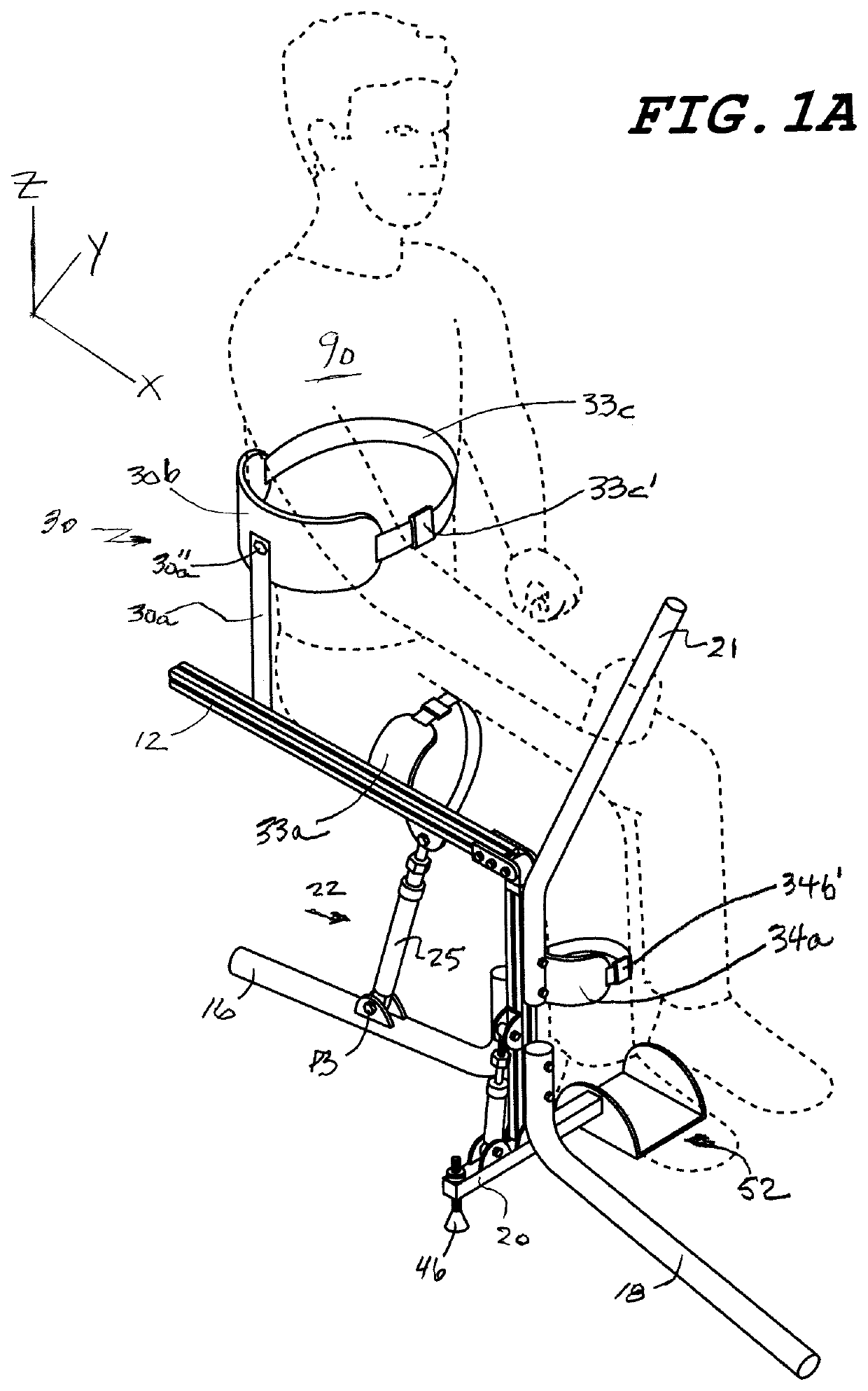
Figure 1 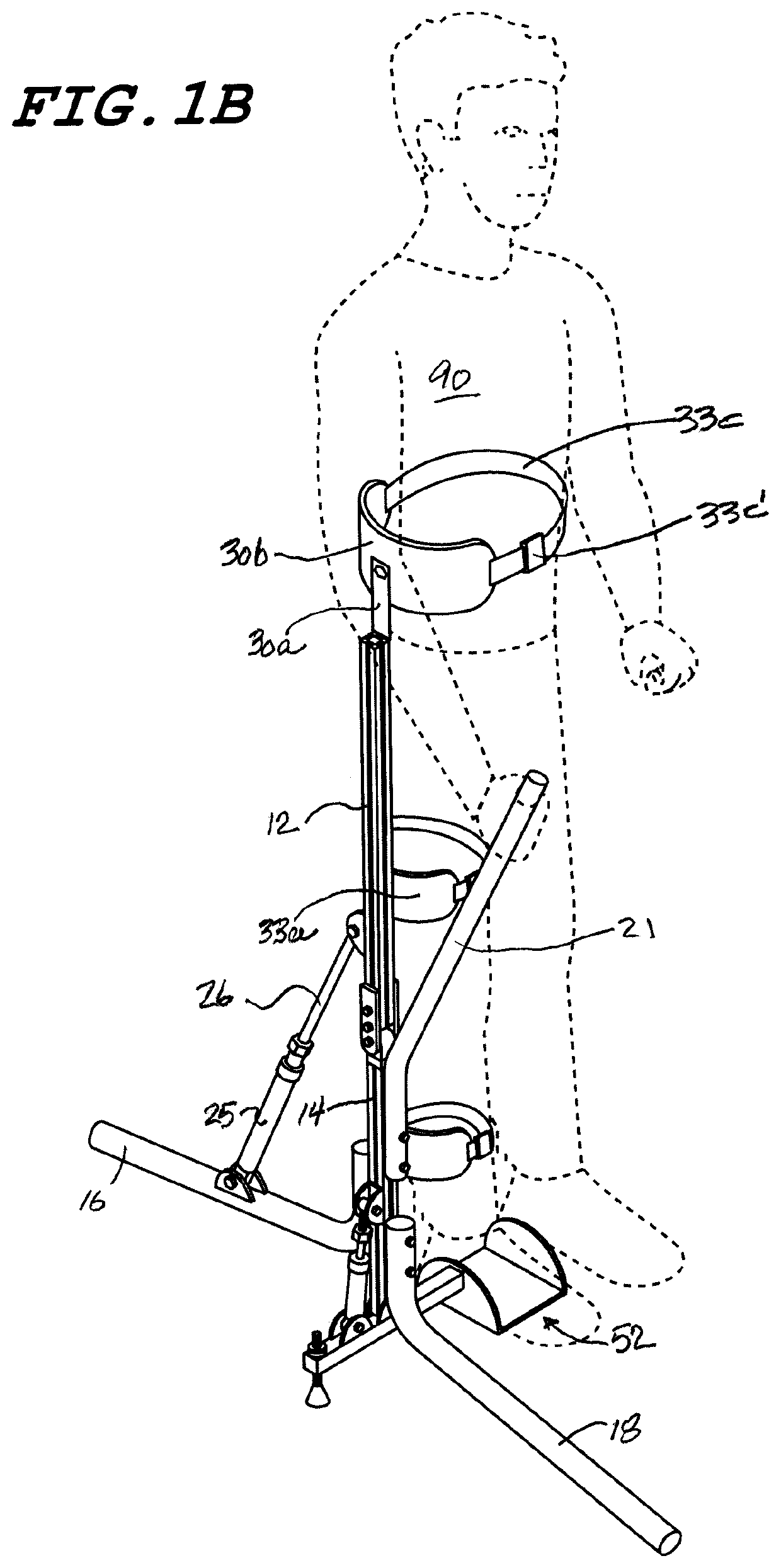
Figure 2 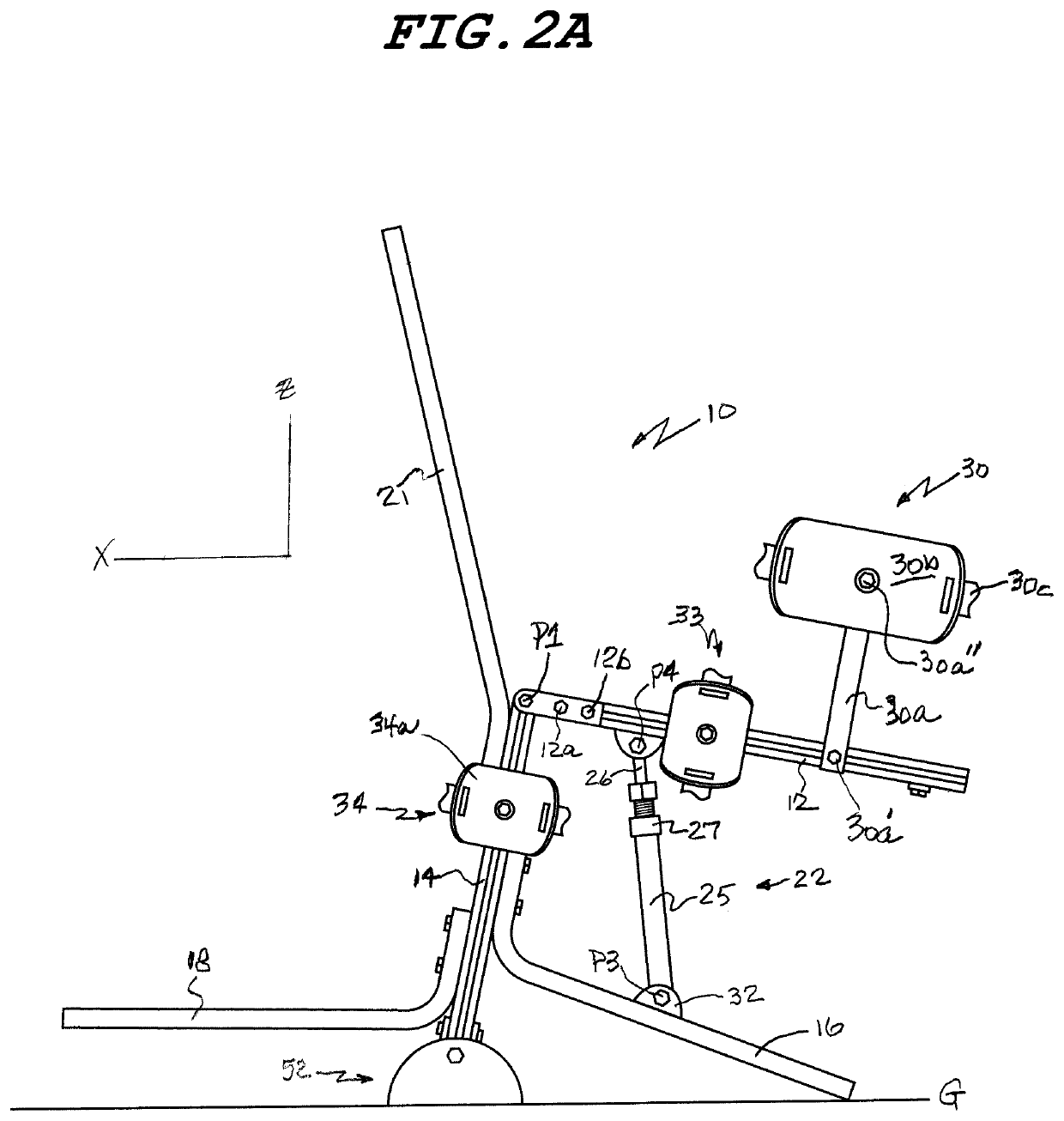
Figure 3
Abstract
Description
CROSS REFERENCE TO RELATED APPLICATIONS
[0001] This application claims priority to U.S. Provisional Patent Application No. 62 / 970,056 filed Feb. 4, 2020, which application is incorporated herein by reference in its entirety.FIELD OF THE INVENTION
[0002] The present invention relates to an assisted standing and walking device for a human experiencing at least one-sided partial paralysis or weakness where the device can be attached by the user without external assistance while being in a seated position and will assist the user to transition from a seated position to a standing position for walking with a simple user-friendly installation and controlled limited lateral gait movement while walking in the device.BACKGROUND OF THE INVENTION
[0003] Human one sided paralysis (hemiplegia) or weakness (hemiparesis) is typically the result of a stroke, but can also result from other brain, nervous system and spinal cord injuries or diseases. Further one sided weakness can be the result of soft tiss...
Examples
Embodiment Construction
[0025]Three-dimensional Cartesian space is established in the drawings for convenience of describing relative locations and movements of the disclosed assisted standing and walking device's components.
[0026]There is shown in FIG. 1A through FIG. 6 one embodiment of an assisted standing and walking device 10 of the present invention. By way of example and not limitation, one embodiment of the assisted standing and walking device 10 of the present invention has typical dimensions as indicated below for an adult user.
[0027]Upper support rod 12 provides attachment for an upper body attachment assembly 30, thigh attachment assembly 33 and upper transition pivotal revolute joint P4 for body transition assist assembly 22. Typical, but not limiting, overall linear length of upper support rod 12 is 20 inches + / −6 inches.
[0028]Lower support rod 14 provides attachment for below knee attachment assembly 34, body transition grab bar 21, backwards motion stop rod 16 and forward motion stop rod 18...