

Transdermal drug patch with attached pocket for controlled heating device
a technology of controlled heating device and drug patch, which is applied in the field of security, can solve the problems of drug patch dislocation or other less secure, patch without compromise, and heating element must be secured, so as to achieve controlled temperature and reduce the likelihood. , the effect of increasing the likelihood
Patent Information
- Authority / Receiving Office
- US · United States
- Patent Type
- Applications(United States)
- Current Assignee / Owner
- Publication Date
- 2002-01-10
- Estimated Expiration
- Not applicable · inactive patent
Smart Images
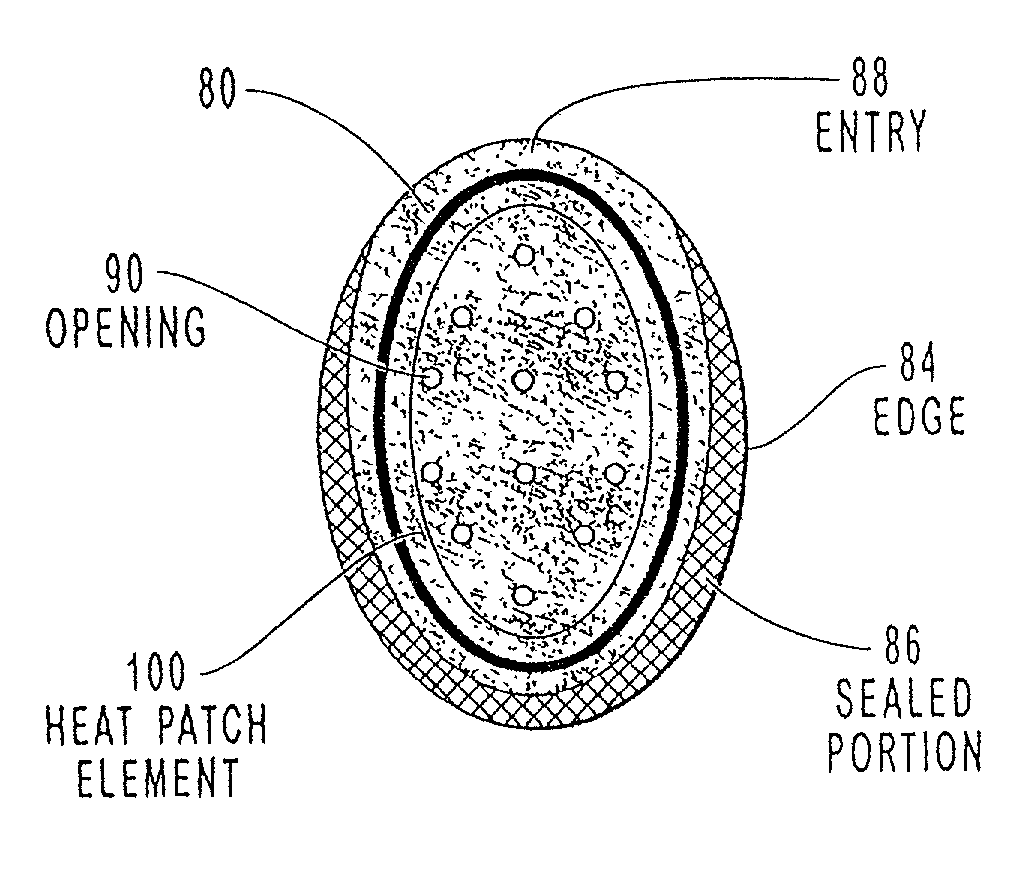
Figure 1 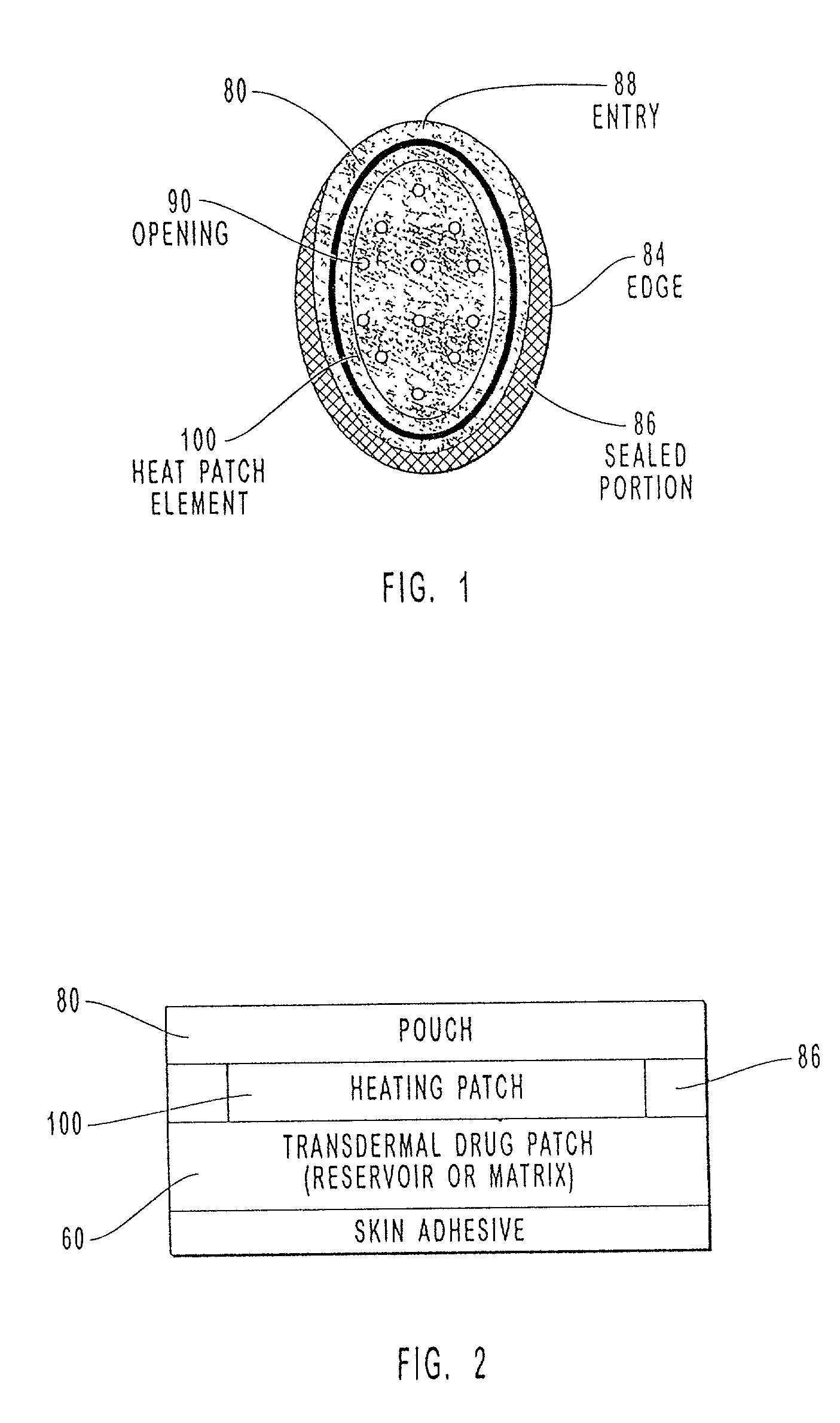
Figure 2 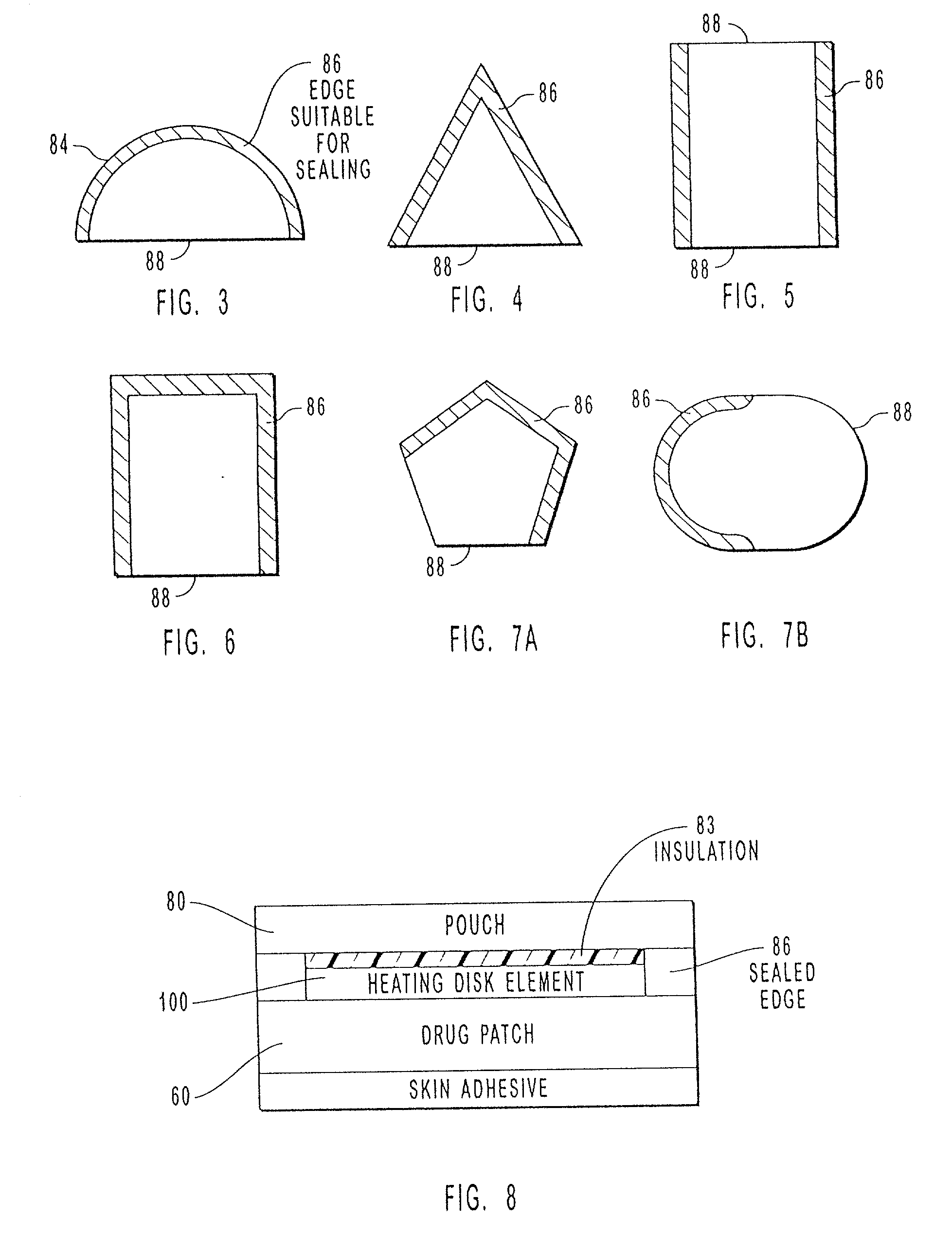
Figure 3
Abstract
Description
[0001] 1. The Field of the Invention
[0002] The present invention is directed toward a method and apparatus for applying heat to a transdermal drug delivery system. More specifically, the invention is a securable compartment with a corresponding freely transferrable heating element for use with dermal drug delivery patches.
[0003] 2. The Background Art
[0004] It has been discovered recently that the transdermal delivery of certain drugs can be facilitated by the application of heat. Controlled heat is provided to transdermal drug delivery patches using various techniques and apparatus such as heat generating patches. The heat generating patches sometimes utilize heat generated from chemical reactions, such as an oxidation reaction, or may utilize heat generated by an electrical current or some other method. One of the disadvantages of prior art heating apparatus for the transdermal drug patches is that the heating element must be secured to the transdermal patch without compromising th...
Examples
example 2
[0073] Another example of using an embodiment of the present invention for dermally administering testosterone to increase and optimize the amount of drug delivered comprises a user placing a testosterone patch 60, such as a one day dermal testosterone patch (EG Androdermn.sup.200 produced by TheraTech, Inc. of Salt Lake City, Utah, USA) on the skin of the patient. Patch 60 can be applied to the skin at night, for example, around 10:00 p.m. However, in order to raise the steady state concentration of the testosterone quickly, the user may apply a freely transferrable heating element 100 to a heating element compartment 80 secured to testosterone patch 60. Heating element 100 is designed to provide heat for a desired period of time in order to allow the serum concentration of testosterone to reach a steady state more rapidly than it would without heating element 100. When heat from heating element 100 is terminated, heating element 100 may provide a measure of insulation to maintain ...
example 3
[0075] The present invention can also be used to administer a drug transdermally that otherwise would have a diffusion coefficient or a permeability coefficient across a rate limiting membrane 62 of patch 60 that would be disadvantageously low. A user places a patch containing a drug onto the skin of the patient and after waiting for a period of time determines that the administration requires a higher concentration of drug in the patient's blood stream to properly treat the patient's condition. The user can remove freely transferrable heating element 100 and replace it with a second, different freely transferrable heating element 100 having heating characteristics that facilitate increased absorption of the drug. Increased temperature provided by second heating element 100, for example, may increase the diffusion coefficient of the active ingredient in the formulation and / or increase the permeability coefficient of the drug across the rate limiting membrane of patch 60. The overall...
example 4
[0076] The present invention can be used to decrease the onset time of a drug from a transdermal drug patch 60. A user places patch 60 on a patient's skin. Patch 60 contains a freely transferrable heating element 100 secured in heating element compartment 100 on patch 60. The heat allows the drug formulation in transdermal drug patch 60 to be absorbed more quickly through the skin. However, if the user determines that a faster onset time is necessary for proper treatment of the patient, the user can replace the initial heating element 100 with a second, different freely transferrable heating element 100 having different heating characteristics, for example, generating higher temperatures. The increased temperature allows the drug to be absorbed into the patient's systemic circulation more quickly and if sustained over a sufficient amount of time results in a quicker onset of the drug. After obtaining onset in a shortened period of time, second heating element 100 with the higher tem...