
Roller conveyor
a conveyor and roller technology, applied in the direction of roller-ways, chutes, transportation and packaging, etc., can solve the problems of affecting the operation of the conveyor, so as to achieve the effect of easy replacement and easy removal of the chain
Patent Information
- Authority / Receiving Office
- US · United States
- Patent Type
- Applications(United States)
- Current Assignee / Owner
- Publication Date
- 2006-02-02
Smart Images
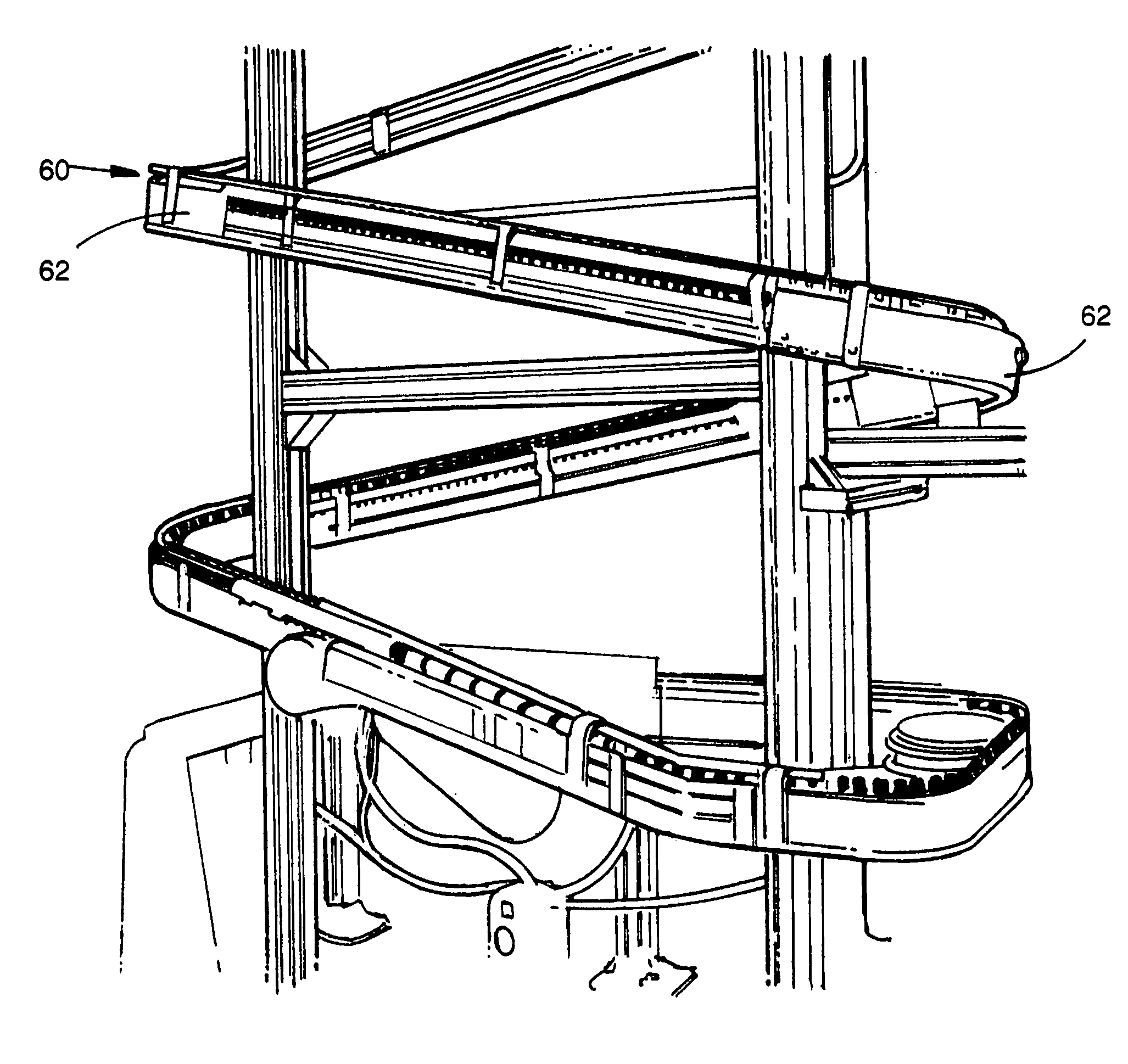
Figure 1 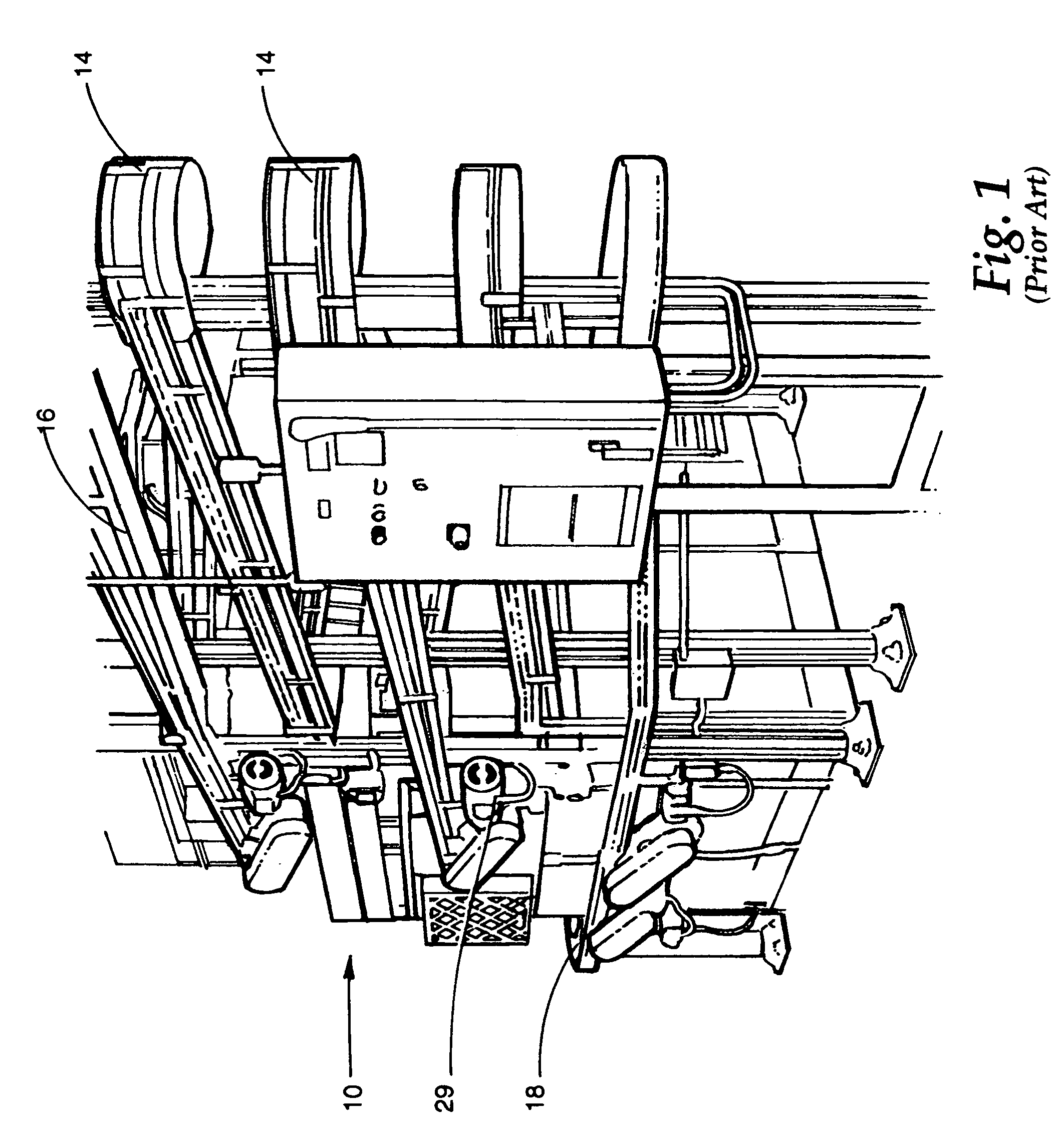
Figure 2 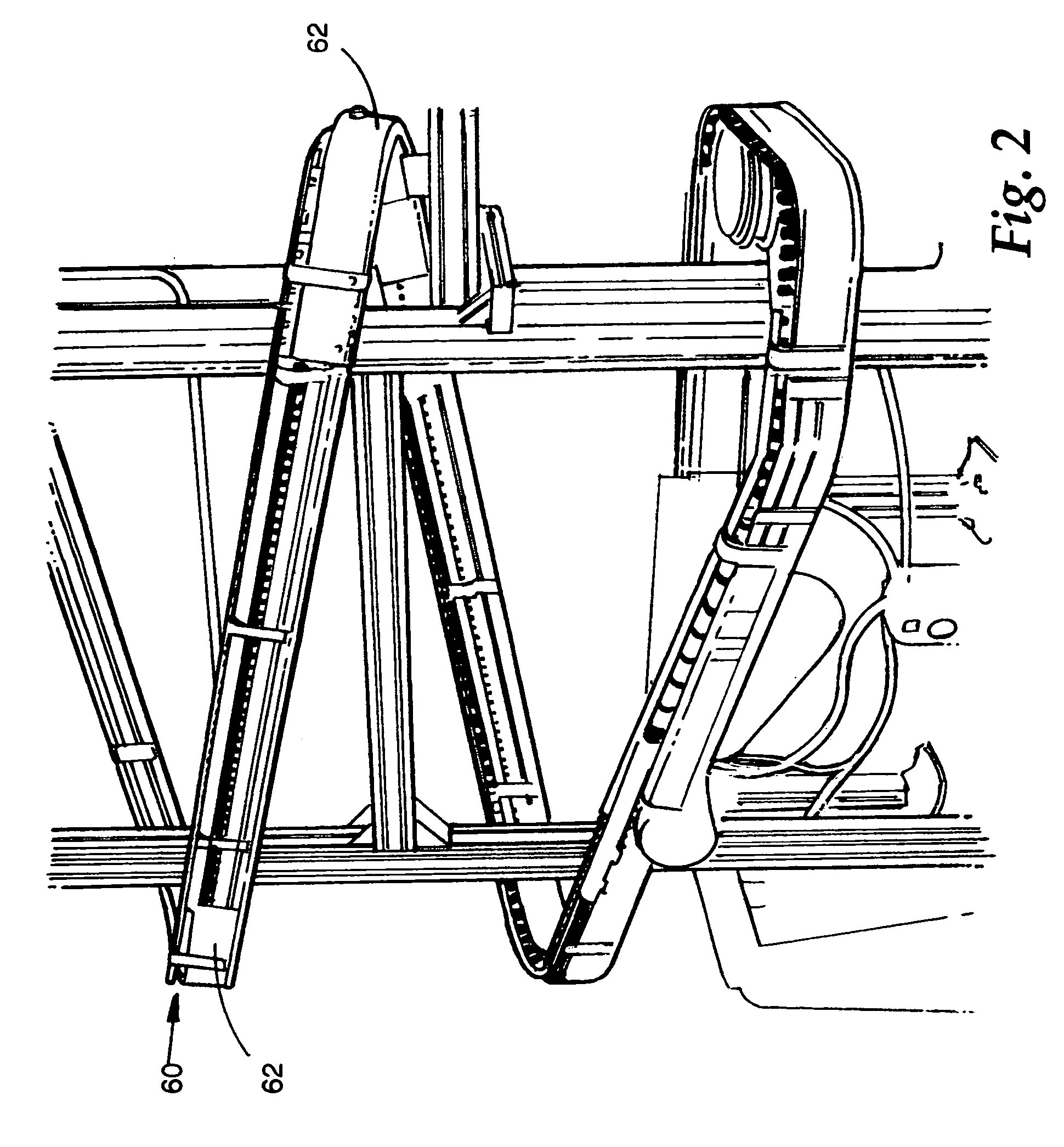
Figure 3
Abstract
Description
CROSS-REFERENCES TO RELATED APPLICATIONS
[0001] This is a non-provisional application based on and claiming the filing priority of co-pending provisional patent application Ser. No. 60 / 580,948, filed Jun. 18, 2004, the disclosure of which is incorporated herein by reference.BACKGROUND OF THE INVENTION
[0002] The present invention relates to a gravity feed roller conveyor and more particularly to a roller conveyor that accumulates or holds pallets or in a buffer zone immediately adjacent an end position where the products are used.
[0003] In conventional assembly operations, parts to be assembled are placed on pallets and then pallets are placed on conveyors leading to assembly stations where the parts are used. The length of conveyor upstream from the assembly location is deemed to be a “buffer” zone, wherein a supply of parts is maintained for use at the assembly point. In some operations, these buffer zones comprise a downwardly inclined conveyor that leads from an upper loading a...
Examples
Embodiment Construction
[0025] A buffer or accumulating conveyor system 10 of the type conventionally used prior to the present invention is shown in FIG. 1. Conveyor system 10 comprises a plurality of downwardly inclined straight conveyor sections 12 connected at their ends by horizontal arcuate or bend sections 14, leading in spiral fashion from an upper end 16 to a lower end 18, which is positioned adjacent a station where the products are used one at a time. The generally spiral arrangement of the system is designed to minimize space and provide a maximum amount of conveyor length for accumulating products prior to use in a manufacturing operation, such as an assembly operation.
[0026] Typical bend or arcuate sections are shown in FIGS. 9-12. These are called horizontal wheel bends, because the conveyor is guided around a bend by means of a horizontal wheel 15 mounted on the inner edge of the bend. The wheel is mounted on bearings and bears against the inner edge of the conveyor as the conveyor goes ar...