
Method and Device for Detection of Nucleic Acids and/or Polypetides
a nucleic acid and polymer technology, applied in the field of nucleic acid and/or polymer detection methods, can solve the problems of prolonging assay time, rt-pcr amplification tends to introduce contamination, and inability to protect the northern blotting and ribonuclease, etc., and achieves the effect of simple and rapid detection
Patent Information
- Authority / Receiving Office
- US · United States
- Patent Type
- Applications(United States)
- Current Assignee / Owner
- Publication Date
- 2007-10-25
- Estimated Expiration
- Not applicable · inactive patent
Smart Images
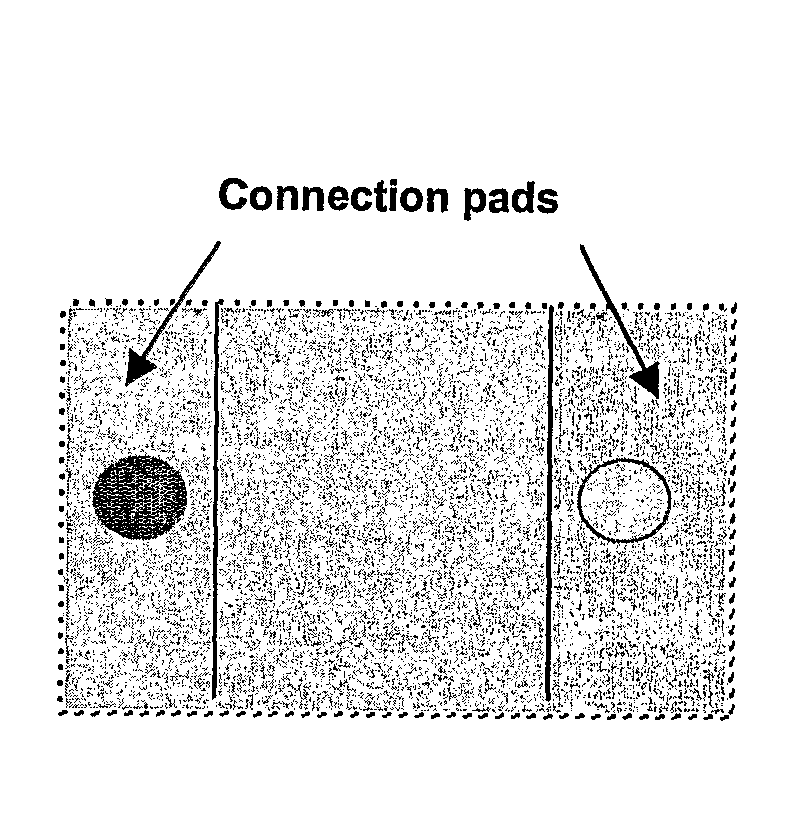
Figure 1 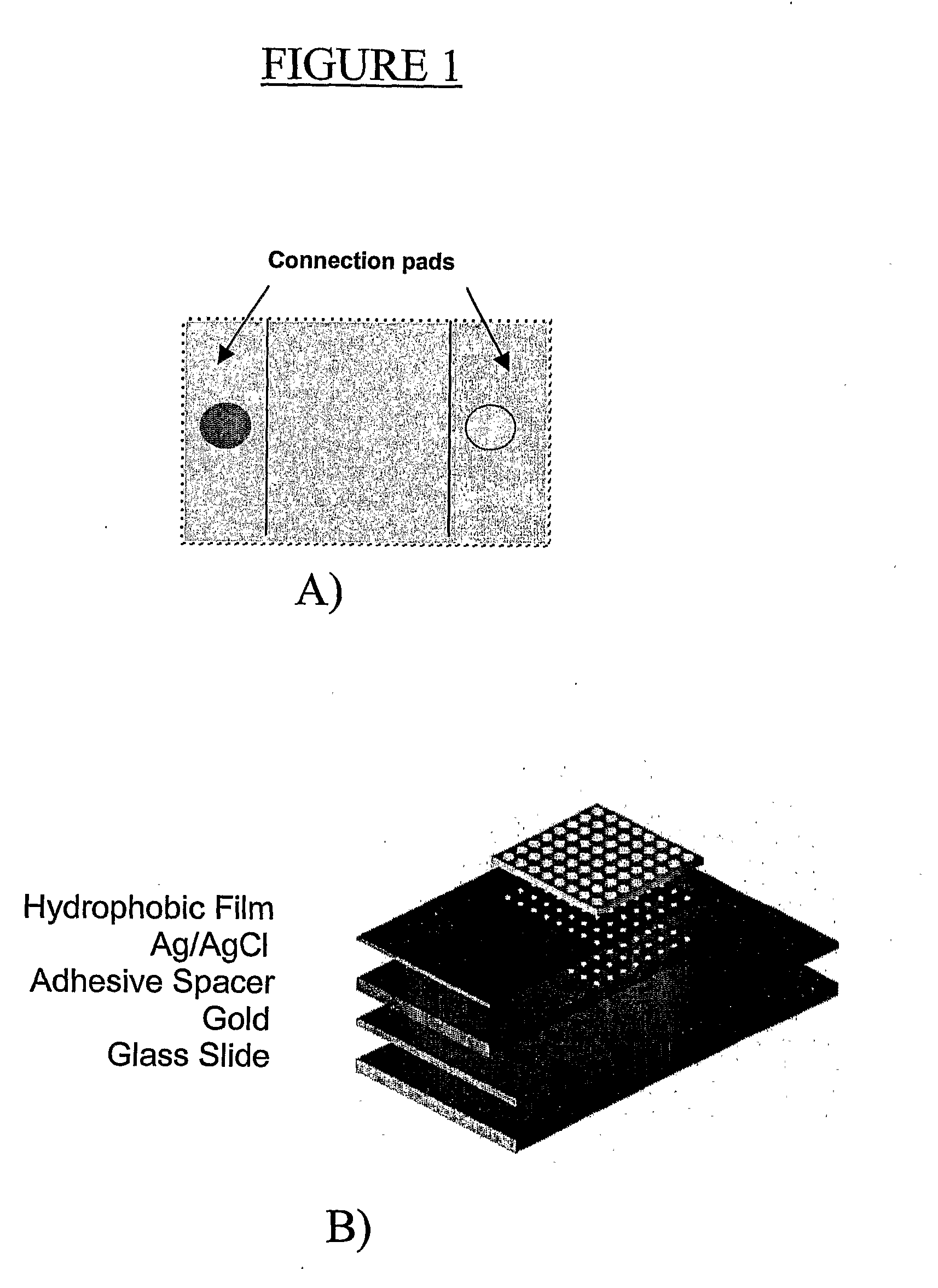
Figure 2 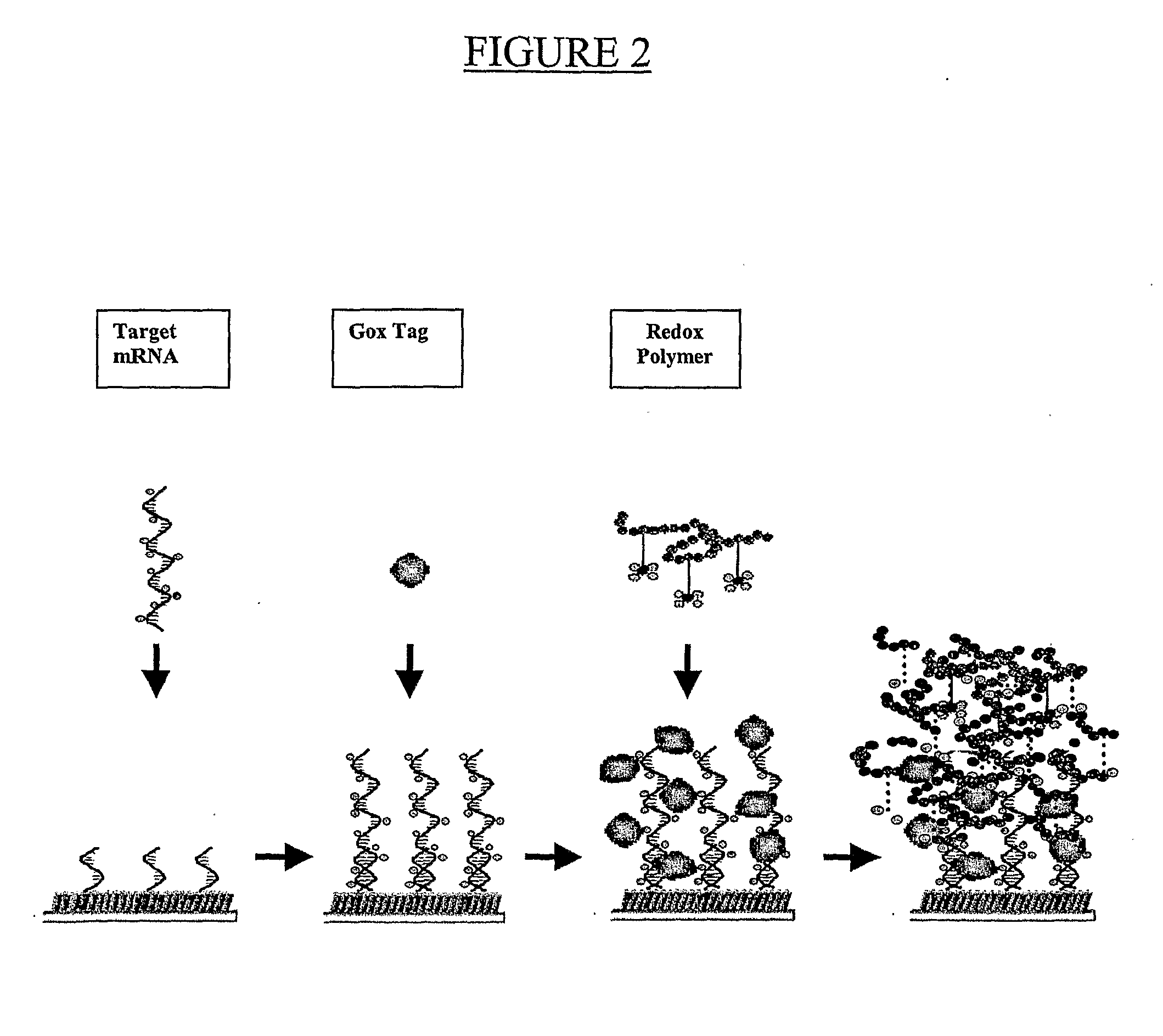
Figure 3
Abstract
Description
FIELD OF THE INVENTION
[0001] This invention relates to methods of detecting and / or quantifying the expression of at least one target gene of interest. In particular, this invention is useful in the simultaneous detection and / or quantification of a plurality of target genes, in particular, selected expressed genes. The invention also provides a device for carrying out the detection and / or quantification. BACKGROUND OF THE INVENTION
[0002] The most commonly used methods for the quantification of gene expression include northern blotting (Watson, J., et al., Recombinant DNA, 2nd Edn. W.H. Freeman and Company, New York, 1992), ribonuclease protection (Chan, S. D. H, et al., Anal. Biochem., 242, 214, 1996) and reverse transcription-polymerase chain reaction (RT-PCR)(Cottrez, F., et al., Nucleic Acids Res., 22, 2712, 1994; Totze, G., et al., Mol. Cell. Probes, 10, 427, 1996). The first two methods require 10-100 μg of mRNA and can detect single mRNA molecules at 106-107 copy levels. Such...
Examples
examples
Materials
[0077] Unless otherwise stated, reagents were obtained from Sigma-Aldrich (St Louis, Mo., USA) and used without further purification. Glucose oxidase-avidin conjugates (GOx-A) were purchased from Vector Laboratories (San Diego, Calif., USA). Cisplatin-coupled biotin conjugates (Biotin-Chem-Link) were obtained from Roche Diagnostics (Mannheim, Germany). [Osmium(2,2′-bipyridine)2C12]Cl ([Os(bpy)2]), [Osmium(4,4′-dimethyl-2,2′-bipyridine)2C12]Cl, ([Os(dmbpy)2]) and [Osmium(4,4′diamino-2,2′-bipyridine)2C12]Cl ([Os(dabpy)2]) were synthesized from K2OsC16 following the proposed procedure by Lay et al. (Lay, P. A., et al., Inorg. Synth. 24, 291, 1986, herein incorporated by reference). [Osmium(2,2′-bipyridine)2(1-methylimidazole)Cl]C12 ([Os(bpy)2(Mim)]) and [Osmium(2,2′-bipyridine)2(imidazole)Cl]C12 ([(Os(bpy)2(im)]) complexes were prepared from the [Os(bpy)2C12] complex according to literature procedures (Sullivan, B. P., Salmon D. & Meyer, T. J. Inorg. Chem., 1978, 17, 3334, h...