
Method and apparatus for chromatography mass spectrometry
Patent Information
- Authority / Receiving Office
- US · United States
- Current Assignee / Owner
- Publication Date
- 2008-10-02
Smart Images
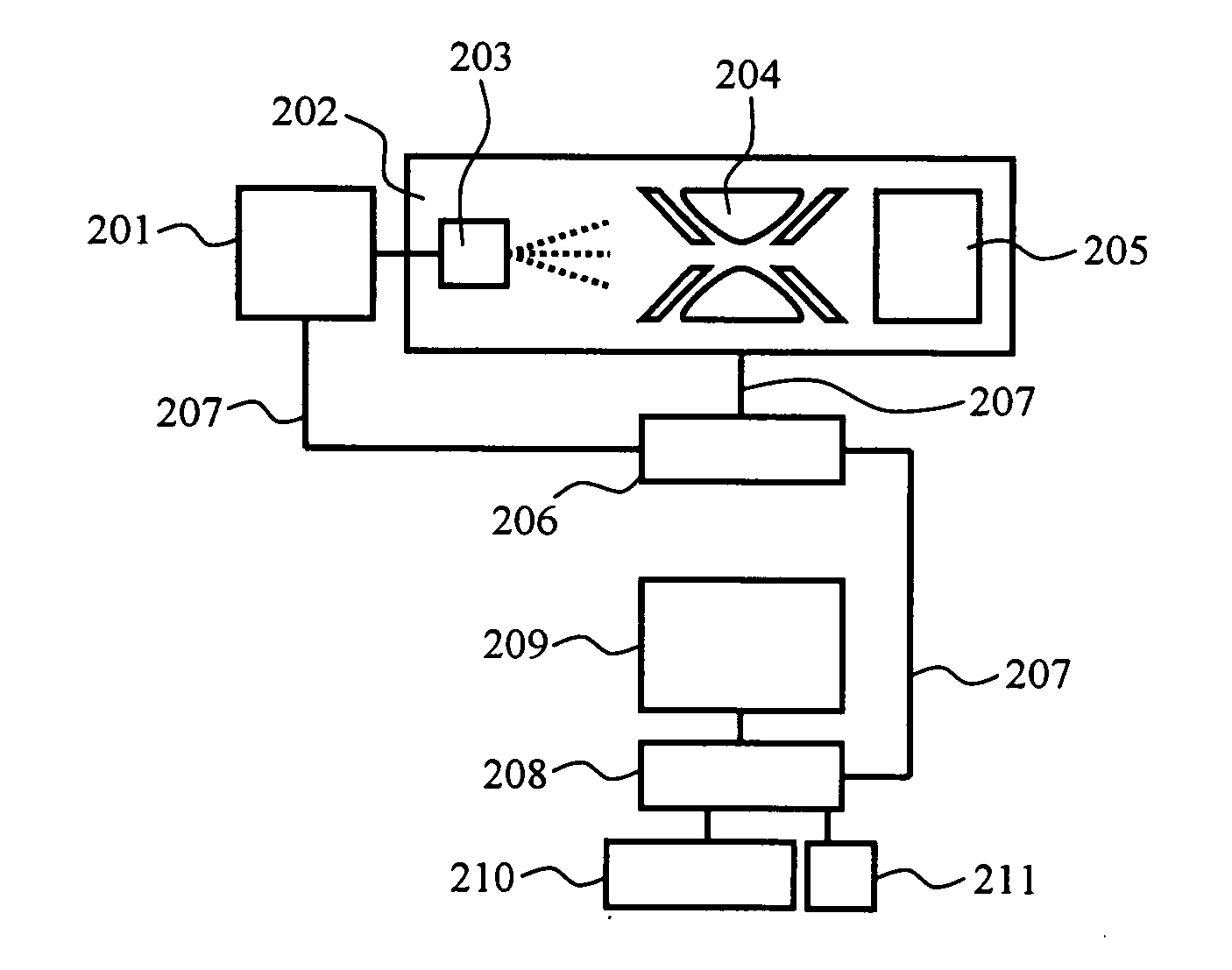
Figure 1 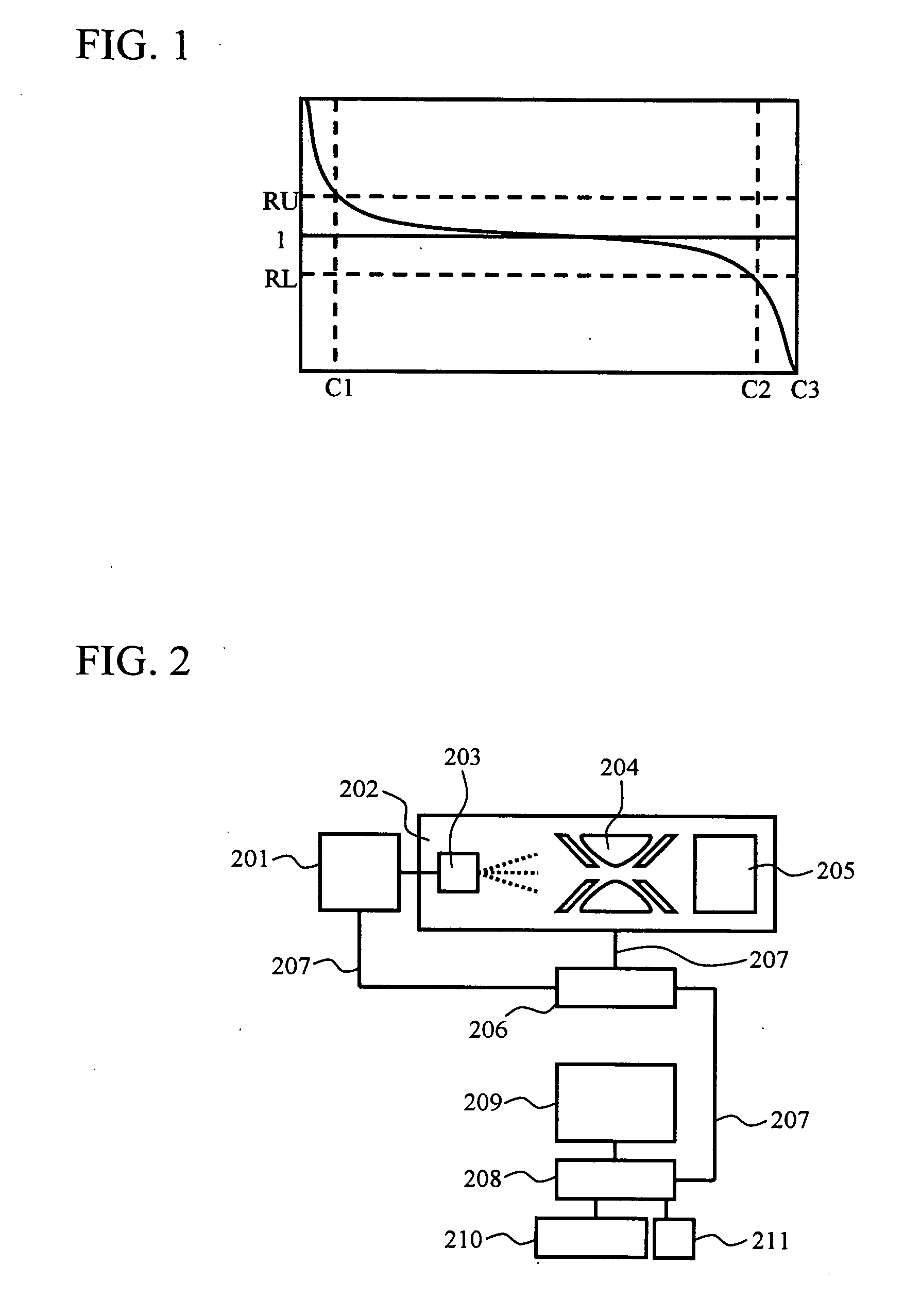
Figure 2 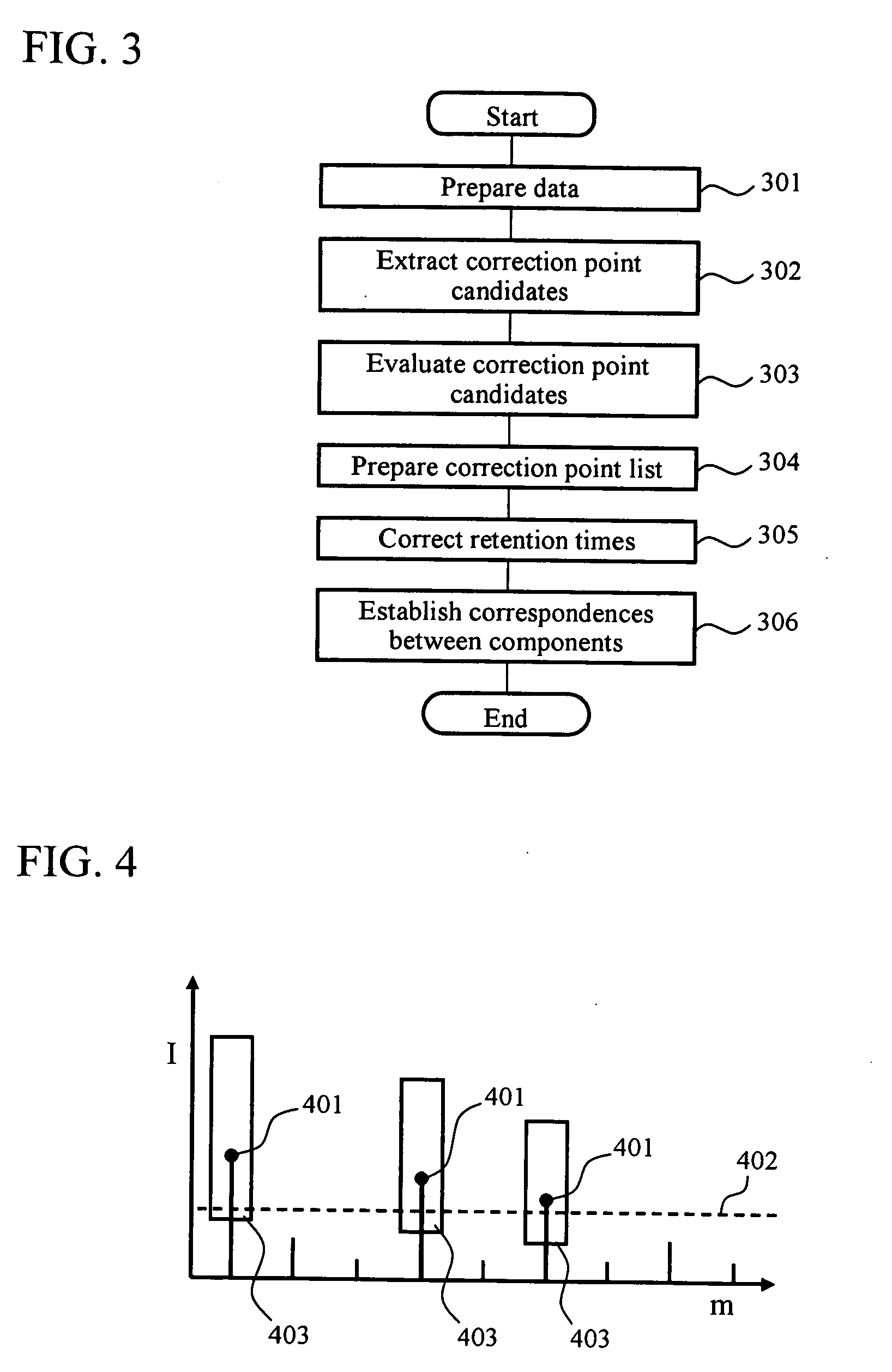
Figure 3
Abstract
Description
CLAIM OF PRIORITY
[0001] The present application claims priority from Japanese application JP 2007-90058 filed on Mar. 30, 2007, the content of which is hereby incorporated by reference into this application.BACKGROUND OF THE INVENTION
[0002] 1. Field of the Invention
[0003] The present invention relates to a method and apparatus for chromatography mass spectrometry.
[0004] 2. Background Art
[0005] When a sample constituted by a plurality of components is measured by a liquid chromatography-mass spectrometry using a combination of a separating instrument and a mass spectrometer, the sample components are successively observed as ions. By this liquid chromatography-mass spectrometry, a three-dimensional data in which mass spectra consisting of the ion intensity with respect to the mass-to-charge ratio are accumulated at certain times (so-called retention times) can be obtained. Trials have been made by using such data for quantitative comparative analysis of components contained in different s...
Examples
embodiment 1
[0075]An embodiment of the above-described method will be described.
[0076]An embodiment described below is an example of a process in which proteins are extracted from a reference sample and a sample to be corrected; liquid chromatography mass spectrometry is executed after enzyme digestion; and the correspondences between individual components is determined from the results of the mass spectrometry.
1. Outline
[0077]A more concrete form of the flow of processing shown in FIG. 3 is given and the relationship between main data and the processing is shown in FIG. 7.
[0078]Measurement data files 701 and 702 for a reference sample and a sample to be corrected are first prepared. In the measurement data files, data including MS spectra retention times, mass-to-charge ratios and ion intensities is stored. Data preparation processing (703, 704) is performed to organize these sorts of data and to enable easy access to target mass spectra or particular ions. As a result, map data groups 705 and...