
Presence-enhanced calendaring
a technology of calendaring and presence, applied in the field of calendaring systems, can solve the problems of inability to reliably predict the availability of specific dates the conventional calendaring system often cannot be relied on for specific availability at a given time, and the scheduled meeting may often run late or get canceled
Patent Information
- Authority / Receiving Office
- US · United States
- Current Assignee / Owner
- Publication Date
- 2008-10-02
- Estimated Expiration
- Not applicable · inactive patent
Smart Images
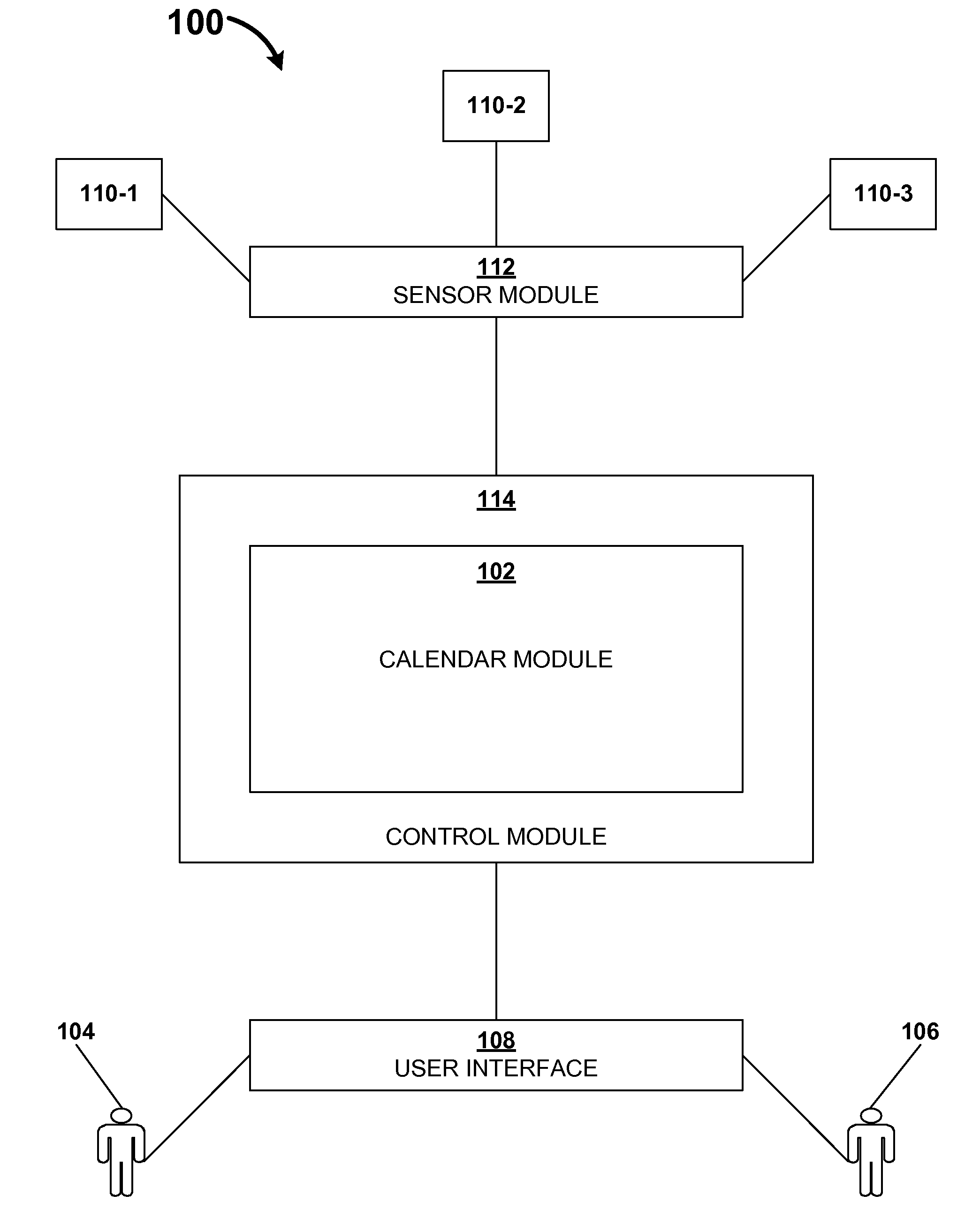
Figure 1 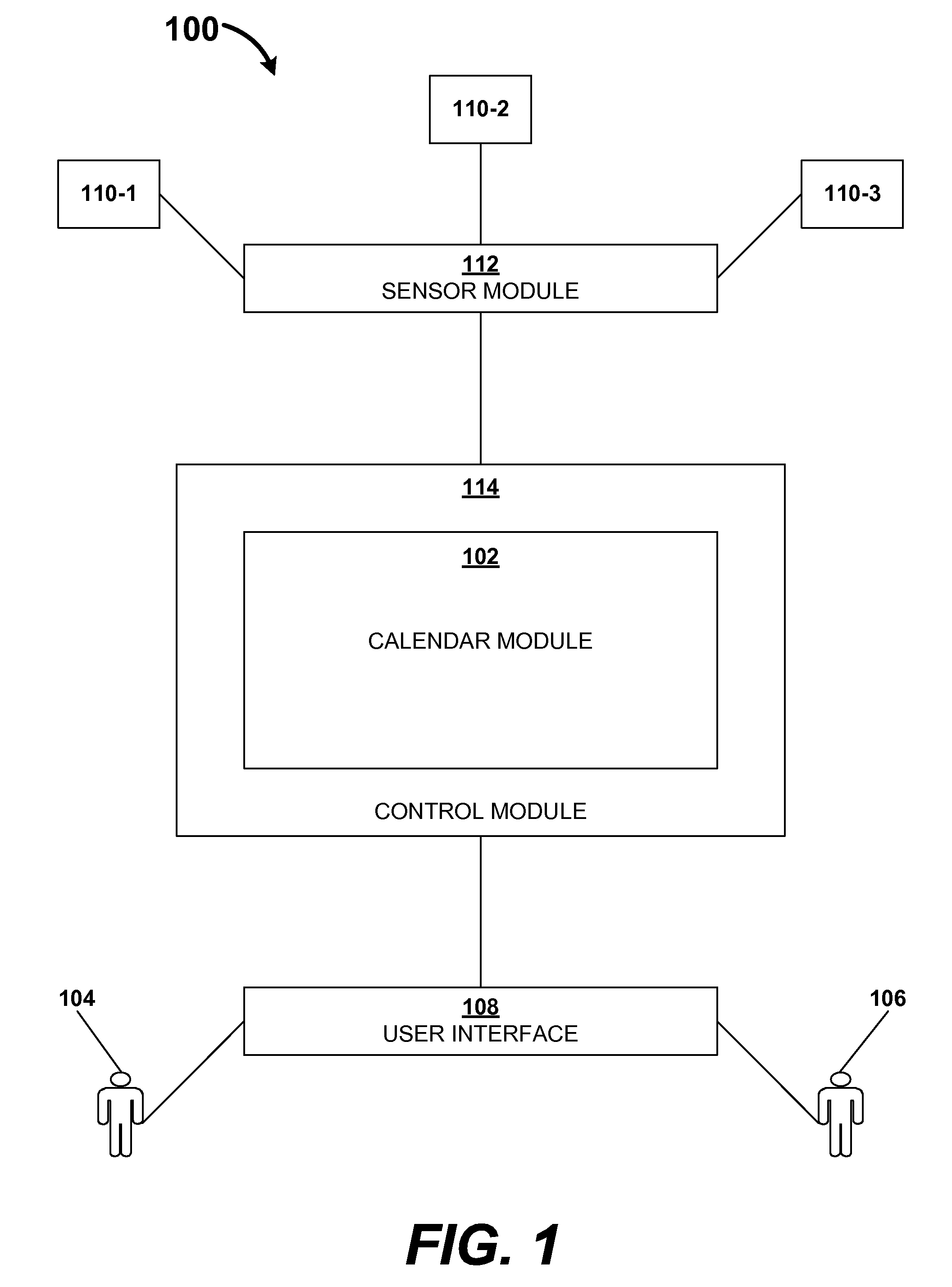
Figure 2 
Figure 3
Abstract
Description
FIELD OF THE INVENTION
[0001] The present disclosure relates generally to calendaring systems. In particular embodiments described herein, sensor-generated information related to a user's current activity can be incorporated into the calendaring system's activity information related to the user.BACKGROUND OF THE INVENTION
[0002] The typical modern workplace is heavily computerized, with communication, scheduling, and work output all now either primarily or entirely computer based. Groups of people who need to work together regularly use electronic calendars capable of being shared across a network to coordinate their activities. These electronic calendars are sometimes referred to as groupware calendaring systems (“GCSs”).
[0003] Group members publish their schedules, allowing group members to determine good times to schedule future appointments and good times to contact other group members. Publishing and sharing schedule information in this manner can be particularly important for distr...
Examples
Embodiment Construction
[0018]FIG. 1 illustrates a calendaring system 100 in accordance with embodiments disclosed herein. The calendaring system 100 includes a calendar module 102, a user interface 108, three sensors 110-1, 110-2, 110-3 (generally 110), a sensor module 112, and a control module 114.
[0019]In operation, a user 104 interacts with the user interface 108 to enter, delete, modify scheduled-activity information related to the user 104. The type of scheduled-activity information that the user 104 enters may be the same as in conventional calendaring systems. Typically, the user 104 will enter information reflecting scheduled or otherwise intended activities of the user 104. For example, if the user 104 schedules a meeting with a group of people, the user 104 may enter the day, time, and location of the meeting. The user 104 may enter other information as well, such as a list of attendees and a brief description of the purpose of the meeting. The user 104 may also enter information describing othe...