
Compositions and methods for inducing satiety and reducing caloric intake
a technology of satiety and caloric intake, applied in the field of compositions and methods for inducing satiety and reducing caloric intake, can solve the problems of poor weight loss candidates, individuals scoring high on rigid control scales and low on flexible control scales, and prone to compensatory behavior, so as to facilitate weight loss, reduce food intake, and reduce food intake
Patent Information
- Authority / Receiving Office
- US · United States
- Patent Type
- Applications(United States)
- Current Assignee / Owner
- Publication Date
- 2009-02-26
- Estimated Expiration
- Not applicable · inactive patent
Smart Images
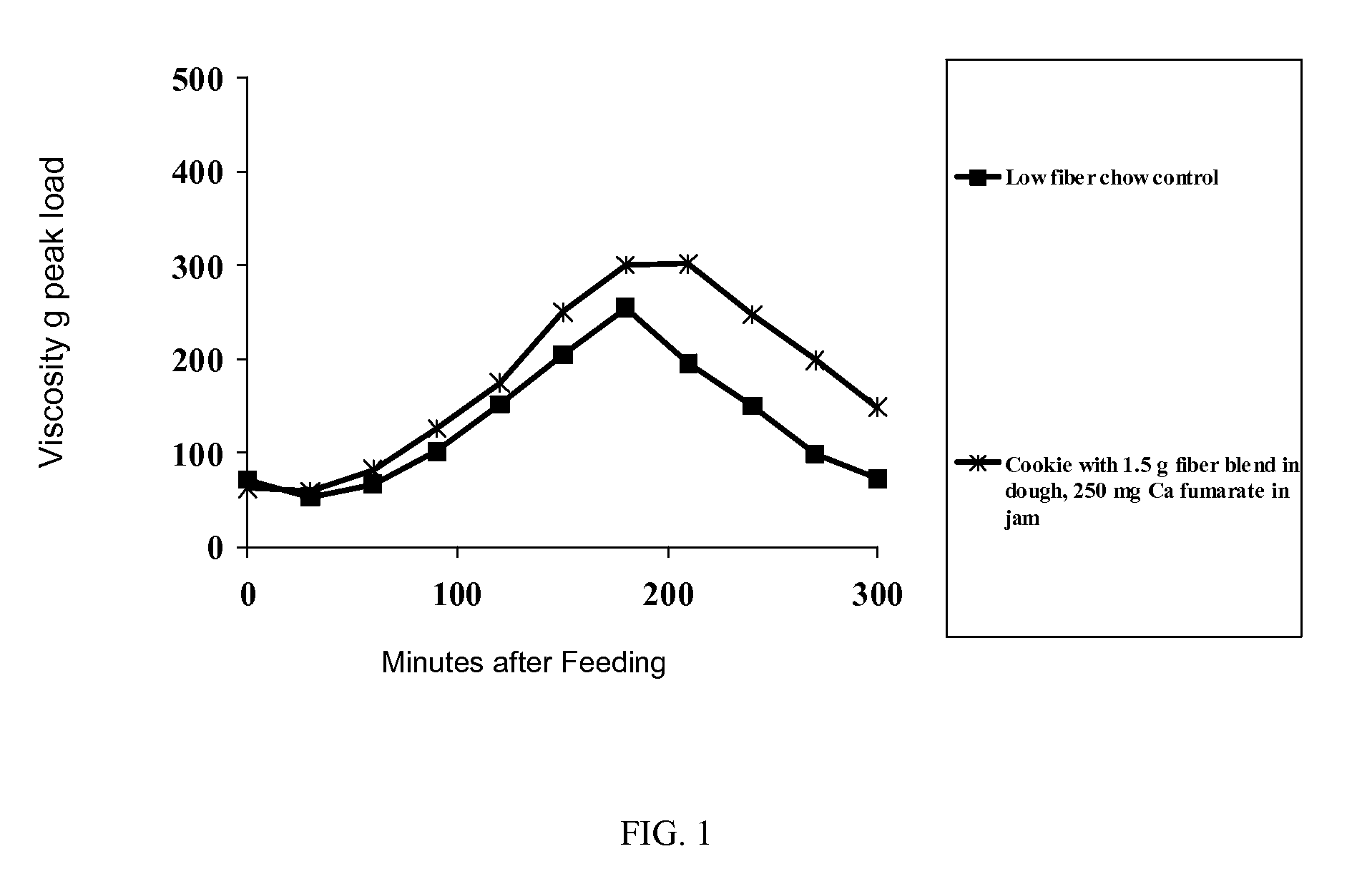
Figure 1 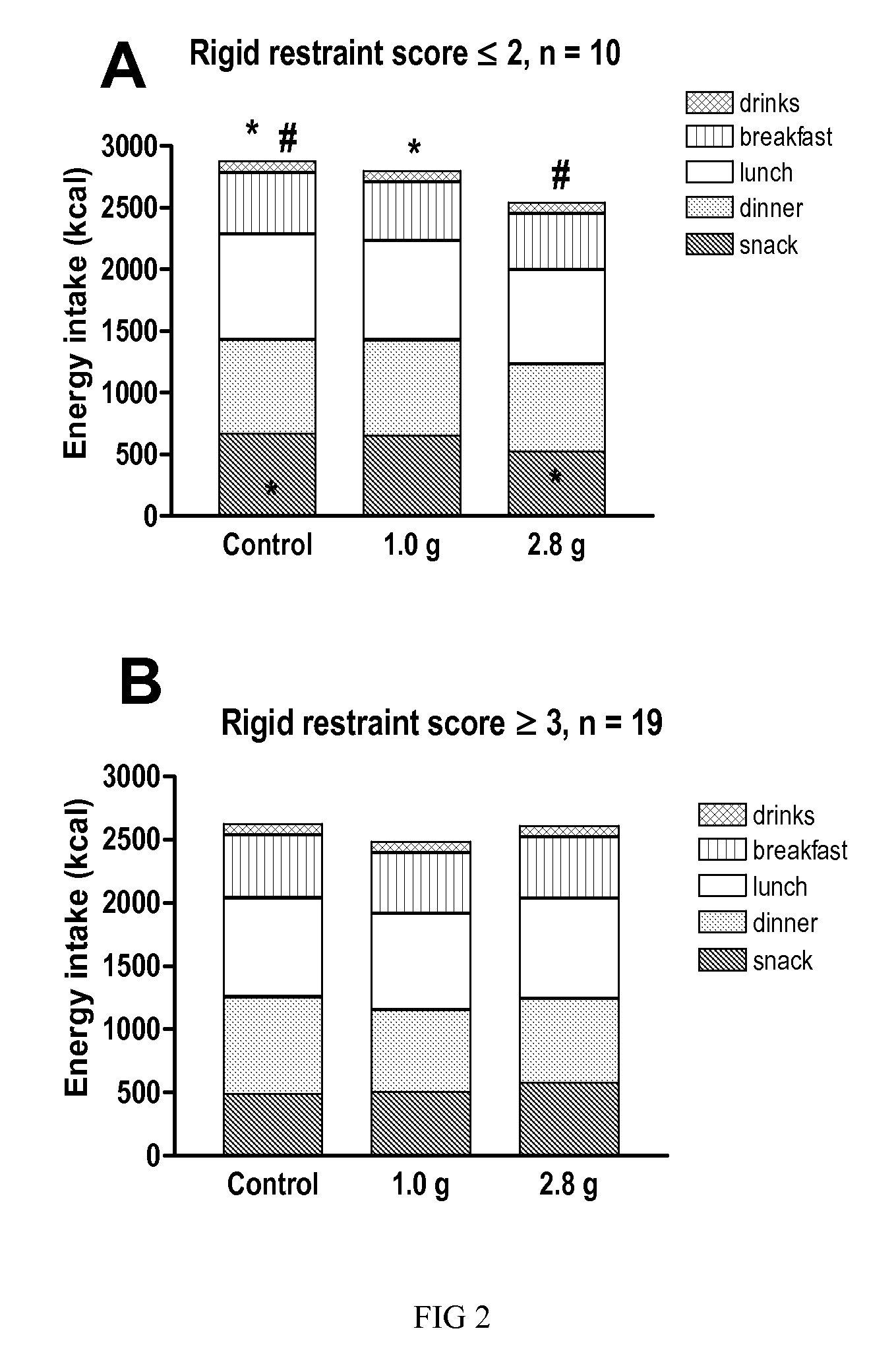
Figure 2
Abstract
Description
FIELD OF THE INVENTIONCROSS-REFERENCE TO RELATED APPLICATIONS
[0001] The present invention is directed to a method of determining the eating restraint behavior of an individual, and providing treatments for reducing food intake or weight based on the determined eating restraint behavior.BACKGROUND OF THE INVENTION
[0002] Diabetes and obesity are common ailments in the United States and other Western cultures. A study by researchers at RTI International and the Centers for Disease Control estimated that U.S. obesity-attributable medical expenditures reached $75 billion in 2003. Obesity has been shown to promote many chronic diseases, including type 2 diabetes, cardiovascular disease, several types of cancer, and gallbladder disease.
[0003] Adequate dietary intake of soluble fiber has been associated with a number of health benefits, including decreased blood cholesterol levels, improved glycemic control, and the induction of satiety and satiation in individuals. Consumers have been resista...
Examples
example 1
[0109]A study to evaluate the effects of soluble fiber and soluble calcium on food intake was performed by the following procedure.
[0110]The study enrolled premenopausal non-smoking overweight or obese women (body mass index between 25 and 35 kg / square meter) selected without regard to racial or ethnic background between 20 and 40 years of age. The TFEQ, see Stunkard and Messick above, was administered to each subject.
[0111]The study was a within-subjects design with 30 participants completing three one-week treatment periods, with a washout period of one week between treatment periods. Treatment order was counterbalanced to have five subjects randomly assigned to each of six possible treatment sequences. Subjects in each treatment period consumed a test beverage [WHAT SIZE?] at breakfast and after lunch (mid-afternoon). In one treatment period, subjects consumed a placebo beverage without fiber. In two treatment periods, the test beverage contained a blend of soluble fibers of one ...
example 2
[0125]A group of overweight or obese women having a BMI of 25-35 and aged 20 to 40 years of age is selected via newspaper advertisements. The women are supplied with a case containing 24 bottles of the 2.8 g alginate fiber composition of Example 1, and a second case containing 24 bottles of the 0.5 g calcium beverage composition of Example 1.
[0126]Each woman also receives a sealed envelope containing the TFEQ for determining her eating restraint status. Each woman completes the questionnaire in her home, and mails it back to the study director. Each woman consumes one bottle of the alginate fiber beverage and one bottle of the calcium beverage with breakfast, and a second pair of beverages at mid-afternoon, between lunch and dinner. These beverages are consumed using this protocol for 12 consecutive days.
[0127]Each woman also maintains a daily food diary that records all foods consumed, and the amount of each food consumed. At the end of 12 days, the women return any unused containe...
example 3
[0128]An internet website for a food intake control product includes the questions of the TFEQ. A potential purchaser enters the website, and answers the questions. A computer program records the responses to the questions, and based on the responses, calculates the rigid restraint score for the individual. Based on the obtained calculation, a new screen appears indicating the score of the potential purchaser, and if the score is two or less, a recommendation is provided that the potential purchaser purchase and use a particular product to assist in food intake control efforts. Additional computer screens linked to this screen via menu choices provide opportunities to purchase the product on-line, or alternately provide suggestions about retail locations at which the product may be purchased.