
Compositions and Methods for Treating Hair
a technology for hair and compositions, applied in the field of compositions and methods for treating hair, can solve the problems of affecting the control and manageability of hair, affecting the appearance of hair, and human hair naturally becoming soiled, so as to improve the appearance and feel of hair, and improve the appearance of hair. the effect of nourishing and softness
Patent Information
- Authority / Receiving Office
- US · United States
- Patent Type
- Applications(United States)
- Current Assignee / Owner
- Publication Date
- 2010-04-22
- Estimated Expiration
- Not applicable · inactive patent
Smart Images
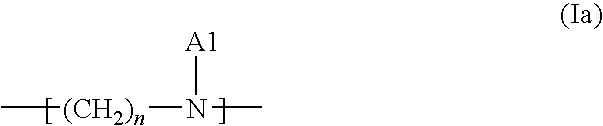
Figure 1 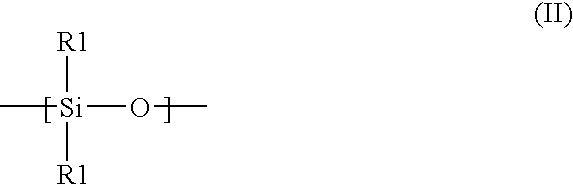
Figure 2 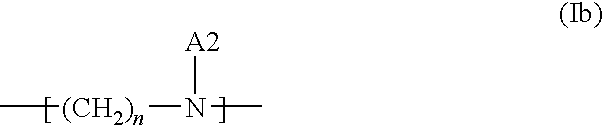
Figure 3
Abstract
Description
CROSS REFERENCE TO RELATED APPLICATIONS
[0001] This application is a continuation of PCT Application No. PCT / US2007 / 024511, filed Nov. 28, 2007, entitled “Compositions and Methods for Treating Hair,” which claims the benefit of U.S. Provisional Application bearing Ser. No. 60 / 867,447 entitled “Compositions and Methods for Treating Hair,” filed on Nov. 28, 2006, the entire contents of both of which are hereby incorporated herein by reference.
[0002] The present application is also related to an International Patent Application bearing Application Number PCT / US06 / 041564, entitled “COMPOSITIONS AND METHODS FOR IMPARTING OIL REPELLENCY AND / OR WATER REPELLENCY,” filed on Oct. 23, 2006. The entire contents of the international application are hereby incorporated by reference herein.FIELD OF INVENTION
[0003] The technical field of this invention is directed toward compositions that are potentially useful for treating hair, e.g., giving hair a conditioned effect.BACKGROUND OF THE INVENTION
[0004] H...
Examples
examples
[0054]The following examples are provided to illustrate some aspects of the present application. The examples, however, are not meant to limit the practice of any embodiment of the invention.
Synthetic Procedures
Synthesis 1: “Linear” Polyethyleneimine (“LPEI”)
[0055]Poly(2-ethyl-2-oxazoline) (Sigma Aldrich, St. Louis, Mo.; catalog no. 373974) was deacetylated by refluxing in 6M HCl overnight to yield a LPEI with a molecular weight of about 215,000 Daltons.
Synthesis 2: LPEI / PDMS Copolymer
[0056]Poly(dimethylsiloxane) (“PDMS”), having a molecular weight of about 980 Daltons and being diglycidyl ether terminated (Sigmal Aldrich, St. Louis, Mo.; catalog no. 480282), was mixed with LPEI, produced using Synthesis 1, in a thick-walled glass flask with isopropyl alcohol (“IPA”). The amounts of each component for making Sample A1 are shown in Table 1. The flask was heated to 150° C. and kept at that temperature for 18 hours. The resulting polymer solution was then concentrated to 20% (w / v) usin...