
Membrane desulfurization of liquid hydrocarbons using an extractive liquid membrane contactor system and method
Patent Information
- Authority / Receiving Office
- US · United States
- Current Assignee / Owner
- Publication Date
- 2011-01-06
- Estimated Expiration
- Not applicable · inactive patent
Smart Images
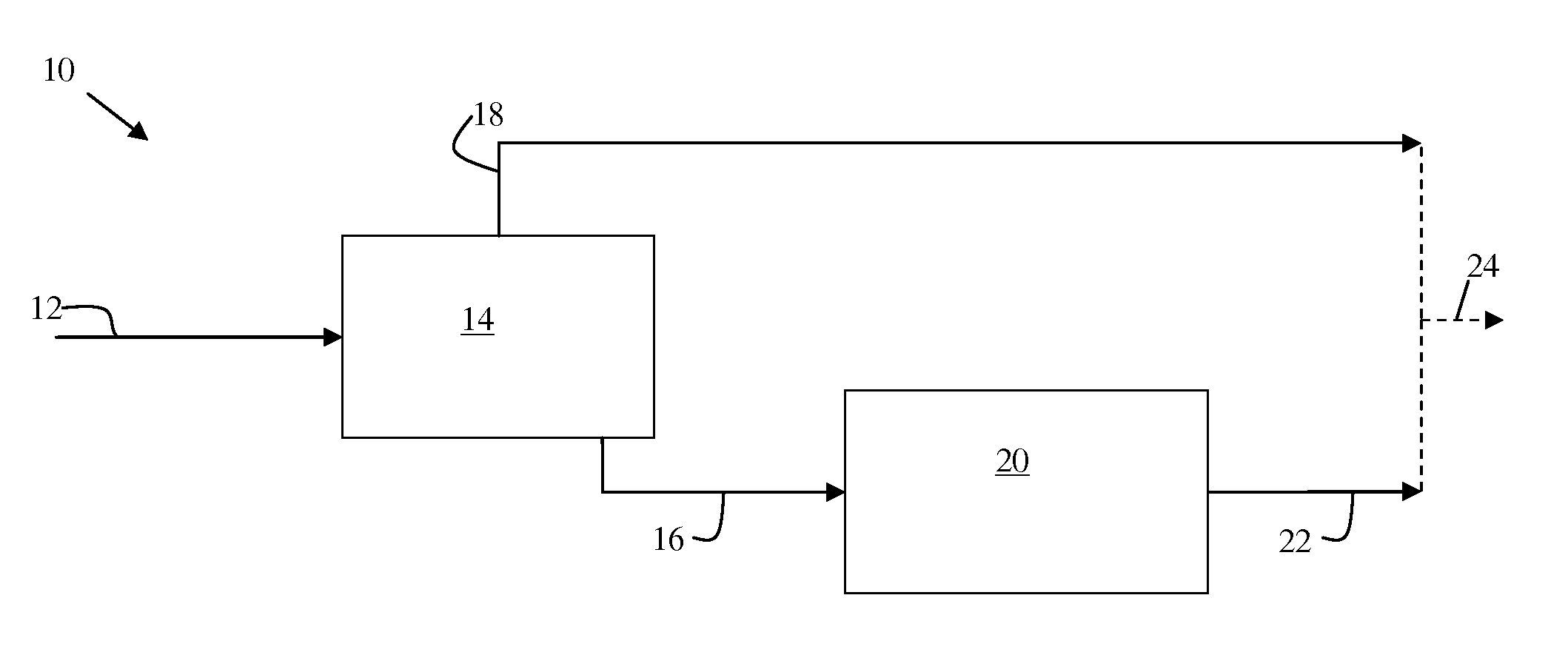
Figure 1 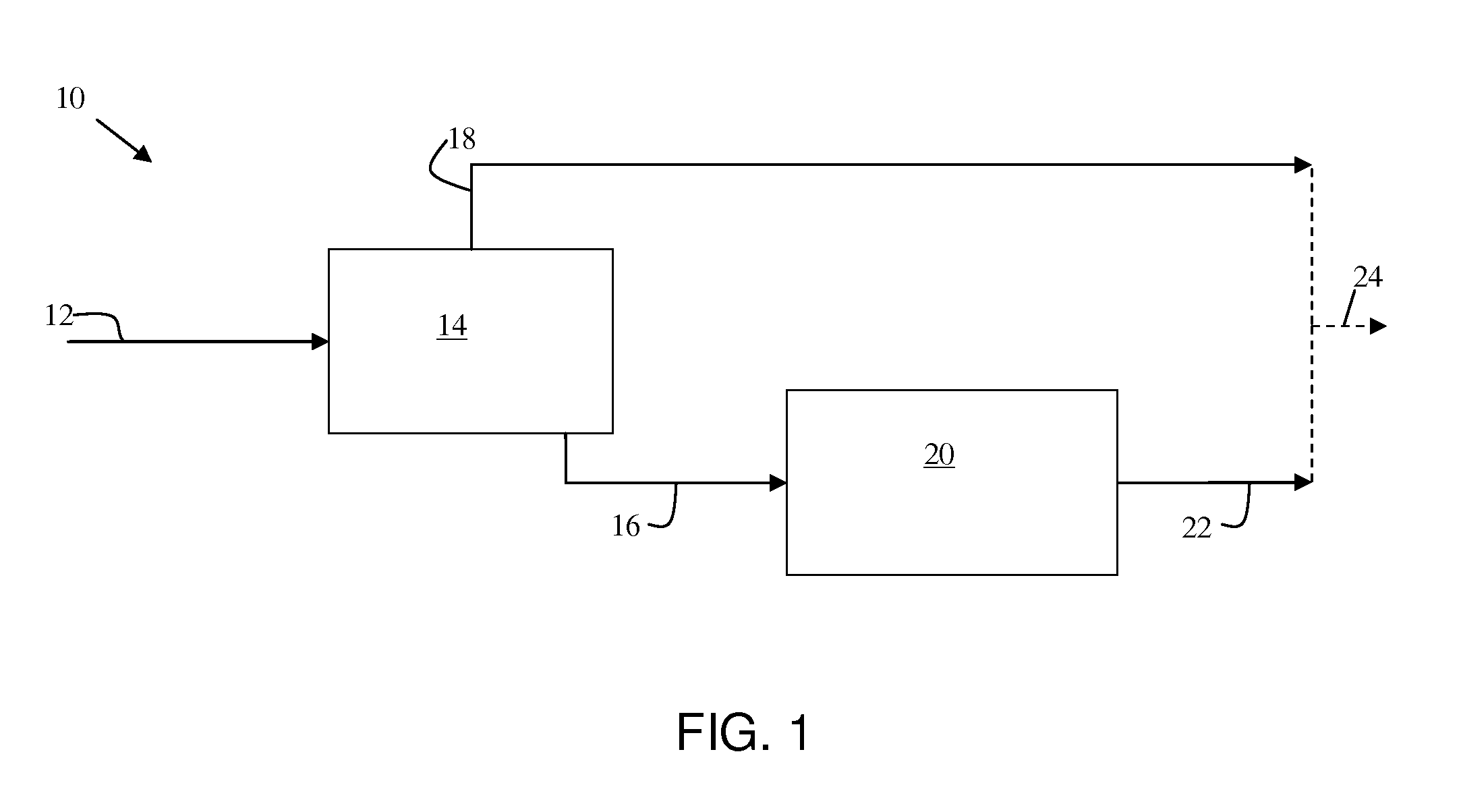
Figure 2 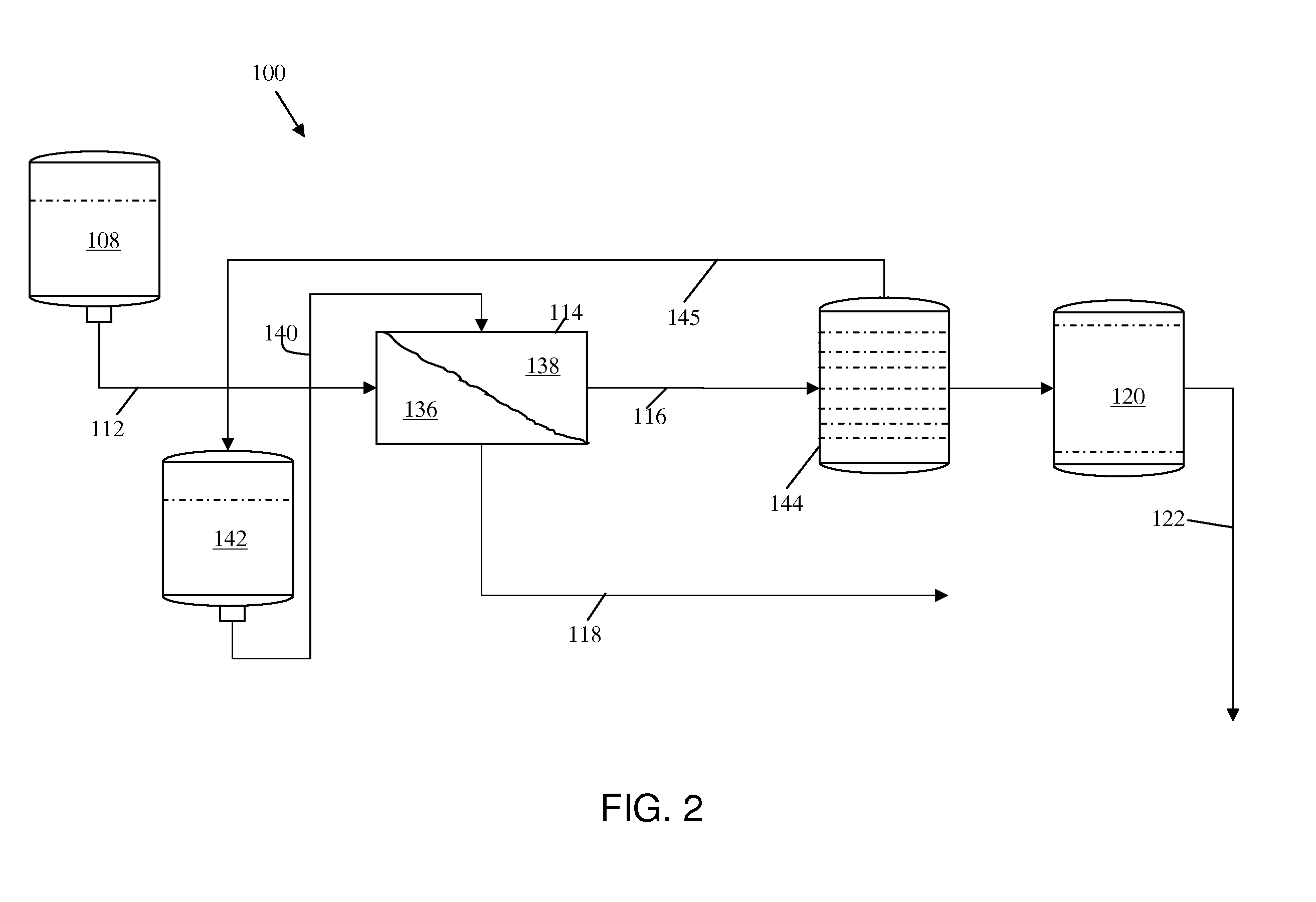
Figure 3
Abstract
Description
RELATED APPLICATIONS
[0001] This applications claims priority to U.S. Provisional Patent Application Ser. No. 61 / 222,411, which is incorporated by reference in its entirety herein.FIELD OF THE INVENTION
[0002] The invention relates to processes for desulfurization of a hydrocarbon feed using membrane separation, and more particularly to a process and system for desulfurization of a hydrocarbon feed using an extractive liquid membrane separation contactor.BACKGROUND OF THE INVENTION
[0003] Compositions of natural petroleum or crude oils vary significantly, generally based upon the source. However, virtually all crude oils contain some level of sulfur compounds, including inorganically combined sulfur and organically combined sulfur, i.e., organosulfur compounds. Whole crude oil that contains a substantial concentration of sulfur compounds, such as hydrogen sulfide, and organosulfur compounds such as mercaptans, thiophenes, benzothiophenes, and dibenzothiophenes is referred to as “sour,” wh...
Examples
example
[0050]Membrane contactors using polyvinylidene fluoride (PVDF) flat sheet ultrafiltration membranes were constructed and tested in accordance with the present invention. The membranes were about 125 μm in thickness, had pores of 0.1 μm or 0.2 μm, and a porosity of 70%, 75% or 80%. Furfural was used as the extractive solvent. The flow rate of both the extractive solvent and the hydrocarbon streams was set at 10 milliliters per minute. Table 3 provides the results indicating effective mass transfer coefficients (in centimeters per hour).
TABLE 3Mass TransferHydrocarbon streamMembrane ContactorCoefficientArab light crude 0.1 μm pore, 70% porosity0.25(1.9% w / w sulfur)Diesel (1.5% w / w sulfur)0.1 μm pore, 70% porosity0.19Diesel (1.5% w / w sulfur)0.1 μm pore, 75% porosity0.28Diesel (1.5% w / w sulfur)0.2 μm pore, 80% porosity0.37