
Apparatus for removing interference between neighbor cells in a radio communication system, and method for same
Patent Information
- Authority / Receiving Office
- US · United States
- Current Assignee / Owner
- Publication Date
- 2011-07-28
Smart Images
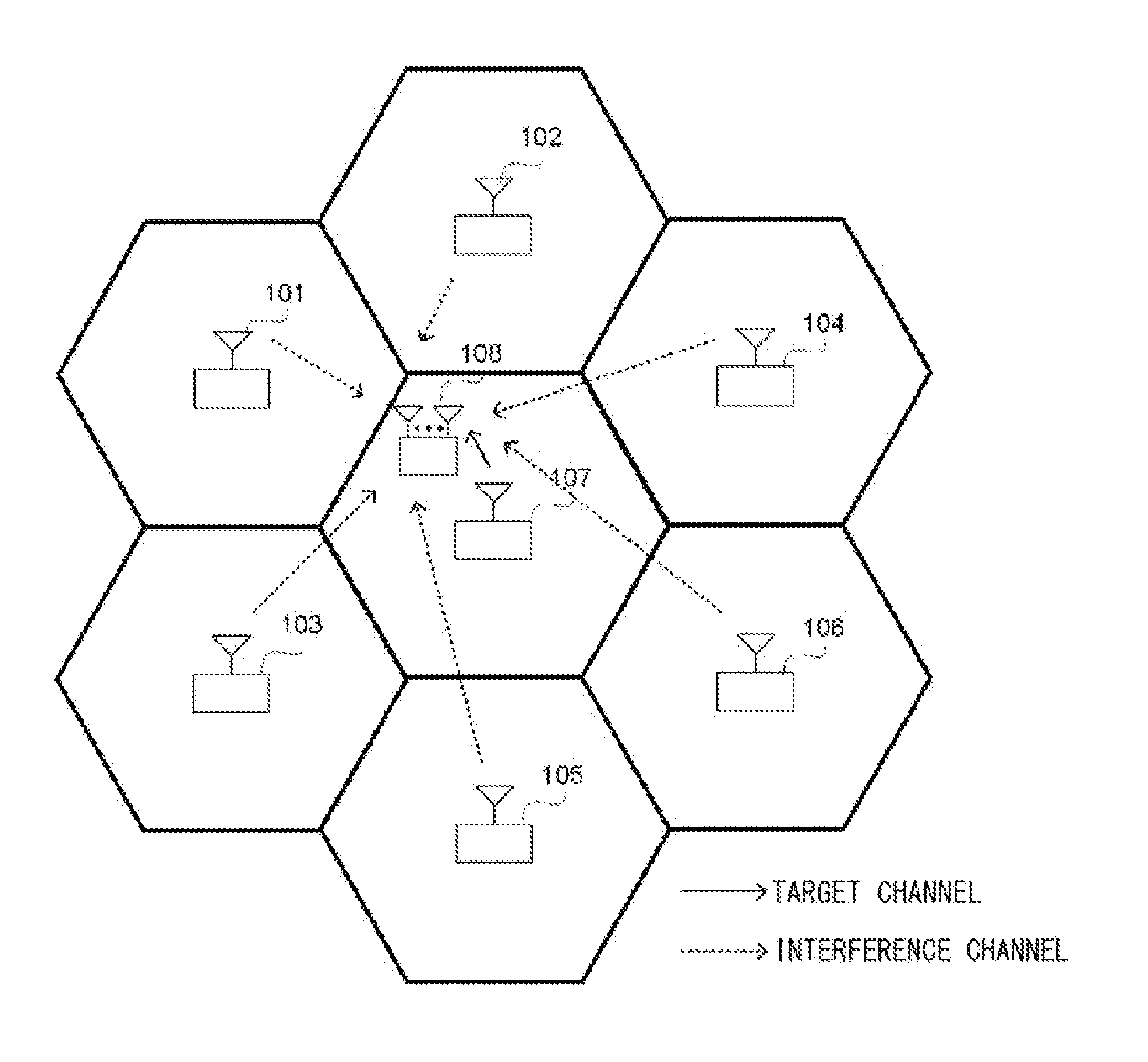
Figure 1 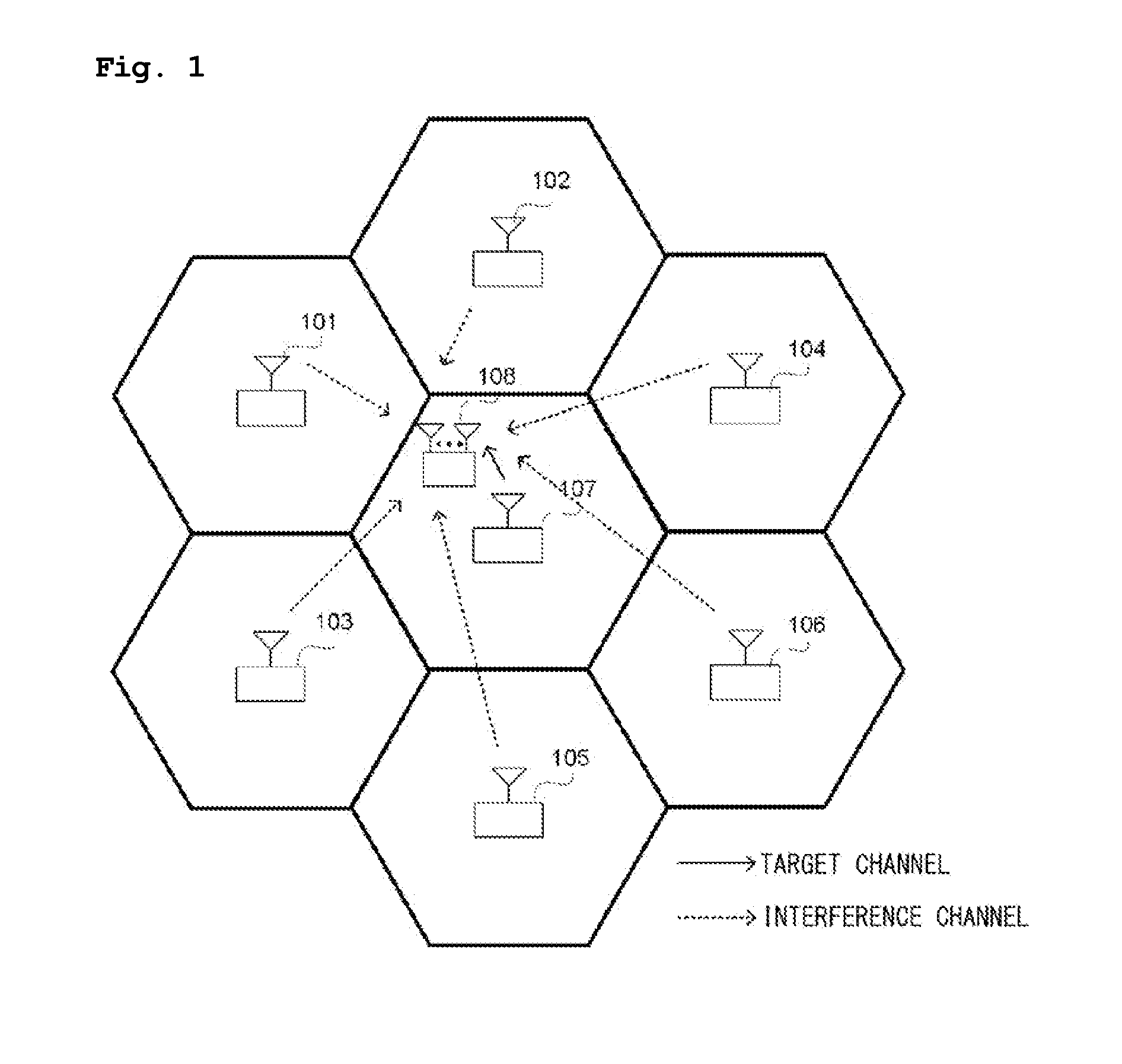
Figure 2 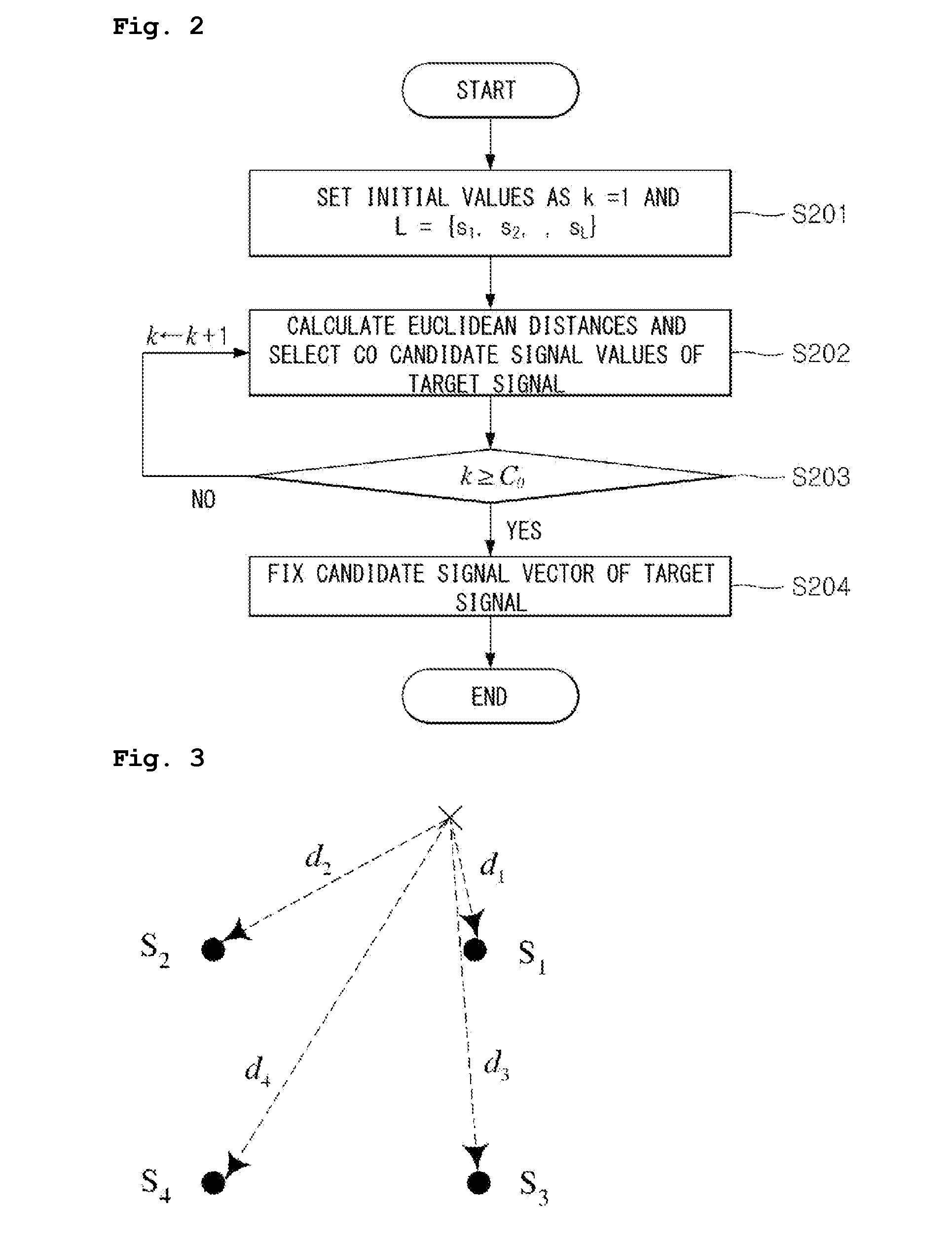
Figure 3
Abstract
Description
TECHNICAL FIELD
[0001] The present invention relates to an apparatus and method for cancelling interference between neighboring cells in a wireless communication system.BACKGROUND ART
[0002] Generally, in a wireless communication system, in particular, in a multi-cell environment in which all cells use the same frequency band, terminals present on the boundary of each cell have a considerably limited system capacity near the cell boundary due to a large number of interference signals from neighboring cells. The reason for the phenomenon whereby performance on the cell boundary is greatly deteriorated in this way is that a Signal-to-Interference-Noise power Ratio (SINR) decreases due to interference between neighboring cells.
[0003] In order to solve this problem, research into methods of minimizing the influence of interference signals between neighboring cells has been widely carried out.
[0004] In particular, a conventional Minimum Mean Square Error (MMSE) technique is known as a consider...
Examples
Example
DESCRIPTION OF REFERENCE NUMERALS OF PRINCIPAL ELEMENTS IN THE DRAWINGS
[0029]910: receiving unit[0030]920: first determination unit[0031]930: second determination unit[0032]940: third determination unit[0033]950: estimation unit
BEST MODE
[0034]Hereinafter, an apparatus and method for cancelling interference between neighboring cells in a wireless communication system according to embodiments of the present invention will be described in detail with reference to FIGS. 1 to 9.
[0035]The present invention proposes a scheme for cancelling interference between neighboring cells. That is, the present invention can estimate a target signal or an interference signal by applying only target and interference signal vectors, which have been selected using a Minimum Mean Square Error-Ordered Successive Interference Cancellation (MMSE-OSIC) technique, to a Maximum Likelihood (ML) technique. In this case, the number of target and interference signal vectors can be determined in consideration of the...