
Novel Class Of Olefin Metathesis Catalysts, Methods Of Preparation, And Processes For The Use Thereof
a technology of olefin metathesis and catalyst, which is applied in the direction of physical/chemical process catalyst, ruthenium organic compound, osmonium organic compound, etc., can solve the problems of unfavorable industrial consideration of catalysts, waste of reactants and energy, and often undetectable inefficient production of laos
Patent Information
- Authority / Receiving Office
- US · United States
- Current Assignee / Owner
- Publication Date
- 2012-03-29
- Estimated Expiration
- Not applicable · inactive patent
Smart Images
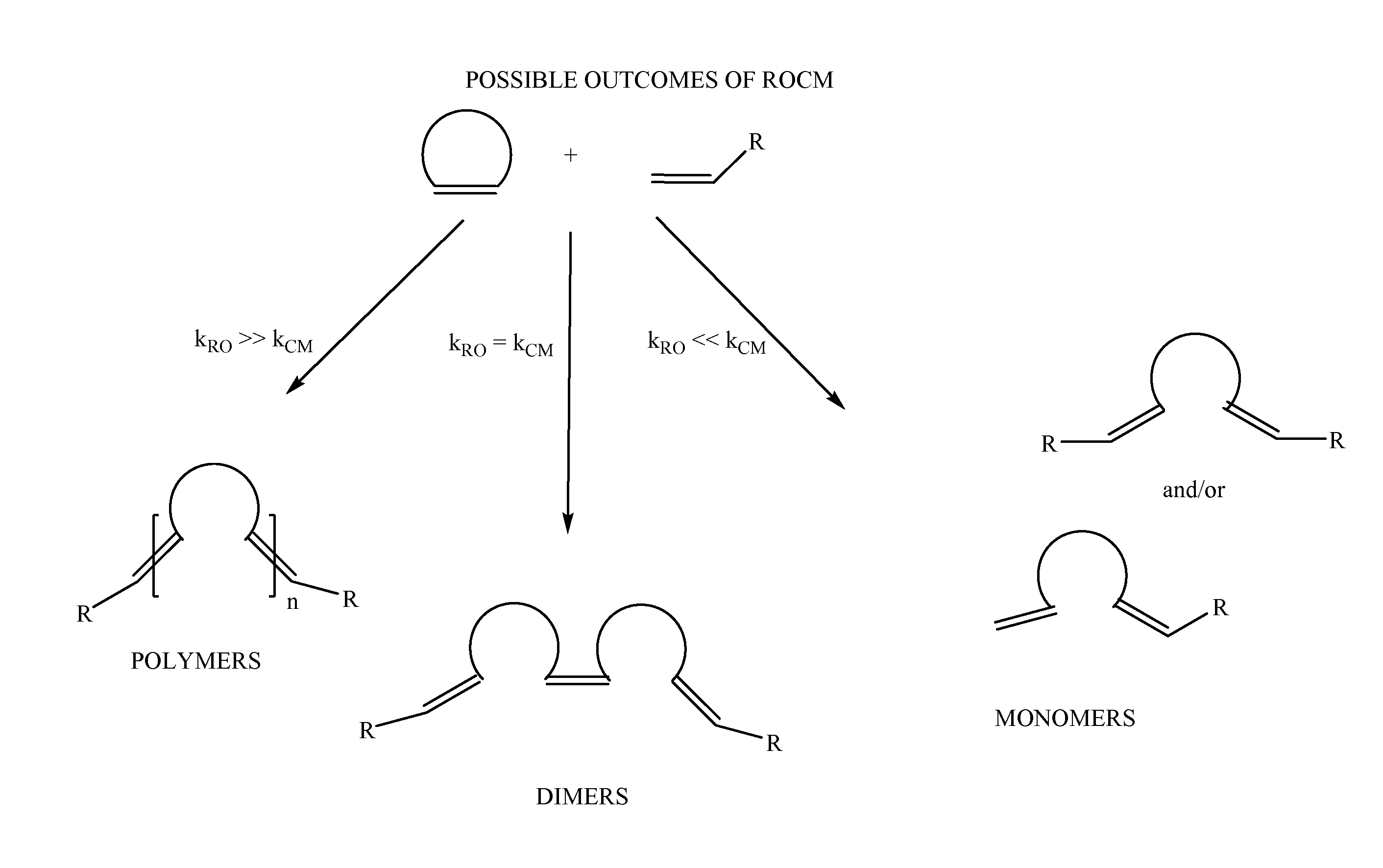
Figure 1 
Figure 2 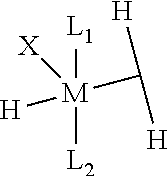
Figure 3
Abstract
Description
STATEMENT OF RELATED CASES
[0001] This application relates to U.S. Ser. No. 12 / 143,663, filed on Jun. 20, 2008; U.S. Ser. No. 12 / 487,739, filed on Jun. 19, 2009; U.S. Ser. No. 12 / 488,066, filed on Jun. 19, 2009; U.S. Ser. No. 12 / 488,093, filed on Jun. 19, 2009; U.S. Ser. No. 61 / 259,514, filed on Nov. 9, 2009; U.S. Ser. No. 61 / 259,521, filed on Nov. 9, 2009; U.S. Ser. No. 12 / 705,136, filed on Feb. 12, 2010; U.S. Ser. No. 61 / 314,388, filed on Mar. 16, 2010; U.S. Ser. No. 61 / 203,523, filed on Dec. 23, 2008; U.S. Ser. No. 12 / 660,815, filed on Mar. 4, 2010; U.S. Ser. No. 61 / 025,076, filed on Jan. 31, 2008; and U.S. Ser. No. 61 / 376,925 filed on Aug. 25, 2010.FIELD OF THE INVENTION
[0002] This invention relates to a novel class of olefin metathesis catalysts, methods of preparation, and to processes using the olefin metathesis catalysts.BACKGROUND OF THE INVENTION
[0003] In organic synthesis, a metathesis reaction is a catalytic reaction in which recombination of the double bonds occurs between ...
Examples
example 1
[0136]ROMP of DCPD: A 10.0 gram (75.6 mmol) amount of dicyclopentadiene was added to a 20 ml scintillation vial. A 5.0 milligram (7.2 μmol) amount of RuClH(H2)(PCy3)2 was added. One equivalent of phenylacetylene and hexachloroethane per equivalent of RuClH(H2)(PCy3)2 was charged via the addition of 0.1 mls each of a 72 mM stock solution of phenylacetylene and hexachloroethane, respectively. The ring opening polymerization of dicyclopentadiene was observed by a gradual thickening of the solution to a rubbery viscous material after six minutes. After one hour a solid rubbery material had formed.
example 2
[0137]ROMP of DCPD: A 10.0 gram (75.6 mmol) amount of dicyclopentadiene was added to a 20 ml scintillation vial. A 5.0 milligram (7.2 μmol) amount of RuClH(H2)(PCy3)2 was added. Five equivalents of phenylacetylene and hexachloroethane per equivalent of RuClH(H2)(PCy3)2 were added via the addition of 0.5 mls of 72 mM solution of phenylacetylene and hexachloroethane, respectively. The ring-opening polymerization of dicyclopentadiene was observed by a rapid thickening of the solution to a rubbery viscous material. After 4 minutes, the material was a rubbery solid. After 24 hours, the material was a hard rubbery solid.
example 3
[0138]ROMP of DCPD: A 10.0 gram (75.6 mmol) amount of dicyclopentadiene was added to a 20 ml scintillation vial. A 5.0 milligram (7.2 μmol) amount of RuClH(H2)(PCy3)2 was added. One equivalent of phenylacetylene per equivalent of RuClH(H2)(PCy3)2 was added via the addition of 0.1 mls of 72 mM solution of phenylacetylene. Ten equivalents of hexachloroethane per equivalent of RuClH(H2)(PCy3)2 were charged via the addition of 1.0 mls of a 72 mM solution. The ring opening polymerization of dicyclopentadiene was observed by a gradual thickening of the solution to a rubbery viscous material after six minutes. After one hour, a solid rubbery material had formed.