

Methods of Automated Spectral Peak Detection and Quantification Having Learning Mode
a technology of spectral peak detection and learning mode, applied in chemical methods analysis, instruments, recognising signals, etc., can solve the problems of mass spectrometry techniques, novice or untrained operators will very likely get an incorrect result or no result at all, and achieve the effect of convenient handling
Patent Information
- Authority / Receiving Office
- US · United States
- Current Assignee / Owner
- Publication Date
- 2012-04-12
- Estimated Expiration
- Not applicable · inactive patent
Smart Images
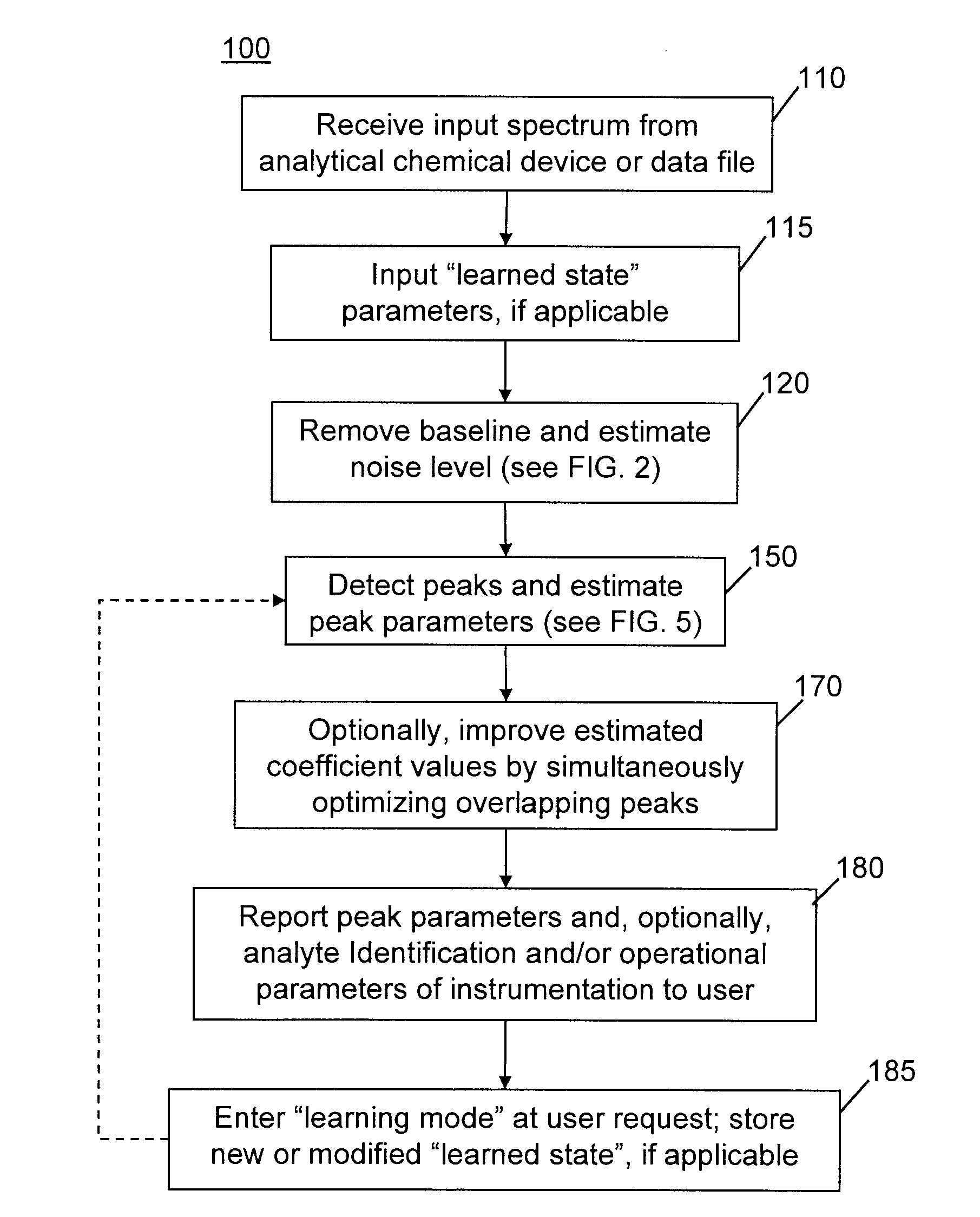
Figure 1 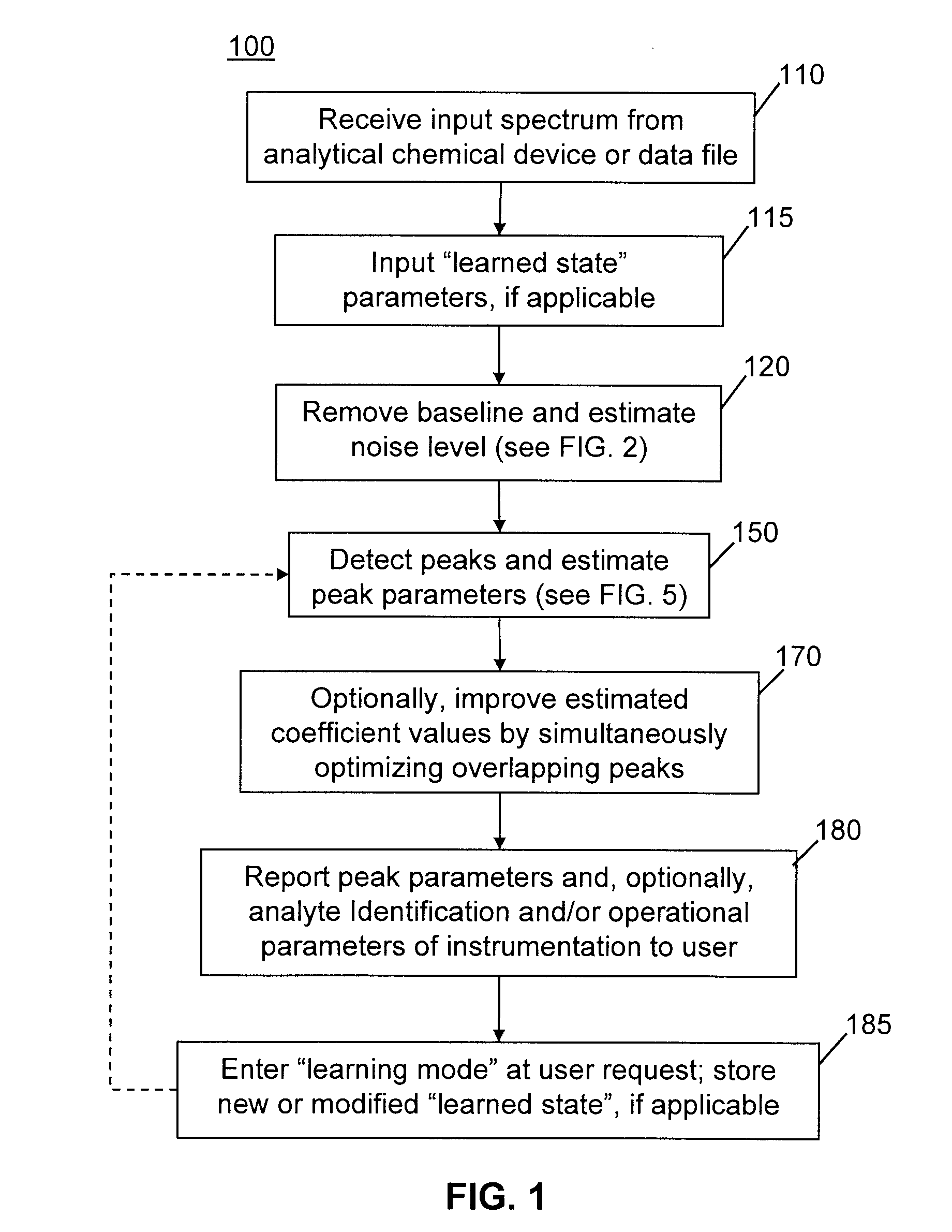
Figure 2 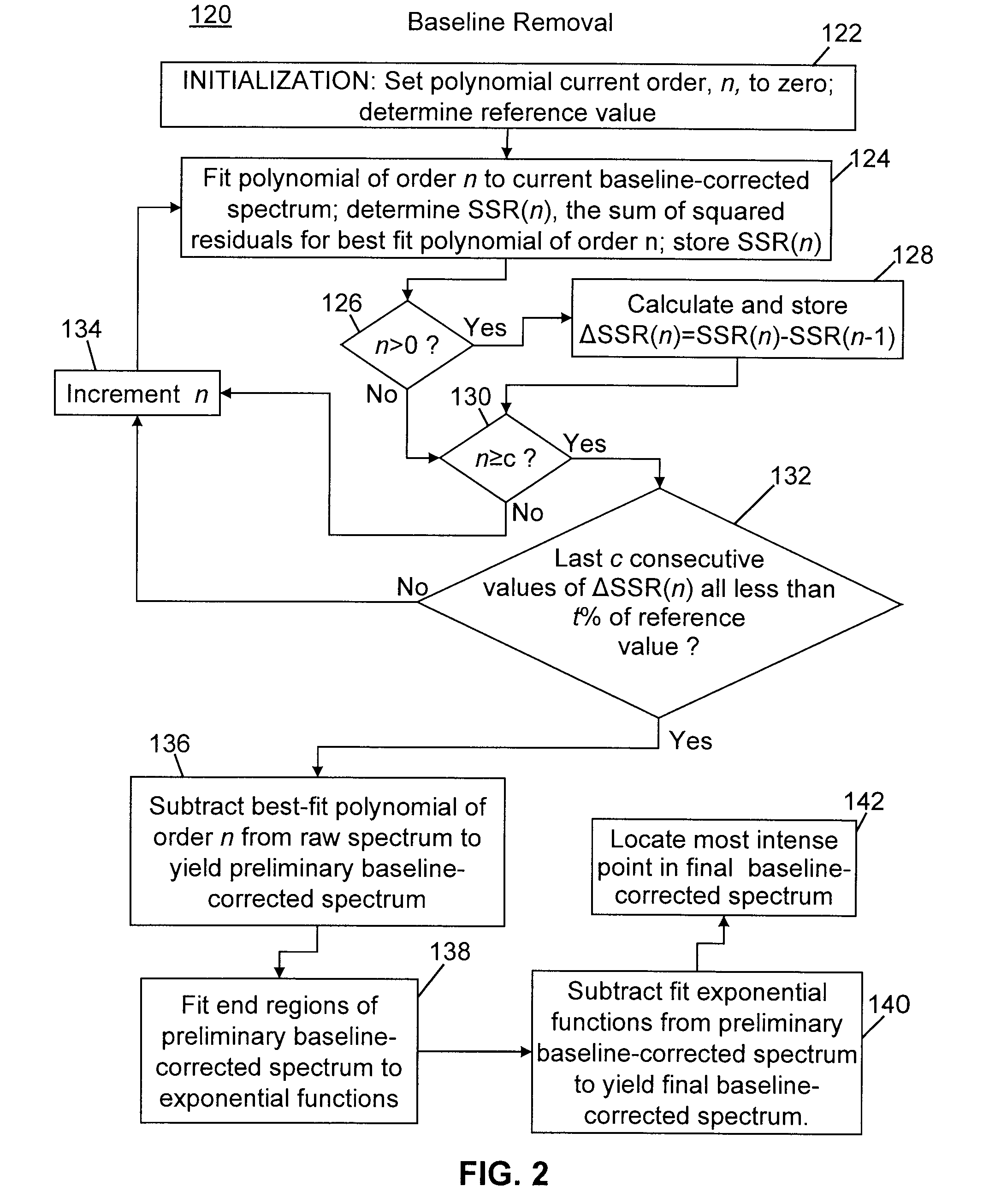
Figure 3
Abstract
Description
FIELD OF THE INVENTION
[0001] This invention relates to methods of analyzing data obtained from instrumental analysis techniques used in analytical chemistry and, in particular, to methods of automatically identifying peaks in liquid chromatograms, gas chromatograms, mass chromatograms or optical or other spectra without input from or intervention of a user.BACKGROUND OF THE INVENTION
[0002] The various techniques of instrumental analysis used in the broad field of analytical chemistry have been developed and refined primarily over the last century. Many of these techniques—such as the spectroscopic techniques including atomic absorption spectroscopy, atomic emission spectroscopy, UV-visible spectroscopy, infrared spectroscopy, NMR spectroscopy and Raman spectroscopy, among others—involve complex interactions of electromagnetic radiation with samples, possibly containing unknown substances to be identified or characterized. Other techniques, such as liquid chromatography (LC), gas chrom...
Examples
Embodiment Construction
[0053]The present invention provides methods of automated spectral peak detection and quantification that do not require any user input or intervention during the peak detection process but which do allow for users to interactively teach any particular implementation of the methods how to improve its accuracy and precision in subsequent peak detection processes. The methods described herein can accommodate and model all types of spectral data, where the term “spectral data” is broadly defined as described above, and provide robust automatic detection, integration and reporting of spectral peaks. Any and even all model parameters utilized in these methods may be adaptively determined in a manner that is invisible to the user. The following description is presented to enable any person skilled in the art to make and use the invention, and is provided in the context of a particular application and its requirements. Various modifications to the described embodiments will be readily appa...