
Sitagliptin synthesis
a technology of sitagliptin and synthesis method, which is applied in the field of enantiomerically enriched amino acid derivative preparation, can solve the problems of unsuitable industrial production, inconvenient and expensive industrial processes, and process disclosure, and achieves simple, reliable, convenient and commercially acceptable processes.
Patent Information
- Authority / Receiving Office
- US · United States
- Current Assignee / Owner
- Publication Date
- 2012-05-03
Smart Images
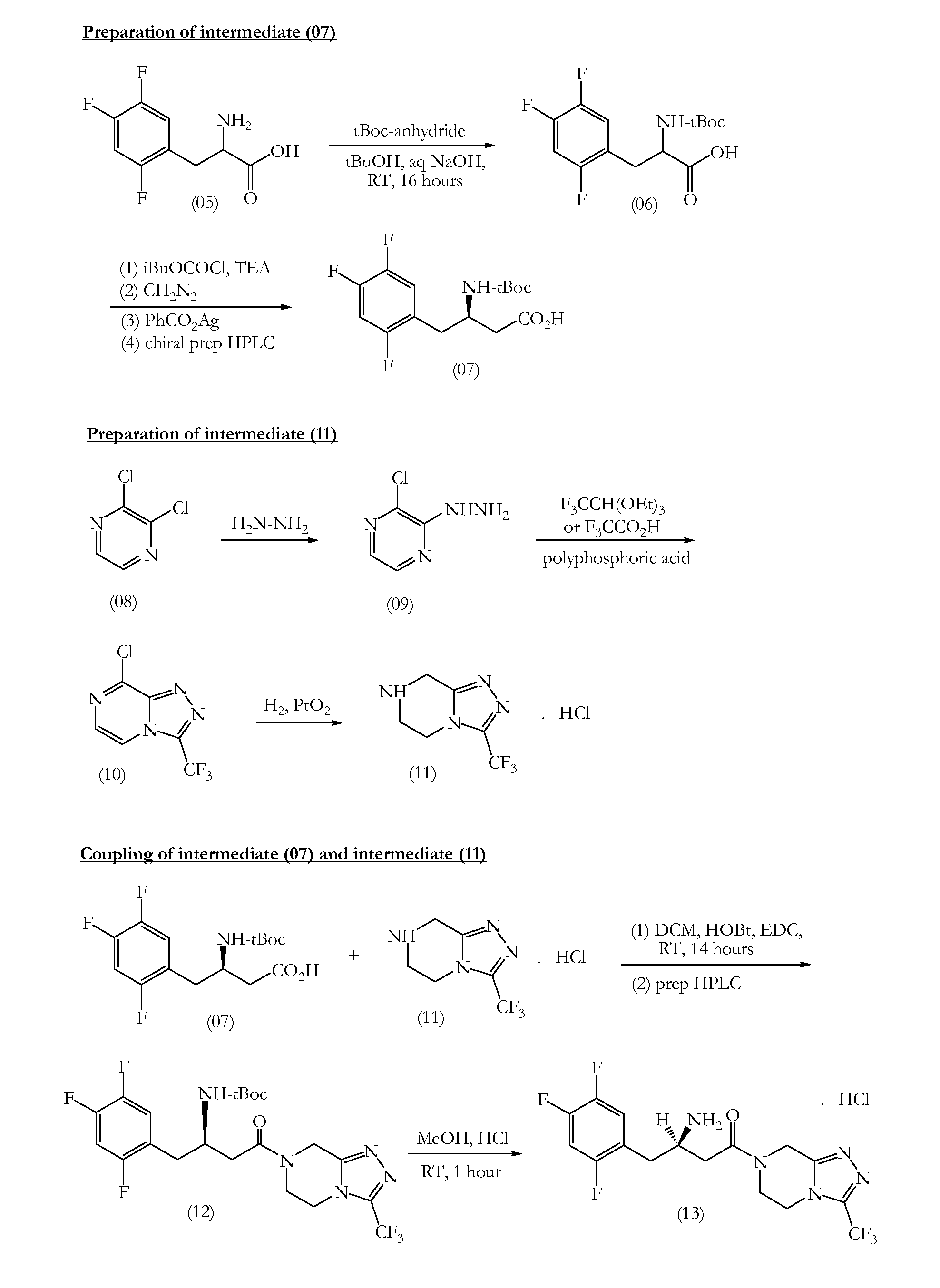
Figure 1 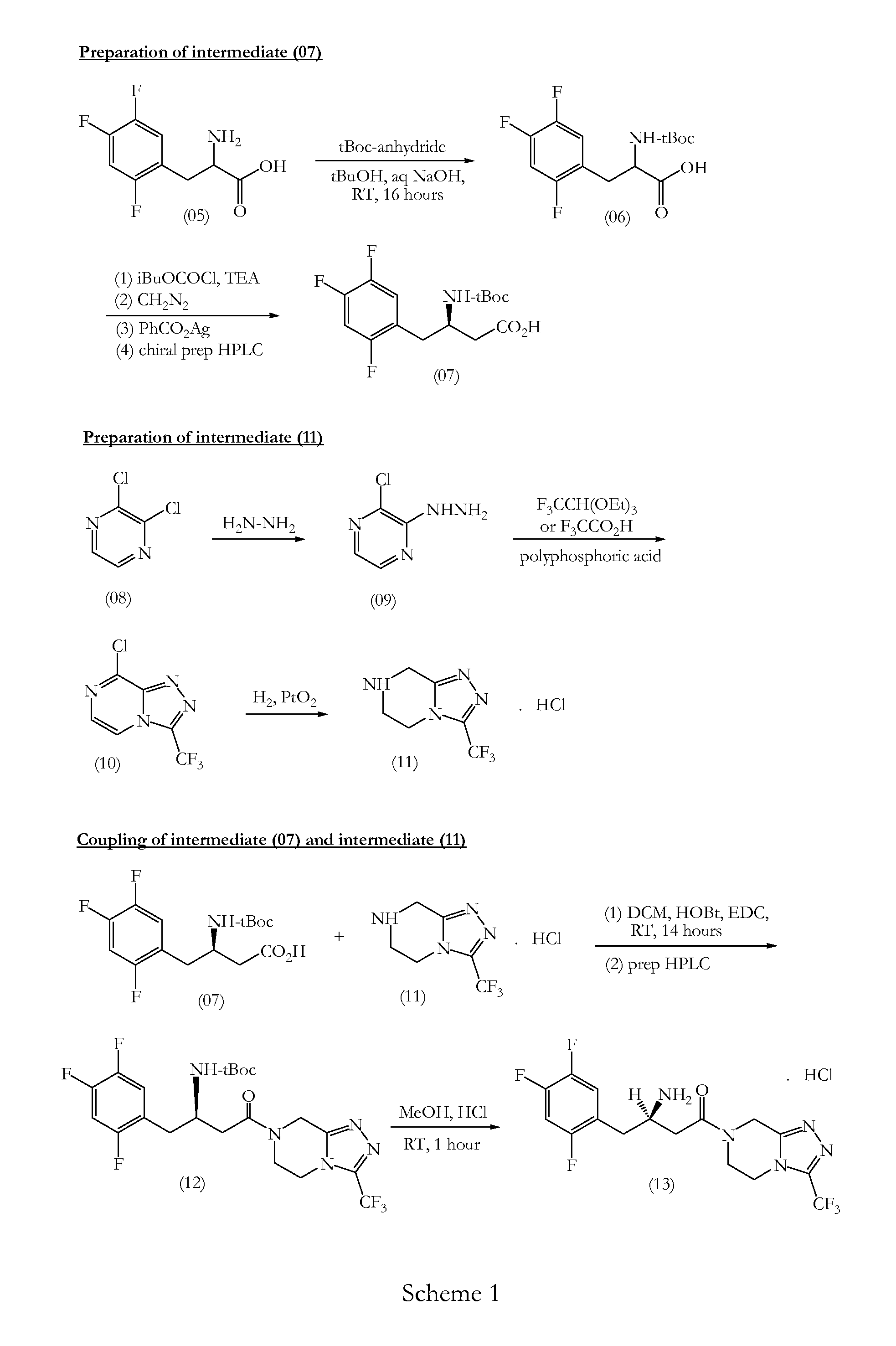
Figure 2 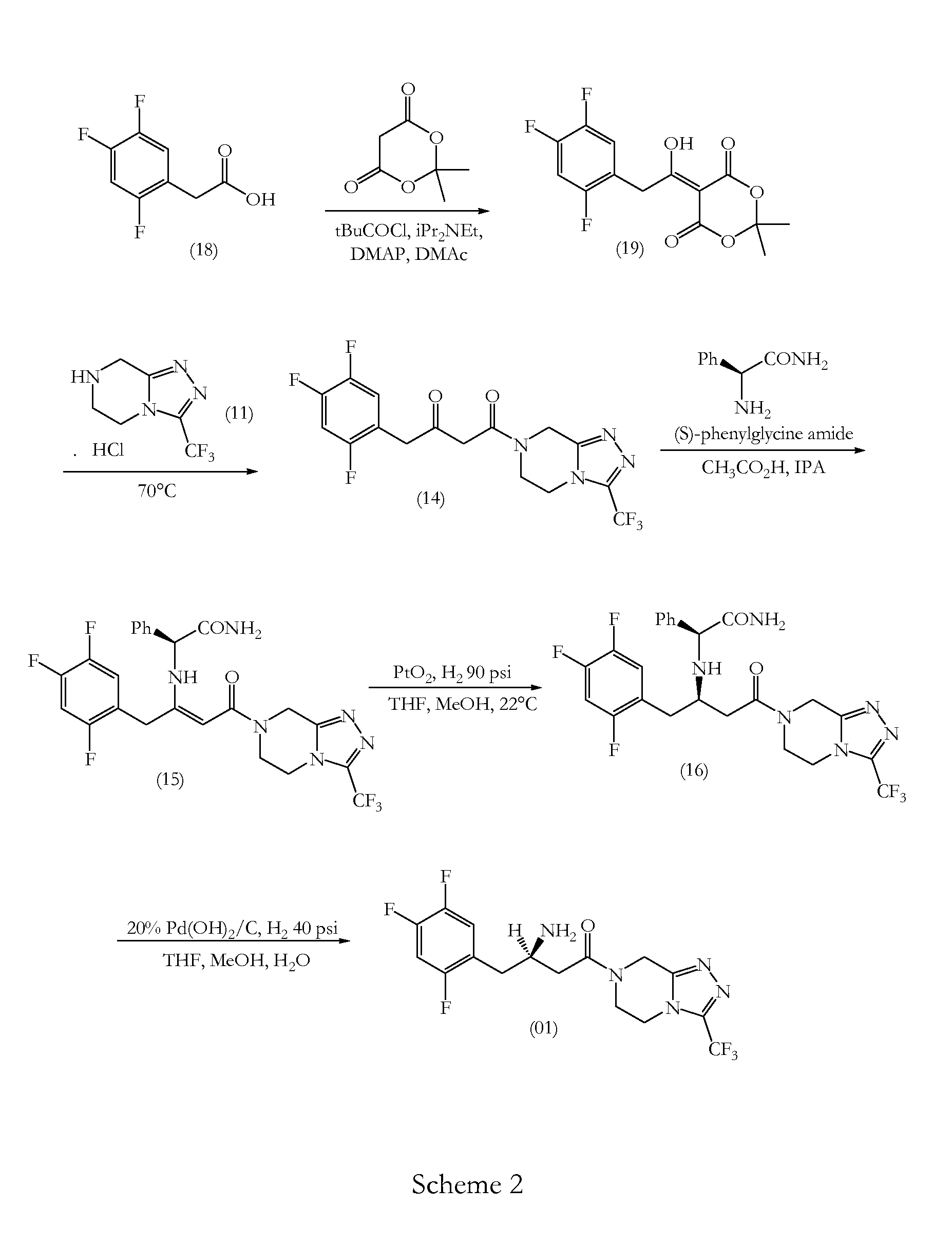
Figure 3
Abstract
Description
FIELD OF THE INVENTION
[0001] The present invention relates to novel processes for the preparation of enantiomerically enriched β-amino acid derivatives such as β-amino esters useful for the synthesis of enantiomerically enriched biologically active molecules such as sitagliptin (01) and sitagliptin dihydrogen phosphate (02). The present invention further relates to pharmaceutical compositions comprising such biologically active molecules and to the use of such compositions.BACKGROUND OF THE INVENTION
[0002]
[0003] Sitagliptin dihydrogen phosphate (02), chemically named as (2R)-4-oxo-4-[3-(trifluoro-methyl)-5,6-dihydro[1,2,4]triazolo[4,3-a]pyrazin-7(8H)-yl]-1-(2,4,5-trifluorophenyl)butan-2-amine dihydrogen phosphate, is an oral antihyperglycemic of the dipeptidyl peptidase-IV (DPP-IV) inhibitor class. Inhibition of DPP-IV, an enzyme that inactivates both glucose-dependent insulinotropic peptide (GIP) and glucagon-like peptide 1 (GLP-1), represents a recent approach to the treatment and p...
Examples
examples
Meldrum's Adduct (19)
[0137]2,4,5-Trifluorophenylacetic acid (500.0 gm, 2.63 mol) (18) was suspended in tetrahydrofuran (5.26 vol, 2.63 Ltr) at 25-30° C. and the reaction mixture was stirred for 10-15 minutes. To this clear solution, 1,1′-carbonyldiimidazole (1.5 eq, 639.68 gm) was charged in four lots and the reaction mixture was stirred for 2-3 hours at 25-30° C. After 2-3 hours stirring, Meldrum's acid (1.2 eq, 454.87 gm) was charged and the reaction mixture was heated for 6 hours at 50-55° C. After 6 hours heating at 50-55° C., the tetrahydrofuran was distilled out completely at 50-55° C. under reduced pressure to give a dark yellow coloured residue. The dark yellow residue was acidified by using a 1:1 mixture of 35% hydrochloric acid:water (0.5 vol, 250.0 ml) at 0-5° C. The product was extracted from the aqueous solution by using dichloromethane (3×5.0 vol, 3×2.5 Ltr). The combined dichloromethane layers were further washed with water (3×10.0 vol, 3×5.0 Ltr). After water washing...