

Method of heating a preform, a driving arrangement, a preform heating system and a computer program
a preform and driving arrangement technology, applied in the field of heating a preform, can solve the problems of limited energy efficiency, poor energy efficiency, and the inability to effectively direct or focus radiation emitted by halogen lamps, and achieve the effect of reducing the number of halogen lamps
Patent Information
- Authority / Receiving Office
- US · United States
- Current Assignee / Owner
- Publication Date
- 2012-06-28
- Estimated Expiration
- Not applicable · inactive patent
Smart Images
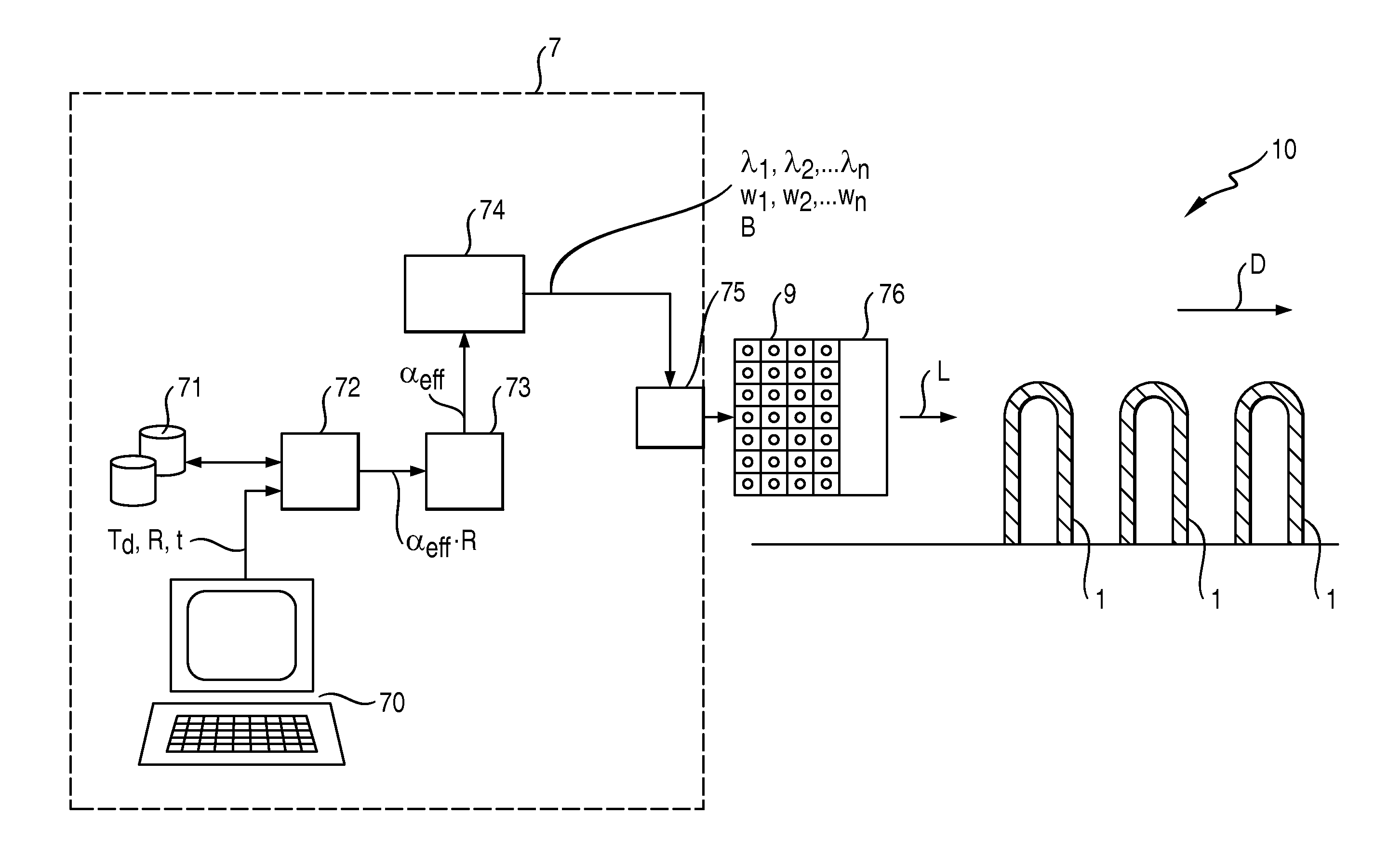
Figure 1 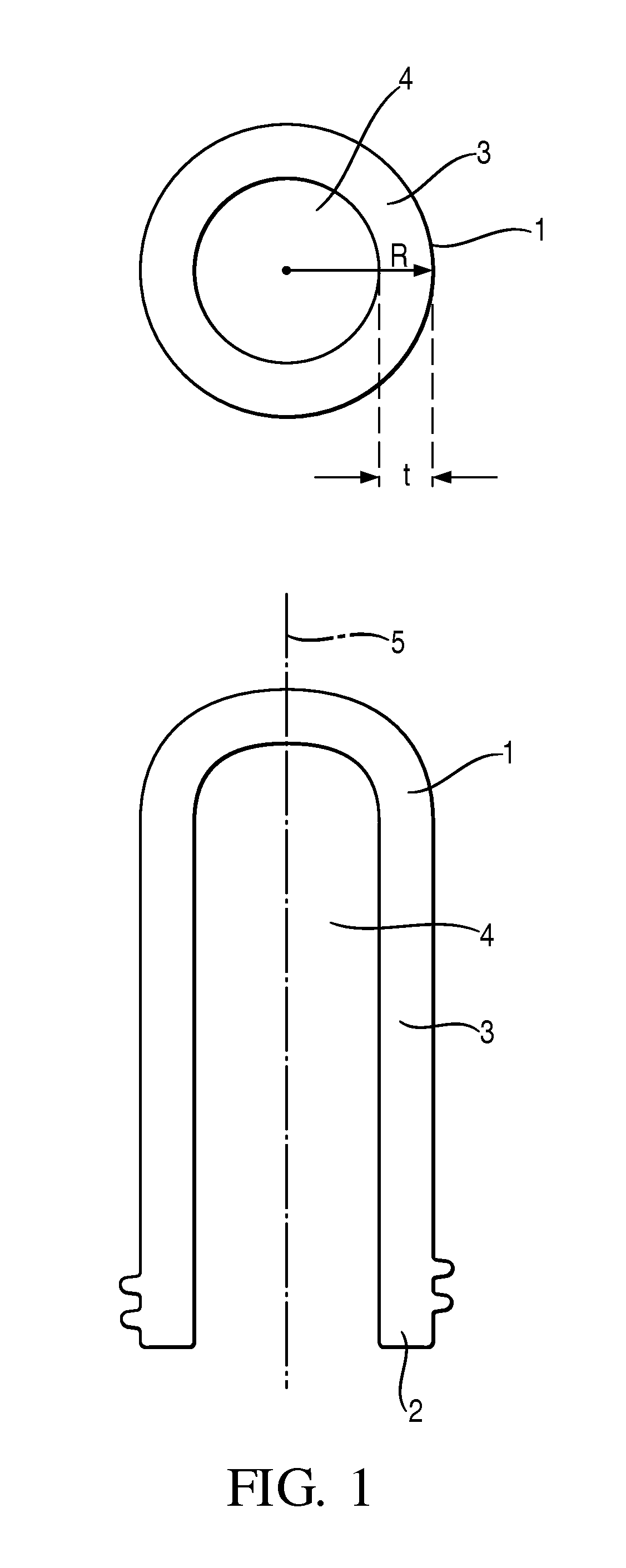
Figure 2 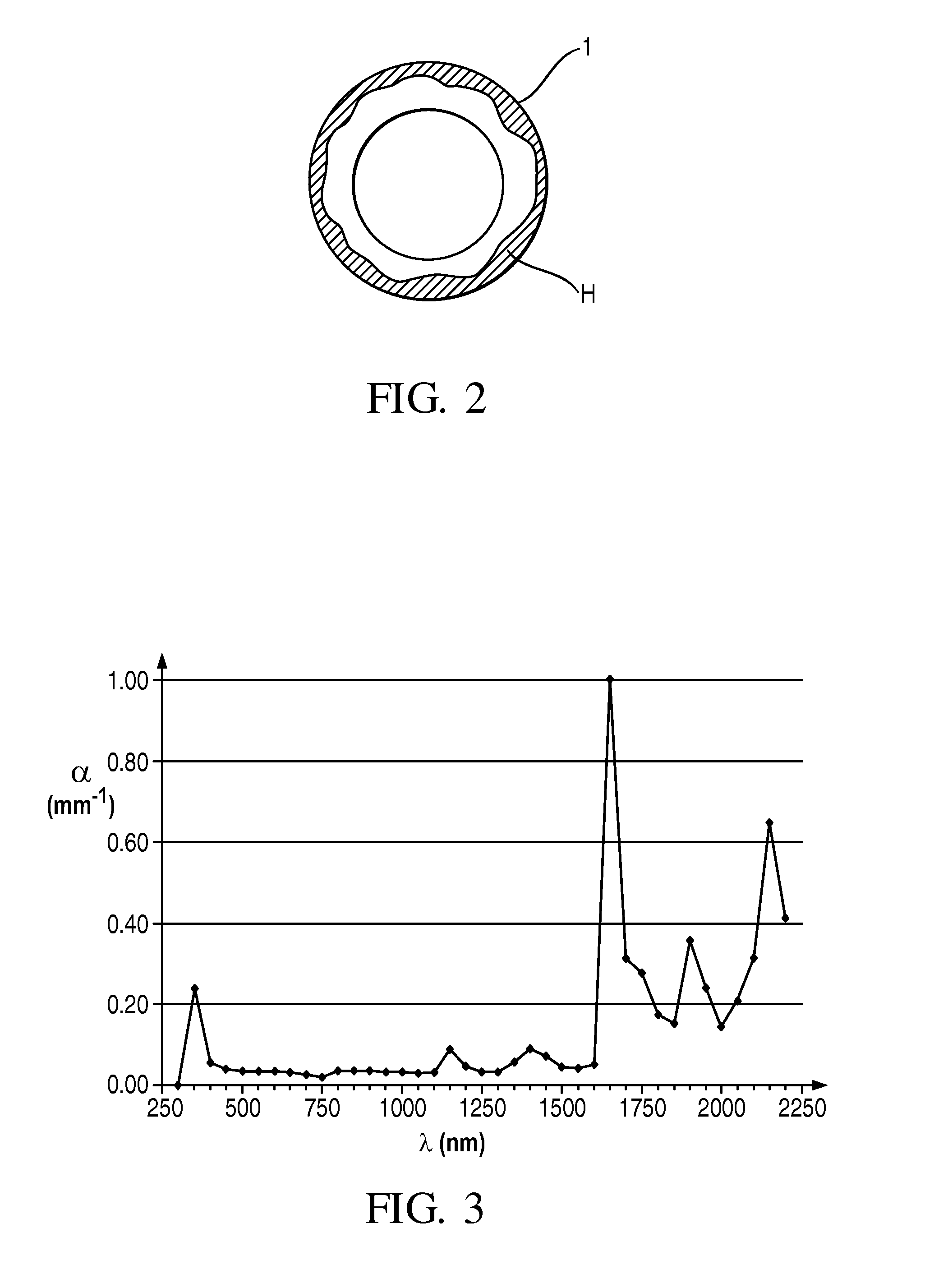
Figure 3
Abstract
Description
FIELD OF THE INVENTION
[0001] The invention describes a method of heating a preform. The invention also describes a driving arrangement, a preform heating system and a computer program for heating a preform.BACKGROUND OF THE INVENTION
[0002] Nowadays, the majority of beverage containers are lightweight plastic bottles of a material such as PET (polyethylene terephthalate), manufactured in a two-step process. In a first step, so-called hollow “preforms” are created from the raw material, e.g. by a slow, high-temperature extrusion process. In a second step the ‘walls’ of these hollow preforms are heated again—this time to a temperature below their re-crystallization point, i.e. below about 130° C.—and then formed into the desired bottle-shapes via blow-moulding.
[0003] In most state of the art preform heating ovens, this heating is carried out using halogen lamps, for which a significant portion of the broad emission spectrum lies in the infrared region. During the heating process, heat ene...
Examples
Embodiment Construction
[0051]FIG. 1 shows a transverse cross-section and a longitudinal cross-section through the body 3 of a preform 1. Such a preform 1, intended for use as a beverage container or bottle, already features a threaded neck 2, which, contrary to the body 3 of the preform 1, is usually not subjected to any heating and thus remains largely unaffected by the subsequent blow-moulding of the heated preform body 3. The cavity 4 of the preform 1 can be used to fixate the preform 1 during its path through the oven or furnace, as a bottle-blowing apparatus is usually termed, for example by a rod or pin upon which the preform is placed. While being heated, the preform may be rotated about its longitudinal axis 5. When heated in the oven, the body 3 of the preform 1 becomes hot and softens as a result, so that, in a subsequent treatment step, air forced into the cavity 4 of the preform 1 under a certain pressure causes the preform body 3 to expand. Suitable shaping means external to the preform 1 may...