
Mutant interleukin-2 polypeptides
a technology of interleukin-2 and polypeptides, which is applied in the field of mutant interleukin-2 polypeptides, can solve the problems of insufficient inhibition of tumor growth of il-2, suboptimal therapeutic cost, and no known il-2 mutant has been shown to overcome all of the above-mentioned problems
Patent Information
- Authority / Receiving Office
- US · United States
- Patent Type
- Applications(United States)
- Current Assignee / Owner
- Publication Date
- 2012-09-27
Smart Images
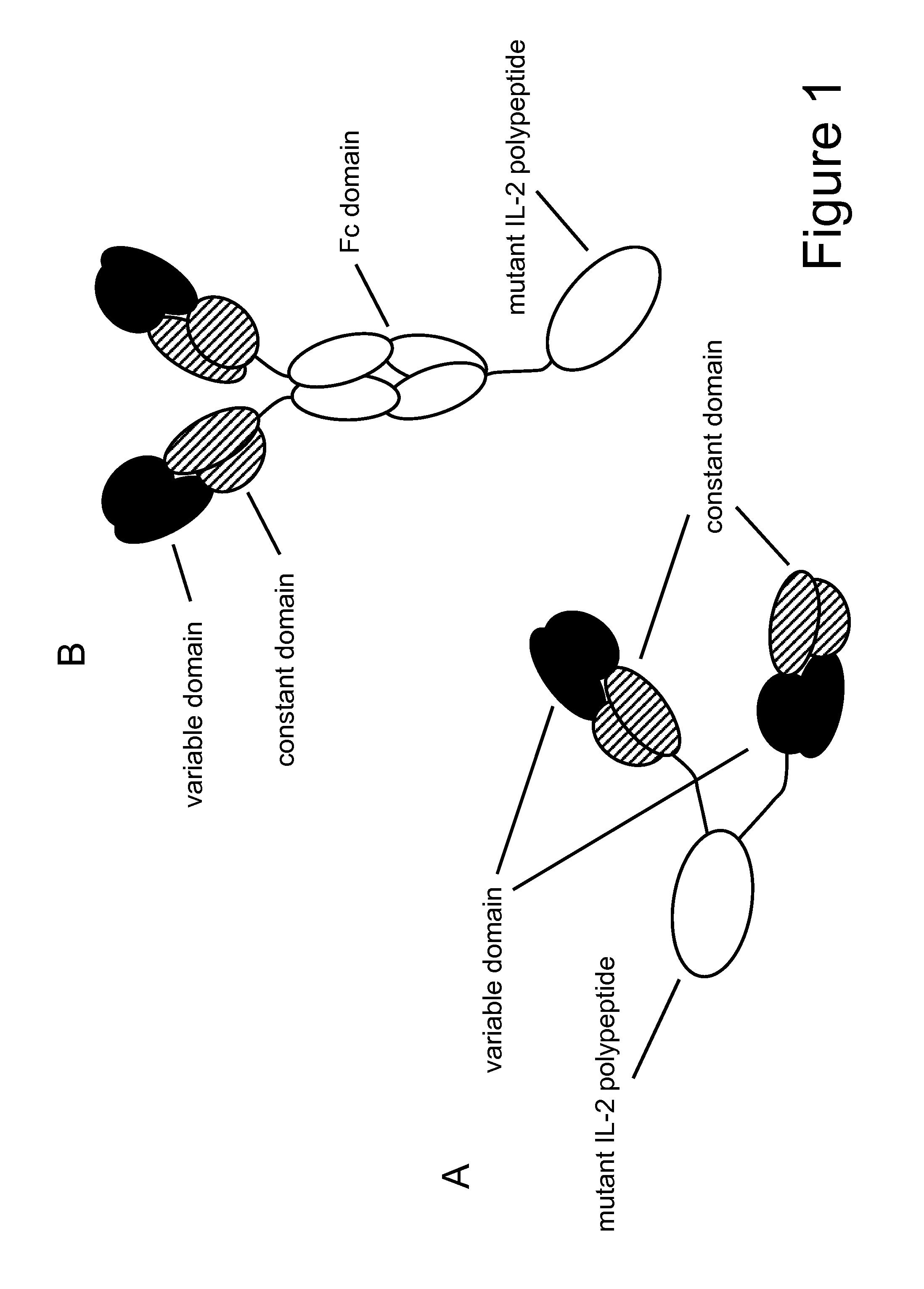
Figure 1 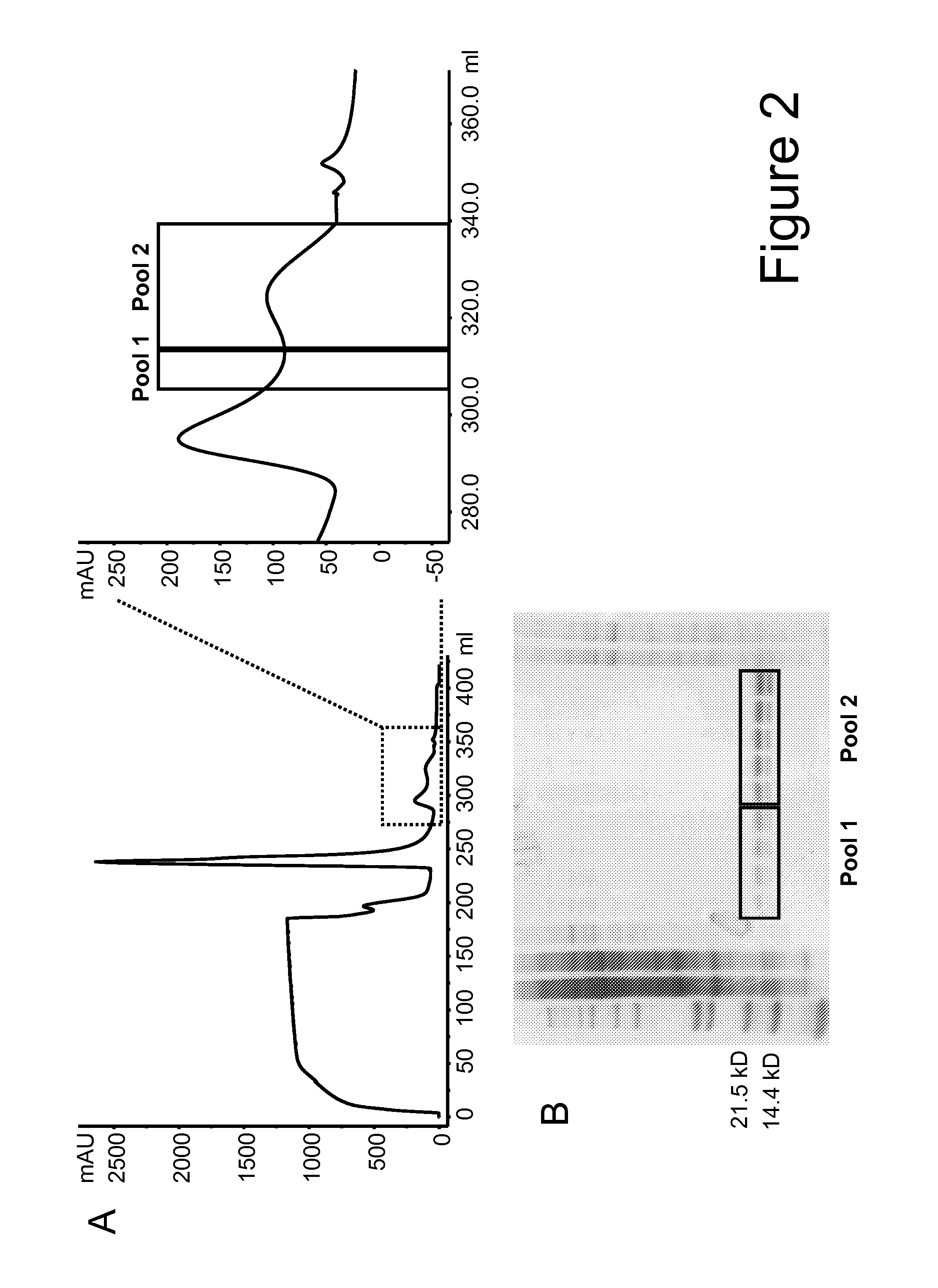
Figure 2 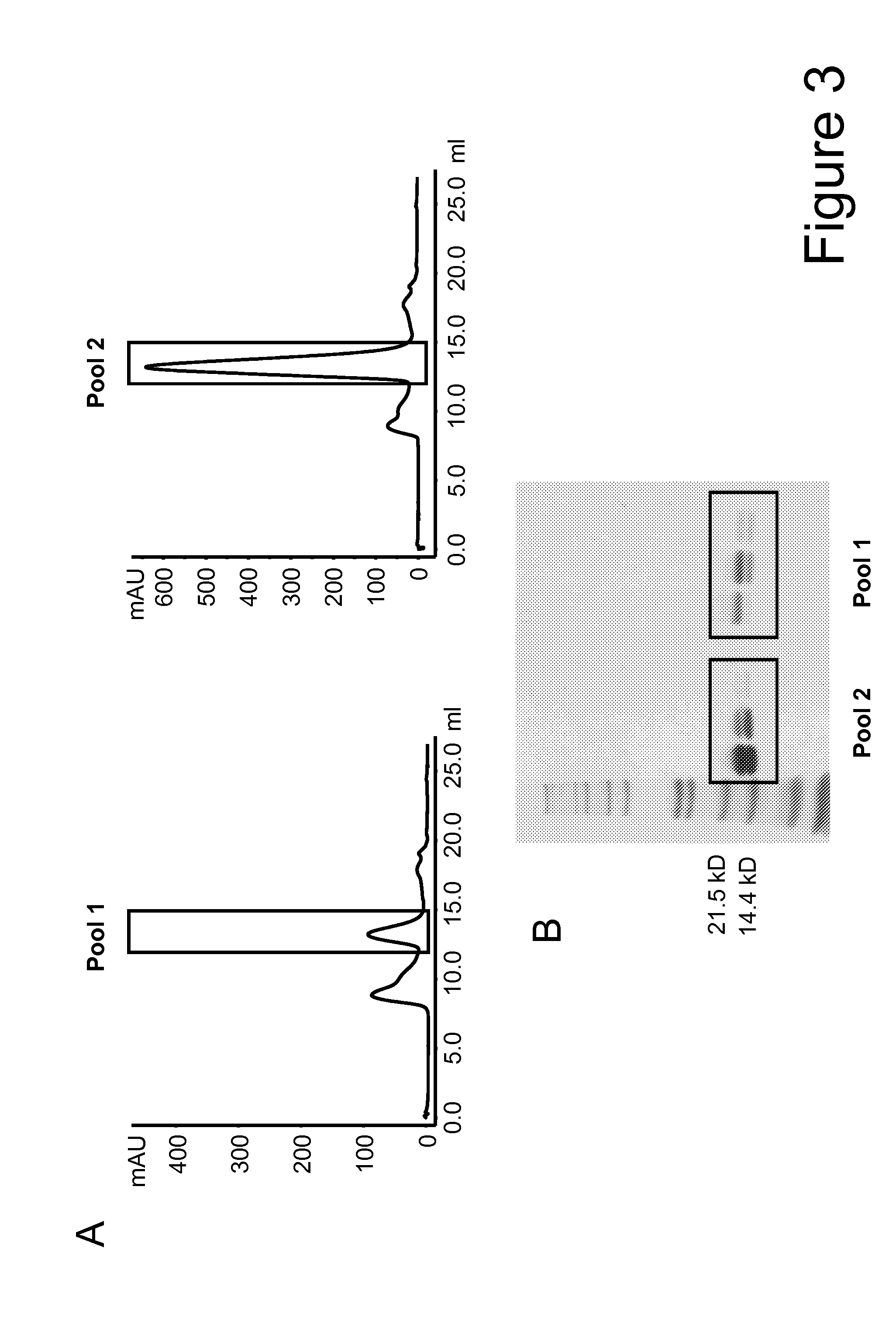
Figure 3
Abstract
Description
FIELD OF THE INVENTION
[0001] The present invention generally relates to mutant interleukin-2 polypeptides. More particularly, the inventions concerns mutant IL-2 polypeptides that exhibit improved properties for use as immunotherapeutic agents. In addition, the invention relates to immunoconjugates comprising said mutant IL-2 polypeptides, polynucleotide molecules encoding the mutant IL-2 polypeptides or immunoconjugates, and vectors and host cells comprising such polynucleotide molecules. The invention further relates to methods for producing the mutant IL-2 polypeptides or immunoconjugates, pharmaceutical compositions comprising the same, and uses thereof.BACKGROUND
[0002] Interleukin-2 (IL-2), also known as T cell growth factor (TCGF), is a 15.5 kDa globular glycoprotein playing a central role in lymphocyte generation, survival and homeostasis. It has a length of 133 amino acids and consists of four antiparallel, amphiphatic α-helices that form a quaternary structure indispensable o...
Examples
example 1
General Methods
Recombinant DNA Techniques
[0271]Standard methods were used to manipulate DNA as described in Sambrook et al., Molecular cloning: A laboratory manual; Cold Spring Harbor Laboratory Press, Cold Spring Harbor, N.Y., 1989. The molecular biological reagents were used according to the manufacturer's instructions. General information regarding the nucleotide sequences of human immunoglobulins light and heavy chains is given in: Kabat, E. A. et al., (1991) Sequences of Proteins of Immunological Interest, Fifth Ed., NIH Publication No 91-3242.
DNA Sequencing
[0272]DNA sequences were determined by double strand sequencing.
Gene Synthesis
[0273]Desired gene segments where required were either generated by PCR using appropriate templates or were synthesized by Geneart AG (Regensburg, Germany) from synthetic oligonucleotides and PCR products by automated gene synthesis. In cases where no exact gene sequence was available, oligonucleotide primers were designed based on sequences from c...
example 2
[0291]We designed mutated versions of IL-2 that comprised one or more of the following mutations (compared to the wild-type IL-2 sequence shown in SEQ ID NO: 1):[0292]1. T3A—knockout of predicted O-glycosylation site[0293]2. F42A—knockout of IL-2 / IL-2R α interaction[0294]3. Y45A—knockout of IL-2 / IL-2R α interaction[0295]4. L72G—knockout of IL-2 / IL-2R α interaction[0296]5. C125A—previously described mutation to avoid disulfide-bridged IL-2 dimers
[0297]A mutant IL-2 polypeptide comprising all of mutations 1-4 is denoted herein as IL-2 quadruple mutant (qm). It may further comprise mutation 5 (see SEQ ID NO: 19).
[0298]In addition to the three mutations F42A, Y45A and L72G designed to interfere with the binding to CD25, the T3A mutation was chosen to eliminate the O-glycosylation site and obtain a protein product with higher homogeneity and purity when the IL-2 qm polypeptide or immunoconjugate is expressed in eukaryotic cells such as CHO or HEK293 cells.
[0299]For purification purposes ...
example 3
[0303]The three mutations F42A, Y45A and L72G and the mutation T3A were introduced in the Fab-IL-2-Fab format (FIG. 1A) using the anti-FAP antibody 4G8 as model targeting domain either as single mutants: 1) 4G8 IL-2 T3A, 2) 4G8 IL-2 F42A, 3) 4G8 IL-2 Y45A, 4) 4G8 IL-2 L72G, or they were combined in Fab-IL-2 mt-Fab constructs as: 5) triple mutant F42A / Y45A / L72G, or as: 6) quadruple mutant T3A / F42A / Y45A / L72G to inactivate the O-glycosylation site as well. The 4G8-based Fab-IL-2 wt-Fab served for comparison. All constructs contained the C145A mutation to avoid disulfide-bridged IL-2 dimers. The different Fab-IL 2-Fab constructs were expressed in HEK 293− cells and purified as described above via protein A and size exclusion chromatography as specified above. Subsequently, the affinity of the selected IL 2 variants for the human and murine IL 2R βγ heterodimer and for the human and murine IL-2R α-subunit was determined by surface plasmon resonance (SPR) (Biacore) using recombinant IL-2R...