
Robust, Fast Unused-Code Detection
a technology of unused code and fast detection, applied in the field of wireless receivers, can solve the problems of long observation intervals for hs-pdsch code detection techniques, and achieve the effects of improving the quality of impairment covariance estimation in wireless receivers, avoiding unused code false decisions, and increasing the number of available symbols
Patent Information
- Authority / Receiving Office
- US · United States
- Current Assignee / Owner
- Publication Date
- 2014-11-20
Smart Images
Figure 1 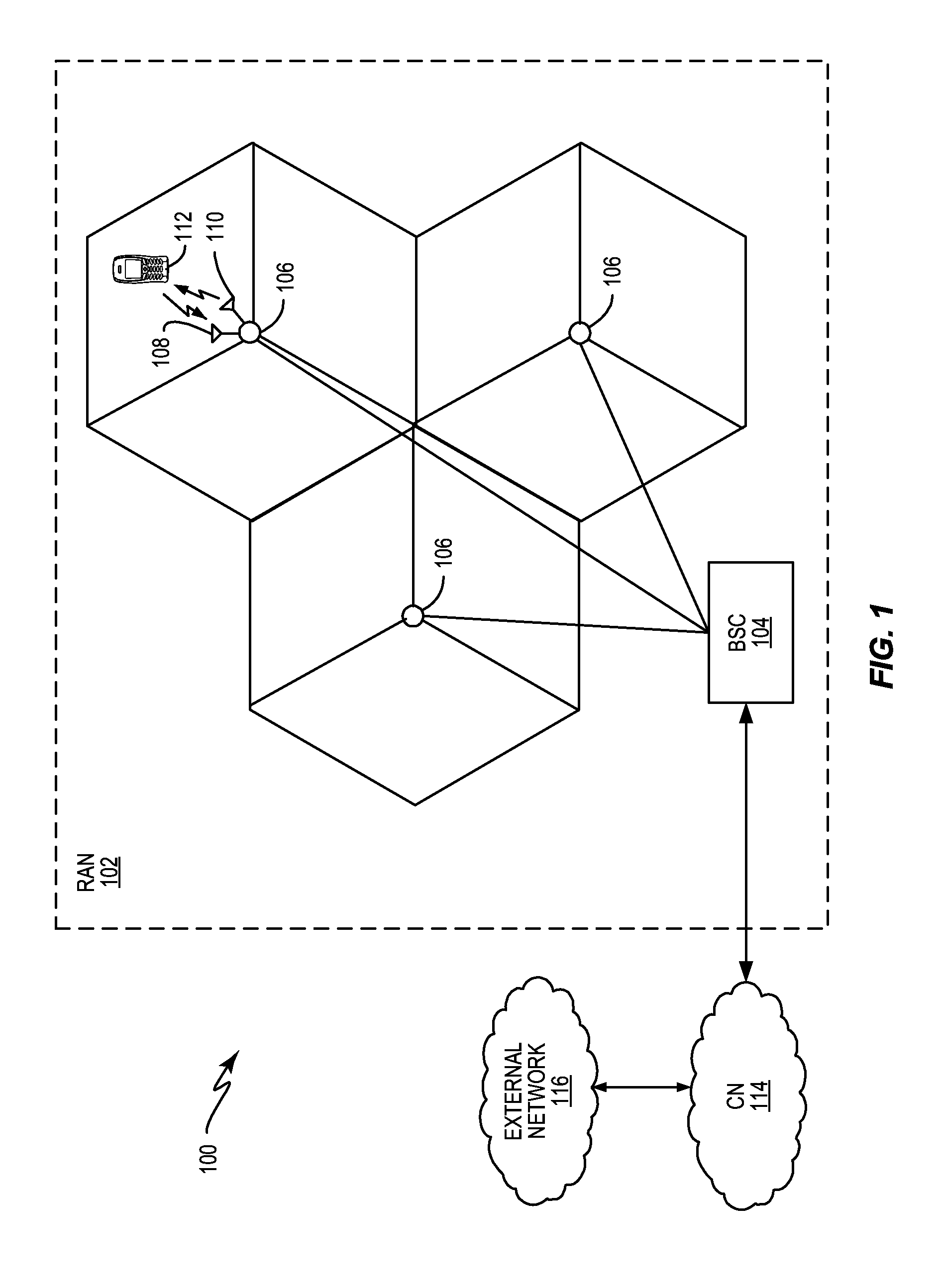
Figure 2 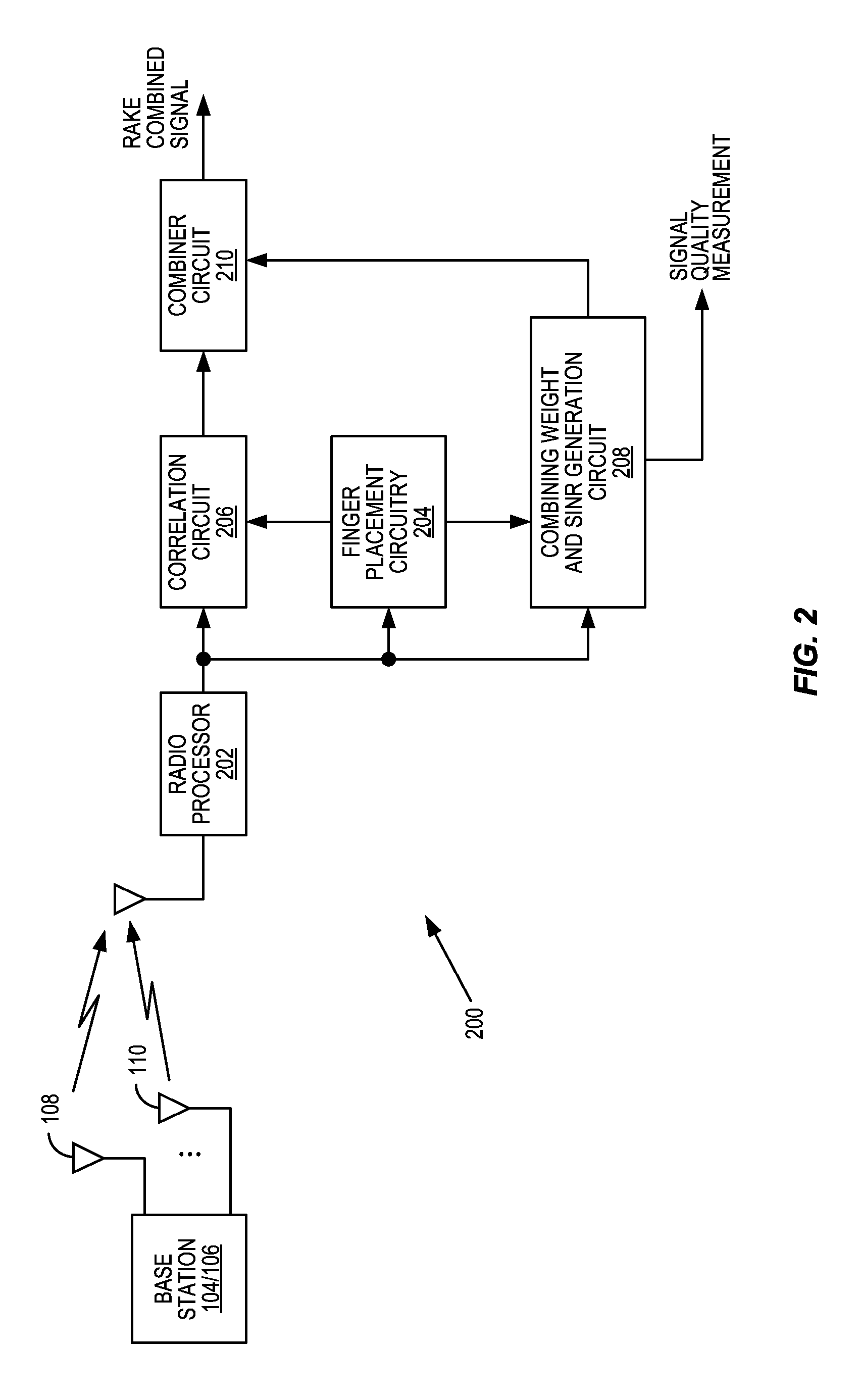
Figure 3
Abstract
Description
TECHNICAL FIELD
[0001] The present disclosure generally relates to wireless receivers, and particularly relates to techniques for estimating impairments to received signals for interference suppression purposes.BACKGROUND
[0002] RAKE receivers are well known in the communication arts and find wide-spread use in Code Division Multiple Access (CDMA) systems, such as in IS-95, IS-2000 (cdma2000), Wideband CDMA (WCDMA), and High Speed Packet Access (HSPA) wireless communication networks. The name derives from the rake-like appearance of some representations of these receivers, wherein multiple, parallel receiver “fingers” corresponding to different signal delays are used to receive multiple signal images in a received multipath signal. By coherently combining the finger outputs in a RAKE combiner, the conventional RAKE receiver can use multipath reception to improve the Signal-to-Noise Ratio (SNR) of the received multipath signal.
[0003] However, as is known to those skilled in the art, the c...
Examples
Embodiment Construction
[0025]FIG. 1 depicts an example wireless communication system 100. Within a Radio Access Network (RAN) 102, a Base Station Controller (BSC) 104 controls a plurality of Radio Base Stations (RBS) 106, also known in the art as Base Transceiver Stations (BTS). The BSC 104 and an RBS 106 together comprise a “base station” or “NodeB”. Each base station provides radio communication services with subscriber mobile terminals or user equipments (UEs) 112 within a geographic area called a cell. Each cell may be divided into sectors, as depicted in FIG. 1. The BSC 104 communicates with a Core Network (CN) 114, which in turn is connected to one or more external networks 116, such as the Public Switched Telephone Network (PSTN), the Internet, or the like.
[0026]In addition to an information signal, the base station transmits a pilot channel from each transmit antenna 108, 110, in this example of a system employing transmit diversity. The pilot channels comprise a series of pilot symbols. For the p...