
Combination therapy to improve joint, tendon, and ligament healing
a joint complex and joint technology, applied in the field of joint, tendon and ligament healing, can solve the problems of neurologic injuries, substantial proportion of bony defects not healing, and injury to the joint complex in healthy humans can take months to heal, so as to improve the healing of joint injuries
Patent Information
- Authority / Receiving Office
- US · United States
- Patent Type
- Applications(United States)
- Current Assignee / Owner
- Publication Date
- 2015-02-12
- Estimated Expiration
- Not applicable · inactive patent
Smart Images
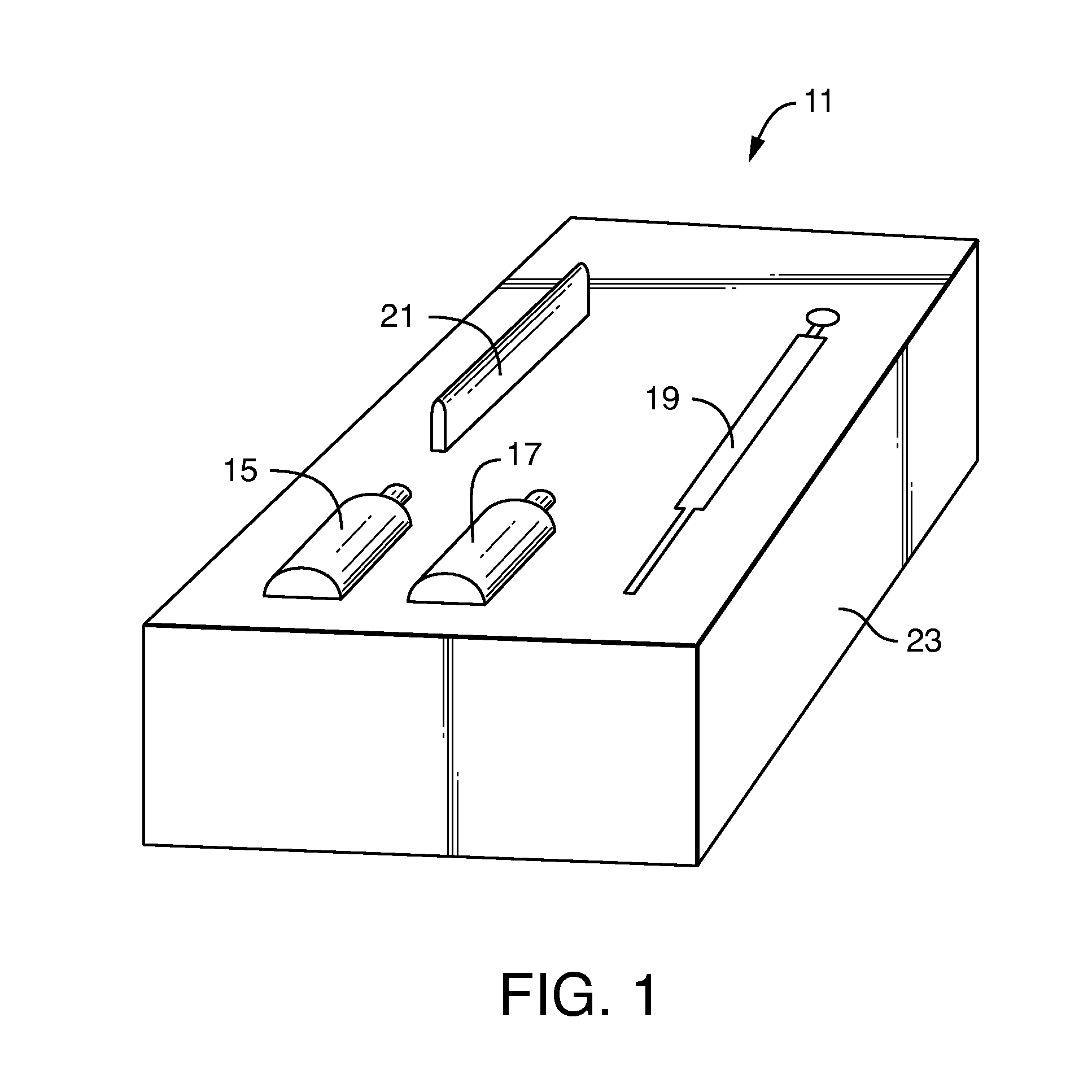
Figure 1
Abstract
Description
BACKGROUND OF THE INVENTION
[0001] Injury to the joint complex in healthy humans can takes months to heal. Furthermore, in certain types of injury (e.g. meniscal or ligament tear, avascular necrosis, etc.), a substantial proportion of bony defects do not heal. Current therapeutic options for the treatment of joint injuries include splints, casts, and arthroscopic surgery to treat floating cartilage, torn surface cartilage, ligament reconstruction, and trim damaged cartilage. While the above treatment options can be somewhat successful, they are associated with complications such as hemarthrosis, infection, thromboembolic disease, anesthetic complications, reflex sympathetic dystrophy, iatrogenic ligament injury, iatrogenic fracture, and neurologic injuries. Moreover, the above treatment options do not improve or augment the body's own endogenous repair mechanisms. To avoid the above complications and improve the joint healing process new therapeutic options are necessary.SUMMARY OF TH...
Examples
examples
[0031]Mice and Injury Model: All experiments are performed in accordance with the IACUC guidelines. C57BL / 6J wild-type mice aged 8-12 weeks are purchased from Jackson Laboratories (Bar Harbor, Me.). Mice are randomized to receive one of #1) no injury; #2) full thickness partial transection of the medial collateral ligament of the knee; #3) full thickness partial excision of the medial meniscus of the knee; #4) articular medial intercondylar femoral osteotomy of the knee; and #5) full thickness partial transection in the patellar tendon. These injury models resemble the bone, cartilage, tendon, and ligament injury patterns common in humans.
[0032]Treatment Groups: Mice in each of the 4 experimental groups are randomly assigned to receive once daily one of: #1) saline i.p. injection; #2) AMD3100 (10 mg / kg, i.p.; PLERIXAFOR®; Genzyme Corp., Cambridge, Mass.) injection; #3) Teriparatide (0.285 mcg / kg, i.p.; FORTEO®; Eli Lilly and Company, Indianapolis, Ind.); or #4) AMD3100 (10mg / kg, i.p...