
Resin-coated seamless aluminum can
a technology resin coatings, applied in the field can solve the problems of non-chromium inorganic surface treatment films, not fully adhesion of seamless aluminum cans to resin coatings, and formation of seamless aluminum cans, etc., to achieve high degree of adhesiveness, low crystallinity, and rich in softness and flexibility
Patent Information
- Authority / Receiving Office
- US · United States
- Patent Type
- Applications(United States)
- Current Assignee / Owner
- Publication Date
- 2016-06-02
Smart Images
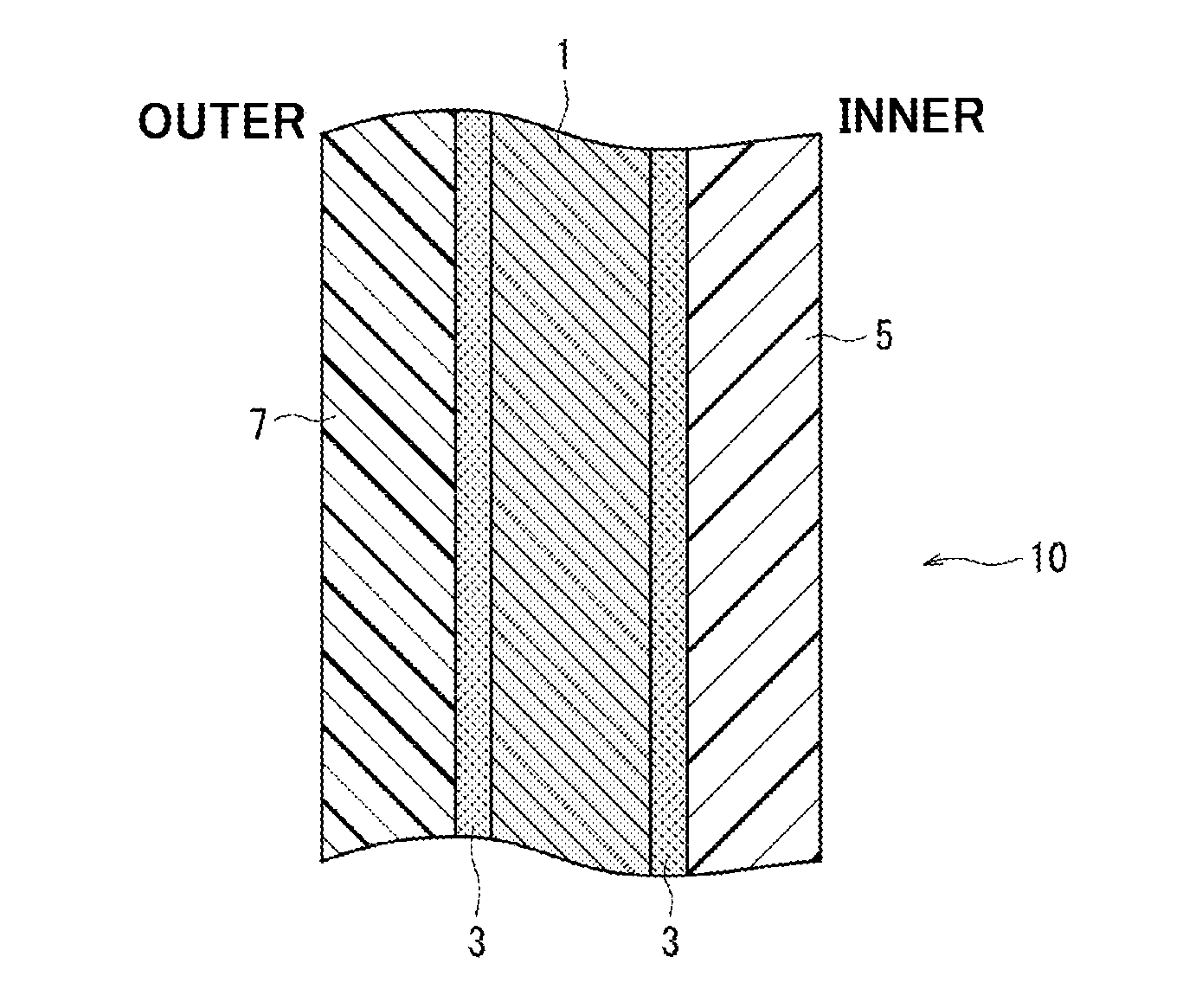
Figure 1 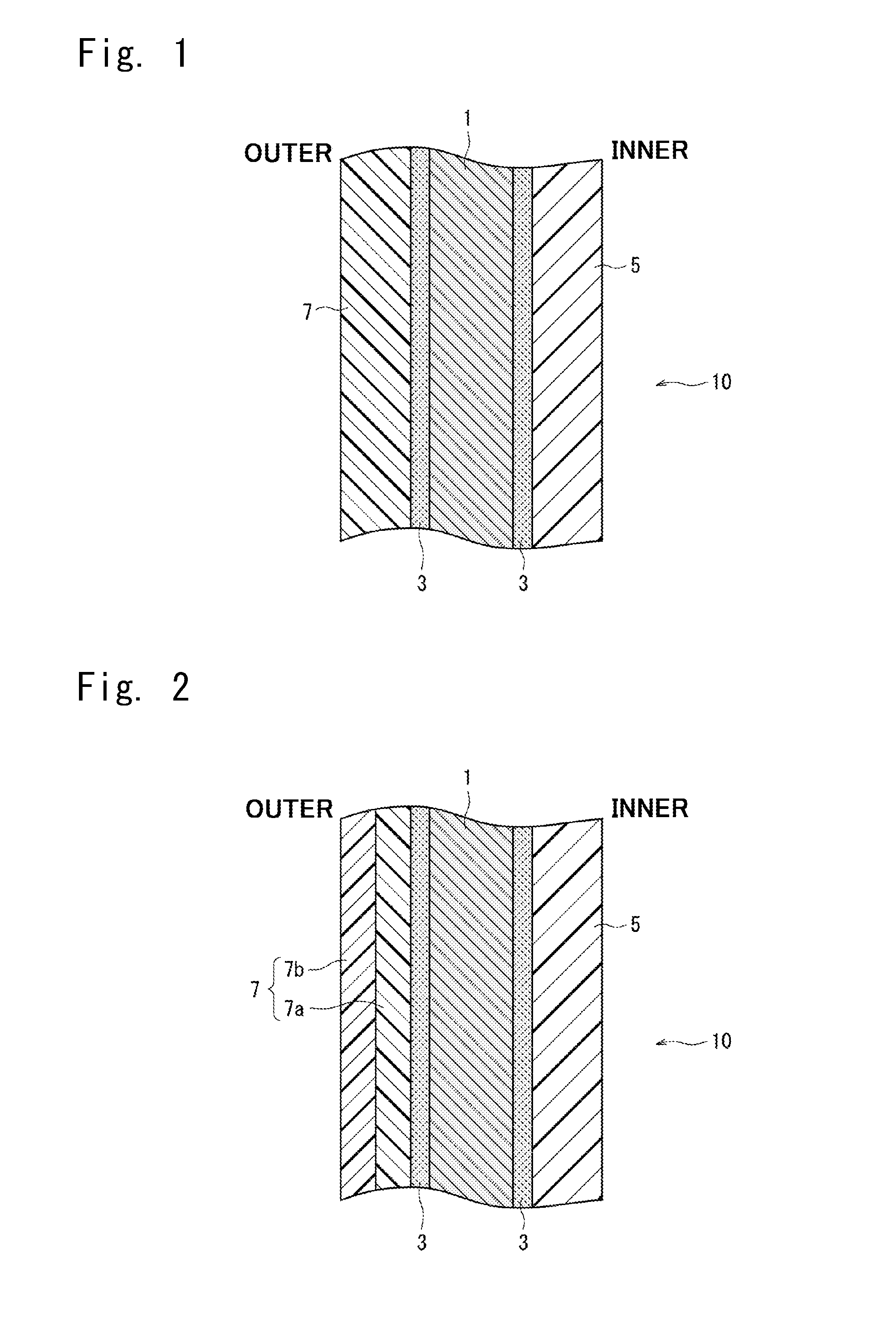
Figure 2 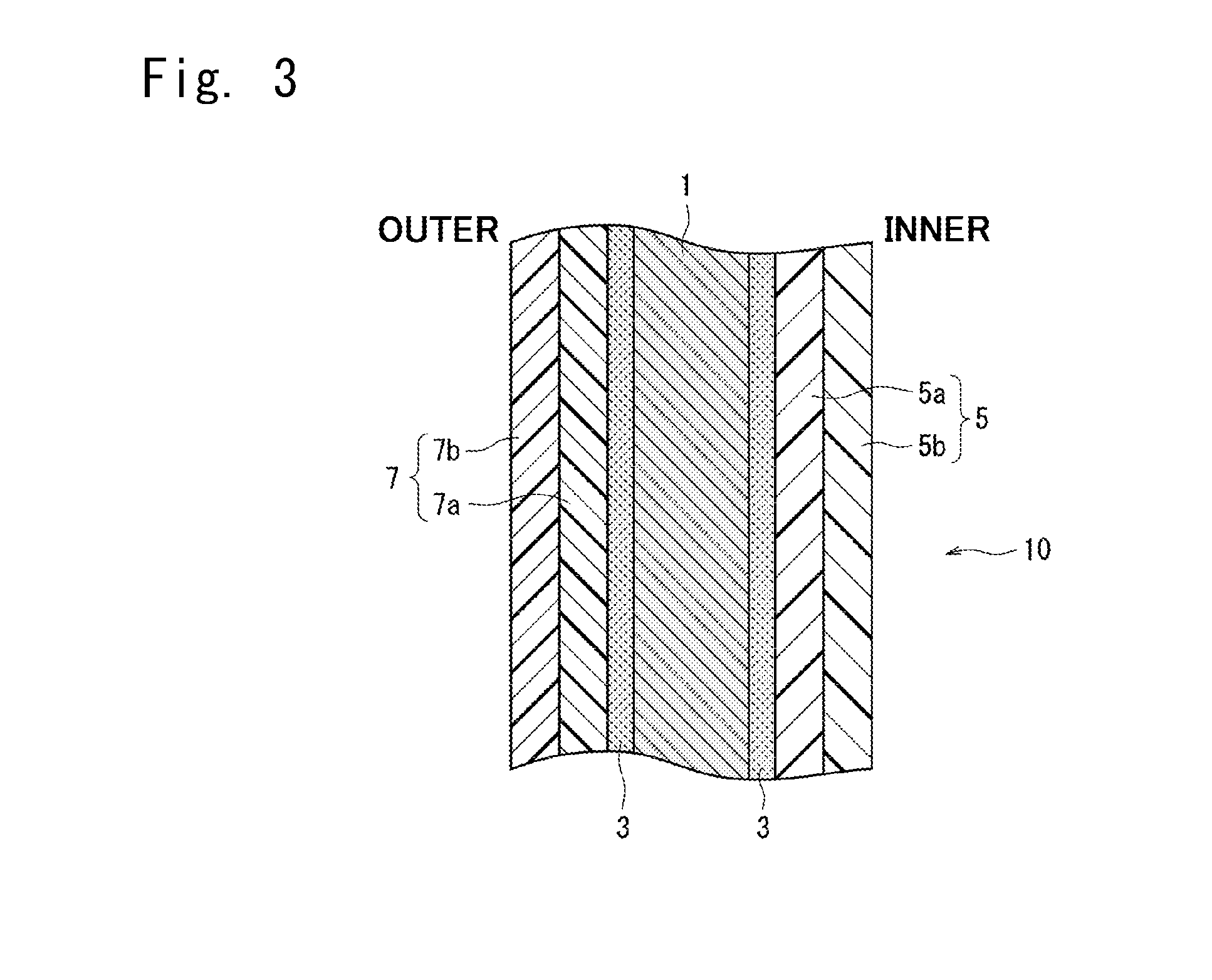
Figure 3
Abstract
Description
TECHNICAL FIELD
[0001] This invention relates to a seamless aluminum can having polyester resin coatings formed thereon via non-chromium inorganic surface-treating films.BACKGROUND ART
[0002] Aluminum is light in weight and easy to form as compared to steels and has been favorably used in the field of containers. Specifically, aluminum has been widely used for producing seamless cans through severe workings of forming such as drawing and ironing.
[0003] In the seamless aluminum cans mentioned above, in general, chromium type surface treating films are formed by conversion treatment on the inner and outer surfaces of the aluminum sheet that forms the cans in order to improve corrosion resistance of aluminum. Further, such seamless aluminum cans are formed through severe working of forming. Therefore, polyester resin coating or films are, usually, formed on the inner and outer surfaces of the cans via the surface-treating films.
[0004] However, to meet strong demands concerning environmental ...
Examples
examples
[0072]The invention will now be described by the following Experiments.
experiment 1
(Experiment 1)
[Production of the Polyester Resin-Coated Aluminum Sheet]
[0073]A 0.28 mm-thick coil sheet of an aluminum alloy, JIS3104, was conversion treated on its both surfaces with the “Alodine N-405” manufactured by Nihon Parkerizing Co. to form a surface-treating film of zirconium phosphate thereon in an amount of 10 mg / m2 calculated as Zr. The surface that becomes the outer surface of the can was roll-coated with a polyester phenol type primer, dried, baked at 250° C. to form a primer of a thickness of 0.9 μm thereon, and was taken up.
[0074]While rewinding the coil sheet, a polyester resin was extrusion-laminated on both surfaces thereof. On the outer surface of the can, there was formed a polyester resin coating of a two-layer structure comprising a lower layer of a 7-μm thick polyethylene terephthalate containing 15 mol % of isophthalic acid and 0.1 mol % of trimellitic acid (hereinafter expressed as PET / IA15TMA0.1) and an upper layer of a 3-μm thick PET / IA7.5. The polyester...