
Sewing machine presser foot
Patent Information
- Authority / Receiving Office
- US · United States
- Current Assignee / Owner
- Publication Date
- 2017-03-16
Smart Images
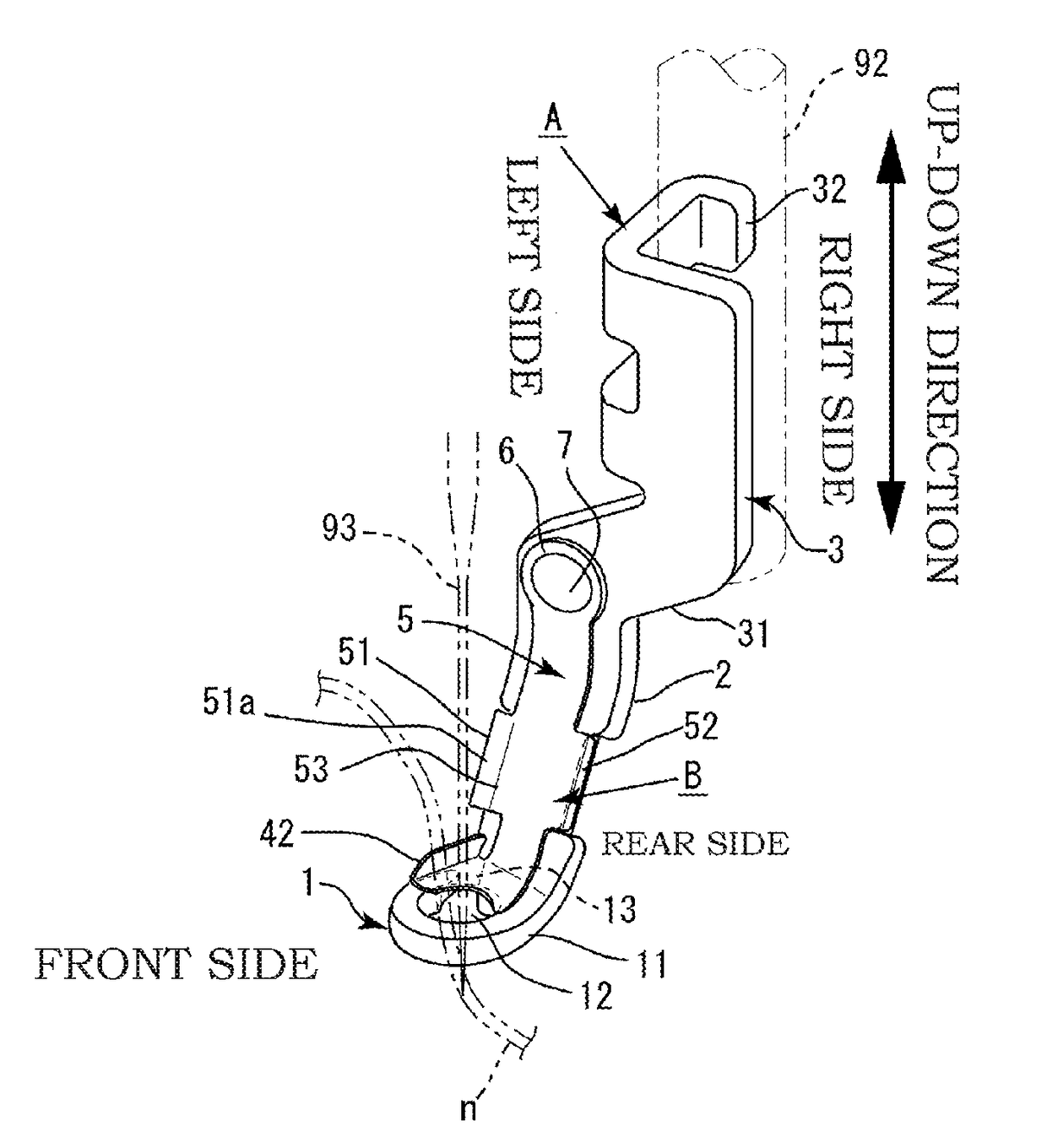
Figure 1 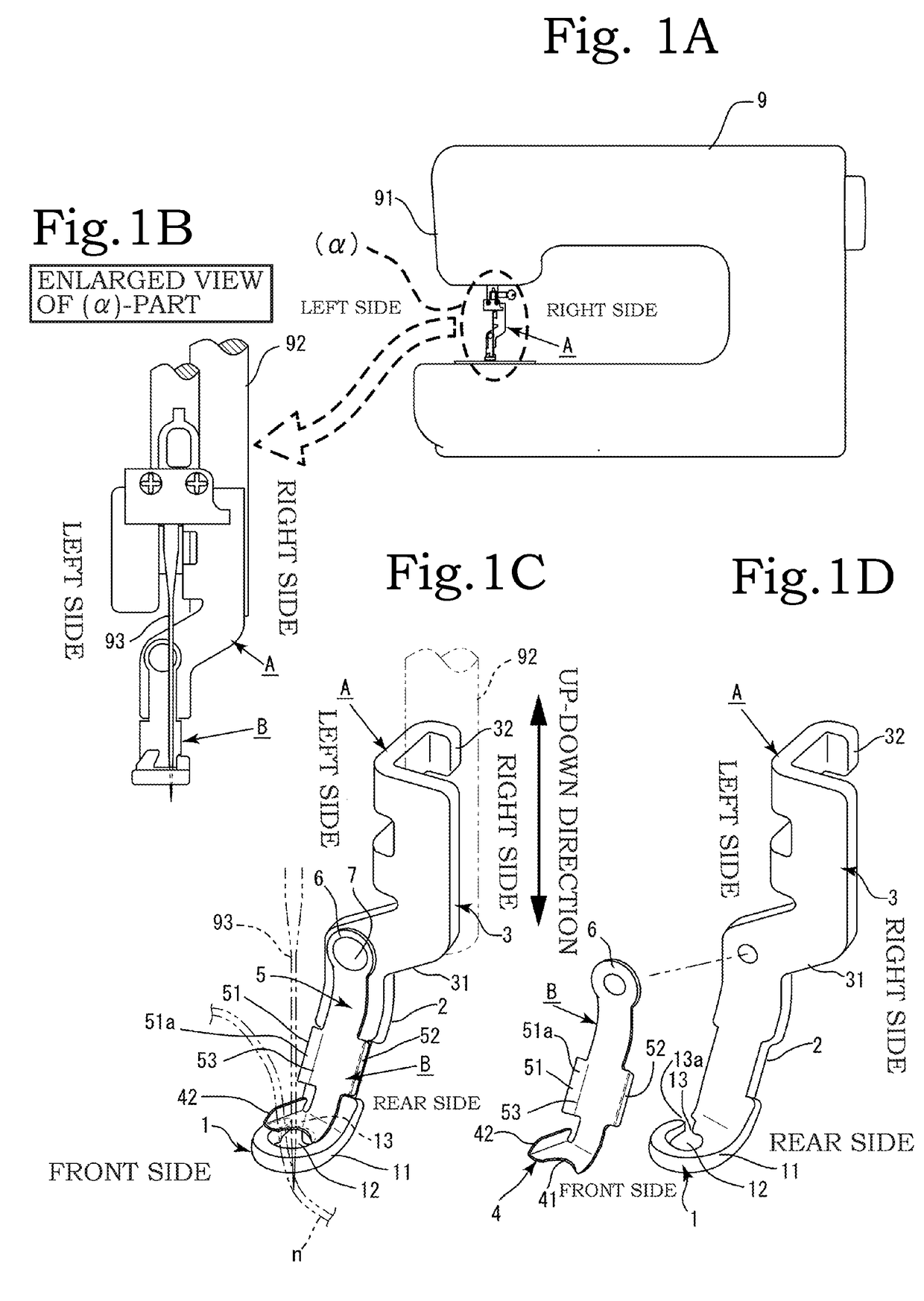
Figure 2 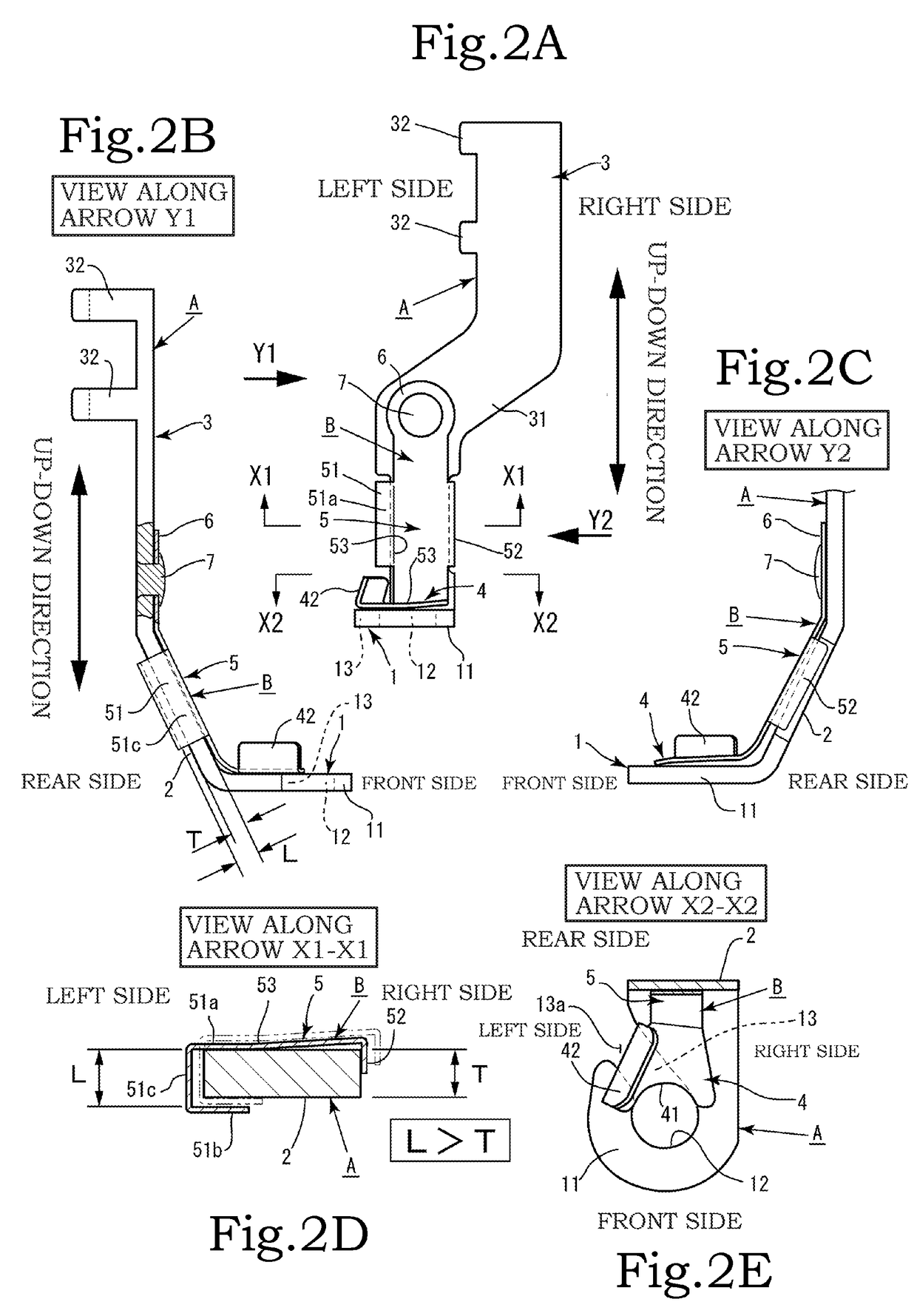
Figure 3
Abstract
Description
BACKGROUND OF THE INVENTION
[0001] 1. Field of the Invention
[0002] The present invention relates to a sewing machine presser foot which is attached to a presser bar of the sewing machine and used to sew a decorative string of wool yarn or the like on a cloth, and which makes it easier to pass the decorative string through a needle guiding hole while reducing the probability of the decorative string detaching from the needle guiding hole.
[0003] 2. Description of the Related Art
[0004] Some conventional home sewing machines are designed for what is called “couch stitching”, which is a type of stitching means for sewing decorative wool yarn, embroidery threads, ribbons, etc. on a cloth. A couch stitching operation involves setting an upper thread, a lower thread, and an embroidery frame, passing a third decorative string through a presser foot attached to a sewing machine, and then performing stitching. In this couch stitching operation, a presser foot dedicated for the couch stitching is us...
Examples
second embodiment
[0045]In the second embodiment, since the bent portion is formed at a position near the left end in the left-right direction of the supporting plate portion of the cover member, substantially the entire portion of the supporting plate portion except the left end in the left-right direction floats by being displaced elastically from the supporting portion of the presser foot body. Due to this, the groove covering portion can be more easily displaced in relation to the upper side of the string guiding groove of the pressing portion and the operation of inserting the decorative string can be performed more easily and quickly.
third embodiment
[0046]In the third embodiment, since the string guide is formed at the left end of the groove covering portion of the cover member, in the process of inserting the decorative string into the needle guiding hole, the decorative string makes substantially surface-contact with the string guide. Thus, it is possible to protect the decorative string so that intensive load is not applied to the decorative string especially during the insertion operation.
fourth embodiment
[0047]In the fourth embodiment, the restricting portion which includes the front restricting plate and the rear restricting plate and has a C-shaped cross-sectional shape is formed on the left side in the width direction of the supporting plate portion of the cover member, and the interval between the front restricting plate and the rear restricting plate is larger than the thickness of the supporting portion. Thus, it is possible to restrict a separation distance of the cover member from the supporting portion of the presser foot body, restrict a separation distance of the groove covering portion from the upper surface of the string guiding groove, and prevent deformation resulting from too much displacement.