
Iodophor composition with improved stability in the presence of organic material
a technology of organic material and iodophor, which is applied in the direction of drug compositions, inorganic non-active ingredients, aerosol delivery, etc., can solve the problems of high cost and potential toxicity of iodophor, inability to use such a concentration in many environments, and inability to stabilize in the presence of organic material, etc., to achieve stable presence and high organic matter load
Patent Information
- Authority / Receiving Office
- US · United States
- Patent Type
- Applications(United States)
- Current Assignee / Owner
- Publication Date
- 2017-08-17
- Estimated Expiration
- Not applicable · inactive patent
Smart Images
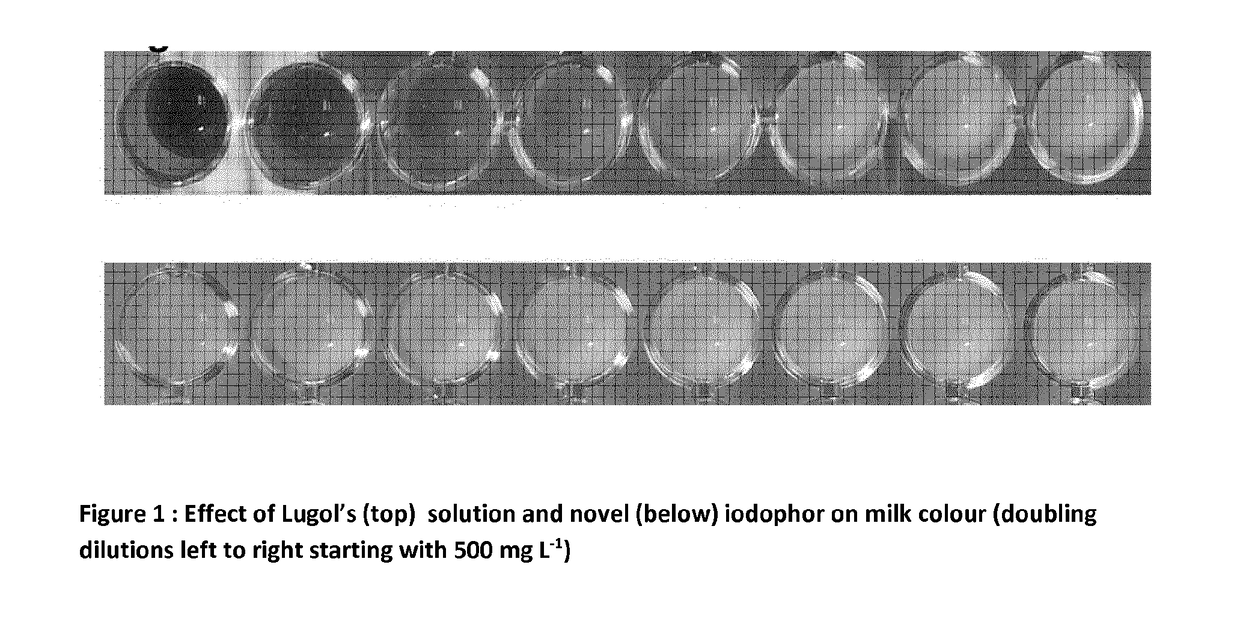
Figure 1 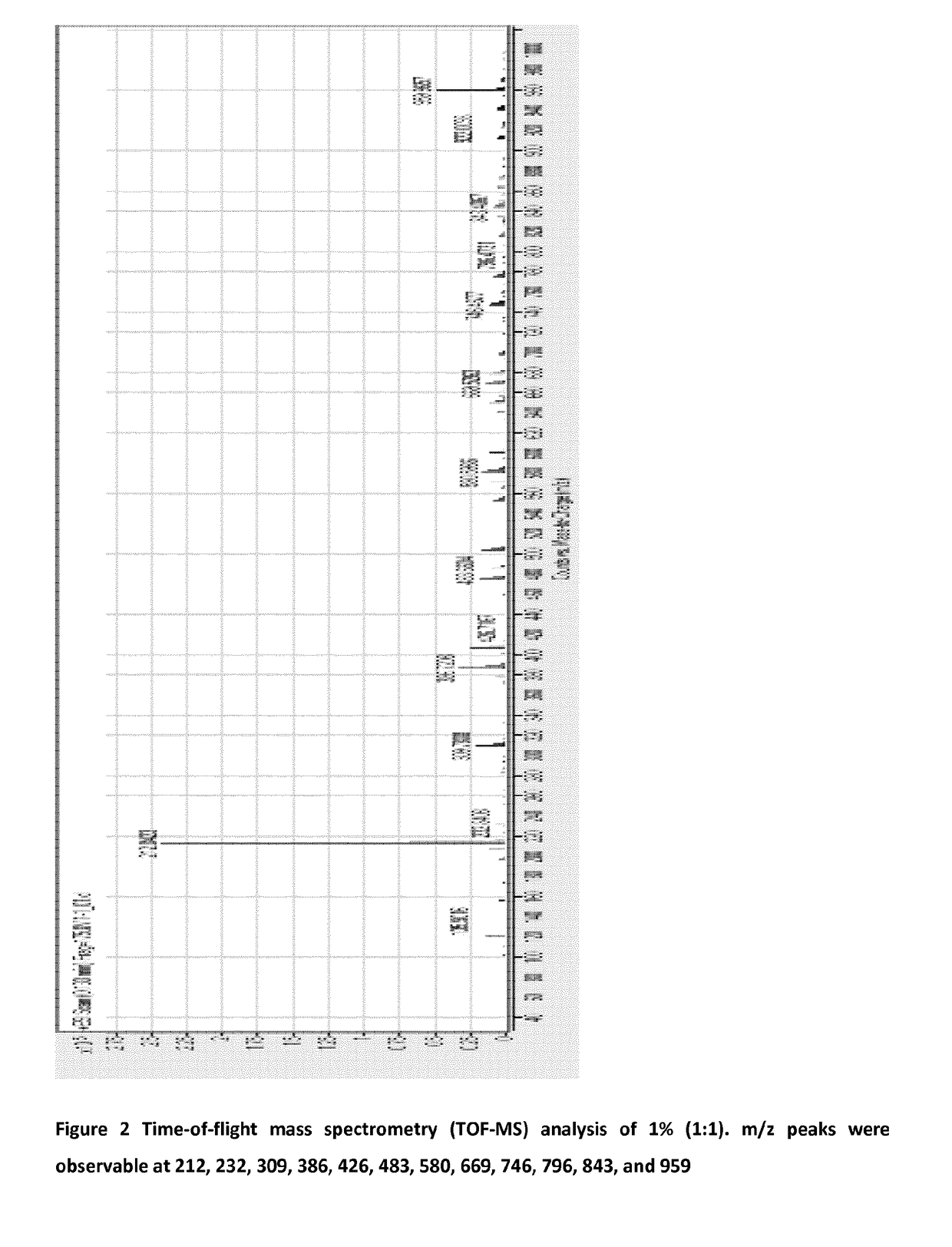
Figure 2 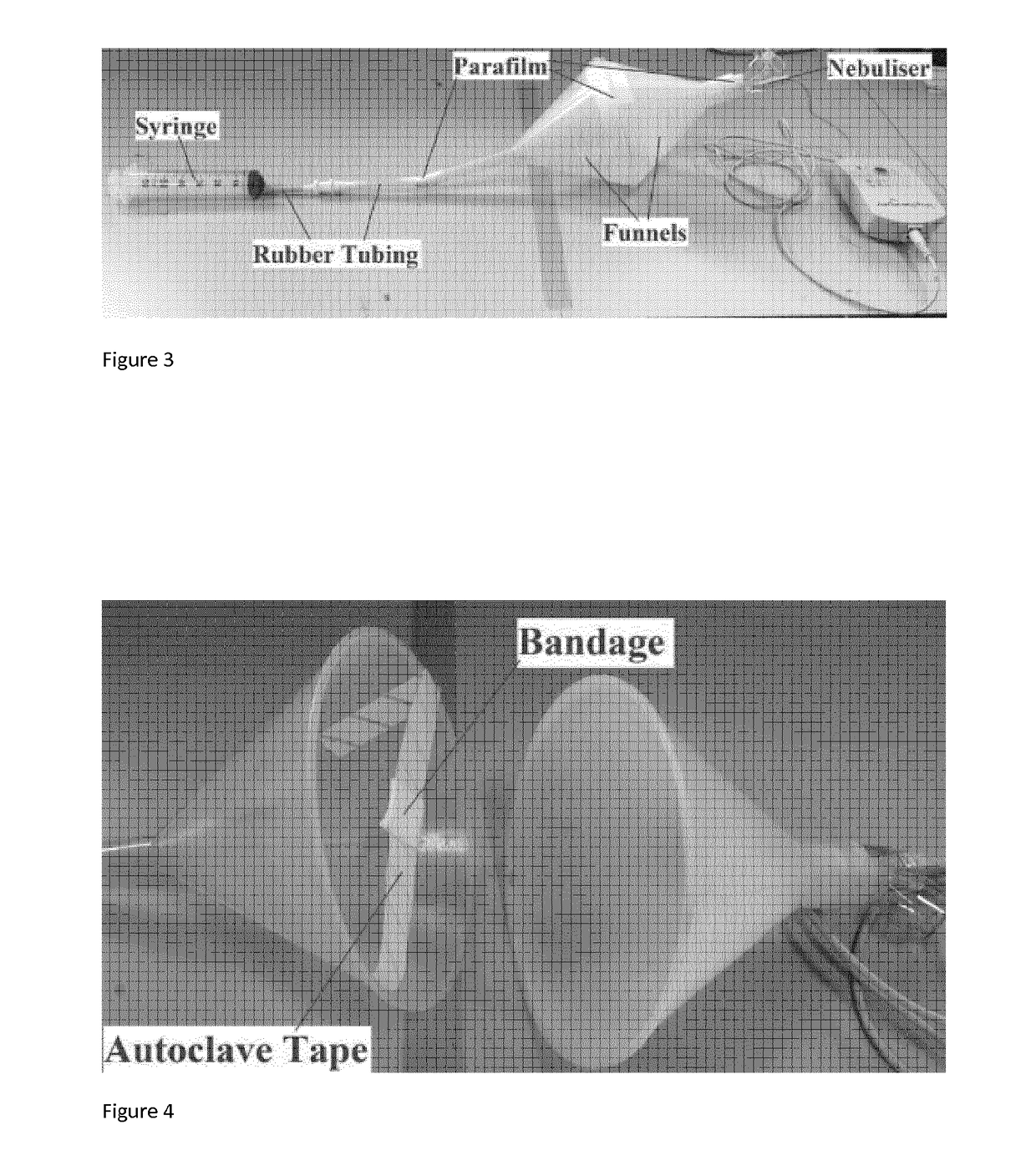
Figure 3
Abstract
Description
BACKGROUND OF THE INVENTION
[0001] This invention is concerned with a pharmaceutical and industrial iodophor preparation, its synthesis and potential applications. The compound has predictable antimicrobial activities. Furthermore, this iodophor is much more stable in the presence of organic material than traditional iodophors.
[0002] Iodophors are iodine based compounds complexed with a stabilization agent. They release free iodine when in solution, which provides the antimicrobial activity. They are typically prepared by mixing iodine with the stabilization agent, with heating.
[0003] Iodophors exert antimicrobial activity as the free iodine interacts with key bacterial proteins causing bacteriostatic or bacteriocidal effects. They have a potential wide-range of uses, from cleaning and sterilising industrial or medical equipment, to wound treatment (after or before infection as a prophylactic). Diluted iodophors are used extensively in the dairy industry to clean machinery, minimising t...
Examples
example 9
[0053]A 1 L batch of iodophor is prepared by the addition of 10 g potassium iodide, 10 g potassium thiocyanate to ca.950 ml of water. When the salts have dissolved fully, 33.33 ml of 30% hydrogen peroxide is added to the solution. The solution is then topped up to 1,000 ml with water. The solution can be pH adjusted and buffered to 5.5 if necessary. This solution is henceforth referred to as 1% (1:1) mixture, the ratio referring to the weight of the peroxide added to the weights of thiocyanate and iodide salts used.
[0054]An alternative to the use of hydrogen peroxide is to use ca.33 g of sodium percarbonate (with 30% available hydrogen peroxide) and allowed dissolve fully to permit release of peroxide.
[0055]As a further alternative, a 1 L batch of the iodophor is prepared by the addition of 10 g potassium iodate and 10 g potassium thiocyanate to ca.950 ml. The solution is then topped up to 1,000 ml with water and left for 24 hours to allow the reaction to occur. The solution can the...
example 10
[0058]Two funnels, a 60 mL Syringe, rubber tubing, and a nebuliser were assembled as according to FIG. 3. A bandage piece was suspended in the middle of the two funnels, by placing a piece of gauze on a length of tape and sticking the bandage over the gauze as according to FIG. 4. 500 μL of the target bacteria (either E. coli ATCC 25922 or P. aeruginosa) was applied onto the bandage piece using an autopipette with a sterile tip. Both funnels were closed together, forming an area volume of 790 mL (while syringe was extended), and parafilm was applied around their rim in order to seal the apparatus shut and to keep the environment inside air tight. 1 mL of the compound of choice was placed into the nebuliser chamber, the chamber was then closed. The nebuliser (Aeroneb Pro-X Solo Nebuliser System manufactured by Aerogen Ltd.) was switched on to begin the aerosolisation of the compound, the inoculated bandage was then exposed to 1 mL of aerosolised compound in the chamber for 15 minutes...